

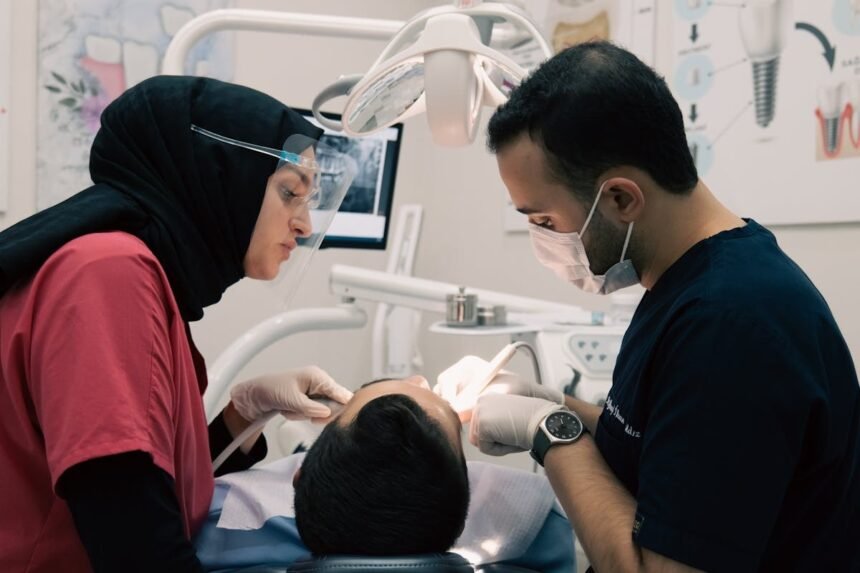
Losing a single tooth might seem like a minor dental issue, but the American Dental Association’s 2024 research reveals that leaving even one missing tooth unreplaced can trigger a cascade of oral health problems within just 12-18 months. As bone loss accelerates in the empty socket and adjacent teeth begin shifting to fill the gap, what starts as a cosmetic concern quickly evolves into functional complications affecting chewing, speech, and facial structure.
The dental implant industry has responded with increasingly sophisticated single-tooth solutions, but navigating the options requires understanding what sets implants apart from traditional bridges and partial dentures.
For the millions of Americans facing this decision each year whether due to injury, decay, or failed root canals the choice between replacement methods carries long-term consequences that extend far beyond the initial investment. The evidence points toward implants as the gold standard for single tooth replacement, but understanding why requires looking beyond the surface-level benefits to examine how different approaches actually perform over time.
Why Single Tooth Implants Matter for Oral Health and Quality of Life
When you lose a tooth, your body immediately begins a process that most people don’t anticipate: bone resorption. The jawbone tissue that once supported that tooth starts dissolving away, shrinking at a rate of roughly 25% in the first year alone. This isn’t just a structural concern — it’s the foundation of numerous problems that ripple through your oral health and daily life.
Consider someone who loses a molar during their forties. Without the constant pressure that tooth roots provide, the surrounding bone begins to disappear. Adjacent teeth start tilting into the empty space, creating new gaps where food gets trapped. The opposing tooth — the one that used to bite against the missing tooth — begins “super-erupting,” growing longer as it searches for something to contact. Within two years, what started as one missing tooth has created spacing issues, bite problems, and areas that are nearly impossible to clean effectively.
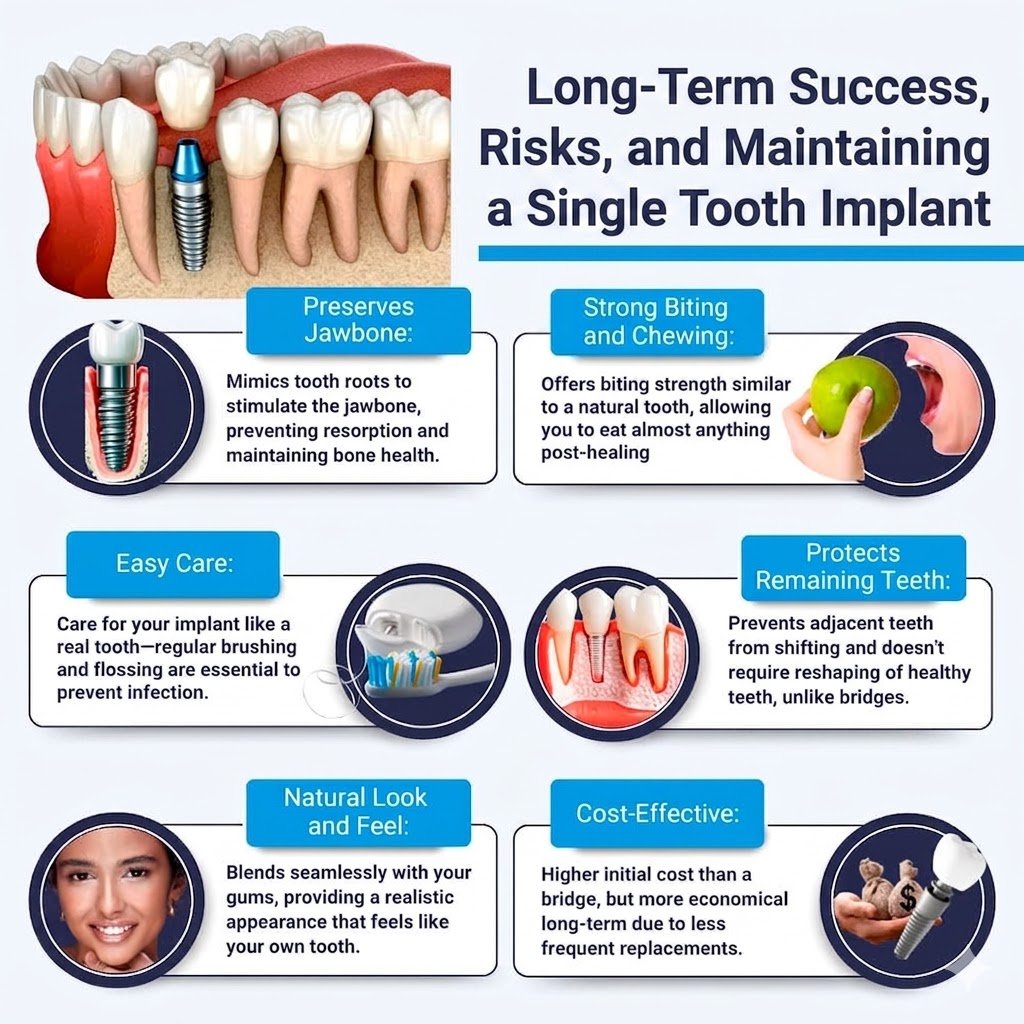
Dental implants solve this problem at the source by replacing both the visible tooth and the root structure. The titanium post integrates directly with your jawbone through a process called osseointegration, maintaining the bone tissue through continued stimulation. This preservation effect extends to your facial structure the bone support that keeps your cheeks and lips properly positioned remains intact.
The functional improvements often surprise patients more than the cosmetic ones. Unlike bridges, which can restrict certain foods, or partial dentures, which may slip during speech, properly placed dental implants for one tooth restore nearly 100% of natural chewing force. Patients report being able to eat corn on the cob, bite into apples, and speak without the clicking sounds that sometimes accompany removable appliances. These seemingly small details add up to significant quality-of-life improvements, particularly for active adults who don’t want their missing tooth to limit their food choices or social confidence.
How the Single Tooth Implant Procedure Works
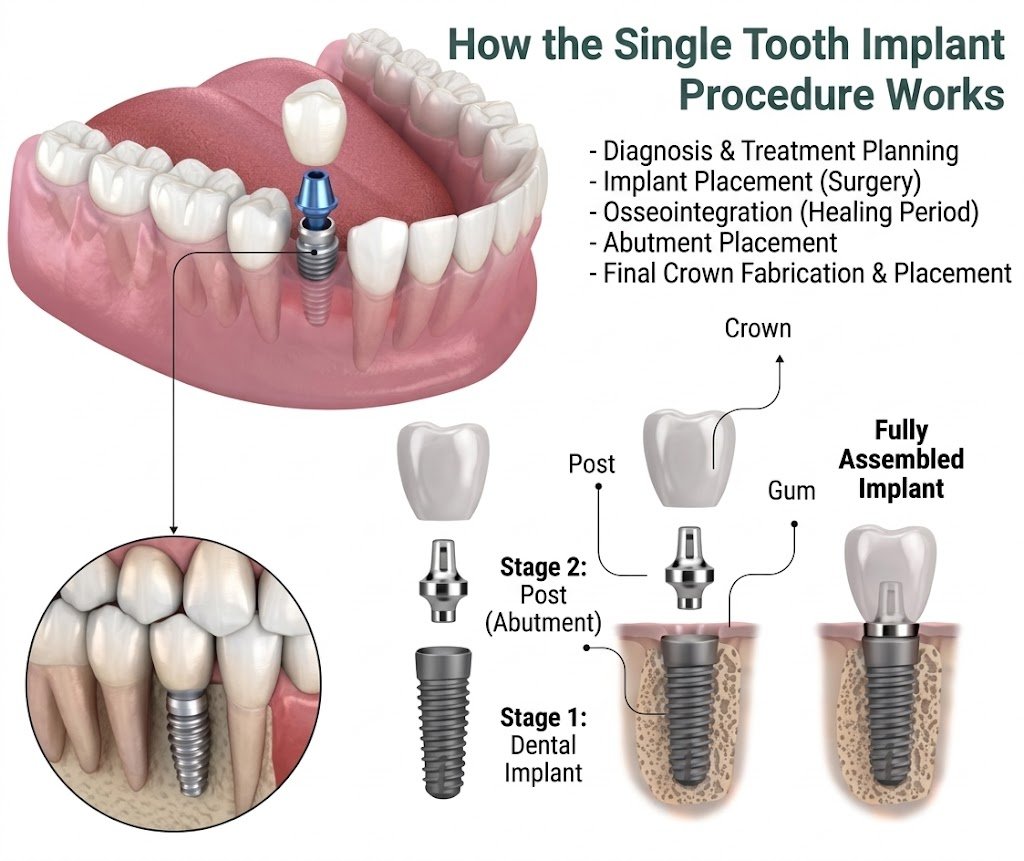
The implant process unfolds in carefully orchestrated stages, typically spanning three to six months from initial consultation to final restoration. Understanding this timeline helps set realistic expectations and explains why implants, while requiring more initial time investment than other options, deliver superior long-term results.
What to Expect During Consultation and Surgery
Your first appointment involves comprehensive imaging usually a 3D cone beam CT scan that maps your jawbone density, nerve pathways, and sinus locations. This digital planning phase allows your dentist to determine the precise implant size, angle, and placement depth before any surgery begins. If bone density appears insufficient, this is when bone grafting procedures are discussed and scheduled.
- The actual implant placement surgery is typically less involved than patients expect. Under local anesthesia, a small incision exposes the bone where your tooth root once sat.
- Using precise measurements from the planning phase, the surgeon creates a carefully sized socket and threads the titanium implant into position.
- The entire placement procedure usually takes 30-60 minutes for a single tooth, with most patients returning to work within a day or two.
- Pain management proves more straightforward than many anticipate.
- Most patients describe the discomfort as similar to having a large filling, manageable with over-the-counter medications and ice packs.
- The surgical site receives a temporary healing cap, and you’ll leave with specific instructions about avoiding the area while it integrates with your bone.
Recovery and Restoration Process
The critical phase happens largely out of sight over the following 8-12 weeks. During this osseointegration period, bone cells literally grow into the microscopic surface texture of the titanium implant, creating a bond stronger than the original tooth root. You’ll maintain the area with gentle cleaning and return for progress checks, but most daily activities continue normally.
Once integration completes confirmed through clinical examination and sometimes additional imaging the restoration phase begins. The temporary healing cap comes off, and an impression captures the exact position of your implant relative to surrounding teeth. This information goes to a dental laboratory where technicians craft a custom crown that matches your natural teeth in color, shape, and bite relationship.
The final crown attachment happens during a brief appointment where the completed restoration screws or cements onto your implant. From this point forward, you care for your implant-supported tooth exactly like a natural tooth, with regular brushing, flossing, and routine dental cleanings. The entire process requires patience, but the result is a replacement tooth that functions and feels remarkably similar to what you lost.
Comparing Dental Implants to Other Tooth Replacement Options
When weighing replacement options, the key differences emerge not in initial cost or convenience, but in long-term performance and impact on surrounding teeth. Each approach makes different trade-offs that become more significant over time.
Dental bridges: require grinding down the healthy teeth adjacent to the gap, removing significant enamel to create anchoring crowns. While this creates a stable, comfortable restoration that feels natural for chewing and speaking, it permanently alters two healthy teeth to replace one missing tooth. Statistics from dental practice management studies indicate that bridge-supporting teeth face increased risk of nerve damage, decay, and eventual failure — often requiring root canals or extractions years later. Additionally, bridges don’t address bone loss in the empty socket, which continues progressing beneath the suspended replacement tooth.
Removable partial dentures: offer the most conservative approach, requiring no alteration to existing teeth and costing significantly less upfront. However, they present ongoing challenges that many patients find increasingly frustrating. The clasps that secure partials to adjacent teeth can gradually loosen those teeth over time. Food particles regularly get trapped underneath, requiring removal for thorough cleaning after meals. Perhaps most significantly, partials rest on gum tissue rather than replacing root structure, providing only a fraction of natural chewing force and contributing to continued bone loss in the gap.
Implants stand apart: by addressing both the visible tooth and the underlying bone support system. They preserve adjacent teeth completely — no grinding, no clasps, no increased stress on neighboring structures. The chewing force transmission through the implant post maintains bone density in the treatment area rather than allowing continued deterioration. While implants require the largest initial investment and longest treatment timeline, they typically outlast other options by decades and eliminate the ongoing maintenance costs associated with bridge repairs or partial adjustments.
The practical implications become clear over a 15-20 year timespan. Bridge patients often face replacement procedures as supporting teeth develop problems. Partial denture wearers frequently require relines, adjustments, or complete remakes as their mouth shape changes. Implant patients, assuming proper oral hygiene and regular dental care, usually experience no significant issues requiring additional treatment.
Long-Term Success, Risks, and Maintaining a Single Tooth Implant
Understanding what influences implant longevity helps patients make informed decisions and optimize their outcomes. Current research from dental implant registries shows success rates exceeding 95% at 10 years for single-tooth implants, but this impressive statistic depends heavily on patient factors and post-surgical care.
Factors Affecting Implant Success and Longevity
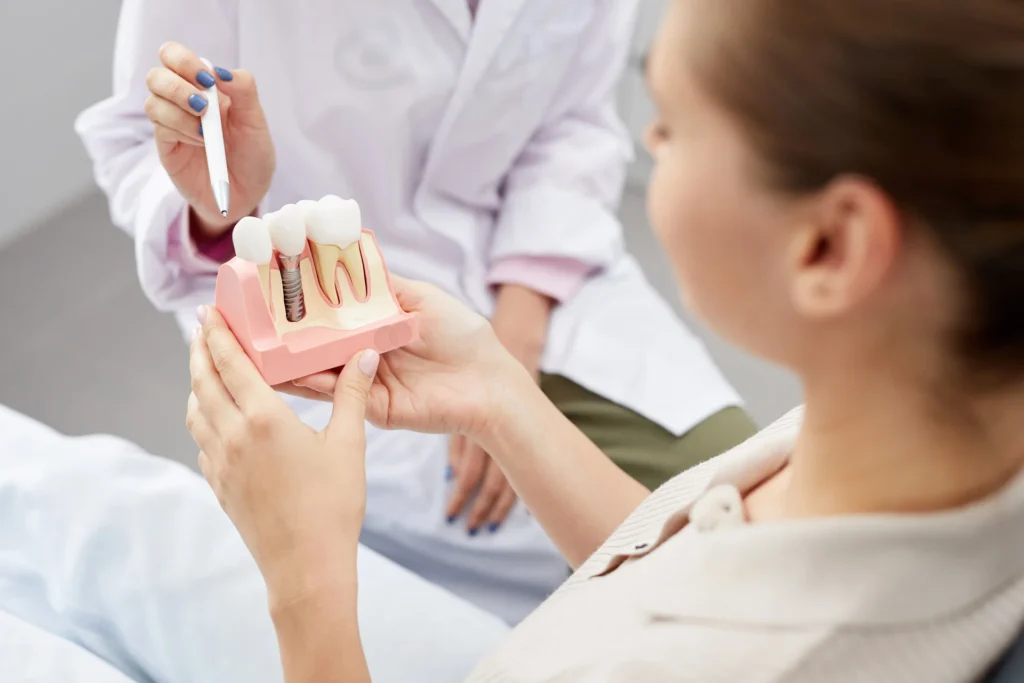
Osseointegration quality forms the foundation of implant success, influenced by bone density, healing capacity, and the precision of initial placement. Patients with conditions like uncontrolled diabetes or those taking certain medications (particularly bisphosphonates for osteoporosis) face higher integration failure rates and require modified treatment protocols. Smoking significantly impairs healing and doubles the risk of implant failure, which is why many practitioners require smoking cessation before treatment.
The implant design and materials also matter considerably. Modern titanium implants feature surface treatments that encourage bone integration, while the crown materials — typically porcelain or zirconia resist wear and staining over decades of use. Proper bite adjustment ensures that chewing forces distribute evenly, preventing the overloading that can cause mechanical failures or bone loss around the implant.
Patient anatomy plays a crucial role that isn’t always apparent during initial consultation. Thin bone walls, proximity to nerves or sinuses, and unusual root positions from the extracted tooth can complicate placement and affect long-term stability. This is why thorough 3D imaging and experienced surgical judgment prove essential for predictable outcomes.
Post-Surgical Care and Managing Complications
Immediately following implant placement, the focus shifts to protecting the surgical site while maintaining oral hygiene in surrounding areas. Most complications that do occur happen within the first few months and relate to infection, excessive force on the healing implant, or poor oral hygiene allowing bacteria to accumulate around the surgical site.
Peri-implantitis represents the most serious long-term complication — essentially gum disease around an implant that can progress to bone loss and implant failure. Unlike natural teeth, implants lack the biological attachment that helps resist bacterial invasion, making consistent oral hygiene even more critical. Patients notice warning signs like bleeding, swelling, or discomfort around the implant, which require immediate professional attention.
Daily care for implant-supported teeth mirrors natural tooth maintenance with some specific considerations. Regular brushing and flossing remain essential, though the technique around the implant crown may require modification to avoid damaging the gum seal. Water flossers prove particularly effective for cleaning around implant restorations. Professional cleanings every six months allow early detection of problems and removal of bacterial buildup that home care might miss.
The investment in proper maintenance pays significant dividends. Well-maintained implants routinely function for 25-30 years or longer, often outlasting the patient’s natural teeth. This durability, combined with the preservation of facial structure and adjacent teeth, explains why many dental professionals consider implants the closest thing to growing a new natural tooth.
Scientific Research and Common Myths About Single Tooth Implants
Decades of clinical research have established dental implants as one of the most predictable procedures in dentistry, yet misconceptions persist that can influence patient decisions. The scientific evidence provides a clearer picture of what patients can realistically expect.
Long-term studies consistently demonstrate implant superiority over alternative treatments. Research published in the Journal of Dental Research tracked patients for 20 years and found that implant-supported crowns maintained their function and appearance with minimal complications, while bridge-supported restorations required significant repairs or replacements in over 60% of cases during the same period. The biological advantage of maintaining bone structure through root replacement proves decisive over extended timeframes.
One persistent myth suggests that implants frequently fail or require replacement after a few years. Actual failure rates tell a different story modern implants placed by experienced practitioners succeed in over 95% of cases, with most failures occurring within the first year due to integration issues rather than long-term mechanical problems. When failures do happen, they’re often related to patient factors like smoking, uncontrolled diabetes, or poor oral hygiene rather than inherent problems with the implant technology.
Another common concern involves pain and complexity of the procedure. Patient satisfaction surveys reveal that most people rate implant surgery as less uncomfortable than tooth extraction, with recovery times typically shorter than patients anticipate. The perception of complexity often stems from the extended timeline rather than difficult individual appointments. the actual surgical procedures are well-established and predictable.
The evidence strongly supports single tooth implants as the optimal replacement option for most patients, particularly when considering the 20-30 year timespan over which these decisions play out. As implant technology continues advancing with improved surface treatments and guided surgical techniques, success rates and patient comfort continue improving. For individuals facing the loss of a single tooth, understanding these evidence-based advantages helps separate marketing claims from clinical reality, enabling decisions that prioritize long-term oral health outcomes over short-term convenience or cost considerations.