

According to the American Dental Association’s 2024 research, adults who maintain consistent dental hygiene routines reduce their risk of cardiovascular disease by up to 24% a connection that extends far beyond what most people associate with brushing and flossing. As healthcare costs continue climbing and preventive medicine gains prominence, the mouth has emerged as a critical window into overall health status. What happens during those six-month checkups and daily two-minute brushing sessions creates ripple effects throughout the body that researchers are only beginning to fully understand.
For the millions of Americans who view dental care as purely cosmetic or limited to preventing cavities, this perspective misses a fundamental reality: the mouth serves as a gateway to systemic health. The bacteria that accumulate between teeth don’t stay confined to oral tissues they enter the bloodstream, trigger inflammatory responses, and influence conditions ranging from diabetes management to cognitive function. Understanding these connections transforms routine dental care from a chore into a strategic health investment with surprising returns.
How Routine Dental Care Benefits Overall Health
The mouth-body connection operates through surprisingly direct pathways that most people never consider. When harmful bacteria from periodontal disease enter the bloodstream through inflamed gum tissue, they trigger systemic inflammation — the same underlying process linked to heart disease, stroke, and diabetes complications. Research from the Harvard School of Public Health demonstrates that individuals with severe gum disease face a 70% higher risk of coronary artery disease compared to those with healthy gums.
The mechanism involves more than just bacterial migration. Chronic inflammation in the mouth elevates C-reactive protein levels throughout the body, creating a state of systemic stress that affects insulin sensitivity and blood vessel function. For diabetics, this creates a particularly problematic cycle: elevated blood sugar worsens gum disease, while gum inflammation makes blood sugar harder to control. The CDC’s 2023 diabetes surveillance data shows that diabetic patients who maintain excellent oral hygiene require 23% less medication adjustment over five-year periods.
- Perhaps most surprising is the emerging research on oral health and cognitive function. The bacteria *Porphyromonas gingivalis, commonly found in severe gum disease, has been detected in the brain tissue of Alzheimer’s patients. While causation isn’t definitively established, multiple studies suggest that maintaining healthy oral bacteria levels through routine care may play a protective role in cognitive aging. Consider someone who diligently flosses and receives regular cleanings throughout their forties and fifties — they’re not just preventing tooth loss, but potentially preserving neurological function decades down the road.
Daily Dental Hygiene Practices and Their Impact
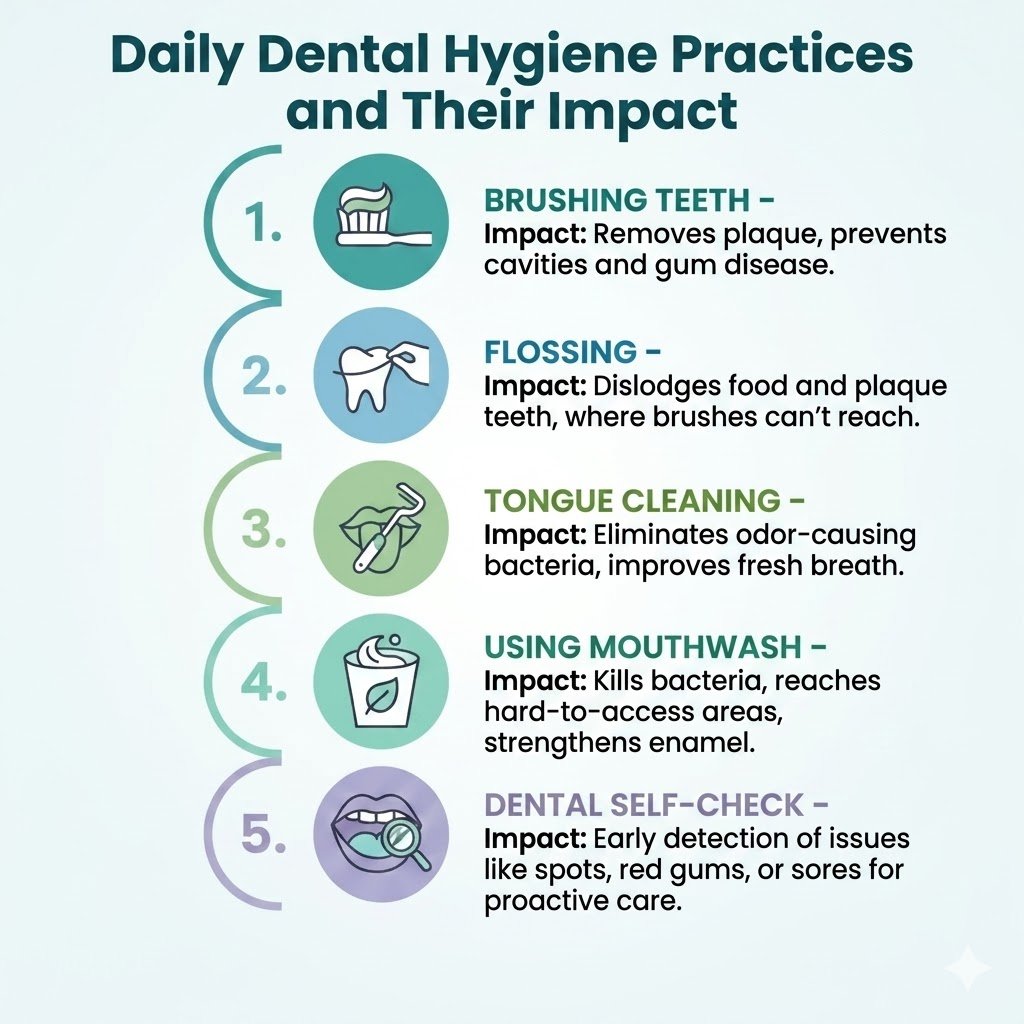
The physiological changes that occur during basic dental hygiene extend well beyond the obvious removal of food particles. Each brushing session disrupts biofilm formation — the sophisticated bacterial communities that would otherwise release toxins directly into gum tissue. Within 24 hours of effective plaque removal, inflammation markers in the mouth begin decreasing, while beneficial bacteria populations start recovering their natural balance.
Role of Flossing and Brushing in Preventing Disease
Brushing primarily targets the easily accessible surfaces where plaque accumulates, but its mechanical action does something equally important: it stimulates blood circulation in the gums. This increased circulation delivers immune cells and nutrients to gum tissue while helping remove metabolic waste products. The two-minute timeframe isn’t arbitrary — it takes approximately 90 seconds of consistent pressure to adequately disrupt established bacterial colonies.
Flossing addresses the 35% of tooth surfaces that brushing can’t reach, but its impact goes beyond simple debris removal. The pressure applied during proper flossing creates microscopic massage effects on gum tissue, promoting the tight seal between teeth and gums that keeps bacteria from penetrating deeper into periodontal spaces. Regular flossers show measurably different inflammatory profiles in their saliva compared to non-flossers, with lower levels of interleukin-1 beta — a key inflammatory marker linked to both gum disease and systemic health problems.
Importance of Tongue Cleaning and Hydration
The tongue’s surface contains thousands of papillae that harbor bacteria and food debris, creating an often-overlooked reservoir of oral health problems. Tongue cleaning reduces the bacterial load that contributes to bad breath, but it also eliminates a source of reinfection that can undermine brushing and flossing efforts. The bacteria removed through tongue scraping would otherwise migrate throughout the mouth, recolonizing recently cleaned areas.
Proper hydration plays an equally crucial role by maintaining saliva production — the mouth’s natural defense system. Saliva contains antimicrobial proteins, neutralizes acid produced by harmful bacteria, and provides minerals that strengthen tooth enamel. Adults who maintain adequate hydration (approximately eight glasses daily) show significantly lower rates of cavity formation and gum disease progression. Dehydration reduces saliva flow, creating an environment where harmful bacteria flourish and tooth decay accelerates.
Recognizing Early Signs and Preventing Dental Problems

Early detection transforms potentially serious dental problems into manageable maintenance issues, but most people miss the subtle warning signs until damage becomes extensive. Healthy gums appear pink and firm, while even slight redness or puffiness indicates inflammation that could progress to irreversible bone loss. The key indicator many overlook is bleeding during brushing or flossing — healthy gum tissue doesn’t bleed under normal oral hygiene pressure.
Plaque accumulation follows predictable patterns that reveal important information about hygiene effectiveness. The areas where plaque consistently reappears between cleanings highlight spots where brushing technique needs improvement or where anatomy creates natural trap zones. Those sticky yellowish deposits along the gum line contain millions of bacteria actively producing acids and toxins. Left undisturbed for 72 hours, this soft plaque hardens into tartar that only professional cleaning can remove.
Bad breath provides another early warning system that most people misinterpret. While morning breath or temporary odors after eating certain foods are normal, persistent halitosis typically indicates bacterial overgrowth in areas that aren’t being adequately cleaned. The sulfur compounds responsible for bad breath are the same ones that damage gum tissue and contribute to tooth decay.
Professional dental visits serve as quality control for home care efforts. During these appointments, practitioners can identify developing problems like small cavities, early gum recession, or bite alignment issues that patients can’t detect themselves. The combination of professional dental checkups and cleanings with vigilant home care creates a comprehensive prevention system that catches problems while they’re still reversible. Many adults discover during routine visits that what they thought was effective home care was missing significant problem areas — information that allows them to adjust their technique before damage accumulates.
Dental Care Routines Adapted for Different Life Stages
Children’s dental needs focus heavily on habit formation and protecting newly erupted permanent teeth. Those first permanent molars that appear around age six have deep grooves that trap food and bacteria, making them particularly vulnerable to decay. Sealant application during this window can prevent up to 80% of molar cavities, but the timing is critical — the protection works best when applied to newly erupted, cavity-free teeth.
Teenage years bring unique challenges as hormonal changes increase gum sensitivity and orthodontic treatments create new cleaning obstacles. Adolescents wearing braces need modified techniques using interdental brushes and water flossers to navigate around brackets and wires. The bacteria that accumulate around orthodontic hardware can cause permanent white spots on teeth if not properly managed, making this period crucial for establishing lifelong oral hygiene habits.
Adult dental care shifts toward maintaining existing dental work and preventing gum disease progression. By age 35, periodontal disease becomes the leading cause of tooth loss, making professional cleanings every six months essential for removing tartar buildup that home care can’t address. Adults also face increased risks from grinding, stress-related jaw clenching, and the cumulative effects of dietary choices made over decades.
Seniors encounter specific challenges including medication-induced dry mouth, decreased manual dexterity, and the need to clean around dental appliances. Many common medications reduce saliva production, creating conditions where tooth decay and gum disease accelerate rapidly. Older adults often benefit from electric toothbrushes and prescription fluoride toothpaste to compensate for these physiological changes while maintaining independence in their oral care.
Emerging Research and Advances in Dental Care
Recent technological developments are transforming both the precision and convenience of routine dental care. Digital imaging now allows practitioners to detect cavities in their earliest stages sometimes before they’re visible on traditional X-rays enabling minimally invasive treatments that preserve more natural tooth structure. Laser therapy for gum disease offers faster healing times and reduced discomfort compared to traditional surgical approaches.
Saliva testing represents another frontier in personalized dental care. These tests can identify specific bacterial strains present in a patient’s mouth, allowing practitioners to recommend targeted treatments and monitor the effectiveness of prevention strategies over time. Some practices now use chairside saliva analysis to determine individual risk levels for cavities and gum disease, tailoring cleaning intervals and home care recommendations accordingly.
The integration of artificial intelligence in dental imaging is beginning to enhance diagnostic accuracy while reducing the time needed for comprehensive examinations. AI-assisted systems can flag potential problems on X-rays and intraoral photos, helping practitioners catch issues that might otherwise be overlooked during busy clinical schedules.
Looking ahead, the field is moving toward increasingly predictive and preventive approaches. Rather than simply treating problems as they arise, future dental care will likely focus on maintaining optimal oral microbiomes through personalized interventions based on genetic testing, lifestyle factors, and real-time bacterial monitoring. For patients committed to routine care, these advances promise even greater returns on their prevention investments — potentially eliminating many of the dental problems that previous generations accepted as inevitable parts of aging.