


Hello. Many of my patients are prescribed Adderall, and it’s a medication that generates a lot of questions. Adderall is a brand name for a combination of amphetamine and dextroamphetamine, which are central nervous system (CNS) stimulants. It is highly effective for specific conditions, primarily Attention Deficit Hyperactivity Disorder (ADHD) and, less commonly, narcolepsy. Because it’s a powerful tool that directly affects brain chemistry, understanding exactly how to use it safely, what to expect, and how to mitigate risks is crucial for maximizing its benefits while minimizing potential harm.
We’ll discuss the science behind how it works, the serious risks associated with misuse, and the practical steps you can take to use this medication responsibly under medical guidance.
What is Adderall and How Does it Affect the Brain?
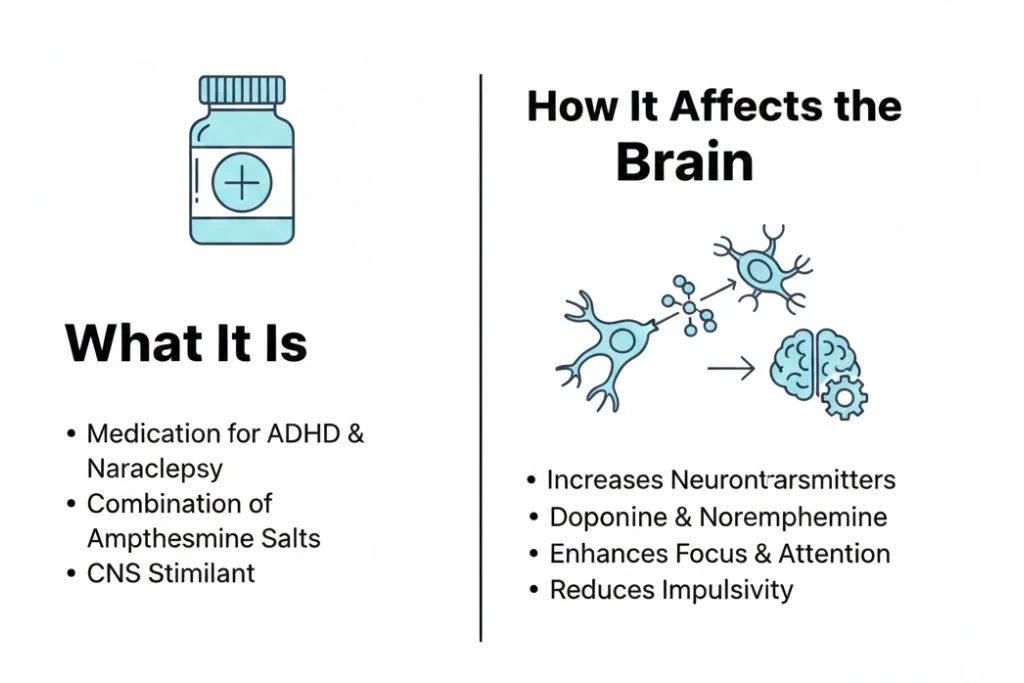
Adderall works by increasing the activity of several brain chemicals, known as neurotransmitters, that are critical for attention, focus, and impulse control.
- Key Neurotransmitters: The drug primarily targets dopamine and norepinephrine.
- Mechanism of Action: Adderall causes these neurotransmitters to be released from storage sites in the nerve endings, and it also blocks their reuptake (reabsorption) back into the nerve cells. The result is a higher concentration of dopamine and norepinephrine in the brain’s synapses, leading to improved communication between nerve cells.
- The Effect in ADHD: In patients with ADHD, this boost helps regulate the prefrontal cortex, the area of the brain responsible for executive functions (planning, organizing, and attention), effectively reducing restlessness and increasing the ability to sustain focus.
Primary Uses and Therapeutic Benefits
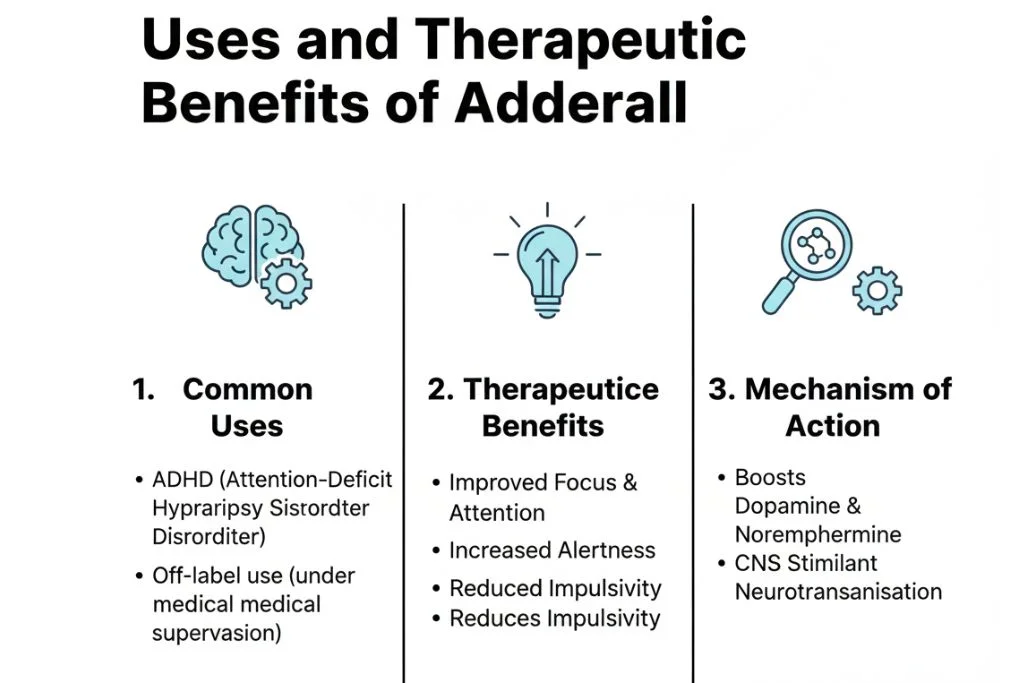
Adderall is prescribed only for specific conditions where stimulant therapy is medically indicated and beneficial.
- Attention Deficit Hyperactivity Disorder (ADHD): This is the most common use. For individuals with ADHD, Adderall can significantly improve core symptoms:
- Reduced inattention and distractibility.
- Improved impulse control.
- Increased ability to complete tasks and follow instructions.
- Clinical Insight: I often hear from parents that the medication doesn’t change their child’s personality, but simply allows them to engage their “brakes” and focus their energy constructively.
- Narcolepsy: Adderall is also approved to treat narcolepsy, a chronic sleep disorder characterized by overwhelming daytime drowsiness and sudden sleep attacks. It helps promote wakefulness and alertness during the day.
Dosage Forms, Schedules, and Safe Use
Adderall comes in two main forms, and the correct form and schedule are vital for maximizing benefit and minimizing side effects.
- Immediate Release (IR): The effects last about 4 to 6 hours. It is often taken 2 to 3 times per day.
- Extended Release (XR): The effects last about 10 to 12 hours. It is taken once daily in the morning.
Safe Dosage Practices
- Start Low, Go Slow: Your doctor will begin with the lowest possible dose to see how your body responds and will gradually increase it until the therapeutic “sweet spot” is found.
- Example: A patient might start at 5 mg IR daily and increase by 5 mg increments every 7 days until the desired effect is achieved without excessive side effects.
- Consistent Timing: Take the dose at the same time every day to maintain a steady effect and reduce sleep interference. Never take the evening dose too late.
- Do Not Crush or Chew XR: The Extended Release formulation is specifically designed to release the drug slowly over time. Crushing or chewing it destroys this mechanism and causes the entire dose to be absorbed at once, leading to a dangerous peak level and severe side effects.
Practical Risks and Common Side Effects
Most people experience some side effects, especially when first starting the medication. These often diminish over the first few weeks.
| Body System | Common Side Effect | Clinical Guidance |
| Cardiovascular | Increased Heart Rate & Blood Pressure | Monitor at home; report sustained increases to your doctor. |
| Gastrointestinal | Decreased Appetite, Weight Loss, Dry Mouth | Schedule meals around dosage peaks; stay well hydrated. |
| Neurological | Insomnia, Nervousness, Headaches | Ensure the last dose is taken early; check caffeine intake. |
| Psychological | Irritability, Rebound Effect (at dose end) | If irritability is persistent, the dose may be too high. |
Long Term Risks and Misuse Concerns
Because Adderall is a Schedule II controlled substance, it carries a significant risk of dependence and misuse.
- Tolerance and Dependence: Over time, the body may build tolerance, requiring higher doses to achieve the same effect. Physical dependence means the body has adapted to the presence of the drug, and stopping abruptly will lead to withdrawal symptoms (fatigue, depression, sleep disturbances).
- Cardiovascular Strain: Sustained increases in heart rate and blood pressure are long term concerns. Anyone starting Adderall should have a baseline ECG and regular blood pressure checks to screen for underlying heart conditions or cardiac strain.
- Misuse Trap: Misusing Adderall (taking more than prescribed, or taking it without a prescription) for weight loss or performance enhancement can lead to severe paranoia, psychosis, dangerously high blood pressure (hypertensive crisis), and addiction.
- Simple Analogy: Think of it like a high-performance engine: it’s great when used properly, but forcing it past its design limits will cause a catastrophic failure.
Simple Risk/Benefit Illustration
| Aspect | Therapeutic Use (ADHD) | Misuse (Performance Enhancement) |
| Brain Function | Normalizes executive function | Overstimulates, depletes dopamine stores |
| Dosage | Titrated slowly to lowest effective dose | High, inconsistent, often combined with alcohol |
| Result | Improved school/work function | Severe sleep deprivation, anxiety, high addiction risk |
When to See a Doctor
Contact your doctor immediately if you experience any of the following:
- Signs of an Allergic Reaction: Hives, swelling of the face, tongue, or throat.
- Cardiovascular Symptoms: Chest pain, severe shortness of breath, unexplained fainting.
- Psychiatric Symptoms: New or worsening anxiety, aggression, paranoia, or hallucinations.
- Severe Side Effects: Uncontrolled tremors or seizures.
Improvement Timeline
It is important to have realistic expectations about when you will notice changes and when side effects might stabilize.
| Time Frame | Expected Changes | What to Monitor |
| Day 1 | Immediate effect on focus; possible dry mouth, headache. | Measure heart rate and blood pressure before and 2 hours after dose. |
| Days 3–7 | Peak appetite suppression; insomnia may improve as body adjusts. | Track food intake and sleep quality. |
| Weeks 2–4 | Side effects usually stabilize; dose may be adjusted if benefits are insufficient. | Academic or professional performance feedback. |
Final Advice
Adderall is a medication that works, but it demands respect. Use it exactly as prescribed, maintain open communication with your physician, and never share it with others. Responsible use means prioritizing your overall health, including nutrition and sleep, to support the medication’s therapeutic effects.
Medical Disclaimer
The information provided in this article is for informational purposes only and is not intended as medical advice, diagnosis, or treatment. It is not a substitute for professional medical care. Always seek the advice of a qualified healthcare provider with any questions you may have regarding a medical condition, the use of stimulants (including starting, stopping, or managing side effects of Adderall), or any concerns about dependence or misuse. Do not stop or change any prescribed medication without consulting your prescribing physician.
References
- U.S. Food and Drug Administration (FDA). (2023). Adderall (Amphetamine and Dextroamphetamine) prescribing information.
- Volkow, N. D., et al. (2014). The neuropharmacology of stimulants and its impact on addiction. Biological Psychiatry.
- Cortese, S., et al. (2020). Comparative efficacy and tolerability of medications for ADHD in children, adolescents, and adults. The Lancet Psychiatry.
- National Institute on Drug Abuse (NIDA). (2020). Misuse of Prescription Drugs.
- Wilens, T. E., et al. (2016). Cardiovascular effects of stimulant medications. Journal of the American Academy of Child and Adolescent Psychiatry.
- Faraone, S. V., et al. (2009). The genetics of Attention Deficit Hyperactivity Disorder. Human Genetics.
- Kooij, J. J. S., et al. (2019). European consensus statement on diagnosis and treatment of adult ADHD: The European Network Adult ADHD guidelines. BMC Psychiatry.