

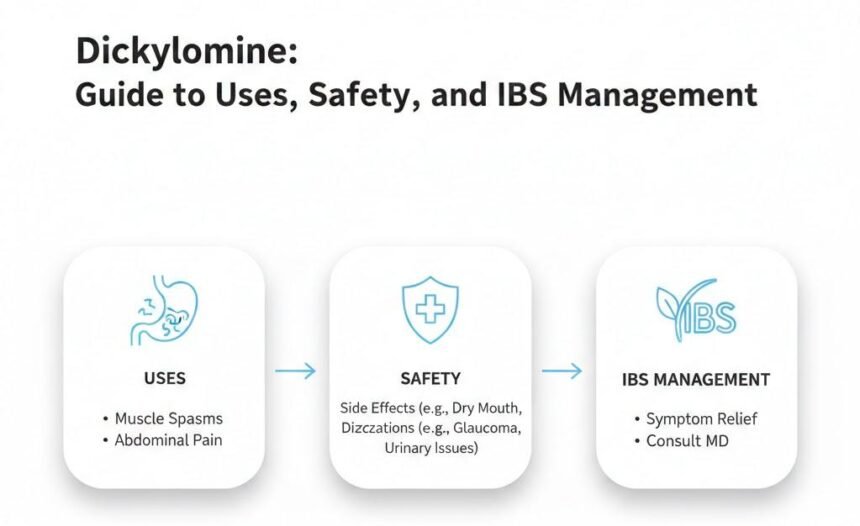
Many patients with Irritable Bowel Syndrome (IBS) are prescribed dicyclomine, commonly known by the brand name Bentyl. This medication is an antispasmodic that calms the overactive muscles of the gut. When IBS causes sudden, painful spasms or cramps, dicyclomine can provide rapid and effective relief.
While it is excellent for acute episodes, it does not treat the underlying causes of IBS. Its mechanism of action extends beyond the gut, so understanding potential side effects is essential for safe use.
What is Dicyclomine and How Does it Affect the Gut?
Dicyclomine is an anticholinergic medication that blocks the action of the neurotransmitter acetylcholine. Acetylcholine stimulates the smooth muscles of the digestive tract, causing contractions that can lead to cramps.
By blocking acetylcholine receptors in the gut, dicyclomine relaxes the intestinal muscles, stopping painful gastrointestinal spasms. This mechanism makes it an effective antispasmodic.
Primary Uses and Therapeutic Benefits
Dicyclomine primarily manages the physical discomfort of gastrointestinal dysfunction.
- Irritable Bowel Syndrome (IBS): It is most commonly used to relieve abdominal pain, cramping, and bloating caused by muscle spasms. It is most effective when taken before meals or at the onset of a painful episode.
- Other Functional Bowel Disorders: Dicyclomine may also help in some instances of diverticulitis or biliary colic, where muscle spasm is the primary source of pain.
- Rapid Relief: Its main benefit is speed. Painful spasms can subside within an hour, giving patients relief during acute flare-ups. Clinically, it can be thought of as a “rescue inhaler” for the gut, helpful for social events, work meetings, or other activities where IBS symptoms may be triggered.
Dosage Forms, Schedules, and Safe Use
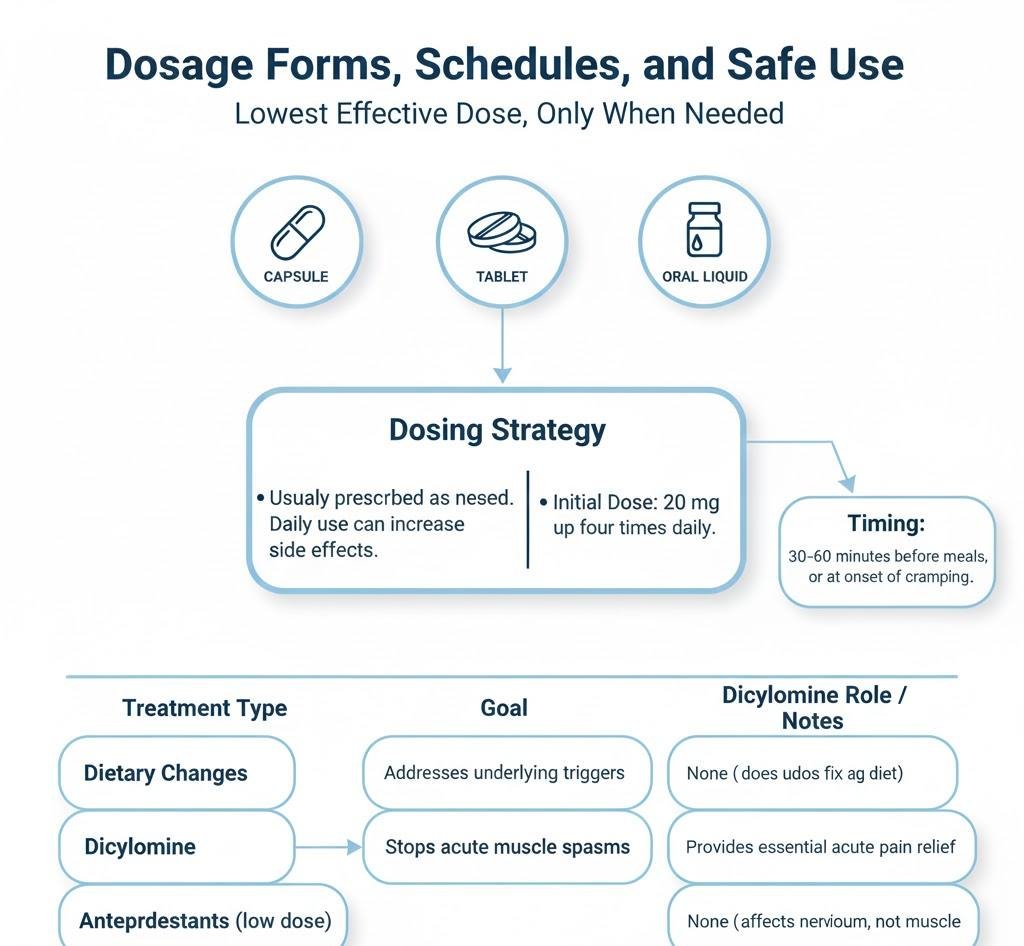
Dicyclomine is available as capsules, tablets, and oral liquid. Safe use involves taking the lowest effective dose only when needed.
- Dosing Strategy: Usually prescribed as needed. Daily use can increase side effects and risk of tolerance.
- Initial Dose: Typically 20 mg up to four times daily, adjusted based on response.
- Timing: Take 30–60 minutes before meals for meal-induced spasms, or at the onset of cramping.
| Treatment Type | Goal | Dicyclomine Role / Notes |
|---|---|---|
| Dietary Changes | Addresses underlying triggers | None (does not fix diet) |
| Dicyclomine | Stops acute muscle spasms | Provides essential acute pain relief |
| Antidepressants (low dose) | Calm pain signals from the gut to the brain | None (affects the nervous system, not the muscle) |
Practical Risks and Common Side Effects
Because it is anticholinergic, dicyclomine affects acetylcholine receptors throughout the body, not just the gut:
- Dry Mouth: Reduced saliva production.
- Blurred Vision: Affects the muscles controlling the eye lens, causing temporary difficulty with near vision.
- Constipation: Slowed gut motility can worsen or cause constipation.
- Dizziness and Drowsiness: Sedation may occur; avoid driving or operating machinery.
- Urinary Retention: Can relax bladder muscles and tighten the sphincter, particularly in older men with prostate enlargement.
Long-Term Risks and Misuse
Although not addictive, chronic use carries risks:
- Tolerance: Long-term daily use may reduce effectiveness.
- Cognitive Impact: In older adults, chronic anticholinergic use can contribute to confusion, memory problems, and possible cognitive decline.
- Masking Serious Conditions: Using dicyclomine to stop pain without proper evaluation may hide severe conditions like appendicitis or bowel obstruction.
When to See a Doctor
Seek immediate medical attention if you experience:
- Severe, unexplained abdominal pain, especially with fever or vomiting.
- Worsening constipation or inability to pass gas.
- Signs of allergy: hives, swelling, difficulty breathing.
- Severe side effects: unmanageable blurred vision or urinary difficulties.
Improvement Timeline
Dicyclomine provides rapid relief for acute episodes:
| Time Frame | Expected Observation | Practical Advice |
|---|---|---|
| 30–60 minutes | Onset of muscle relaxation; cramping begins to subside | Take at the first sign of a flare or before a known trigger meal |
| 1–2 hours | Peak pain relief | Avoid increasing the dose; let it reach full effect |
| 4–6 hours | Duration of relief | Another dose may be taken if needed, within prescribed limits |
Final Advice
Dicyclomine is a potent tool for acute IBS-related muscle spasms. Use it on an “as needed” basis while focusing on long-term strategies like dietary changes, stress reduction, and lifestyle modifications. It treats symptoms, not the root cause, but can significantly improve quality of life when used responsibly.
Medical Disclaimer: This information is for educational purposes only and is not a substitute for professional medical advice. Consult a healthcare provider with questions about medical conditions or medication use. Do not stop or change prescribed medications without professional guidance.