

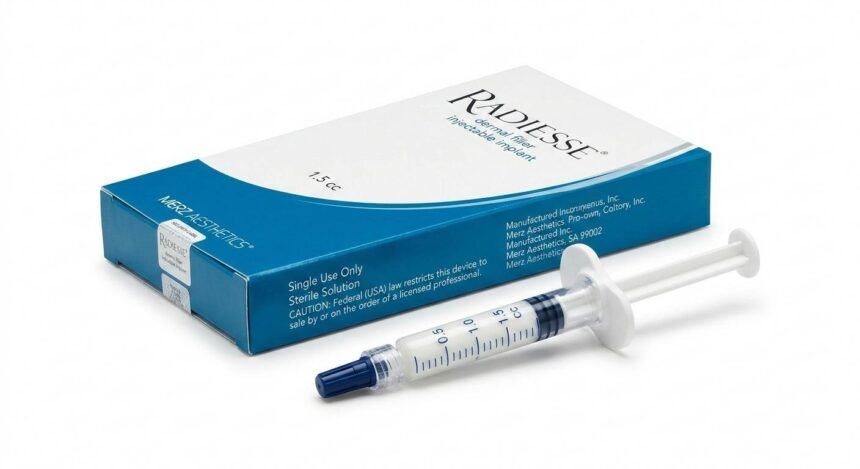
Let’s be real for a moment, nobody enters the medical aesthetics industry hoping to become a detective. You went to school to sculpt jawlines, soften nasolabial folds, and boost your patients’ confidence, not to scrutinize holographic stickers like a TSA agent. But here’s the uncomfortable truth landing on treatment tables across the Lone Star State: counterfeit Radiesse® is circulating, and it’s getting harder to spot.
Texas, with its sprawling geography and booming medspa culture, has become a prime hunting ground for counterfeiters. From Houston to Dallas, Austin to El Paso, the demand for calcium hydroxylapatite-based fillers remains sky-high. And where demand surges, supply chain predators follow. Even seasoned injectors, professionals with a decade of experience, have unboxed what looked like legitimate product, only to watch patients develop complications that made their stomachs drop.
So, how do you protect your practice, your license, and the faces trusting you with their care? You stop treating supply chain verification as an afterthought and start treating it as clinical protocol. Here’s your Texas-sized guide to buying real Radiesse® without getting burned.
Growing Threat: Why Fake Radiesse® Is Flooding the Texas Market
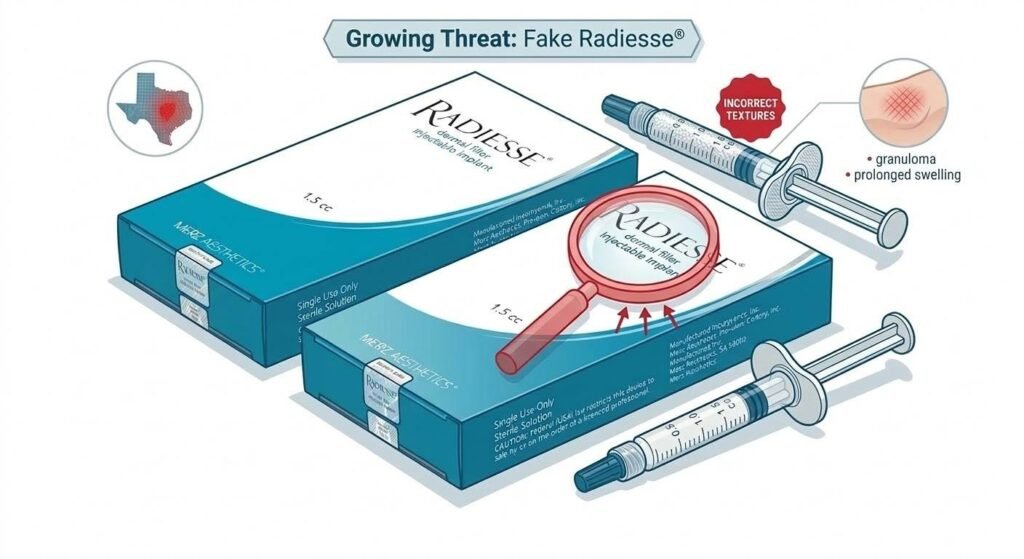
Counterfeiters aren’t targeting the small-time operator buying a single syringe for a friend. They’re going after high-volume clinics ordering cases at a time. The profit margins on fake filler are obscene; we’re talking manufacturing costs measured in pennies sold at premium prices. And because Radiesse® enjoys such a sterling reputation for longevity and biostimulatory effects, it’s become a favorite target for duplication.
What’s genuinely terrifying is the level of sophistication. We’re not talking about blurry labels and obvious misspellings anymore. Modern counterfeit Radiesse® arrives in packaging that, at first glance, mirrors the real thing. The boxes have similar weights. The syringes feel authentic in your hand. The lot numbers might even scan initially. It’s only when you understand what genuine Radiesse® should look and act like that cracks begin to show. A deeper analysis of the composition and behavior of the authentic product can significantly sharpen your eye for authenticity. Reviewing the clinical context surrounding dermal fillers is an excellent way to understand what to look for.
The scariest part? Several Texas injectors only discovered they’d been duped after patients returned with granulomas, prolonged swelling, or product that didn’t perform as expected. By then, the damage was done, both medically and reputationally.
Red Flags at a Glance: Spotting Counterfeit Radiesse® Before You Inject
Let’s walk through your unboxing ritual, because that sixty seconds between opening the shipping box and priming the syringe might be the most critical moment in your entire treatment protocol.
Packaging tells the story. Genuine Radiesse® packaging features crisp printing, precise color matching, and holographic elements that shift when tilted. Counterfeiters struggle to replicate these details consistently. Run your finger over the text. Legitimate packaging has a certain tactile quality. Check the lot number and expiration date stamping; authentic products use consistent font sizes and pressure impressions, while fakes often look slightly smudged or misaligned.
The product itself doesn’t lie. Radiesse® has a specific viscosity, a smooth, uniform gel consistency that experienced injectors recognize immediately. If you extrude a tiny amount during priming and notice grittiness, separation, or unusual resistance, stop everything. Some counterfeit products have been found to contain everything from industrial silicone to unsterilized hyaluronic acid mixed with who-knows-what. It’s also worth understanding the versatility of authentic Radiesse®, particularly how it behaves when diluted for different treatment applications. The predictable performance characteristics of authentic dermal fillers demonstrate a level of reliability that counterfeit versions cannot replicate.
Trust your nose. This sounds almost too simple to mention, but multiple injectors who’ve encountered counterfeit products report a distinct chemical odor upon opening. Genuine Radiesse® is virtually odorless. If it smells like nail polish remover or industrial adhesive, your “supplier” just handed you a lawsuit waiting to happen.
Sourcing Smart: How to Vet a Radiesse Supplier in Texas
Here’s where we separate the savvy practitioners from the cautionary tales. When searching for a legitimate radiesse supplier, Texas injectors must look beyond the price tag and demand proof of origin. The grey market thrives on one thing: your desire to save a few dollars per syringe. But let’s do the math together. Saving fifty bucks on a case of filler seems like smart business until you’re facing a single malpractice claim that wipes out a decade of profits.
Start by asking the hard questions before you wire a dime. Where does the supplier source their inventory? Are they authorized distributors for Merz Aesthetics? Can they provide documentation tracing each batch back to the manufacturer? Legitimate suppliers welcome these questions because they have nothing to hide. The shady operators? They’ll deflect, rush you, or offer “deals” that expire in the next twenty-four hours.
Also, verify their physical presence. A real Radiesse supplier operating in Texas has a physical address, licensed staff, and typically a track record you can verify through professional networks. If their “headquarters” is a P.O. box and their customer service number routes to a voicemail with generic music, run.
Compliance Angle: Protecting Your License and Your Patients
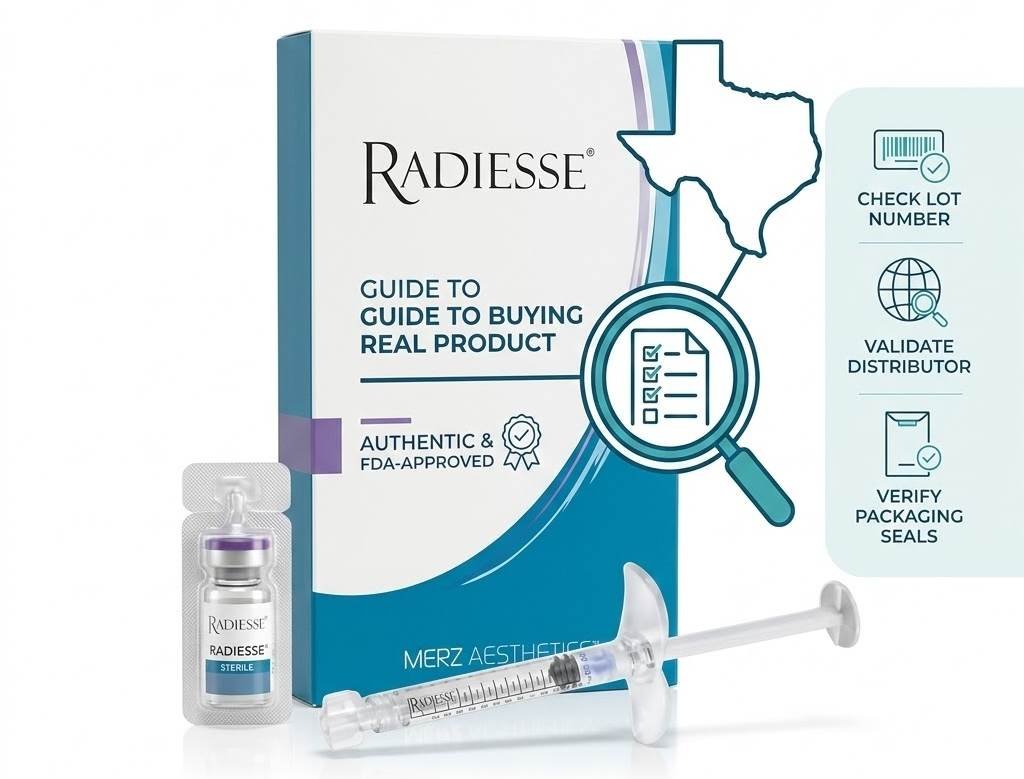
Let’s shift gears into territory that makes most injectors uncomfortable, regulatory compliance and liability. Here’s the brutal truth no one likes to discuss at industry happy hours: if you inject counterfeit product, even unknowingly, you bear responsibility for the outcome. The Texas Medical Board doesn’t accept “but my supplier seemed legit” as a defense when patients file complaints.
Every syringe you purchase needs a paper trail. I’m talking about invoices with clear lot numbers, chain-of-custody documentation, and verifiable proof of cold-chain shipping compliance. Radiesse® requires specific temperature controls during transport. If your “deal” arrived via standard ground shipping in an unmonitored box, that product’s integrity is already compromised, regardless of authenticity.
Beyond the legal exposure, consider what counterfeit injections do to patient trust. A single complication traced back to your practice spreads through review sites, professional networks, and community word of mouth faster than wildfire through West Texas brush. Many respected practitioners incorporate Radiesse® alongside other modalities for comprehensive facial rejuvenation. Top-tier professionals approach product selection with patient safety as the non-negotiable foundation.
Safe Harbor: A Trusted Radiesse Supplier Doing the Vetting for You
Wouldn’t it be refreshing to offload all this anxiety onto someone else? To order, knowing that the verification work happened before the product ever reached your door? That’s the philosophy behind a truly reliable distribution partnership.
The right partner functions as your supply chain security team. Every batch of authentic product moving through their network undergoes verification protocols that mirror what you’d do yourself if you had unlimited time and resources. We’re talking direct sourcing from authorized channels, rigorous cold-chain maintenance from warehouse to delivery, and complete transparency on lot numbers and expiration dates.
For injectors tired of playing detective every time they restock, having a wholesale partner who treats authenticity as seriously as you treat patient outcomes changes everything. The right distributor doesn’t just ship product; they provide the documentation trail that keeps compliance officers happy and patients safe.
Don’t Gamble with Your Reputation
Here’s the bottom line, and I need you to really absorb this: your reputation took years to build and approximately thirty seconds to destroy. Counterfeit Radiesse® isn’t just a bad product; it’s an existential threat to everything you’ve worked for. The patients walking through your door trust you with their faces. They trust that the substance entering their skin is exactly what the label claims. Violating that trust, even through negligence rather than intent, leaves scars that don’t fade.
So inspect every box. Question every deal that seems too good to be true. Vet every supplier like your license depends on it, because it absolutely does. And when you find a distribution partner who shares your commitment to authenticity, hold onto them. The peace of mind alone is worth more than any discount a grey-market operator could ever offer.
Stay sharp, Texas. Your patients are counting on you.
Conclusion
The proliferation of counterfeit dermal fillers, including calcium hydroxylapatite-based products such as Radiesse®, represents one of the most pressing patient safety challenges facing medical aesthetic practitioners in Texas and beyond. As this guide has outlined, the threat is no longer confined to obvious forgeries but has evolved into sophisticated supply-chain fraud that can deceive even experienced injectors. The consequences, ranging from granuloma formation and persistent inflammatory reactions to irreversible reputational and legal harm, underscore the non-negotiable importance of rigorous sourcing protocols.
Practitioners must adopt a proactive, compliance-first mindset that treats product authentication as an integral component of the clinical workflow rather than a peripheral administrative concern. This means demanding verifiable chain-of-custody documentation, purchasing exclusively through authorized distribution networks, and maintaining meticulous lot-number records for every syringe administered. These steps are not bureaucratic burdens; they are the professional standard of care that patients deserve, and regulatory bodies expect.
Ultimately, the safety and efficacy of any injectable procedure begin long before the needle touches skin. It begins the moment a practitioner chooses where, and from whom, to source their materials. By anchoring supply-chain decisions in evidence-based verification rather than price-driven convenience, Texas injectors can uphold the trust their patients place in them, protect the integrity of their practice, and contribute to a culture of accountability that elevates the entire aesthetic medicine profession.
References
1. Funt D, Pavicic T. Dermal fillers in aesthetics: an overview of adverse events and treatment approaches. Clin Cosmet Investig Dermatol. 2013;6:295–316. https://doi.org/10.2147/CCID.S50546
2. Rohrich RJ, Bartlett EL, Dayan E. Practical approach and safety of hyaluronic acid fillers. Plast Reconstr Surg Glob Open. 2019;7(6):e2172. https://doi.org/10.1097/GOX.0000000000002172
3. Wollina U, Goldman A. Fillers for improving hand aesthetics and rejuvenation. Dermatol Ther. 2011;24(1):63–66. https://doi.org/10.1111/j.1529-8019.2010.01382.x
4. Bassichis B, Blick G, Conant M, et al. Injectable poly-L-lactic acid for human immunodeficiency virus-associated facial lipoatrophy: open-label study of efficacy, tolerability, and quality of life. Dermatol Surg. 2012;38(7pt2):1193–1205. https://doi.org/10.1111/j.1524-4725.2012.02378.x
5. Alam M, Gladstone H, Kramer EM, et al. ASDS guidelines of care: injectable fillers. Dermatol Surg. 2008;34(S1):S115–S148. https://doi.org/10.1111/j.1524-4725.2008.34253.x
6. Lemperle G, Morhenn V, Charrier U. Human histology and persistence of various injectable filler substances for soft tissue augmentation. Aesthetic Plast Surg. 2003;27(5):354–366. https://doi.org/10.1007/s00266-003-3022-1
7. Carruthers J, Carruthers A. A prospective, randomized, parallel group study analyzing the effect of BTX-A (Botox) and non-animal sourced hyaluronic acid (NASHA, Restylane) in combination compared with NASHA (Restylane) alone in severe glabellar rhytides in adult female subjects. Dermatol Surg. 2003;29(8):802–809. https://doi.org/10.1046/j.1524-4725.2003.29212.x
8. U.S. Food and Drug Administration. Counterfeit medical products. FDA. Published 2023. https://www.fda.gov/safety/counterfeit-medicine
9. Nicolau PJ. Long-lasting and permanent fillers: biomaterial influence over host tissue response. Plast Reconstr Surg. 2007;119(7):2271–2286. https://doi.org/10.1097/01.prs.0000260712.43354.09
10. Vleggaar D, Fitzgerald R, Lorenc ZP. Composition and mechanism of action of a new filler. J Drugs Dermatol. 2014;13(4 Suppl):s29–s31. PMID: 24719060
11. Texas Medical Board. Standards of practice and rules. Texas Medical Board. https://www.tmb.state.tx.us/page/rules-statutes
12. Sundaram H, Rohrich RJ, Liew S, et al. Cohesivity of hyaluronic acid fillers: development and clinical implications of a novel assay, pilot validation with a five-point grading scale, and evaluation of six U.S. Food and Drug Administration-approved fillers. Plast Reconstr Surg. 2015;136(4):678–686. https://doi.org/10.1097/PRS.0000000000001638
13. Merz Aesthetics. Radiesse® (calcium hydroxylapatite) injectable implant: directions for use. Merz North America; 2022.
14. World Health Organization. WHO global surveillance and monitoring system for substandard and falsified medical products. WHO, 2017. https://www.who.int/publications/i/item/9789241513425
15. Baumann L, Weiss RA. The relationship between cold chain management and the efficacy of injectable cosmetic products. J Cosmet Dermatol. 2021;20(4):1048–1053. https://doi.org/10.1111/jocd.13921