

As we age, our skin and underlying tissues undergo natural changes. Reduced collagen production, the effects of gravity, and shifting fat volumes lead to skin laxity, particularly around the jawline, jowls, and neck. These changes can make the face appear tired or sagging, even in otherwise healthy adults.
For many, a surgical facelift is the only option for a noticeable lift. However, not everyone wants extensive surgery or long downtime. FaceTite offers a minimally invasive solution that combines fat reduction, tissue tightening, and collagen stimulation using advanced radiofrequency technology.
How FaceTite Works: Science Explained
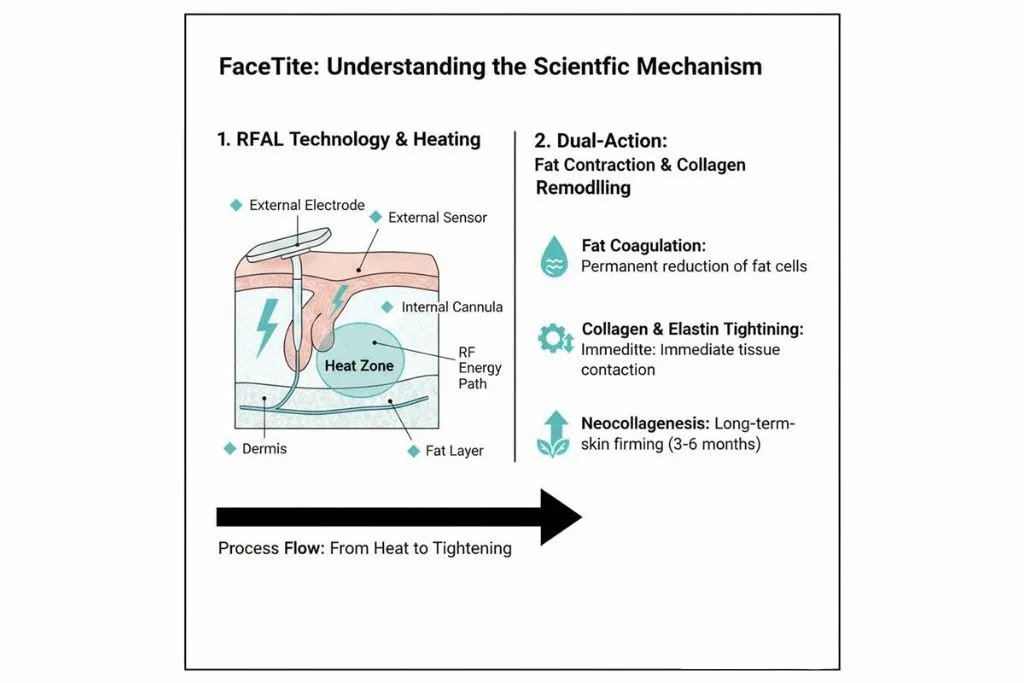
FaceTite is an FDA-cleared procedure that uses Radiofrequency Assisted Lipolysis (RFAL) to melt fat and tighten skin simultaneously. Unlike creams or non-invasive treatments, FaceTite works at the subdermal and deep tissue level, providing meaningful contouring and skin contraction.
Role of Radiofrequency Energy
Radiofrequency (RF) energy generates heat, which triggers three key effects:
- Fat Liquefaction – Heat melts unwanted fat, making it easier to remove if needed.
- Immediate Collagen Contraction – The heat shrinks collagen fibres for instant tightening.
- Neocollagenesis – Stimulates the body to produce new collagen, improving skin quality over several months.
Tip from Experts: Dr Mulholland, a leading cosmetic surgeon, emphasises that controlled temperature is critical. Too low will be ineffective; too high risks burns. FaceTite’s internal probe ensures precise heating for safety and results.
FaceTite Procedure: Step by Step
FaceTite is performed in an outpatient setting, usually with local anaesthesia or light sedation, and typically takes 1-2 hours depending on the area treated.
Pre-Procedure Preparation
| Step | Action | Purpose |
|---|---|---|
| Consultation | Discuss medical history, goals, and take photos | Ensure patient is a suitable candidate and manage expectations |
| Medication Hold | Stop blood thinners like aspirin or NSAIDs 1-2 weeks before | Reduce bruising and bleeding risk |
| Hydration | Drink plenty of water | Optimize tissue health for better recovery |
During the Procedure
Step 1: Anaesthesia
- Local tumescent anaesthesia is injected into treatment areas such as the jowls, submental chin, and neck.
- Helps with comfort and reduces bleeding.
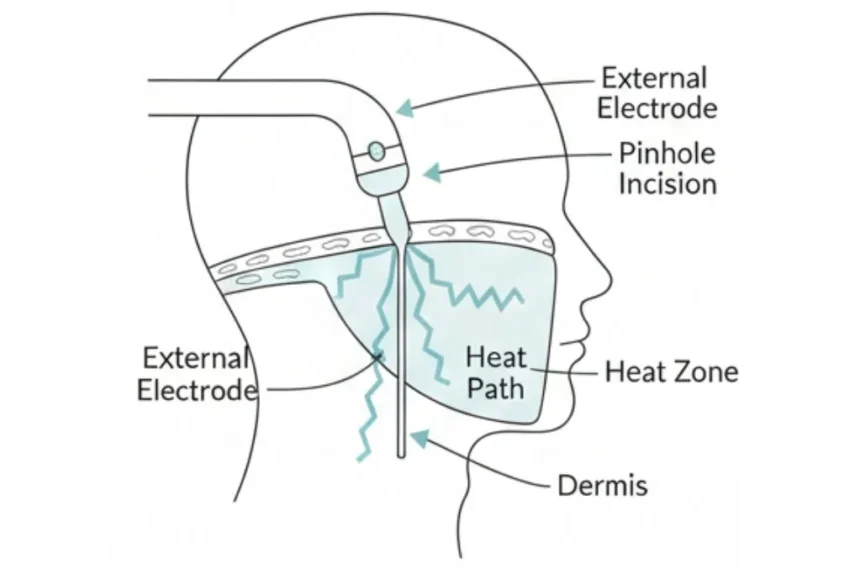
Step 2: Cannula Insertion
- Micro-incisions (<3 mm) are made, usually behind the earlobe or under the chin.
- The FaceTite cannula delivers RF energy to deep fat and dermis while a surface electrode monitors skin temperature.
Step 3: Fat Removal (Optional)
- If significant submental fat exists, liquefied fat is gently aspirated.
- For many patients, the primary benefit comes from skin contraction, not fat removal alone.
Step 4: Post-Procedure Care
- Incisions are closed with a single suture or sterile tape.
- A compression garment is applied immediately to reduce swelling and encourage skin redraping.
Recovery and Timeline of Results
FaceTite offers faster recovery than a traditional facelift, but some downtime is still expected.
| Timeframe | Expected Outcome | Explanation |
|---|---|---|
| Day 1-7 | Swelling and bruising; initial tightness | Trauma and inflammation response; immediate collagen contraction |
| 1 Month | 20-30% of final results visible | Swelling decreases; initial skin contouring becomes noticeable |
| 3-6 Months | Noticeable definition and skin quality improvement | Peak period of new collagen production (neocollagenesis) |
| 1 Year | Final, stable results | Long-term remodeling and collagen maturation |
Patient Insight: Many patients report feeling tighter skin immediately, but the full effect continues to improve over months as collagen rebuilds.
Comparing Facial Rejuvenation Options
Not all treatments address moderate skin laxity equally. Here’s a simple comparison:
| Method | Degree of Laxity | Invasiveness | Typical Downtime |
|---|---|---|---|
| Topical Creams | Minimal | Non-invasive | None |
| HIFU / Ultherapy | Mild to moderate | Non-invasive | 1 day |
| FaceTite (RFAL) | Moderate to significant | Minimally invasive | 3-7 days |
| Surgical Facelift | Severe | Surgical | 2-4 weeks |
Key takeaway: FaceTite fills the gap for those who want more than non-invasive tightening but are not ready for full surgery.
Tips for Maximising FaceTite Results
- Choose an Experienced Provider – Board-certified plastic surgeons or dermatologists with RFAL experience reduce risks and improve outcomes.
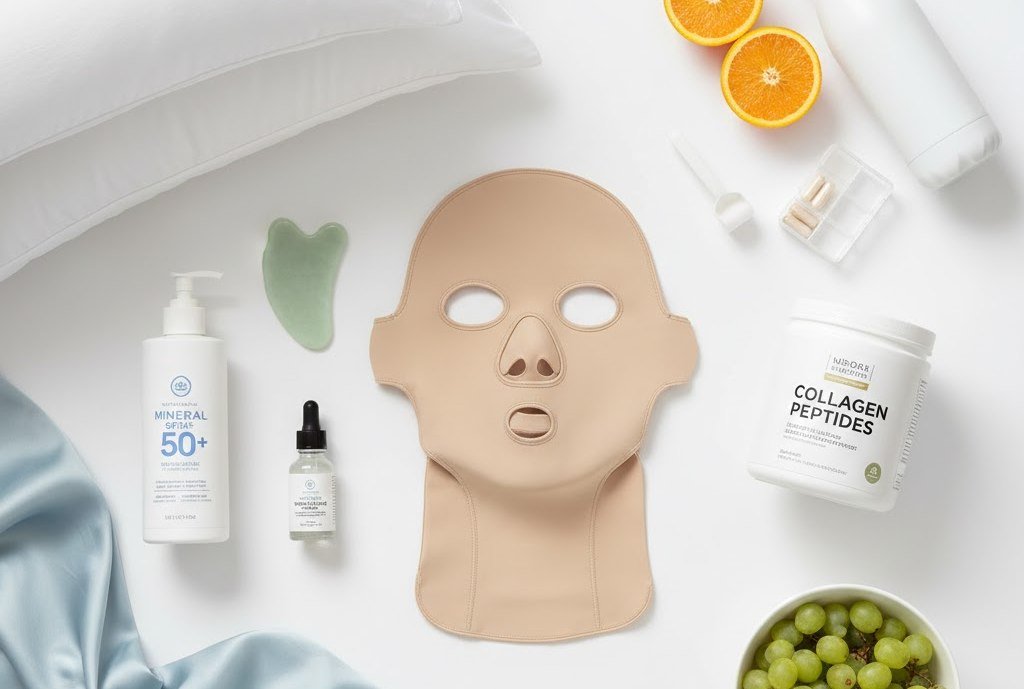
- Follow Compression Instructions – Wearing compression garments as recommended improves skin contraction.
- Maintain Healthy Habits – Hydration, proper nutrition, and avoiding smoking support recovery and skin quality.
- Be Patient – Collagen remodelling takes months; the best results appear gradually.
- Combine with Non-Invasive Treatments – Some patients benefit from complementary treatments like gentle laser resurfacing for skin texture.
Risks and When to See a Doctor
FaceTite is generally safe, but contact your provider if you experience:
- Increasing redness, warmth, or discharge
- Severe pain not relieved by medication.
- Swelling or firmness in one area (possible hematoma)
- Nerve symptoms like facial weakness or asymmetry
Expert Note: Complications are rare, but prompt evaluation ensures safe recovery.
Who Is an Ideal Candidate?
FaceTite is best for adults with:
- Moderate skin laxity in the lower face, jawline, or neck
- Desire for noticeable results without major surgery
- Realistic expectations about gradual improvement
- Good general health and no contraindications for local anaesthesia or RF energy
Example
One patient in her late 40s wanted jawline definition but was hesitant about surgery. She underwent FaceTite under local anaesthesia:
- Immediate tightening was felt during the procedure
- Mild bruising and swelling resolved within a week
- By three months, her jawline and neck looked smoother, and her face appeared lifted
- She avoided the downtime and scarring of a surgical facelift
Frequently Asked Questions
Q: Is FaceTite painful?
A: Most patients report minimal discomfort due to local anaesthesia. Some soreness or tightness can persist for a few days.
Q: How long do results last?
A: Results are long-lasting, especially when combined with a healthy lifestyle. Aging will continue naturally.
Q: Can FaceTite replace a surgical facelift?
A: FaceTite is ideal for moderate laxity. Severe sagging still requires surgery.
Q: Is there scarring?
A: Incisions are tiny (<3 mm) and usually heal with minimal to no visible scar.
Q: Can FaceTite be combined with other procedures?
A: Yes. Many patients combine it with liposuction, fat grafting, or skin resurfacing for enhanced results.
Final Advice
FaceTite provides a safe, minimally invasive, and effective alternative for facial contouring and skin tightening.
The keys to success:
- Work with a skilled provider
- Follow all pre- and post-care instructions
- Be patient for the full results
- Focus on gradual, natural-looking improvement rather than dramatic overnight change
For those seeking more definition and a lifted appearance without surgery, FaceTite is a powerful tool in modern aesthetic medicine.
Medical Disclaimer
This article is for educational purposes only and is not a substitute for professional medical advice. Consult a qualified, board-certified plastic surgeon or dermatologist before considering any cosmetic procedure.
References
- Mordon, S. R. (2010). Radiofrequency Ablation: Principles and Clinical Applications. Medical Devices: Evidence and Research.
- Mulholland, R. S. (2007). Radiofrequency-assisted lipolysis (RFAL) for facial and neck contouring—Journal of Cosmetic and Laser Therapy.
- Weiss, R. A., & Weiss, M. A. (2009). The role of radiofrequency in aesthetic medicine. Clinics in Dermatology.
- InMode Ltd. (2024). FaceTite technology and clinical documentation.