

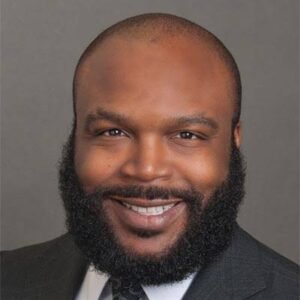
Dr. Gregory Elders, MD Orthopedic Spine Surgeon and Spine Care
Dr. Gregory Elders, MD, is a board-certified orthopedic surgeon with fellowship training in spine surgery. His professional background centers on conditions affecting the cervical, thoracic, and lumbar spine, including problems that can cause persistent back or neck pain, nerve compression, weakness, numbness, and reduced mobility. He earned his medical degree from the University of Michigan Medical School, completed orthopedic surgery training at Henry Ford Hospital, and later completed an advanced spinal surgery fellowship at the Texas Back Institute.
For patients, meeting an orthopedic spine surgeon does not automatically mean an operation is the next step. A useful spine consultation connects symptoms with the physical examination and imaging before deciding whether physical therapy, medication, injections, continued observation, or surgery offers the most reasonable path.
About Dr. Gregory Elders
Dr. Elders is a fellowship-trained orthopedic and spine surgeon practicing with Texas Bone and Joint. Current professional information identifies orthopedic surgery as his specialty and confirms more than two decades of experience in the field. (Texas Bone and Joint)
His training makes him particularly relevant for patients whose symptoms appear to come from the structural components of the spine, such as vertebrae, discs, joints, or areas where spinal nerves become compressed.
This is different from assuming that every episode of back pain requires surgical care. Many spinal problems improve without an operation. The surgeon’s role includes identifying which patients may benefit from surgery and, equally importantly, which patients are better served by nonsurgical treatment.
Patients trying to understand where spine surgery fits into the wider treatment process can read about when to review surgery options with a spine doctor.
Education and Orthopedic Training
Dr. Elders graduated with honors from the University of Michigan Medical School in 1999. He completed orthopedic surgery residency training through Henry Ford Hospital, where his professional biography reports that he served as chief resident. He then completed advanced fellowship training in spinal surgery at the Texas Back Institute.
| Training Area | Institution | Details |
|---|---|---|
| Medical education | University of Michigan Medical School | Doctor of Medicine, honors graduate |
| Residency | Henry Ford Hospital | Orthopedic Surgery |
| Residency leadership | Henry Ford Hospital | Chief resident |
| Fellowship | Texas Back Institute | Advanced spinal surgery |
| Specialty | Orthopedic Surgery | Spine-focused orthopedic care |
The progression from general orthopedic residency to a dedicated spine fellowship is important for patients. Orthopedic training covers bones, joints, muscles, injuries, and the musculoskeletal system, while spine fellowship training concentrates more closely on disorders affecting spinal anatomy and the nerves that travel through it.
Board Certification and Professional Credentials
Dr. Elders is identified by his current practice and HCA profile as a board-certified, fellowship-trained orthopedic and spine surgeon. His current provider record lists NPI 1669479861.
Board certification and fellowship training represent different parts of a surgeon’s background. Board certification reflects specialty-level orthopedic training and professional certification requirements. Fellowship training provides additional concentrated experience in spinal conditions and procedures after residency.
For a patient considering spine surgery, credentials are only part of the decision. It is also helpful to understand what is causing the symptoms, whether the proposed operation addresses that cause, what nonsurgical options remain, and what recovery may involve.
Back Pain That May Need a Spine Evaluation
Back pain is common, but not every painful back has a structural problem requiring surgery.
An orthopedic spine evaluation may become more useful when pain continues despite appropriate treatment, repeatedly returns, travels into the legs, limits walking, or appears together with weakness or numbness.
The surgeon may consider whether symptoms could be connected with:
- Degenerative changes in the spine
- Disc damage
- Herniated discs
- Spinal stenosis
- Nerve compression
- Spinal instability
- Spondylolisthesis
- Scoliosis or another spinal deformity
- Previous spine surgery
- Injury
- Arthritis affecting spinal joints
These are common reasons for spine-surgery evaluation and should not be interpreted as confirmation that Dr. Elders personally performs every available treatment for each condition.
Patients who have been told that disc wear may be contributing to their symptoms can read the Doctiplus guide to degenerative disc disease and back pain.
Herniated Disc and Nerve Compression
A spinal disc sits between neighboring vertebrae and helps absorb pressure while allowing movement. When part of a disc pushes outward, it can sometimes irritate or compress a nearby nerve.
Texas Bone and Joint lists herniated disc care among its orthopedic services, while Dr. Elders’ practice is specifically focused on orthopedic spine surgery.
Symptoms can vary according to where the affected disc is located. A problem in the neck may produce arm symptoms, while a lower-spine problem can cause pain, tingling, or numbness extending into a leg.
A scan showing a herniated disc does not automatically establish that the disc is causing the patient’s symptoms. Imaging findings have to match the location and pattern of pain, neurological findings, and physical examination.
This distinction matters because spinal scans can show abnormalities in people who have few or no symptoms.
Spinal Stenosis
Spinal stenosis refers to narrowing within areas of the spine where the spinal cord or nerve roots travel. Lumbar stenosis can sometimes produce pain, numbness, heaviness, or weakness in the legs, particularly during standing or walking.
Some patients notice that they can walk only a limited distance before symptoms begin. Sitting or bending forward may provide temporary relief.
The severity of narrowing on imaging is only one part of deciding what to do. The doctor may also consider walking ability, strength, sensation, daily limitations, overall health, and whether nonsurgical treatment has provided adequate improvement.
Surgery is generally discussed when there is a clear problem that surgery can reasonably address, not simply because an MRI uses the word “stenosis.”
Degenerative Disc and Arthritic Spine Changes
Spinal discs and joints naturally change over time. These changes may involve loss of disc height, arthritis, bone-spur formation, stiffness, or narrowing around nearby nerves.
Some people have significant degenerative changes on imaging without major symptoms, while others develop persistent pain or neurological problems.
This is why treating the scan rather than the patient can lead to poor decisions.
A useful spine consultation asks whether the structural finding explains:
- Where the pain occurs
- Where pain travels
- Whether numbness follows a nerve pattern
- Whether weakness is present
- Which movements worsen symptoms
- Whether walking becomes difficult
- Whether treatment has already been attempted
The treatment plan can then focus on the clinical problem rather than every abnormality mentioned in an imaging report.
Neck Pain and Cervical Spine Problems
The cervical spine is the part of the spine within the neck. Problems here may remain localized to the neck or affect nerves traveling into the shoulders, arms, and hands.
Patients may seek spine evaluation for persistent neck pain accompanied by arm pain, tingling, numbness, weakness, loss of hand coordination, or other neurological symptoms.
An orthopedic spine surgeon may review cervical X-rays, MRI findings, previous treatments, and neurological examination results before deciding whether a structural problem requires further intervention.
Patients should describe functional changes rather than pain alone. Difficulty fastening buttons, dropping objects, reduced grip strength, or changes in walking can sometimes provide important information about nerve or spinal cord function.
Lumbar Spine and Lower Back Problems
The lumbar spine carries much of the body’s load and contains nerve roots that contribute to movement and sensation in the legs. Conditions such as herniated discs, stenosis, degenerative disc disease, and spondylolisthesis can affect this region.
Patients may describe:
- Persistent lower-back pain
- Pain extending into the buttock
- Pain travelling down a leg
- Tingling or numbness
- Leg weakness
- Difficulty standing
- Reduced walking distance
- Symptoms worsened by certain positions
A spine consultation can help determine whether these symptoms come from nerve compression, spinal joints, discs, muscles, or another source.
This distinction matters because surgery aimed at nerve compression is unlikely to solve pain caused primarily by an unrelated structure.
Spondylolisthesis and Spinal Instability
Spondylolisthesis occurs when one vertebra moves out of alignment relative to another. In some patients it causes few symptoms, while in others it can contribute to back pain, nerve compression, or instability.
Assessment may involve standing X-rays, MRI, CT imaging, or specialized movement views depending on the clinical situation.
If instability is significant and symptoms remain difficult to control, fusion surgery may sometimes be discussed. Fusion is not selected simply because movement exists between vertebrae. The surgeon considers whether that instability actually relates to symptoms and whether stabilizing the segment is likely to provide meaningful benefit.
Scoliosis and Spinal Deformity
Spinal deformity can involve abnormal curvature, alignment changes, or degeneration that develops across several levels of the spine.
Adult scoliosis is sometimes identified incidentally, while other patients develop pain, imbalance, reduced walking tolerance, nerve symptoms, or progressive difficulty remaining upright.
Surgical correction of spinal deformity can be considerably more complex than treating one isolated disc problem.
Before considering a major reconstruction, patients should understand what aspect of the deformity is causing difficulty, what improvement surgery is expected to provide, and what recovery may require.
When Nonsurgical Treatment Still Makes Sense
An orthopedic spine surgeon can recommend against surgery when the expected benefit is unclear.
Nonsurgical treatment may remain appropriate when symptoms are manageable, neurological function is stable, imaging does not show a surgically correctable problem, or conservative treatments have not yet been adequately tried.
Depending on the condition, care may involve:
- Physical therapy
- Activity modification
- Medication
- Guided exercise
- Pain-management consultation
- Spinal injections
- Observation
- Weight and general health management
- Further diagnostic testing
Patients can also review Doctiplus guidance on small posture changes and musculoskeletal well-being as part of understanding everyday factors that may influence back comfort.
None of these approaches guarantees that surgery will never become appropriate. The condition can be reassessed if symptoms progress.
When Spine Surgery May Enter the Discussion
Surgery becomes a more meaningful consideration when symptoms and imaging identify a structural problem that has a reasonable surgical solution.
Examples may include persistent nerve compression, significant spinal stenosis, instability, deformity, or a disc problem that continues to cause disabling symptoms despite appropriate nonsurgical management.
The decision becomes more urgent if neurological function is worsening.
Patients should understand four things before proceeding: what structure is causing the problem, what the operation will change, what symptoms it is expected to improve, and what symptoms may remain afterward.
A procedure can be technically successful without removing every source of back discomfort. Setting realistic goals before surgery is therefore important.
Second Opinions Before Spine Surgery
A second opinion can be especially useful before spinal fusion, deformity correction, revision surgery, or another major procedure.
It may help when:
- Several operations have been proposed
- Imaging findings are complicated
- Previous surgery did not provide the expected improvement
- The diagnosis remains uncertain
- A large fusion has been recommended
- Surgical and nonsurgical specialists give different advice
- The patient wants to understand whether a less extensive procedure is possible
Another surgeon may reach the same recommendation, which can itself be reassuring. Alternatively, the second evaluation may identify another treatment path.
The purpose is not necessarily to find a doctor who gives the answer the patient prefers. It is to better understand the reasoning behind a significant medical decision.
What Patients Can Expect During an Appointment
A spine consultation usually begins with the patient’s story rather than the MRI.
Dr. Elders may need to know when symptoms began, whether an injury occurred, where pain travels, what activities have become difficult, and which treatments have already been attempted.
A physical examination may assess:
- Walking
- Strength
- Reflexes
- Sensation
- Range of motion
- Balance
- Areas of tenderness
- Signs suggesting nerve irritation
Imaging is then interpreted alongside those findings.
Patients who already have MRI, CT, or X-ray studies should ask whether the practice needs the actual images. The written radiology report may not provide enough detail for surgical planning.
Preparing for a Spine Consultation
Good preparation can save time and make the discussion much more specific.
Patients may want to bring:
- Current medications and doses
- Medication allergies
- Previous spine imaging
- MRI or CT images
- Radiology reports
- Previous surgical reports
- Injection records
- Physical therapy records
- Nerve testing results
- A symptom timeline
- Details of previous treatments
- A list of activities that symptoms prevent
- Questions about treatment alternatives
If previous spine surgery has been performed, operative reports can be particularly useful. Knowing precisely what was done may affect how the current imaging is interpreted and whether another operation is technically reasonable.
Questions Worth Asking Before Spine Surgery
Patients considering an operation should leave the consultation understanding more than the name of the procedure.
Useful questions include whether the imaging finding truly explains the symptoms, what nonsurgical treatments remain, what the operation is expected to improve, whether fusion is required, how many spinal levels would be involved, and what limitations may remain afterward.
It is also worth asking what recovery typically involves and what would happen if surgery were postponed.
The answer may help a patient distinguish between a procedure recommended to improve daily function and one needed more urgently because neurological function or spinal stability is at risk.
Recovery and Follow-Up
Spine-surgery recovery depends heavily on the type of operation. A relatively focused decompression procedure can have a different recovery course from multilevel fusion or revision surgery.
Follow-up may involve wound assessment, medication review, repeat imaging, activity restrictions, physical therapy, and gradual return to normal activities.
Nerve symptoms may not always disappear immediately. A nerve that has been compressed for an extended period can require time to recover, and some neurological changes may not completely reverse.
Patients preparing for postoperative care can read about virtual follow-ups during surgical recovery. Whether a remote visit is appropriate depends on the procedure and whether an in-person examination or imaging is needed.
Current Practice and Appointment Information
Dr. Elders currently practices with Texas Bone and Joint. Current HCA, Texas Bone and Joint, and WellMed provider information lists 281-836-9020 for scheduling and identifies orthopedic surgery as his specialty.
New-patient availability, telehealth appointments, insurance participation, referral requirements, and the office used for a particular consultation can change. Patients should confirm these details with the practice before sending medical records or arranging travel.
Patients should also ask whether imaging should be uploaded electronically, mailed on disc, or brought to the appointment. For a spine-surgery opinion, having access to the actual scan can be considerably more useful than relying only on the radiology report.
Understanding Dr. Elders’s Clinical Profile
The clearest verified picture of Dr. Gregory Elders is that of a board-certified orthopedic surgeon who followed his orthopedic residency with dedicated advanced training in spinal surgery. His education includes the University of Michigan Medical School, orthopedic surgery residency and chief-resident experience at Henry Ford Hospital, and a spine fellowship at the Texas Back Institute.
That background makes his profile particularly relevant for patients who need a surgical opinion about persistent neck or back symptoms, nerve compression, degenerative spinal disease, or a more complex structural spine problem.
For patients, however, the most useful question remains simpler than the surgeon’s list of credentials: Does the abnormality in my spine actually explain what I am experiencing, and will treating it improve the problem that matters most to me?
Meta Description
Read Dr. Gregory Elders’s profile, including his orthopedic spine surgery training, back and neck care, spinal conditions, surgical evaluation, and appointment guidance.



Reviews
There are no reviews yet.