

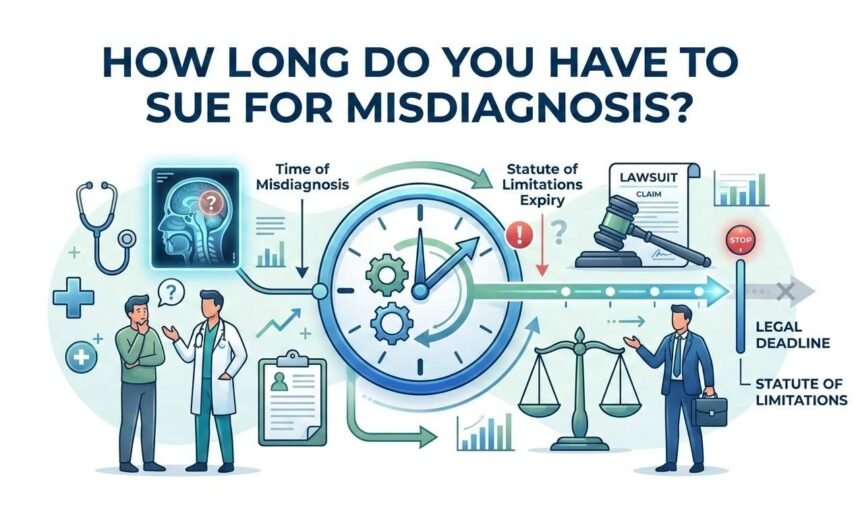
Medical mistakes can change a person’s life in an instant, especially when a condition is diagnosed incorrectly or too late. A misdiagnosis can delay proper treatment, worsen an illness, or even lead to permanent injury. For patients and families dealing with the consequences, one of the most urgent questions is: How long do you have to sue for a misdiagnosis? The answer is not always simple, as medical malpractice laws set strict time limits that vary by location and circumstances.
Understanding these legal deadlines is essential if you believe a doctor failed to diagnose a condition properly. Acting within the required timeframe gives you the opportunity to seek compensation for medical expenses, lost income, and other damages caused by the error. Missing the deadline, however, can prevent you from filing a lawsuit entirely, even if strong evidence exists that a medical mistake occurred.
Why This Matters: Scale of Diagnostic Errors
Medical misdiagnosis is far more common than most people realise. A landmark study co-authored by researchers from Johns Hopkins University estimated that in the United States alone, diagnostic errors contribute to approximately 371,000 deaths, 424,000 cases of permanent disability, and at least 795,000 instances of serious patient harm every year.
If you or a loved one suffered harm because a doctor failed to diagnose, misidentified, or delayed identifying a condition, you may have legal grounds to file a medical malpractice claim. However, one of the most critical factors in any misdiagnosis case is time. Miss the legal deadline, and you may permanently lose your right to seek compensation, regardless of how strong your case is.
What Is the Statute of Limitations for Misdiagnosis?
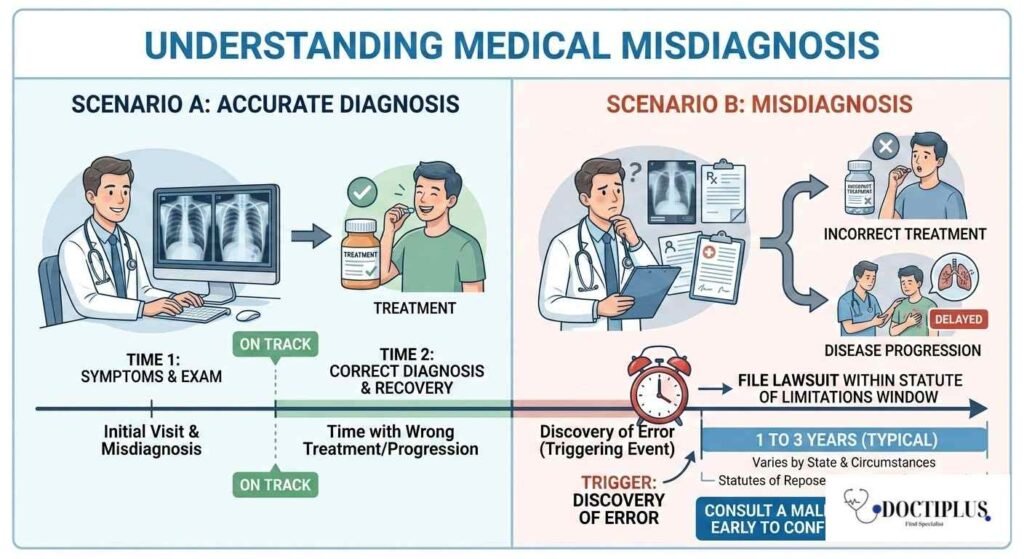
The statute of limitations is the legal deadline by which you must file your lawsuit. In misdiagnosis cases, this deadline is typically triggered by one of two events: the date you were told about the medical error, or the date you independently discovered it.
Most states set the window at 1 to 3 years from the triggering event. However, this varies significantly depending on where you live, your age, the type of misdiagnosis, and other individual circumstances. Some states have outer limits (called statutes of repose) that cap the total filing window at 6 to 10 years, regardless of when the error was discovered.
Key: Do not assume you know your deadline. Contact a malpractice attorney as soon as you suspect a misdiagnosis. Even a few weeks’ delay can affect your ability to file.
How Does the Discovery Rule Affect Your Timeline?
Many patients assume the clock starts ticking on the day they received the wrong diagnosis. In many states, that is not the case. The discovery rule delays the start of the statute of limitations until you actually discovered, or reasonably should have discovered, that a misdiagnosis occurred and caused you harm.
This rule exists because diagnostic errors are often hidden. A misdiagnosis may not become apparent until symptoms worsen, a second opinion reveals a different condition, or new test results contradict the original findings. The discovery rule gives patients a fair opportunity to act once the harm is actually known.
When does the discovery clock start?
The clock typically begins when you become aware of facts that would lead a reasonable person to suspect that a medical error occurred. This might be when a second doctor identifies a condition the first doctor missed, or when you are told the original diagnosis was incorrect.
The period following discovery allows you time to gather medical records, consult with legal counsel, and build your case. Working quickly during this window is essential.
How State Laws Vary: What You Need to Know
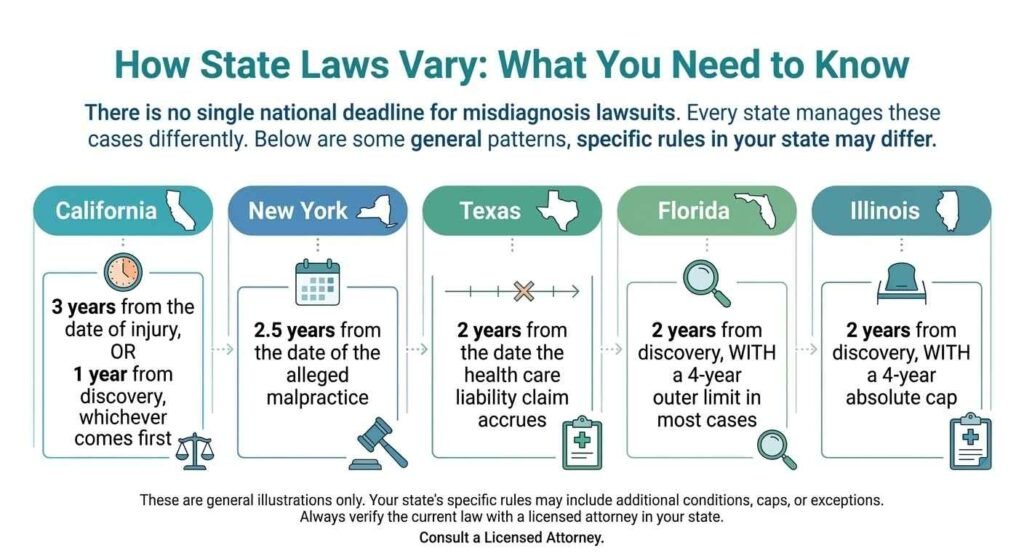
There is no single national deadline for misdiagnosis lawsuits. Every state manages these cases differently. Below are some general patterns, though specific rules in your state may differ.
Filing windows
- California: 3 years from the date of injury, or 1 year from discovery, whichever comes first
- New York: 2.5 years from the date of the alleged malpractice
- Texas: 2 years from the date the health care liability claim accrues
- Florida: 2 years from discovery, with a 4-year outer limit in most cases
- Illinois: 2 years from discovery, with a 4-year absolute cap
These are general illustrations only. Your state’s specific rules may include additional conditions, caps, or exceptions. Always verify the current law with a licensed attorney in your state.
Expert testimony requirements
Several states require plaintiffs to submit a certificate of merit or an affidavit from a qualified medical expert before a malpractice lawsuit can proceed. This is a separate requirement from the deadline itself, and failing to meet it can result in your case being dismissed even if it was filed on time. States such as Georgia, Pennsylvania, and Colorado have such requirements. Your attorney will handle this, but you should be aware that it exists.
Important Exceptions That May Extend Your Deadline
Minors and children
If the misdiagnosis occurred when the patient was under 18, most states pause the statute of limitations until the child turns 18. The filing window then begins from that birthday. However, some states impose separate age caps, so this exception is not unlimited.
Fraudulent concealment
If a healthcare provider deliberately concealed the misdiagnosis, including through falsified records or misleading statements, the statute of limitations may be paused until the patient discovers the concealment. Proving fraudulent concealment is legally complex, but it can be a significant protection for patients who were actively misled.
Mental incapacity
If the patient was mentally incapacitated following the misdiagnosis and could not reasonably manage their own affairs, some states will toll (pause) the deadline for the duration of that incapacity.
Foreign objects left in the body
In cases where a surgical tool, sponge, or other foreign object was left inside the body and later discovered, many states apply a separate discovery-based timeline that begins when the object was found, not when the surgery occurred.
Note: Exceptions are not automatic. You must raise them with your attorney and support them with evidence. Do not assume an exception applies to your case without legal guidance.
What Happens If You Miss the Filing Deadline?
In most cases, missing the statute of limitations means permanently losing your right to sue. Courts will almost always dismiss a case filed after the deadline, regardless of the strength of your evidence or the severity of your harm. The defendant’s attorney will raise the expired deadline as an affirmative defence, and the case will typically be dismissed.
This is why acting quickly is not optional. Even if you are unsure whether you have a case, consulting with a malpractice attorney early costs you nothing except time, while waiting too long can cost you everything. Experienced legal teams, such as Brooks & Baez, often emphasise the importance of early case evaluation to avoid missing critical deadlines and preserving key evidence.
Step-by-Step: What to Do If You Suspect a Misdiagnosis
- Request all of your medical records immediately. This includes notes, imaging results, lab reports, and communication from all providers involved in your care. You have a legal right to these records.
- Seek an independent second opinion from a specialist unconnected to the original provider. This opinion is critical for establishing that an error occurred and documenting its impact on your health.
- Write down everything you remember. Document the timeline of your diagnosis, symptoms, treatments received, and when you first suspected a problem. Dates and details matter greatly in court.
- Consult a medical malpractice attorney who focuses on misdiagnosis cases. Many offer free initial consultations. Bring all records and your written timeline. Ask specifically about the deadline that applies to your case.
- Document all financial losses. Track medical expenses, lost wages, out-of-pocket costs, and any other harm you can connect to the misdiagnosis. These form the basis of your damages claim.
- Do not discuss your case on social media or with the healthcare provider’s staff. Anything you say can be used against you.
How to Find the Right Legal Help
Not all personal injury attorneys handle medical malpractice. Look specifically for attorneys who focus on healthcare litigation and misdiagnosis cases. Questions to ask during a consultation include:
- How many misdiagnosis cases have you handled, and what were the outcomes?
- What is the specific statute of limitations deadline in my state for my situation?
- Do you work on contingency? Most malpractice attorneys do, meaning no fees unless you win.
- What experts will you consult to evaluate my case?
- What is the realistic timeline from filing to resolution
State bar associations maintain referral services that can connect you with licensed malpractice attorneys in your area. The American Bar Association also maintains a directory of state-level resources at americanbar.org.
Disclaimer
This article is intended for general informational and educational purposes only. It does not constitute legal or medical advice and should not be relied upon as a substitute for consultation with a licensed attorney or qualified healthcare professional. Laws governing medical malpractice and statutes of limitations vary significantly by state and are subject to change. The information presented here reflects general legal principles and may not apply to your specific circumstances. Always seek guidance from a licensed attorney in your jurisdiction before making any decisions related to a potential legal claim.
References and Resources
Research and Statistics
- • Newman-Toker, D.E., et al. (2021). Burden of serious harms from diagnostic error in the USA. BMJ Quality and Safety. https://qualitysafety.bmj.com
- • Johns Hopkins Medicine. (2023). Study on diagnostic error mortality. Department of Neurology and Medicine, Johns Hopkins University.
- • National Academy of Medicine. (2015). Improving Diagnosis in Healthcare. The National Academies Press. https://nap.nationalacademies.org
Legal Resources
- • American Bar Association. Find Legal Help. https://www.americanbar.org/groups/legal_services/flh-home
- • Justia. State Medical Malpractice Laws Overview. https://www.justia.com/injury/medical-malpractice
- • Nolo. Medical Malpractice Statutes of Limitations by State. https://www.nolo.com/legal-encyclopedia/medical-malpractice-statute-limitations-state-laws-chart.html
Patient Support and Advocacy
- • Patient Advocate Foundation. Case Management and Legal Resources. https://www.patientadvocate.org
- • Society to Improve Diagnosis in Medicine (SIDM). https://www.improvediagnosis.org
- • MedlinePlus. Patient Rights and Medical Records. U.S. National Library of Medicine. https://medlineplus.gov