

When someone is injured because of another person’s negligence, the financial losses are usually clear. Medical bills, lost wages, and repair costs can be calculated with receipts and documentation. However, injuries affect far more than just finances. Physical pain, emotional distress, and the disruption of daily life can continue long after the accident itself. These impacts fall under what the law calls pain and suffering, one of the most important yet misunderstood elements of personal injury compensation.
Many people pursuing a personal injury claim want to know how these non-economic damages are actually measured. Unlike medical expenses, no fixed bill shows the value of pain, emotional trauma, or reduced quality of life. Instead, courts, attorneys, and insurance companies rely on specific methods and supporting evidence to estimate a fair amount.
Understanding how pain and suffering are calculated can help injury victims make informed decisions about their claim, avoid accepting unfair settlement offers, and ensure that the full impact of their injury is properly recognised. This guide explains what pain and suffering include, the main calculation methods used in personal injury cases, and the key factors that influence the amount of compensation that may be awarded.
Understanding the Scope of Personal Injury
According to the Centres for Disease Control and Prevention (CDC), approximately 39.5 million Americans receive medical attention for injuries each year. That translates to roughly 126 injury cases per 1,000 adults. Many of these injuries happen in car accidents, slip-and-fall incidents, workplace accidents, or due to another person’s negligence.
When you pursue a personal injury claim, the compensation you seek typically falls into two categories: economic damages (medical bills, lost wages, property damage) and non-economic damages. Pain and suffering fall into this second category, and it is often the most misunderstood part of any claim.
If you have ever asked yourself, “How is pain and suffering calculated in a personal injury case?” you are not alone. This guide walks you through the methods, factors, and steps you need to understand to protect your rights and pursue fair compensation.
What Is Pain and Suffering in a Personal Injury Case?
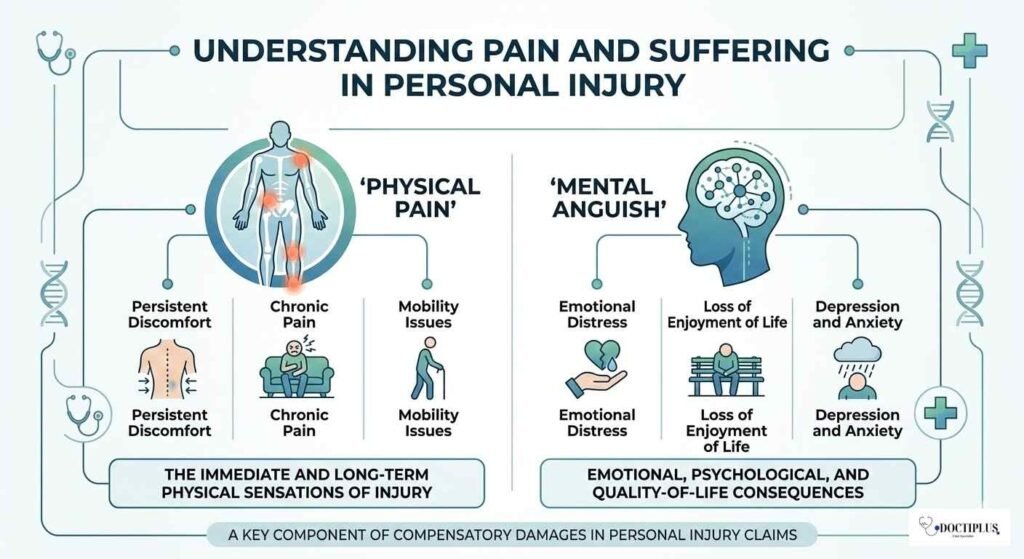
Pain and suffering are legal term that encompasses both physical pain and emotional distress caused by an injury. It goes beyond what shows up on a medical bill. Courts and insurance companies recognise that an injury affects your entire life, not just your body.
Pain and suffering damages generally fall into two categories:
- Physical pain and suffering: The actual bodily pain you experience during and after the injury, including chronic discomfort, reduced mobility, and physical limitations that affect your daily life.
- Emotional and mental pain and suffering: Psychological effects such as anxiety, depression, post-traumatic stress disorder (PTSD), sleep disruption, fear, and loss of enjoyment of life.
Key point: Emotional distress must often be connected to a documented physical injury to be compensable. A mental health professional’s evaluation can significantly strengthen this part of your claim.
Key Factors That Affect Your Pain and Suffering Calculation
Insurance companies, attorneys, and courts weigh several factors when assigning a monetary value to pain and suffering. Understanding these can help you build a stronger case.
Severity of the Injury
More serious injuries generally result in higher compensation. A broken bone that heals in eight weeks is treated very differently from a traumatic brain injury or a spinal cord injury with lasting effects. Injuries that permanently limit your ability to work, move, or care for yourself attract significantly higher awards.
Duration of Recovery
The longer your recovery, the more pain and suffering you are presumed to have endured. An injury that requires months of physical therapy, multiple surgeries, or ongoing medical management will carry more weight than one that resolves quickly.
Age and Pre-Existing Health
Your age and health before the accident are relevant factors. An injury that causes disability in an otherwise healthy 35-year-old may result in a higher award than the same injury sustained by someone with prior health conditions, because the court evaluates the full impact on that individual’s expected future quality of life.
Impact on Daily Life, Work, and Relationships
Courts and insurers examine how the injury has changed your life. This includes your ability to perform everyday tasks, participate in hobbies, maintain employment, and sustain personal relationships. If your injury caused a divorce, job loss, or social withdrawal, these effects are documented and factored in.
Emotional and Psychological Effects
Documented mental health conditions such as depression, anxiety disorders, or PTSD that arise following the injury are compensable. Evaluations by licensed psychologists or psychiatrists, combined with ongoing treatment records, provide strong evidence for this element of your claim.
Two Main Methods for Calculating Pain and Suffering
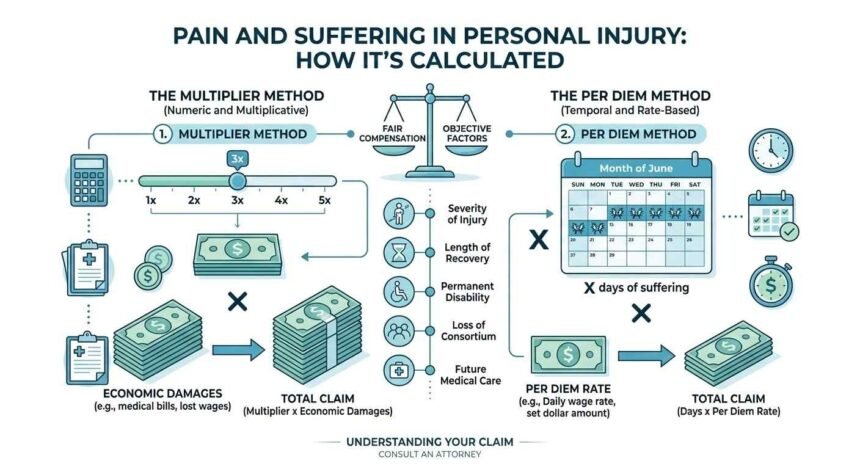
1. Multiplier Method
This is the most widely used approach. Your total economic damages, primarily your medical bills and lost income, are added up and then multiplied by a number, typically between 1.5 and 5. The multiplier is chosen based on the severity of your injuries.
For example, if your medical expenses and lost wages total $40,000 and your injuries are moderately severe, an attorney or insurer might apply a multiplier of 3, resulting in a pain and suffering value of $120,000. The more severe, permanent, or life-altering the injury, the higher the multiplier applied.
Example: $40,000 in economic damages x multiplier of 3 = $120,000 in pain and suffering damages. Total potential compensation: $160,000.
2. Per Diem Method
This approach assigns a specific daily dollar amount to your pain and suffering, then multiplies it by the number of days you experienced that suffering. The daily rate is often tied to your actual daily earnings, on the reasoning that a day of pain is worth at least as much as a day of your labour.
For example, if you earn $250 per day and spend 300 days recovering from your injury, your pain and suffering under the per diem method would be calculated as $75,000. This method works well for injuries with a clear, defined recovery period.
Example: $250 daily rate x 300 days of recovery = $75,000 in pain and suffering damages.
In practice, attorneys often calculate using both methods and use the higher result as a starting point for negotiations. The method that best reflects your individual suffering will depend on the facts of your case.
Why Medical Evidence Is Essential
No matter which calculation method applies to your case, the strength of your claim depends almost entirely on documentation. Pain and suffering are invisible to an outside observer. Medical records, professional evaluations, and consistent treatment histories are what make it visible to an insurer or jury.
What to collect and preserve
- All medical records, including emergency room visits, follow-up appointments, imaging results (X-rays, MRIs), surgical records, and prescription history
- Physical therapy and rehabilitation records showing the duration and intensity of treatment
- Mental health treatment records if you are experiencing emotional distress, PTSD, or depression
- A personal pain journal documenting daily symptoms, limitations, and emotional state
- Statements from family members, friends, or coworkers who can describe visible changes in your behavior or ability
- Expert medical testimony from treating physicians or independent specialists who can explain the injury’s long-term impact
The more consistent and thorough your documentation, the harder it is for an insurance adjuster to dispute or minimise your claim.
How Insurance Companies Evaluate Pain and Suffering
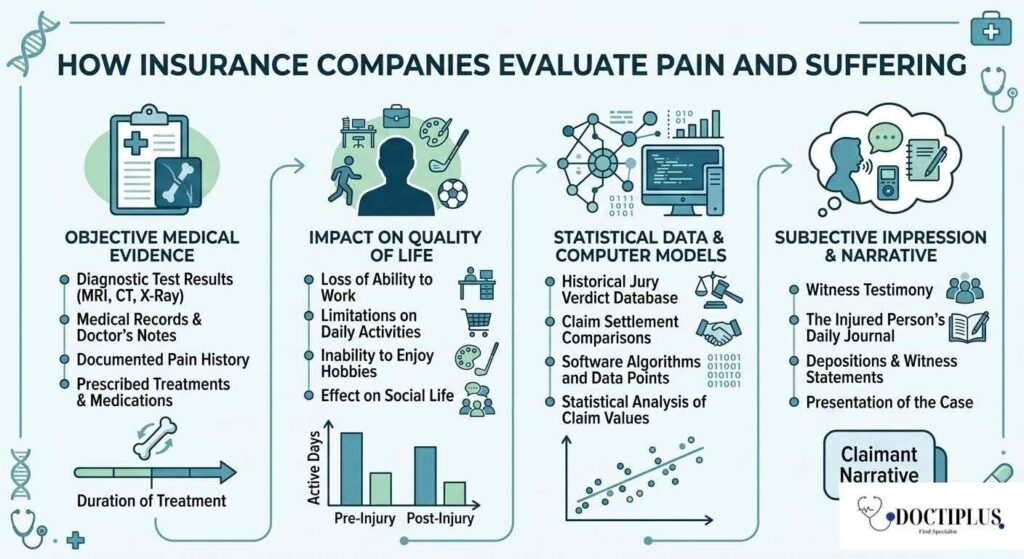
Insurance adjusters are trained to minimise payouts. Understanding how they work helps you avoid common mistakes that reduce your compensation.
Adjusters typically begin by reviewing your medical records to assess the type and severity of your injuries. They compare your pain descriptions against documented clinical findings. If you report severe pain but your records show minimal treatment or quick discharge, that inconsistency will be used to lower your claim.
They also consider your age, lifestyle, and prior health history. Older individuals or those with longer expected recovery periods may receive higher offers, but only if the medical evidence supports the claim. Lifestyle factors, such as whether the injury prevented you from performing a physical job or an active hobby, may be examined.
Watch out: Insurance companies may offer a quick, low settlement early in the process, before the full extent of your injuries is known. Never accept a settlement before consulting an attorney and completing your medical treatment.
Steps to Protect and Strengthen Your Claim
- Seek medical attention immediately and follow every treatment recommendation. Insurers use gaps in treatment to argue that your injuries were not serious.
- Keep a daily pain journal. Record your pain levels, physical limitations, emotional state, and how the injury is affecting your work and personal life.
- Gather and organise all documents. Store medical records, bills, correspondence with insurers, and any written reports from your employer.
- Do not give recorded statements to the opposing insurance company without your attorney present. Adjusters are skilled at using casual statements against claimants.
- Do not post about your injury or daily activities on social media. Defence attorneys regularly use social media to challenge pain and suffering claims.
- Consult an experienced personal injury attorney before accepting any offer. For guidance on how settlements are calculated and what your case may be worth, visit this site: https://www.renicklawfirm.com/ to learn more about how personal injury claims are handled.
Setting Realistic Expectations for Your Settlement
Pain and suffering awards vary enormously from case to case. Factors such as the jurisdiction, the judge or jury, the quality of your attorney, and the specific facts of your case all influence the final amount. There is no guaranteed formula.
Insurance companies routinely start with lower offers, expecting negotiation. Knowing the accurate value of your claim before entering discussions prevents you from accepting less than you deserve. An experienced attorney understands the settlement ranges in your local courts and can push back against lowball offers with documented evidence.
Settlement negotiations can take weeks or months. If a fair agreement cannot be reached, the case may proceed to trial, where a jury will make the final determination. Most cases settle before trial, but being prepared to go to court strengthens your negotiating position.
Disclaimer
This article is provided for general informational and educational purposes only. It does not constitute legal, medical, or financial advice and should not be relied upon as a substitute for professional consultation. Personal injury laws, calculation methods, and compensation standards differ by state and are subject to change. The scenarios and examples presented are illustrative only. Outcomes in personal injury cases depend on the specific facts, evidence, jurisdiction, and legal representation involved. Always consult with a licensed personal injury attorney in your state before making decisions about your case.
References and Resources
• Centres for Disease Control and Prevention (CDC). FastStats: Injuries. https://www.cdc.gov/nchs/fastats/injury.htm
• National Centre for Health Statistics. Emergency Department Visits for Injuries. https://www.cdc.gov/nchs/data/ahcd/namcs_summary/2019-namcs-web-tables-508.pdf
• National Institute of Mental Health (NIMH). Post-Traumatic Stress Disorder. https://www.nimh.nih.gov/health/topics/post-traumatic-stress-disorder-ptsd
Legal References and Guidance
- • American Bar Association. How Damages Are Calculated in Personal Injury Cases. https://www.americanbar.org/groups/public_education/resources/law_issues_for_consumers/injury_damages
- • Nolo. Pain and Suffering in Personal Injury Cases. https://www.nolo.com/legal-encyclopedia/pain-suffering-damages-personal-injury-cases.html
- • Justia. Non-Economic Damages in Personal Injury Law. https://www.justia.com/injury/damages/non-economic-damages
Patient and Victim Support Resources
- • Patient Advocate Foundation. Financial and Legal Support for Injury Survivors. https://www.patientadvocate.org
- • National Disability Rights Network. https://www.ndrn.org
- • MedlinePlus. Coping with Chronic Pain. U.S. National Library of Medicine. https://medlineplus.gov/chronicpain.html