


Healthcare has changed dramatically over the last few years. Patients are no longer relying exclusively on traditional clinic visits for every concern they have. Telemedicine has transformed the way people access doctors, prescriptions, and ongoing healthcare support, especially in women’s healthcare where convenience, privacy, and accessibility are often essential.
Many women today are balancing careers, education, family responsibilities, and personal obligations, leaving little time for lengthy doctor appointments or multiple pharmacy visits. This is one reason why digital healthcare platforms are becoming increasingly important. Services offering online birth control have made it easier for women to access consistent contraceptive care without unnecessary delays.
Telemedicine does not replace traditional healthcare entirely, but it improves accessibility and fills gaps that many patients experience. In underserved communities, rural areas, or regions where specialist appointments can take weeks, digital healthcare platforms provide faster access to licensed providers and medically reviewed treatment options.
Why Convenience Matters in Preventive Care
Preventive healthcare often suffers when access becomes complicated. Something as simple as renewing a prescription can become difficult when patients need to schedule appointments weeks in advance, arrange transportation, or take time off work.
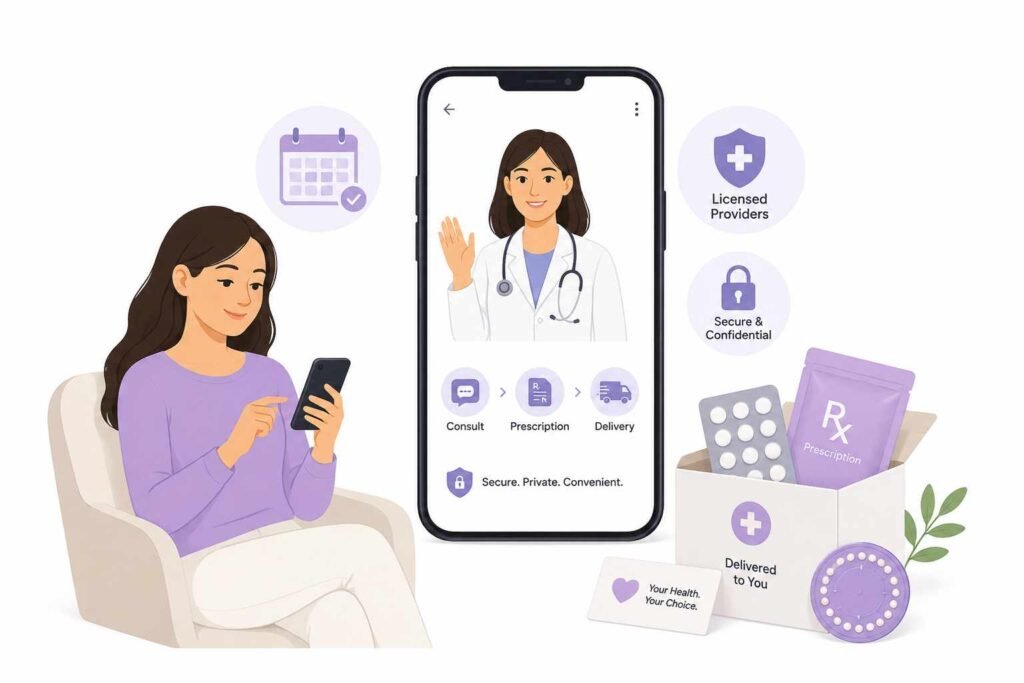
This issue becomes especially relevant in reproductive healthcare. Missed prescriptions or inconsistent access to contraceptives can lead to unnecessary stress and health complications. Telehealth platforms simplify this process by allowing patients to consult licensed providers remotely, discuss medical history securely, and receive approved prescriptions through convenient delivery systems.
Convenience in healthcare should never be underestimated. When preventive care becomes easier to maintain, patients are more likely to stay consistent with treatment plans and long-term health management.
Growing Role of Digital Healthcare Platforms
Digital healthcare has evolved far beyond basic video consultations. Modern telemedicine platforms now provide comprehensive healthcare ecosystems that include:
- Online consultations
- Prescription management
- Medication delivery
- Follow-up care
- Educational resources
- Ongoing support systems
These systems improve continuity of care while helping patients feel more informed about their health decisions.
Women’s healthcare in particular benefits from this model because many concerns require recurring prescriptions, regular check-ins, and confidential communication with providers.
Privacy and Comfort in Women’s Health
One of the biggest advantages of telehealth is privacy. Many patients feel more comfortable discussing sensitive healthcare concerns remotely rather than in busy waiting rooms or crowded clinics.
Reproductive health, hormonal concerns, sexual wellness, and gynecological questions can sometimes feel intimidating to discuss in person. Telemedicine platforms create a more comfortable environment for patients who may otherwise delay seeking care.
Delaying healthcare often leads to larger issues later. When patients can access medical guidance from home, they are more likely to address concerns early and remain proactive about their wellness.
Reducing Healthcare Barriers
Healthcare disparities continue to affect millions of people worldwide. Geographic limitations, financial challenges, transportation issues, and provider shortages all contribute to inconsistent healthcare access.
Telemedicine helps reduce many of these barriers.
For example:
- Rural patients can connect with specialists remotely
- Busy professionals can schedule appointments more flexibly
- Students can access healthcare while away from home
- Patients with mobility issues avoid unnecessary travel
- Prescription renewals become more streamlined
These improvements may seem simple, but they can significantly improve long-term health outcomes.
Importance of Education in Digital Healthcare
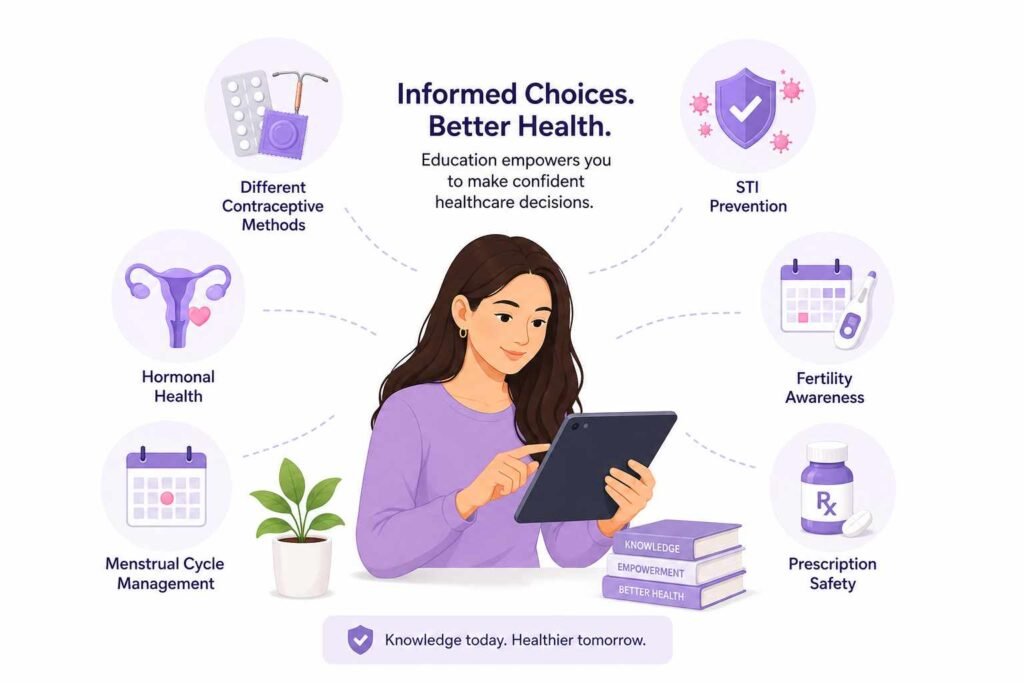
One major benefit of modern healthcare platforms is patient education. Many digital healthcare services provide extensive educational resources that help patients understand treatment options, side effects, lifestyle considerations, and preventive care strategies.
Healthcare decisions become more effective when patients feel informed and empowered.
For example, reproductive healthcare platforms often provide educational content about:
- Different contraceptive methods
- Hormonal health
- Menstrual cycle management
- STI prevention
- Fertility awareness
- Prescription safety
This information supports healthier decision-making and improves communication between patients and providers.
Telemedicine and Medication Adherence
Medication adherence is a major issue across healthcare systems. Many patients unintentionally skip doses or discontinue treatment because of prescription access difficulties.
Telemedicine reduces these interruptions by simplifying the renewal process and improving medication accessibility. Automatic reminders, subscription models, digital follow-ups, and direct shipping all contribute to improved consistency.
For contraceptive care specifically, consistency is extremely important. Reliable access to prescriptions supports better health outcomes and reduces unnecessary interruptions.
Healthcare Personalization Is Increasing
Patients increasingly expect healthcare experiences tailored to their needs. Personalized medicine is becoming more common as technology improves communication and data-driven care.
Digital healthcare platforms can provide more customized patient experiences by:
- Tracking treatment history
- Offering tailored recommendations
- Simplifying provider communication
- Supporting long-term treatment plans
- Providing condition-specific educational content
This personalized approach helps patients feel supported rather than treated as generic cases.
Future of Women’s Healthcare
Women’s healthcare is likely to continue evolving toward hybrid care models that combine traditional medical services with digital convenience.
In-person visits will always remain important for many procedures and examinations, but telehealth offers valuable flexibility for preventive care, consultations, prescription management, and ongoing support.
Healthcare systems that prioritize accessibility, affordability, and patient convenience are likely to continue growing because they solve real-world challenges that patients experience every day.
Technology and Trust in Healthcare
As digital healthcare expands, trust becomes increasingly important. Patients need assurance that platforms use licensed providers, secure systems, medically reviewed information, and ethical healthcare practices.
Reliable telemedicine providers focus on:
- HIPAA-compliant communication
- Licensed medical professionals
- Transparent pricing
- Accurate educational content
- Secure prescription management
Trust remains the foundation of effective healthcare, whether online or offline.
Supporting Preventive Wellness
Preventive healthcare improves long-term public health outcomes. When patients can easily maintain prescriptions, ask questions, and receive guidance, they are more likely to stay engaged in their healthcare journey.
Digital healthcare tools encourage proactive health management rather than reactive treatment.
This shift can help reduce healthcare system strain while improving quality of life for patients.
Final Conclusion
Telemedicine has become an important part of modern women’s healthcare because it makes care easier, faster, and more accessible. For many women, online healthcare platforms reduce the stress of scheduling clinic visits, renewing prescriptions, arranging transportation, or waiting weeks for appointments. This is especially helpful for preventive care, prescription management, contraceptive access, follow-up support, and private health concerns.
However, telemedicine should not be seen as a complete replacement for traditional healthcare. In-person visits are still necessary for physical examinations, emergency concerns, lab testing, imaging, and more complex medical conditions. The strongest healthcare model is a balanced one that combines digital convenience with professional in-person care when needed.
As digital healthcare continues to grow, patient safety, privacy, licensed medical guidance, and accurate health education must remain the top priorities. When used responsibly, telemedicine can support better healthcare access, improve consistency with treatment, and help women feel more confident and informed in managing their long-term wellness.
References
- Smith, A. C., Thomas, E., Snoswell, C. L., Haydon, H., Mehrotra, A., Clemensen, J., & Caffery, L. J. (2020). Telehealth for global emergencies: Implications for coronavirus disease 2019 (COVID-19). Journal of Telemedicine and Telecare, 26(5), 309–313. DOI: 10.1177/1357633X20916567.
- American College of Obstetricians and Gynecologists. (2020). Implementing telehealth in practice: ACOG Committee Opinion No. 798. Obstetrics & Gynecology, 135(2), e73–e79. DOI: 10.1097/AOG.0000000000003671.
- Hillen, C., Sachs, C., Buhling, K. J., Eschenburg, M., Griewing, S., Veneroso, J., Schmalfeldt, B., & von Büren, J. (2024). Evaluating patient-reported adherence and safety for oral contraception treatment in women via a direct-to-consumer prescription platform: A cross-sectional study. Telemedicine and e-Health, 30(12), 2876–2882. DOI: 10.1089/tmj.2024.0168.
- Zuniga, C., Grossman, D., Harrell, S., Blanchard, K., & Grindlay, K. (2020). Breaking down barriers to birth control access: An assessment of online platforms prescribing birth control in the USA. Journal of Telemedicine and Telecare, 26(6), 322–331. DOI: 10.1177/1357633X18824828.
- Wollum, A., Zuniga, C., Grindlay, K., & Grossman, D. (2023). Who accesses birth control online? An analysis of requests for contraception submitted to an online prescribing platform in the United States. Women’s Health Issues, 33(1), 25–35. DOI: 10.1016/j.whi.2022.08.001.
- Murugesu, S., Galazis, N., Jones, B. P., Chan, M., Bracewell-Milnes, T., Ahmed-Salim, Y., Grewal, K., Timmerman, D., Yazbek, J., Bourne, T., & Saso, S. (2020). Evaluating the use of telemedicine in gynaecological practice: A systematic review. BMJ Open, 10(12), e039457. DOI: 10.1136/bmjopen-2020-039457.
- Koonin, L. M., Hoots, B., Tsang, C. A., Leroy, Z., Farris, K., Jolly, B. T., Antall, P., McCabe, B., Zelis, C. B. R., Tong, I., & Harris, A. M. (2020). Trends in the use of telehealth during the emergence of the COVID-19 pandemic — United States, January–March 2020. Morbidity and Mortality Weekly Report, 69(43), 1595–1599. DOI: 10.15585/mmwr.mm6943a3.