


Early detection of autism can make a meaningful difference in a child’s development. When signs of autism spectrum disorder appear before age three, timely evaluation helps families access therapies, early intervention programs, and educational planning during a critical period of brain development.
Autism diagnostic testing for children under 3 follows a structured, evidence-based process. Below is a clear, practical guide to help parents understand what to expect, how to prepare, and where to find support.
Why Early Identification Matters
Research consistently shows that early intervention improves long-term outcomes in communication, social interaction, adaptive skills, and behavior. The first three years of life are marked by rapid brain development, making this window especially important.
Early screening helps identify children who may:
- Have delayed speech or limited babbling
- Avoid eye contact
- Show a limited response to their name
- Engage in repetitive movements
- Demonstrate reduced interest in social interaction
- Exhibit unusual sensory sensitivities
Identifying concerns early does not automatically mean a child has autism. However, it ensures that children who need support receive it as soon as possible.
Organizations such as the American Academy of Pediatrics recommend routine autism-specific screening at 18 and 24 months during well-child visits.
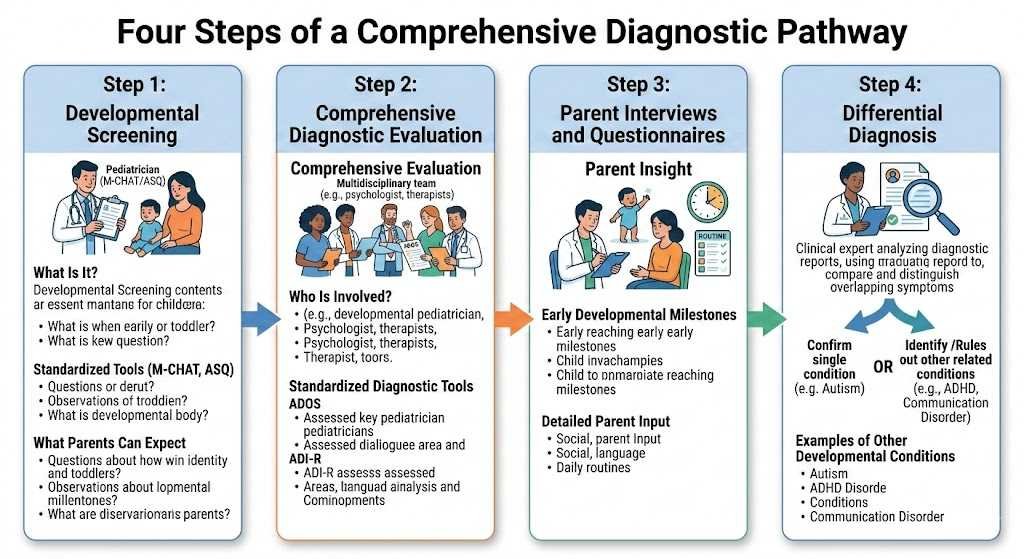
Step 1: Developmental Screening
What Is Developmental Screening?
Developmental screening is a brief process used to identify children who may be at risk for developmental delays. It is not a diagnosis but a first-level check.
Pediatricians often use standardized tools such as:
- Modified Checklist for Autism in Toddlers
- Ages and Stages Questionnaire
These questionnaires are typically completed by parents and focus on communication, social skills, and behavior.
What Parents Can Expect
- Questions about eye contact, gestures, play, and speech
- Observations of how the child interacts during the visit
- Discussion of parental concerns
If screening results suggest possible developmental differences, the pediatrician will recommend a more comprehensive evaluation.
Step 2: Comprehensive Diagnostic Evaluation
If initial screening raises concerns, a full diagnostic assessment is conducted. This process is more detailed and involves trained specialists.
Who Is Involved?
A multidisciplinary team may include:
- Developmental pediatricians
- Pediatric neurologists
- Child psychologists
- Speech-language pathologists
- Occupational therapists
This team approach ensures that all aspects of development are evaluated.
Standardized Diagnostic Tools
Clinicians may use evidence-based assessment instruments such as:
- Autism Diagnostic Observation Schedule
- Autism Diagnostic Interview Revised
These tools help assess:
- Social communication
- Language development
- Play skills
- Repetitive behaviors
- Sensory responses
The child may be observed in both structured tasks and natural play settings.
Step 3: Parent Interviews and Questionnaires
Parent insight is essential. Since young children behave differently across environments, clinicians rely heavily on family input.
Parents are typically asked about:
- Early developmental milestones
- Social engagement patterns
- Language progression
- Daily routines
- Sensory sensitivities
- Behavior at home and in daycare
This helps ensure the diagnosis reflects real-world functioning rather than just clinic-based observation.
Step 4: Differential Diagnosis
Young children may exhibit behaviors that overlap with those of other developmental conditions. The evaluation process helps distinguish autism from:
- Global developmental delay
- Speech or language disorders
- Social communication disorder
- Hearing impairment
- Anxiety or sensory processing differences
Accurate differentiation ensures that the child receives the most appropriate intervention plan.
Step 5: Results and Feedback Session
After assessment, clinicians meet with the family to discuss findings.
If autism spectrum disorder is diagnosed, families receive:
- A detailed written report
- Explanation of developmental strengths
- Areas needing support
- Clear intervention recommendations
If ASD is not diagnosed, families may still receive guidance for other developmental concerns.
Recommended Early Interventions
When autism is identified early, intervention often includes:
| Therapy / Program | Purpose / Benefits |
|---|---|
| Speech Therapy | Improves communication, expressive language, and understanding. |
| Occupational Therapy | Supports sensory processing, fine motor skills, and daily functioning. |
| Behavioral Interventions | Evidence-based programs such as Applied Behavior Analysis may be recommended. |
| Early Intervention Programs | Government-funded services in many countries for children under age three. |
The Centers for Disease Control and Prevention emphasizes that early services can significantly improve developmental outcomes.
How Parents Can Prepare for an Evaluation
To make the most of the diagnostic process:
- Bring medical records
- Note developmental milestones and concerns
- Record examples of behaviors
- List specific questions for the clinician
- Consider video clips of behaviors seen at home
Being prepared helps clinicians gain a clearer picture of your child’s development.
Accessing Diagnostic Services
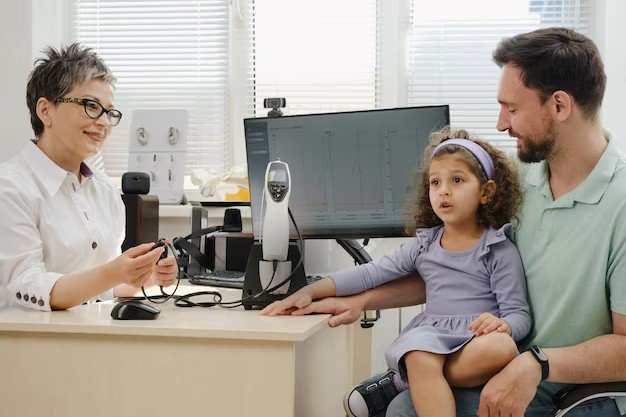
Families can seek referrals through:
- Pediatricians
- Early intervention programs
- Developmental clinics
- University medical centers
National autism organizations often provide provider directories and guidance on accessing services.
For example, Autism Speaks and the National Institute of Mental Health offer educational resources about autism diagnosis and early intervention.
Common Questions Parents Ask
Can autism be diagnosed before age 3?
Yes. Reliable diagnoses can often be made as early as 18–24 months by experienced professionals.
What if my child is too young?
Even if a formal diagnosis is delayed, children can still receive early intervention services based on developmental concerns.
Will my child outgrow autism?
Autism is a lifelong neurodevelopmental condition. However, early support can significantly improve functioning and independence.
Disclaimer
This article is for informational and educational purposes only. It is not a substitute for professional medical advice, diagnosis, or treatment. Always consult a qualified healthcare provider regarding concerns about your child’s development. Diagnostic decisions should only be made by licensed professionals trained in developmental and behavioral assessment.
References
- American Academy of Pediatrics. Recommendations for developmental and autism screening in early childhood.
- Centers for Disease Control and Prevention. Autism Spectrum Disorder screening and early intervention guidelines.
- National Institute of Mental Health. Autism Spectrum Disorder overview and diagnosis information.
- Autism Diagnostic Observation Schedule manual and clinical framework.
- Modified Checklist for Autism in Toddlers official screening documentation.
Final Thoughts
The autism diagnostic process for very young children is thorough, collaborative, and evidence-based. It begins with screening, progresses to detailed evaluation, and ends with personalized recommendations. Early identification allows families to access therapies and educational support that strengthen communication, social interaction, and daily living skills during a critical stage of development.
If you have concerns about your child’s development, seeking evaluation early is a proactive and empowering step.