


People usually think about nutrition when a problem shows up. A diagnosis. A warning from a doctor. Blood tests that are no longer “fine.” Until then, food is background noise, something fitted around work, stress, and daily obligations.
That delay matters. Nutrition rarely creates immediate consequences. It shapes long-term health. And long-term changes develop quietly, while life feels normal.
Nutrition Works Slowly, Not Dramatically
The body adapts to almost anything. Irregular meals. Excess sugar. Poor food quality. Long gaps without eating. It compensates and continues to function, often without obvious symptoms.
That ability to adapt is useful for survival, but misleading for health. By the time nutrition becomes an obvious concern, the body has often been compensating for years. What appears to be a sudden problem is usually the end of a long process. Preventive care means paying attention before the margin for error disappears.
Blood Sugar Stability Is Preventive Care
Blood sugar dysregulation does not announce itself clearly. You do not feel it rising. You feel the downstream effects: energy crashes, concentration issues, irritability, increased hunger, and inconsistent performance throughout the day.
Over time, repeated spikes and crashes increase strain on metabolic systems. This contributes to insulin resistance and raises the risk of chronic disease. None of this requires extreme eating patterns to develop. It comes from everyday habits repeated for years.
Stable meals, adequate protein and fibre, and regular timing reduce that strain long before lab results change.
Inflammation Builds When Nutrition Is Inconsistent
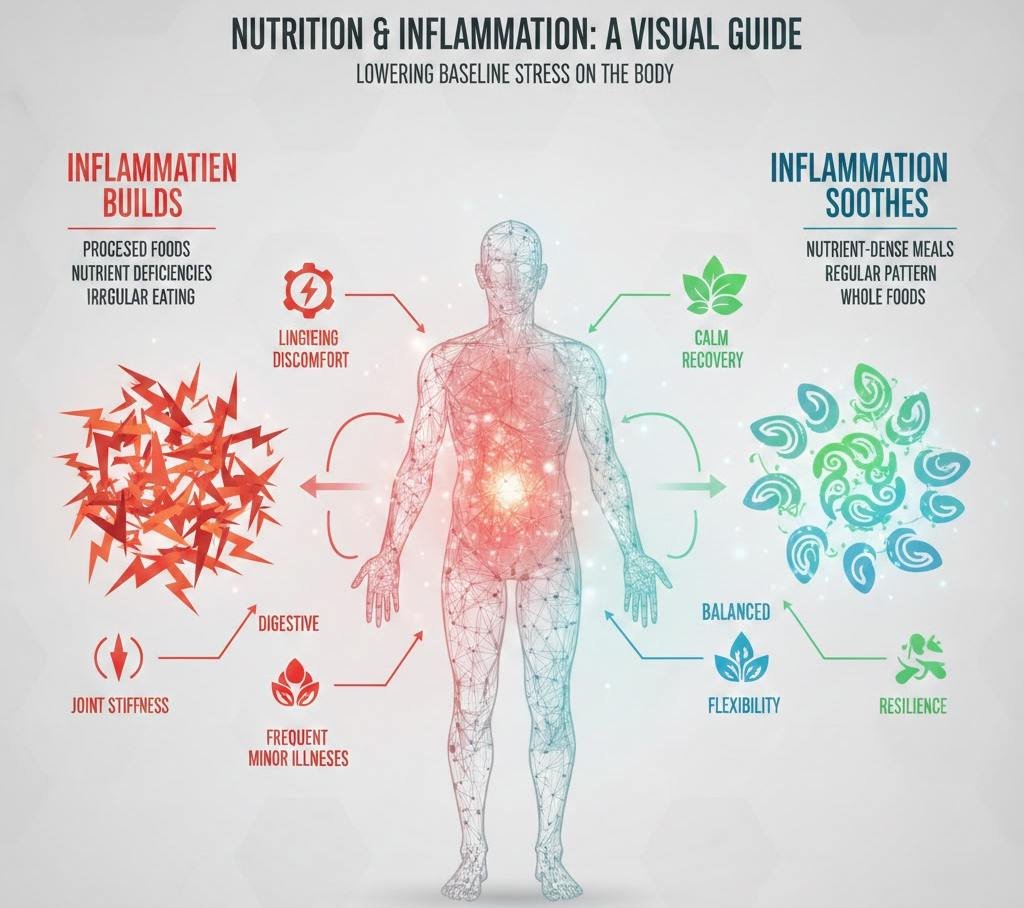
Low-grade chronic inflammation is one of the most common underlying factors in long-term health issues. It rarely feels dramatic. It shows up as lingering discomfort, slower recovery, digestive issues, joint stiffness, or frequent minor illnesses.
Nutrition plays a direct role in either calming or sustaining inflammatory processes. Highly processed foods, nutrient deficiencies, and irregular eating patterns keep the body in a reactive state. Consistent, nutrient-dense meals reduce unnecessary inflammatory load.
This is not about perfection. It is about lowering baseline stress on the body.
Nutrition Supports Energy, Not Just Weight
Many people associate nutrition with weight management. This misses the larger point. Nutrition primarily determines energy availability and recovery capacity.
When meals are skipped, poorly balanced, or inconsistent, the body prioritises short-term survival. That often leads to fatigue, poor focus, and reliance on stimulants. Over time, this pattern becomes normalised, even though it signals underlying strain.
Preventive nutrition supports steady energy rather than short-term stimulation. That stability reduces the likelihood of burnout and chronic fatigue.
Consistency Matters More Than Optimisation
The biggest mistake in nutrition is chasing optimisation instead of consistency. Extreme plans, rigid rules, and frequent resets create cycles of compliance and abandonment.
Preventive care works in the opposite direction. Simple, repeatable habits maintained over time have a greater impact than perfect adherence for short periods. Regular meals, predictable food choices, and sufficient intake matter more than macronutrient precision.
Nutrition should reduce decision fatigue, not add to it.
Nutrition Is Part of Long-Term Health Strategy
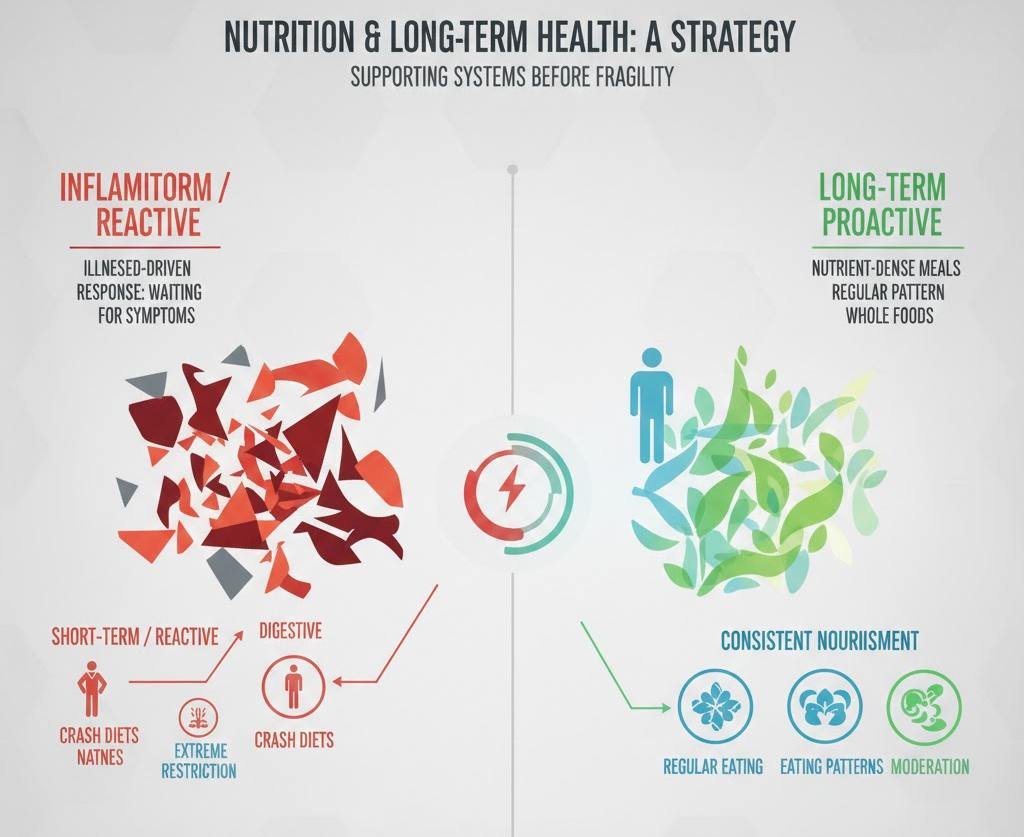
Good nutrition is not a response to illness. It is part of long-term planning. The goal is not to control the body, but to support it before systems become fragile.
People who age and function well tend to do unremarkable things consistently. They eat regularly. They avoid extremes. They adjust early instead of waiting for symptoms to force change.
Nutrition does not need urgency to matter. It needs attention.
Final Tip
If there is one principle nutritionists consistently emphasise, it is this: your body responds best to rhythm.
You do not need perfect meals. You need predictable nourishment.
Try to:
- Eat at regular times most days
- Include protein, fibre, and healthy fats in main meals
- Avoid long stretches of undereating followed by overeating
- Stay hydrated throughout the day
- Keep your weekday eating pattern broadly consistent
From a nutritionist’s perspective, these simple anchors support metabolic stability, reduce inflammatory load, and help maintain steady energy without requiring constant monitoring or restrictive planning.
Instead of asking “What’s the perfect diet?”, ask:
“Can I sustain this pattern for years without stress?”
That question leads to better long-term health decisions than any short-term optimisation strategy.
Practical Guidance from a Nutrition Perspective
A sustainable preventive approach often includes:
- Building meals around whole foods most of the time
- Prioritising consistency over intensity
- Adjusting early when energy, digestion, or sleep patterns change
- Avoiding extreme cycles of restriction and indulgence
- Supporting recovery with adequate intake, not just activity
Small adjustments made early are far easier than large corrections made later.
Disclaimer
This article is for educational and informational purposes only and is not intended as medical advice. Nutritional needs vary based on individual health status, medical conditions, medications, and lifestyle factors. For personalised guidance, consult a qualified healthcare professional or registered nutritionist before making significant dietary changes.
Please be aware:
- If you have existing medical conditions (diabetes, metabolic disorders, eating disorders, food allergies), consult your healthcare provider before implementing dietary changes.
- Extreme fatigue, unexplained weight changes, or persistent digestive issues require professional medical evaluation.
- This information is not a substitute for individualised nutritional counselling or medical treatment.
- Nutritional strategies should complement, not replace, medical care and prescribed treatments.
Additional Resources
For Further Reading
- Pollan, M. (2008). In Defence of Food: An Eater’s Manifesto
- Ludwig, D. S. (2016). Always Hungry?: Conquer Cravings, Retrain Your Fat Cells, and Lose Weight Permanently
- Katz, D. L., & Meller, S. (2014). Can We Say What Diet Is Best for Health? Annual Review of Public Health
- Lustig, R. H. (2017). The Hacking of the American Mind: The Science Behind the Corporate Takeover of Our Bodies and Brains
Support Resources
National Eating Disorders Association (NEDA): 1-800-931-2237 (Support and referrals)
Academy of Nutrition and Dietetics: (Find a registered dietitian)
USDA MyPlate: (Evidence-based nutrition guidance)