

According to the American Association of Oral and Maxillofacial Surgeons’ 2024 data, approximately 85% of people will need their wisdom teeth removed at some point in their lives. Yet surveys reveal that nearly half of patients feel unprepared for the recovery process. As dental practices increasingly emphasize outpatient oral surgery and shorter appointment windows, the burden of managing recovery has shifted largely to patients and their families.
The stakes are real. Poor recovery management can extend healing time from the typical 7 to 10 days to several weeks, while proper preparation and aftercare can minimize discomfort and prevent complications like dry socket or infection. For the millions of Americans facing this procedure annually, many of them teenagers experiencing their first surgery, understanding what to expect and how to support healing actively makes the difference between a smooth recovery and unnecessary suffering.
This guide walks you through the complete recovery landscape, covering the day-by-day progression of symptoms, proven techniques for managing pain and swelling, nutritional strategies that accelerate healing, warning signs that require immediate attention, and the nuanced factors that influence how your specific recovery unfolds.
What Symptoms to Expect and How Recovery Progresses
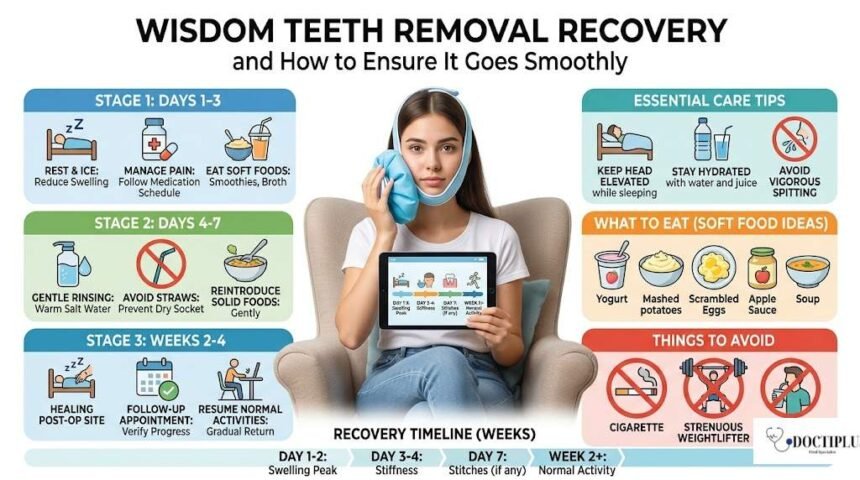
The first 48 hours after wisdom teeth removal follow a predictable pattern that catches many patients off guard. Immediate post-surgery effects include numbness from local anesthesia that can last 3 to 6 hours, blood-tinged saliva for 12 to 24 hours, and mild to moderate pain that typically peaks around hours 6 to 8 as anesthesia wears off. Swelling begins within 2 to 4 hours and reaches maximum intensity by day 2 or 3.
Days 3 through 5 represent the critical healing window. Pain should be manageable with prescribed medications, and swelling begins its gradual decline. Many patients notice jaw stiffness during this period, which is a normal response to tissue trauma that can make opening the mouth challenging. The extraction sites appear white or yellowish as healing tissue forms, which patients sometimes mistake for infection, but actually represents healthy granulation tissue.
The one-week mark typically brings significant improvement. Stitches dissolve or are removed during this timeframe, swelling reduces noticeably, and most people can return to normal activities with some dietary restrictions. However, complete healing of the extraction sites takes 2 to 3 weeks, during which the bone and soft tissue continue remodeling.
Individual variation is substantial. Younger patients, typically teens and early twenties, generally heal faster than adults over 25, while surgical extractions of impacted teeth require longer recovery than simple extractions. Sedation type also influences the timeline. Patients who received general anesthesia may feel groggy for 24 to 48 hours beyond the typical recovery symptoms.
Understanding these phases helps distinguish normal healing from potential complications, reducing anxiety and enabling patients to make informed decisions about activity levels and when to contact their oral surgeon.
How to Manage Pain and Swelling Effectively
Methods for Controlling Pain After Surgery
Post-extraction pain management centers on staying ahead of discomfort rather than reacting to it. Most oral surgeons prescribe a combination approach, using ibuprofen (600 to 800mg every 6 to 8 hours) for inflammation control paired with acetaminophen (650 to 1000mg every 6 hours) for pain relief. According to the Cleveland Clinic, this dual-medication strategy proves more effective than either drug alone.
For moderate to severe cases, prescription opioids may be prescribed for the first 2 to 3 days, but research shows that non-opioid combinations handle most wisdom teeth pain effectively. Taking the first dose before anesthesia wears off prevents the pain from establishing intensity, making subsequent management easier.
Alternative approaches include cold therapy applied to extraction sites (not ice directly on the wounds), which can provide 15 to 20 minutes of natural numbing. Some patients find relief with clove oil applied sparingly to gauze and placed over the extraction site, though this should be cleared with the oral surgeon first. Maintaining proper head elevation during sleep, using 2 to 3 pillows, reduces blood flow to the area and minimizes throbbing pain.
Using Ice Packs and Other Swelling Reduction Techniques
Strategic ice application during the first 48 hours can reduce swelling by up to 30 to 40 percent compared to no cold therapy. The key lies in timing and technique. Apply ice for 15 to 20 minutes on, 15 to 20 minutes off, to the external cheek area over the extraction sites. Direct ice contact with skin should be avoided. Wrapped gel packs or bags of frozen peas work effectively.
After 48 hours, heat therapy becomes more beneficial than continued ice. Warm, moist heat applied to the jaw encourages blood flow and helps resolve established swelling. Many patients switch to warm salt water rinses during this phase, which serve the dual purpose of gentle cleaning and heat application.
Position and activity modifications significantly impact swelling progression. Keeping the head elevated above heart level during rest and sleep prevents blood pooling in facial tissues. Avoiding bending over, heavy lifting, or strenuous activity for the first week prevents blood pressure spikes that can worsen swelling and increase bleeding risk. Even seemingly minor activities like blowing the nose forcefully can create pressure changes that slow healing, as noted by Mayo Clinic dental health resources.
Nutrition and Oral Care Tips for Faster Healing
Choosing Foods That Support Recovery
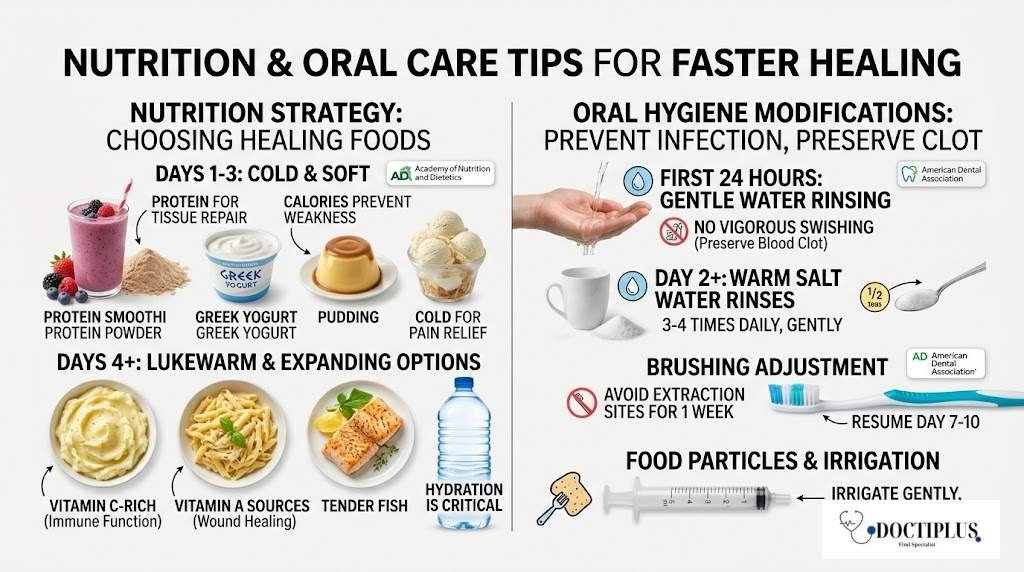
Nutritional strategy during wisdom teeth recovery focuses on foods that provide healing nutrients while respecting the mechanical limitations of a tender mouth. Cold, soft foods dominate the first 3 to 4 days. Smoothies with protein powder, yogurt, pudding, ice cream, and cold soups are all good options. The cold temperature provides additional pain relief while delivering necessary calories and nutrients.
Protein intake becomes crucial for tissue repair. Greek yogurt, protein smoothies, scrambled eggs (once tolerable), and smooth nut butters support healing without requiring significant chewing. Many patients struggle with adequate nutrition during this period, but maintaining caloric intake prevents the weakness that can complicate recovery. The Academy of Nutrition and Dietetics recommends prioritizing nutrient-dense soft foods to support post-surgical healing.
As tolerance improves around day 4 to 5, lukewarm foods expand options. Mashed potatoes, soft pasta, steamed vegetables blended into soups, and tender fish all work well. Vitamin C-rich foods like citrus smoothies (avoiding pulp or seeds) and vitamin A sources like pureed squash support immune function and wound healing. Hydration remains critical throughout. Dehydration can slow healing and intensify post-surgical fatigue.
Maintaining Oral Hygiene Without Disrupting Healing
Oral hygiene modifications balance infection prevention with clot preservation. For the first 24 hours, gentle rinsing with water after meals suffices. Vigorous swishing can dislodge blood clots and delay healing. Starting on day 2, warm salt water rinses (half a teaspoon of salt in 8 ounces of warm water) performed gently 3 to 4 times daily help keep extraction sites clean.
The brushing technique requires adjustment around the extraction sites. Patients can brush normally in unaffected areas but should avoid the extraction sites for the first week. A soft-bristled toothbrush minimizes tissue irritation when resuming normal brushing around day 7 to 10. The American Dental Associationprovides additional guidance on post-surgical oral care routines.
The challenge lies in balancing cleanliness with healing. Food particles will collect in the extraction sites. This is normal and does not indicate infection if other symptoms are not present. Gentle irrigation with a plastic syringe (provided by many oral surgeons) can remove debris without disrupting healing tissue. Professional guidance on when to resume normal oral hygiene prevents both infection and healing delays.
Recognizing and Preventing Complications During Recovery
Signs of Infection and Dry Socket to Watch For
Infection symptoms typically emerge 3 to 5 days post-surgery and require immediate attention. Key warning signs include fever above 101 degrees Fahrenheit, severe pain that worsens rather than improves after day 3, pus discharge from extraction sites with a foul taste or odor, and significant swelling that extends to the neck or becomes hot to the touch, red streaking around the jaw area or difficulty swallowing signal a serious infection requiring emergency care.
Dry socket presents differently but with equally urgent timing. This condition, affecting 2 to 5 percent of extractions, occurs when blood clots dislodge prematurely, exposing bone and nerves. The hallmark symptom is severe, throbbing pain that begins 2 to 4 days after surgery and radiates to the ear. Unlike normal healing discomfort, dry socket pain intensifies dramatically and does not respond well to prescribed pain medications. Research published on PubMed confirms that early intervention significantly improves outcomes when dry socket develops.
Visual inspection can help identify problems early, especially after procedures provided through surgical dental services in Chicago. Normal healing shows dark red clots gradually replaced by whitish healing tissue. Concerning signs include empty extraction sites with visible bone, bright red bleeding that does not stop with gentle pressure after day 2, or extraction sites that appear to be getting larger rather than closing. Recognizing symptoms early helps prevent complications and reduces the need for more serious interventions.
Steps to Reduce Risk of Complications
Prevention strategies significantly reduce complication rates through specific behavioral modifications. The most critical factor is avoiding suction actions for at least one week. Do not drink through straws, do not smoke, and do not spit forcefully. These activities create negative pressure that can dislodge protective blood clots, leading to dry socket.
Smoking cessation cannot be overstated in importance. Nicotine restricts blood flow to healing tissues, while the physical act of smoking creates suction and introduces harmful chemicals to extraction sites. Patients who smoke face 3 to 4 times higher complication rates and should ideally quit at least 48 hours before surgery and remain tobacco-free for two weeks afterward. The National Institute of Dental and Craniofacial Research offers resources on how smoking affects oral healing.
Activity restrictions during the first week protect healing sites from trauma. This means avoiding contact sports, heavy lifting over 20 pounds, vigorous exercise, and even activities like playing wind instruments. Alcohol consumption should be avoided not only because it can interact with prescription medications but also because it impairs immune function and can delay healing.
Following post-operative instructions precisely, including taking prescribed antibiotics as directed, attending follow-up appointments, and maintaining the recommended oral hygiene routine, provides the foundation for uncomplicated recovery. Patients who strictly adhere to these guidelines experience significantly lower rates of both infection and dry socket.
How Recovery Differs by Age, Sedation Use, and Jaw Exercises
Age-related recovery differences become apparent quickly, with teenagers typically experiencing faster healing than patients over 30. Younger patients often return to normal activities within 5 to 7 days, while adults may require 10 to 14 days for full recovery. This difference stems from faster cellular regeneration, better blood circulation, and generally healthier immune responses in younger individuals.
Sedation effects create additional recovery variables that patients must navigate. Local anesthesia alone allows for immediate alertness but may leave patients more aware of post-surgical sensations. IV sedation typically requires 24 to 48 hours for complete clearance, during which coordination and decision-making remain impaired. General anesthesia can cause grogginess, nausea, and fatigue for several days beyond the typical extraction recovery.
Gentle jaw exercises beginning around day 5 to 7 can prevent long-term stiffness and restore normal mouth opening. Simple movements like slowly opening and closing the mouth, gentle side-to-side jaw movements, and careful stretching help prevent temporomandibular joint problems that sometimes develop after oral surgery. The Johns Hopkins Medicine oral surgery guide recommends that these exercises be performed only when sharp pain is absent, noting that mild discomfort during movement is normal, but intense pain indicates the need to slow progression.
Individual factors like pre-existing medical conditions, medication use, and stress levels also influence recovery trajectories. Diabetic patients may heal more slowly due to compromised circulation, while patients taking blood thinners face different bleeding considerations. Understanding these variables helps set realistic expectations and enables patients to communicate effectively with their healthcare providers about any concerns that arise during the healing process.
Conclusion
Wisdom teeth removal is one of the most common dental procedures, and the recovery process does not need to be overwhelming. By following proper pain management protocols, maintaining a nutritious soft food diet, keeping up with modified oral hygiene, and recognizing warning signs early, patients can significantly reduce their risk of complications and shorten their healing timeline.
The key takeaway is to prepare ahead of surgery, follow your oral surgeon’s instructions carefully, and never hesitate to reach out to your dental care provider if something does not feel right. A proactive approach to recovery leads to faster healing and fewer setbacks, helping you return to your normal routine with confidence.
Disclaimer
This article is intended for informational and educational purposes only. It is not a substitute for professional medical advice, diagnosis, or treatment. Always seek the advice of your dentist, oral surgeon, or other qualified healthcare provider with any questions you may have regarding a medical condition or treatment plan. Never disregard professional medical advice or delay seeking it because of something you have read in this article.