


The dental industry has reached a saturation point that would have been unimaginable just a decade ago. According to the American Dental Association’s 2024 workforce analysis, the ratio of practicing dentists to population has increased by 15% since 2015, while patient loyalty has declined significantly due to insurance changes and increased mobility. What once was a profession that could rely purely on referrals and location now faces the same competitive pressures that have transformed every other healthcare sector.
This shift is not just about numbers. It is about fundamentally changed patient behavior. Today’s dental patients research providers online before making appointments, compare reviews across multiple platforms, and expect the same digital experience they receive from other service providers. Practices that assume their clinical excellence alone will sustain growth are discovering that even outstanding patient outcomes cannot overcome invisibility in an increasingly crowded marketplace. Incorporating online marketing solutions for dentists can help practices enhance visibility, reach prospective patients effectively, and stay competitive in today’s digital landscape.
The stakes extend beyond acquiring new patients. Without strategic marketing, established practices watch their patient base age out while younger demographics gravitate toward more visible competitors. Insurance networks increasingly favor practices that demonstrate strong patient acquisition capabilities, and referral sources themselves expect marketing partnerships rather than passive relationships.
Why Dental Marketing Has Become Essential for Practice Growth
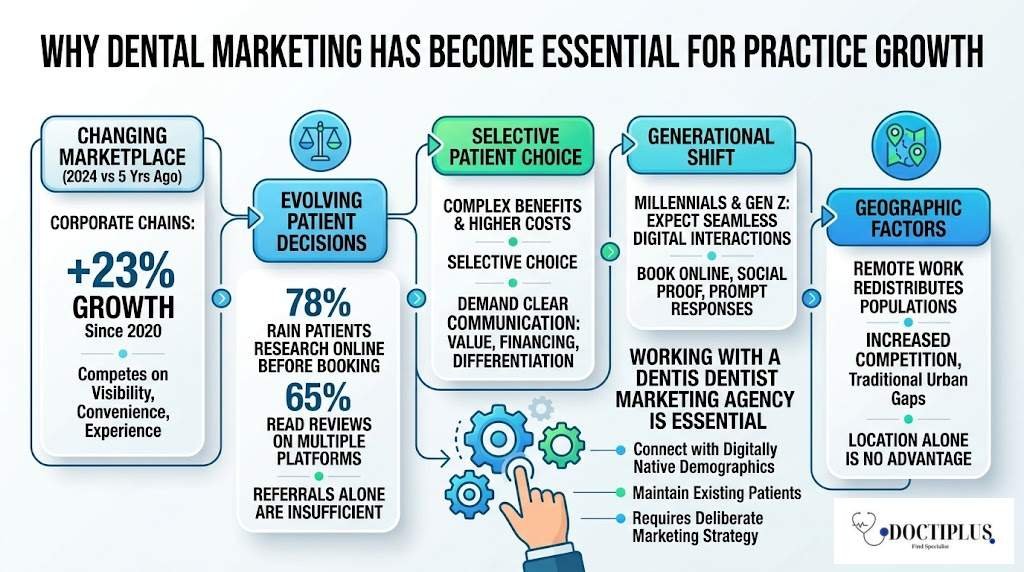
The dental marketplace of 2024 operates under fundamentally different rules than even five years ago. Corporate dental chains have expanded their footprint by 23% since 2020, bringing sophisticated marketing operations to local markets previously dominated by individual practitioners. These entities do not just compete on clinical care. They compete on visibility, convenience, and patient experience, backed by marketing budgets that individual practices cannot match dollar for dollar.
Patient decision-making has evolved equally dramatically. Research from the Dental Trade Alliance shows that 78% of patients now research dental providers online before scheduling appointments, with 65% reading reviews across multiple platforms. The traditional model of building a practice through referrals and word of mouth, while still valuable, now represents only one component of patient acquisition rather than the primary driver.
Insurance dynamics compound these challenges. As dental benefits become increasingly complex and patients face higher out-of-pocket costs, they have become more selective about provider choice. Patients do not just need dental care. They need clear communication about treatment value, financing options, and what differentiates one practice from another. This information is not conveyed through clinical excellence alone. It requires a deliberate marketing strategy.
The generational shift in patient demographics adds another layer of urgency. Millennials and Gen Z patients, now representing the largest consumer segments, expect seamless digital interactions. They book appointments through practice websites, expect prompt responses to online inquiries, and rely heavily on social proof when selecting healthcare providers. Working with a dentist marketing agency has become essential for practices that want to connect with these digitally native demographics while maintaining relationships with existing patients.
Geographic factors intensify competition even in seemingly stable markets. Remote work has redistributed populations, creating unexpected competitive pressures in previously underserved areas while leaving gaps in traditional urban centers. Practices can no longer assume their location alone provides a competitive advantage. They need marketing strategies that reach patients wherever they are located.
Key Challenges in Dental Practice Marketing and How to Address Them
Dental practices face a unique set of marketing obstacles that distinguish them from other small businesses. The complexity of healthcare regulations, the technical nature of dental services, and the inherent discomfort many patients associate with dental care create specific challenges that generic marketing approaches often fail to address effectively.
Common Marketing Obstacles That Dentists Face
Budget constraints top the list of marketing challenges for most dental practices. Unlike retail businesses that can allocate predictable percentages of revenue to marketing, dental practices must balance marketing investments against equipment costs, continuing education requirements, and staff development, all while maintaining cash flow in a procedure-based revenue model. Many practitioners find themselves caught between needing marketing results and lacking the resources to implement comprehensive strategies.
The technical complexity of dental services creates communication challenges that do not exist in most other businesses. Explaining the value of preventive care, the urgency of treatment recommendations, and the long-term benefits of various procedures requires marketing content that balances accessibility with accuracy. Many dentists struggle to translate their clinical expertise into compelling patient-focused messaging that drives appointment scheduling.
Regulatory compliance adds another layer of complexity. HIPAA requirements, state dental board regulations, and advertising standards create legal constraints that must be navigated carefully. This regulatory environment often intimidates practices from pursuing more aggressive marketing strategies, even when such approaches would be perfectly compliant with proper guidance.
Digital marketing presents particular challenges for dental practices. The algorithms governing search results and social media visibility require consistent content creation and technical optimization that many practitioners lack the time or expertise to manage. The rapid evolution of digital platforms means strategies that worked effectively last year may be obsolete today, requiring continuous adaptation that strains practice resources.
Proven Strategies to Overcome Dental Marketing Challenges
Successful dental practice marketing starts with strategic prioritization rather than attempting to execute every possible marketing channel simultaneously. Practices that thrive focus their limited resources on two or three marketing channels that align with their patient demographics and practice goals, developing competency in these areas before expanding to additional channels.
Marketing automation tools have become essential for managing resource constraints effectively. Email marketing platforms, social media scheduling tools, and patient communication systems can handle routine marketing tasks while freeing practice staff to focus on patient care. The key lies in selecting automation tools that integrate well with existing practice management systems and require minimal ongoing maintenance.
Content creation challenges dissolve when practices shift from trying to produce original content constantly to developing systems for repurposing and updating existing materials. A single patient education topic can generate blog posts, social media content, email newsletter segments, and patient handouts when approached strategically. This approach maximizes marketing impact while minimizing time investment.
Partnership strategies offer another solution to resource limitations. Collaborating with local businesses, participating in community health fairs, and developing referral relationships with complementary healthcare providers can generate marketing value without requiring significant financial investment. These relationships often produce more sustainable results than paid advertising because they are built on mutual value rather than budget allocation.
Effective Digital Marketing and SEO Techniques for Dental Practices
Digital marketing for dental practices requires a foundation built on local search optimization, since most patients seek dental care within a limited geographic radius. The technical aspects of SEO matter less than understanding how patients actually search for dental services and ensuring practice information appears prominently in those searches.
Local SEO and Content Marketing for Dentists
Google My Business optimization forms the cornerstone of local dental marketing. Practices must maintain accurate information across all online directories, but more importantly, they need to generate consistent positive reviews and respond professionally to all feedback. The practices that dominate local search results are not necessarily those with the most reviews, but those with the most recent and detailed reviews that include specific service mentions.
Content marketing for dental practices works best when it addresses specific patient concerns rather than attempting to showcase clinical expertise. Patients search for information about symptoms, treatment costs, and procedure expectations, not technical dental terminology. Blog posts that answer common patient questions, explain insurance processes, and address dental anxiety generate more valuable traffic than articles about clinical techniques.
Website optimization extends beyond search engine rankings to conversion optimization. A dental practice website must load quickly on mobile devices, make appointment scheduling easy, and clearly communicate practice location, hours, and services. Technical SEO matters, but user experience determines whether website visitors become patients.
Local content creation opportunities abound for dental practices willing to engage with their communities. Participating in school health fairs, sponsoring youth sports teams, and partnering with local businesses for cross-promotion creates content opportunities while building community relationships that strengthen local search authority.
Social Media Marketing and Paid Advertising for Dental Offices
Social media marketing for dental practices works best when it focuses on education and community building rather than aggressive promotion. Instagram and Facebook provide platforms for sharing before-and-after treatment photos with proper patient consent, explaining preventive care techniques, and showcasing practice culture. The goal is not viral content but consistent engagement with local community members who may need dental services.
Paid advertising campaigns require careful targeting to generate a positive return on investment. Google Ads for dental practices should focus on high-intent keywords related to specific services and emergency dental care. Facebook advertising works well for promoting preventive care services to specific demographic groups, particularly parents and seniors who require different messaging approaches.
Video content has emerged as particularly effective for dental practice marketing because it allows practitioners to demonstrate expertise while building personal connections with potential patients. Simple videos explaining common procedures, showcasing practice facilities, or introducing team members often generate more engagement than polished promotional content.
Reputation management requires active monitoring and response strategies across all digital platforms. Practices must respond to online reviews promptly and professionally, address patient concerns publicly when appropriate, and encourage satisfied patients to share their experiences online. This process requires consistent attention but generates compound benefits over time.
How to Use Analytics to Optimize Your Dental Marketing Efforts
Marketing analytics for dental practices must focus on metrics that connect directly to practice growth rather than vanity metrics that look impressive but do not drive patient acquisition. The most successful practices track new patient acquisition sources, appointment completion rates, and patient lifetime value rather than website traffic or social media followers.
Google Analytics provides essential insights into how potential patients interact with practice websites. Tracking which pages generate the most appointment requests, how long visitors spend reading service descriptions, and where visitors exit the website reveals optimization opportunities that directly impact patient acquisition. Heat mapping tools show exactly where visitors click and scroll, providing detailed guidance for website improvements.
Phone call tracking has become essential for practices that invest in digital marketing, since many patients still prefer calling to schedule appointments rather than using online booking systems. Understanding which marketing channels generate phone calls helps practices allocate marketing budgets more effectively and identify successful campaigns that might otherwise go unnoticed.
Patient feedback surveys provide qualitative data that complements digital analytics. Understanding why new patients chose a specific practice, what information they found most valuable during their research process, and what factors influence their decision to continue treatment helps practices refine their marketing messages and improve conversion rates.
Return on investment calculations for dental practice marketing must account for patient lifetime value rather than just initial appointment revenue. A new patient who receives regular cleanings and preventive care for several years generates significantly more value than the revenue from their first appointment. This long-term perspective changes how practices evaluate marketing channel effectiveness and budget allocation decisions.
Building Long-Term Brand Awareness and Patient Engagement for Your Practice
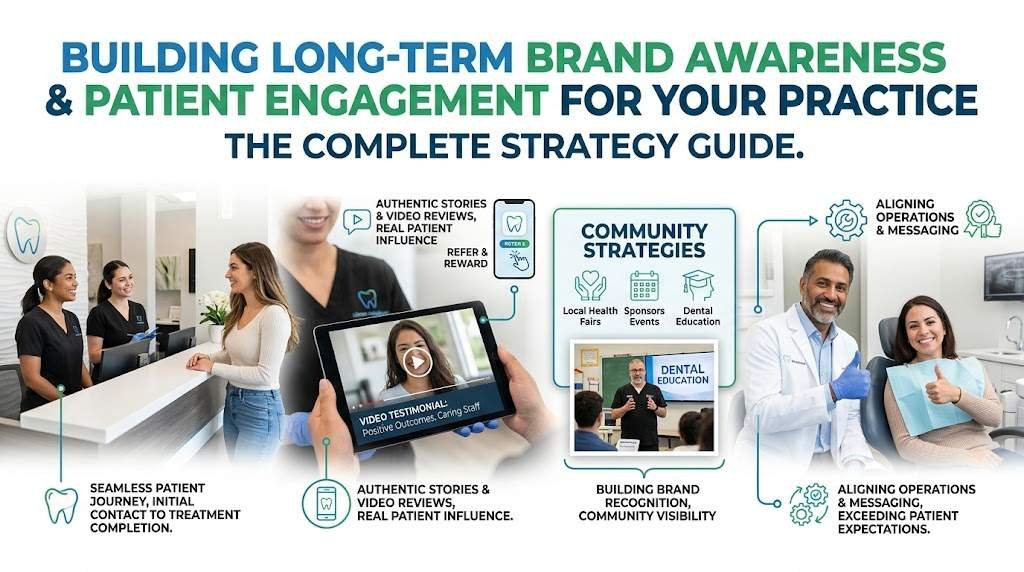
Brand building for dental practices extends far beyond logo design and color schemes to encompass the entire patient experience from initial contact through treatment completion. Successful dental brands create consistent experiences that patients remember and recommend to others, building sustainable competitive advantages that transcend price competition.
Patient testimonials and video reviews carry more marketing weight than any promotional content a practice can create. Authentic patient stories about positive treatment experiences, successful outcomes, and caring staff interactions influence potential patients more effectively than clinical credentials or technology descriptions. The key lies in making it easy for satisfied patients to share their experiences while ensuring compliance with privacy regulations.
Community engagement strategies build brand recognition while demonstrating practice values. Participating in local health fairs, sponsoring community events, and providing dental education at schools creates positive associations that extend beyond traditional advertising. These activities require time investment but generate long-term benefits through increased community visibility and referral opportunities.
Referral programs must offer value to existing patients while encouraging specific behaviors that drive practice growth. Successful programs reward patients for referring friends and family members, but they also educate patients about when referrals are most appropriate and how to make referrals effectively. The most effective referral programs make it easy for patients to refer others while ensuring the referred patients receive exceptional experiences.
The practices that build the strongest brands focus on exceeding patient expectations consistently rather than relying on marketing campaigns to drive growth. When clinical care, customer service, and practice operations align with marketing messages, the result is authentic brand strength that generates sustainable competitive advantage. This alignment requires ongoing attention to every aspect of the patient experience, but creates marketing momentum that compounds over time.
Final Conclusion
The era of passive practice growth is over. Clinical excellence remains the foundation of a successful dental practice. Still, it is no longer sufficient on its own to attract and retain patients in a market shaped by digital behavior, corporate competition, and shifting demographics. Marketing is no longer optional. It is a core operational function with measurable impact on patient acquisition, retention, and long-term practice value.
The good news is that dental practices do not need enormous budgets to compete effectively. They need clarity about their target patient demographics, consistency in their digital presence, and a willingness to measure what is working and adjust accordingly. Practices that invest in local SEO, build genuine community relationships, collect and respond to patient reviews, and communicate their value clearly will consistently outperform larger competitors with disengaged marketing strategies.
The most important step any practice can take today is to stop treating marketing as an afterthought and start treating it as a strategic priority. Whether that means partnering with a specialist agency, dedicating staff time to content and social media, or simply auditing your current online presence, forward movement matters more than perfection. The practices that begin building their marketing foundations now are the ones that will be best positioned for growth over the next decade.
Disclaimer
This article is intended for general informational and educational purposes only and does not constitute professional legal, financial, or marketing advice. Statistics and data cited reflect publicly available research at the time of writing and may be subject to change. Dental practices should consult qualified legal counsel regarding HIPAA compliance, state dental board advertising regulations, and other regulatory requirements before implementing any marketing strategy. Results from marketing initiatives vary based on market conditions, budget, execution, and other factors specific to each practice.
References
- American Dental Association. (2024). Workforce Analysis: Dentist-to-Population Ratios and Practice Trends 2015 to 2024. ADA Health Policy Institute.
- Dental Trade Alliance. (2024). Patient Behavior and Digital Decision-Making in Dental Care: Annual Consumer Survey. DTA Research Division.
- American Dental Association. (2024). Corporate Dentistry Market Share Report: Growth Trends 2020 to 2024. ADA Practice Management Resources.
- U.S. Department of Health and Human Services. (2024). HIPAA for Healthcare Marketing: Compliance Guidelines for Digital Advertising. HHS.gov.
- Google. (2024). The Digital Patient Journey: How People Search for Healthcare Providers. Think with Google Health Industry Insights.
- BrightLocal. (2024). Local Consumer Review Survey: Healthcare Provider Edition. BrightLocal Research.
- Academy of General Dentistry. (2023). Practice Management and Marketing: A Framework for Independent Dental Practices. AGD Impact Journal.