


Hearing changes do not always happen suddenly. For many adults, hearing loss develops slowly over months or years. Because the change is gradual, it is easy to blame other things, such as noisy rooms, tiredness, stress, unclear speech, or normal ageing.
A person may start turning up the television, asking family members to repeat themselves, avoiding group conversations, or feeling tired after social events. At first, these changes may seem small. Over time, they can affect confidence, relationships, work conversations, and daily comfort.
The good news is that early hearing problems can often be assessed and managed. Not every hearing concern means someone needs hearing aids, but a proper hearing check can help identify what is happening and what support may be useful.
Why Hearing Loss Is Often Missed
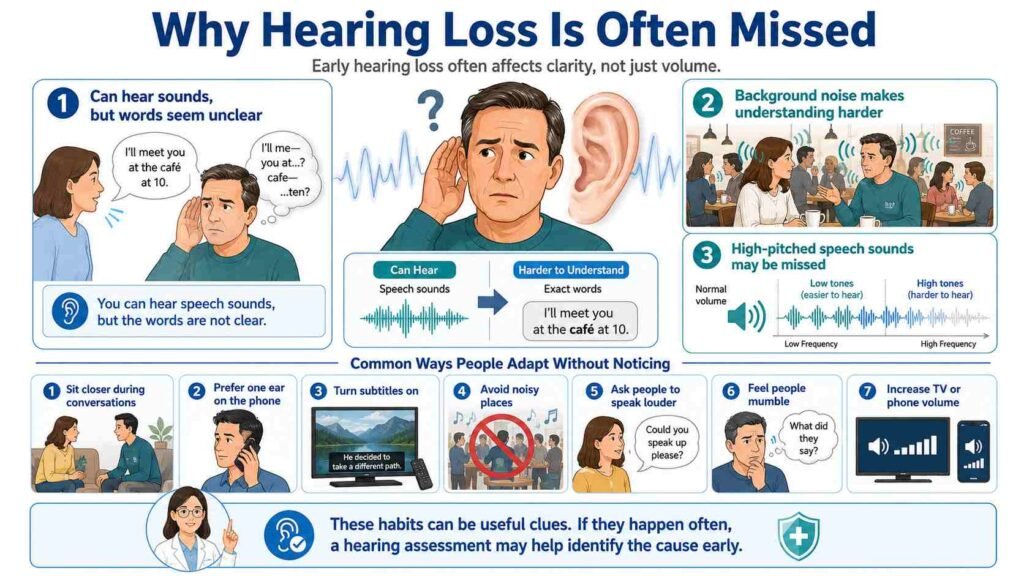
Early hearing loss is easy to overlook because many people can still hear sounds around them. The problem is often not silence. It is clear.
For example, someone may hear that another person is speaking but struggle to understand the exact words. This is especially common when there is background noise, more than one person is talking, or the speaker has a soft voice.
Hearing can also change unevenly. Some adults first lose sensitivity to higher-pitched speech sounds. This can make words sound less clear, even when the overall volume seems loud enough.
Common Ways People Adapt Without Noticing
Many adults adjust their behavior without realizing it. They may:
- Sit closer to people during conversations
- Prefer one ear when using the phone
- Turn subtitles on more often
- Avoid restaurants or busy gatherings
- Ask others to speak louder
- Feel frustrated when people “mumble.”
- Increase the volume on phones, televisions, or tablets
These habits can be useful clues. If they are becoming more frequent, it may be time to think about hearing health.
1. Asking People To Repeat Themselves More Often
One of the earliest signs of hearing difficulty is asking others to repeat what they have said.
This may happen during normal conversations, phone calls, family meals, or work discussions. A person may say:
- “Sorry, what was that?”
- “Can you say that again?”
- “I did not catch that.”
- “Are you mumbling?”
This does not always mean hearing loss is present, but when it happens often, it should not be ignored.
Why This Happens
Speech is made up of different sounds. Some sounds are softer or higher-pitched than others. When hearing sensitivity changes, certain speech sounds can become harder to pick up clearly.
This can make conversation feel incomplete. The person may hear part of the sentence but miss key words. As a result, they need repetition to understand the full meaning.
Example
Someone may hear, “I left the keys on the table,” as “I left the on the table.” They hear the voice, but the important detail is unclear. This can become frustrating for both the listener and the speaker.
2. Struggling To Follow Conversations In Noisy Places
Many people notice early hearing problems in noisy environments. Restaurants, coffee shops, shopping centers, family gatherings, and busy offices can become difficult.
The person may hear the noise around them but struggle to separate speech from the background sounds.
Why Noisy Places Are Difficult
Healthy hearing helps the brain focus on important sounds, such as a person’s voice, while filtering out background noise. When hearing changes, this process can become harder.
This is why someone may manage well in a quiet room but struggle badly in a crowded café.
Signs To Watch For
You may notice that you:
- Lose track of group conversations
- Smile or nod without fully understanding
- Avoid busy social settings
- Feel anxious before noisy events
- Prefer talking one-to-one instead of in groups
- Ask people to move somewhere quieter
If noisy places feel more overwhelming than before, a hearing assessment may help explain why.
3. Turning Up The Volume More Than Before
Another common early sign is needing higher volume on everyday devices.
This may include:
- Television
- Mobile phone
- Tablet
- Radio
- Laptop
- Earphones
- Car Audio
Often, family members notice first. They may say the television is too loud or ask why the phone volume is always high.
Why This Matters
Turning up the volume once in a while is normal. It may depend on the program, device, room size, or background noise.
However, if the volume has slowly increased over time, it may be a sign that speech and sound are becoming less clear.
A Helpful Self-Check
Ask yourself:
- Do others complain that the TV is too loud?
- Do I need subtitles more often?
- Do I struggle to hear phone calls unless the volume is high?
- Do I increase the earphone volume in public places?
- Do I feel that speakers sound unclear even when they are loud?
4. Feeling Tired After Conversations
Hearing is not only an ear function. The brain also plays a major role in understanding speech.
When hearing becomes less clear, the brain has to work harder to fill in missing information. This extra effort can cause listening fatigue.
What Listening Fatigue Feels Like
Listening fatigue may feel like:
- Mental tiredness after conversations
- Reduced concentration in meetings
- Irritability after social events
- Headache or pressure after long discussions
- Wanting to leave noisy places early
- Avoiding phone calls because they feel tiring
Some adults think they are becoming less social or less patient. In some cases, the real issue may be that listening has become harder work.
Why This Can Affect Daily Life
When every conversation requires extra effort, communication can become stressful. This may lead people to withdraw from family events, avoid work discussions, or feel less confident in public settings.
Early support can help reduce this strain and make communication easier again.
5. Ringing, Buzzing, Or Hissing In The Ears
Ringing, buzzing, whistling, humming, or hissing sounds in the ears may be a sign of tinnitus.
Tinnitus can affect one ear or both ears. It may come and go, or it may be present most of the time.
Does Tinnitus Always Mean Hearing Loss?
No. Tinnitus does not always mean someone has hearing loss. However, tinnitus and hearing loss often occur together, especially in adults with age-related or noise-related hearing changes.
Persistent tinnitus should be assessed, especially if it is new, worsening, affecting sleep, or happening with dizziness, ear pain, or sudden hearing changes.
When Tinnitus Needs Prompt Attention
Seek medical advice quickly if tinnitus:
- Starts suddenly
- Happens after a head injury
- Comes with sudden hearing loss
- Affects only one ear
- Comes with dizziness or balance problems
- Causes major sleep or concentration issues
Other Signs That May Point To Hearing Problems
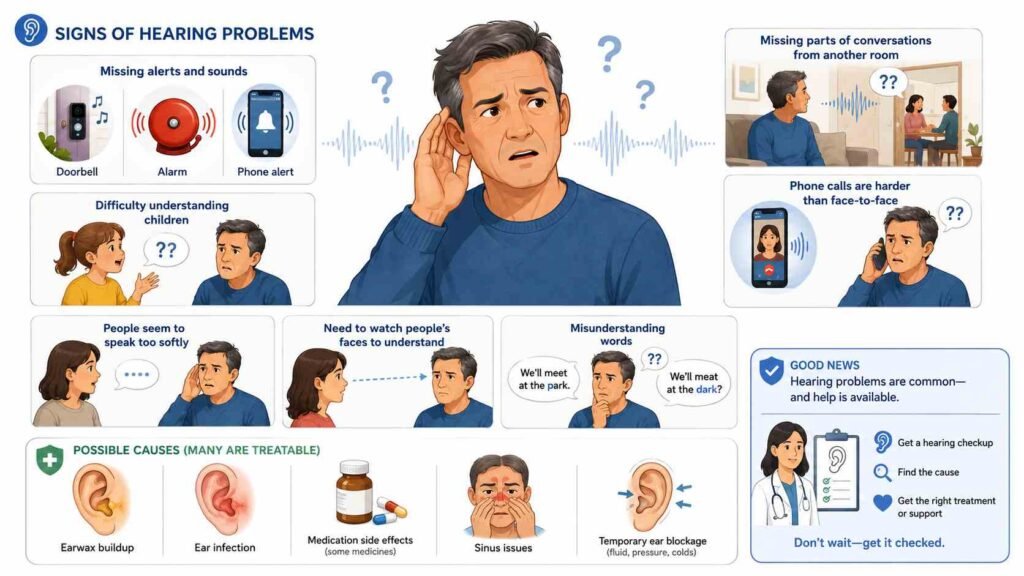
Hearing loss can show up in different ways. In addition to the five early signs above, adults may also notice:
- Difficulty hearing doorbells, alarms, or phone alerts
- Trouble understanding children’s voices
- Missing parts of conversations when people speak from another room
- Finding phone calls harder than face-to-face conversations
- Feeling that people speak too softly
- Needing to look at people’s faces to understand them
- Misunderstanding words more often
These signs can have other causes, such as earwax buildup, ear infections, medication side effects, sinus issues, or temporary ear blockage. That is why assessment is important.
Common Causes Of Hearing Changes In Adults
Hearing changes can happen for many reasons. Some are temporary and treatable. Others may be long-term and need ongoing management.
Age-Related Hearing Changes
Age-related hearing loss often develops gradually. It usually affects both ears and may make speech less clear, especially in noisy places.
Noise Exposure
Long-term exposure to loud sounds can damage hearing. This can happen through loud music, headphones at high volume, concerts, machinery, traffic noise, or workplace noise.
Earwax Build-Up
Earwax can block sound and make hearing seem reduced. This is often treatable, but it should be managed safely. Avoid pushing cotton buds deep into the ear, as this can worsen a blockage or damage the ear canal.
Ear Infections Or Fluid
Infections, inflammation, or fluid behind the eardrum can temporarily affect hearing. A doctor should check for pain, fever, discharge, or ear pressure.
Medical Conditions And Medicines
Some health conditions, such as diabetes or cardiovascular disease, may be linked with hearing problems. Some medicines can also affect hearing in certain cases. Speak to a doctor if hearing changes begin after starting a new medicine.
When To See A Doctor Or Hearing Professional
You should consider a hearing check if hearing difficulties are affecting daily life, relationships, work, or confidence.
Book A Hearing Assessment If You Notice
- Regular difficulty following conversations
- Trouble hearing in noisy places
- Frequent need for repetition
- Family complaints about the loud volume
- Ongoing ringing or buzzing in the ears
- Listening fatigue
- Sudden changes in hearing
- Hearing difficulty in one ear only
Seek Urgent Medical Advice If
- Hearing loss happens suddenly
- Hearing changes after a head injury
- You have ear pain, discharge, or bleeding
- You have severe dizziness or balance problems
- Tinnitus starts suddenly in one ear
- You feel pressure with fever or worsening pain
Sudden hearing loss should be treated as an urgent issue. Early medical care can make a difference.
What Happens During A Hearing Check?
A hearing check is usually simple and non-invasive. The exact process may vary, but it often includes:
- Questions about symptoms and medical history
- Ear examination
- Hearing test using different tones and volumes
- Speech understanding test
- Discussion of results
- Advice on next steps
The goal is not only to measure hearing levels. A good assessment also helps to understand how hearing affects daily life.
How Hearing Loss May Be Managed
Treatment depends on the cause and severity of hearing loss.
Options may include:
- Earwax treatment if blockage is present
- Medical treatment for infection or inflammation
- Hearing aids when suitable
- Tinnitus management support
- Assistive listening devices
- Communication strategies
- Regular hearing monitoring
Not everyone with hearing symptoms needs hearing aids. A professional assessment helps decide what is appropriate.
Hearing Care Options In Singapore
For readers in Singapore, hearing care services are available through clinics, audiology centers, hospitals, and hearing aid providers.
A provider such as Amazing Hearing may be suitable for adults seeking a hearing assessment, hearing aid guidance, and support tailored to their lifestyle and communication needs.
When choosing a hearing care provider, look for:
- Clear hearing assessment process
- Qualified hearing care professionals
- Transparent explanation of results
- Practical advice without pressure
- Trial or fitting support where available
- Aftercare and adjustment appointments
- Clear pricing and warranty information
- Support for cleaning, maintenance, and follow-up care
Questions To Ask Before Choosing Hearing Support
Before committing to hearing aids or long-term care, ask:
- What type of hearing loss do I have?
- Is my hearing change temporary or long-term?
- Do I need a medical review before hearing aids?
- What options are suitable for my lifestyle?
- What happens if the first device setting is not comfortable?
- Are follow-up adjustments included?
- What is the warranty period?
- How often should my hearing be checked?
Good hearing care should feel clear, respectful, and patient-focused.
Practical Tips To Protect Your Hearing
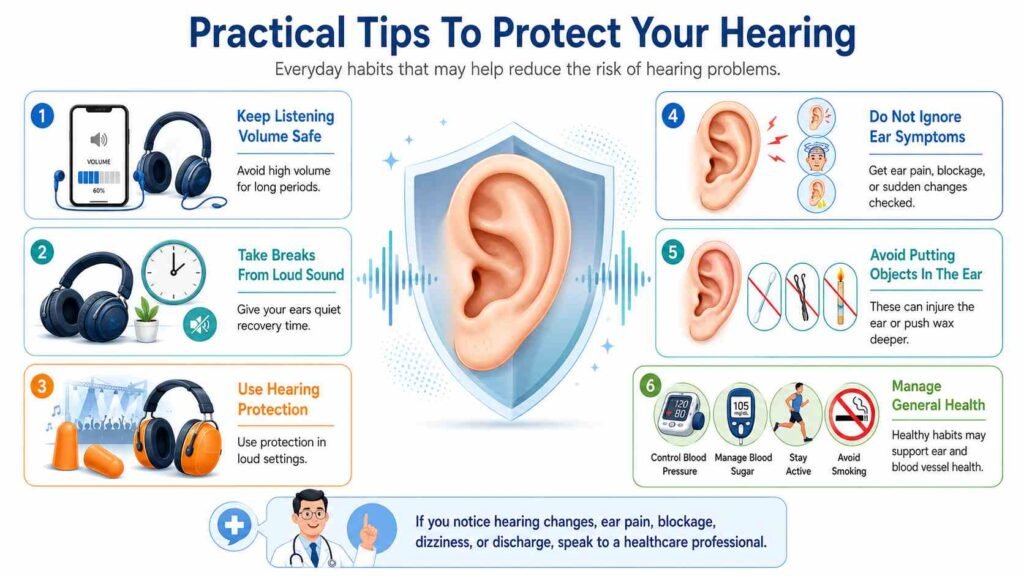
Some causes of hearing loss cannot be fully prevented, but many everyday habits can help protect hearing.
Keep Listening Volume Safe
Avoid using earphones at high volume for long periods. If people nearby can hear sound from your earphones, the volume may be too high.
Take Breaks From Loud Sound
After concerts, loud events, or long headphone use, give your ears quiet time to recover.
Use Hearing Protection
Use earplugs or protective earmuffs in loud settings, such as concerts, workshops, construction areas, or noisy workplaces.
Do Not Ignore Ear Symptoms
Ear pain, blockage, discharge, dizziness, or sudden changes in hearing should be evaluated. Do not assume symptoms will always settle on their own.
Avoid Putting Objects In The Ear
Cotton buds, hairpins, and ear candles can cause injury or push wax deeper. If you think earwax is blocking your hearing, speak to a healthcare professional.
Manage General Health
Healthy blood pressure, blood sugar control, regular exercise, and avoiding smoking may support overall ear and blood vessel health.
How Family Members Can Help
Hearing loss affects more than the person experiencing it. Family and friends can make communication easier by:
- Speaking clearly without shouting
- Facing the person while talking
- Reducing background noise where possible
- Getting the person’s attention before speaking
- Using shorter sentences when needed
- Being patient during group conversations
- Encouraging a hearing check without blame
Supportive communication can reduce frustration and help the person feel less isolated.
Medical Disclaimer
This article is for general health information only. It is not a diagnosis or a substitute for medical advice. If you have sudden hearing loss, ear pain, dizziness, ear discharge, or persistent tinnitus, seek advice from a qualified doctor, audiologist, or hearing care professional.
Final Thoughts
Hearing loss often develops slowly, which is why many adults mistake early signs for normal aging, tiredness, or poor communication from others.
Asking people to repeat themselves, struggling in noisy places, increasing device volume, feeling tired after conversations, and noticing ringing or buzzing in the ears are all signs worth taking seriously.
A hearing check can help identify the cause and guide the right next step. Early assessment can protect communication, confidence, independence, and quality of life.