

If you have been trying to conceive for months without success, you are not alone. According to the World Health Organization, around 1 in 6 people worldwide experience infertility at some point in their reproductive lives. That statistic pushes more couples every year to ask a very real question: Can natural approaches actually make a difference?
The short answer is yes, but with context. Natural fertility support is not about replacing medical treatment. It is about giving your body the best possible foundation so that whether you conceive on your own or go through assisted reproduction, your chances are stronger. This guide walks through what the science says, what to expect, how to find the right support, and where natural approaches fit alongside conventional medicine.
What Are Natural Fertility Treatments and Why Are They Gaining Popularity?
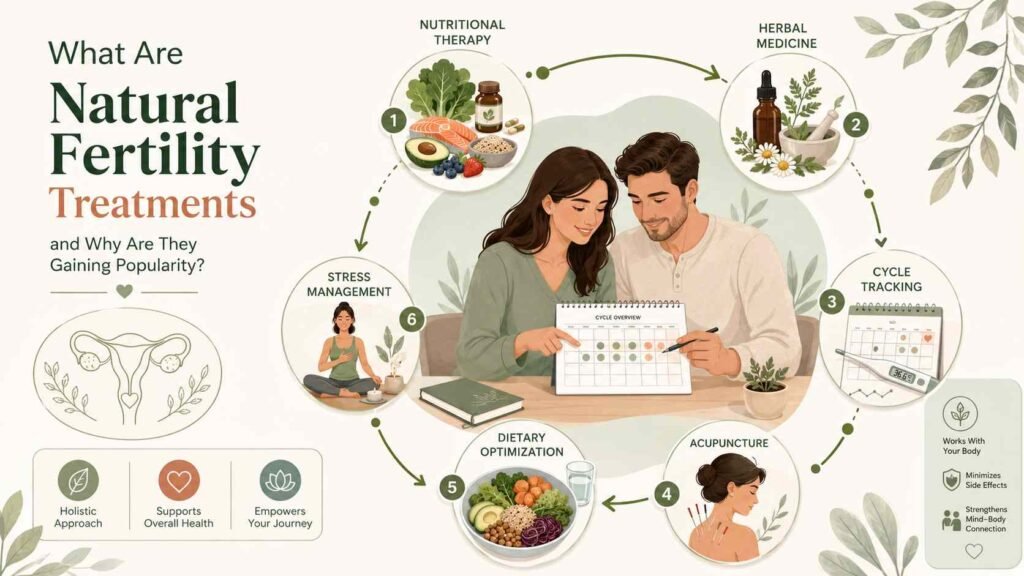
The term natural fertility treatments covers a broad spectrum of practices designed to support reproductive health through non-pharmaceutical means. At one end, you have straightforward lifestyle adjustments like improving your diet, tracking your cycle, sleeping better, and taking basic vitamins. At the other end, you have structured clinical protocols led by qualified practitioners who order blood work, interpret pathology results, and prescribe targeted herbal and nutritional interventions.
When experienced clinicians talk about natural fertility care, they almost always mean the second category. This is not folk medicine. It is evidence-informed clinical work that sits alongside reproductive medicine, not in opposition to it. A qualified naturopathic fertility practitioner will collaborate with your GP and your fertility specialist to create a coordinated plan.
Common Natural Fertility Approaches at a Glance
| Approach | What It Involves | Evidence Level |
| Nutritional Therapy | Targeted supplementation based on blood test results to correct deficiencies | Strong |
| Herbal Medicine | Practitioner-prescribed botanical formulations for hormonal support | Moderate to Strong |
| Cycle Tracking | Monitoring basal body temperature, cervical mucus and ovulation timing | Well Established |
| Acupuncture | Traditional and medical acupuncture to support blood flow and stress reduction | Growing |
| Dietary Optimization | Anti-inflammatory, nutrient-dense eating plans tailored to fertility | Strong |
| Stress Management | Clinical protocols for nervous system regulation and cortisol reduction | Moderate |
The distinction between casual self-directed changes and structured practitioner-led care matters enormously. Research from the American Society for Reproductive Medicine confirms that while basic lifestyle improvements have modest effects, individualized clinical care that addresses specific deficiencies and imbalances produces stronger and more consistent outcomes.
What Does the Science Actually Say About Natural Fertility Support?
This is where conversations often get heated online, so let us lay out the evidence clearly.
Key Nutrients That Directly Affect Reproductive Outcomes
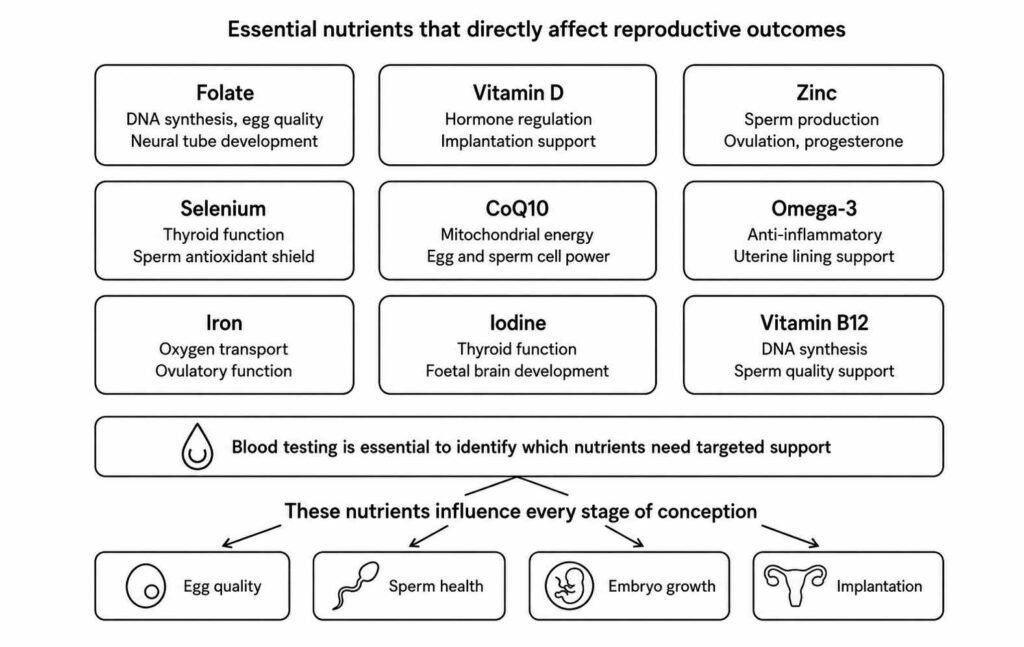
Pre-conception nutrient status has a direct influence on egg quality, sperm health, early embryo development, and the uterine lining that an embryo needs to implant into. This is well established in reproductive medicine. A landmark study published in Human Reproduction found that men who took daily antioxidant supplements for three months produced sperm with significantly less DNA fragmentation. Similar peer-reviewed research shows that mitochondrial support through nutrients like CoQ10 improves oocyte quality in women, particularly those over 35.
| Nutrient | Role in Fertility | Who Benefits |
| Folate (Methylfolate) | Neural tube development, DNA synthesis, egg quality | Women and Men |
| Vitamin D | Hormone regulation, implantation support, immune modulation | Women and Men |
| Zinc | Sperm production, ovulation, progesterone synthesis | Women and Men |
| Selenium | Thyroid function, antioxidant protection for sperm | Women and Men |
| CoQ10 (Ubiquinol) | Mitochondrial energy for egg and sperm cells | Especially over 35 |
| Omega-3 Fatty Acids | Anti-inflammatory support, embryo development, uterine lining | Women and Men |
| Iron | Oxygen transport, ovulatory function, energy production | Primarily Women |
| Iodine | Thyroid function, foetal brain development | Women and Men |
| Vitamin B12 | DNA synthesis, nervous system support, sperm quality | Women and Men |
Many adults in developed countries fall short on at least one of these nutrients. According to the National Institutes of Health Office of Dietary Supplements, subclinical deficiencies are surprisingly common even in people who eat balanced diets, which is why targeted blood testing is so important before and during preconception care.
Where the Evidence Is Still Developing
Honesty matters here. While the connection between nutrient status and fertility is well supported, researchers are still working through some specifics. Which exact protocol works best for unexplained infertility? How much benefit comes from supplements alone versus the dietary and lifestyle changes that usually accompany them? These questions remain open. What you can say with reasonable confidence is that addressing nutrient deficiencies, blood sugar regulation, thyroid function and inflammatory markers before trying to conceive tends to improve outcomes for most couples.
90 Day Preconception Window: Why Timing Your Preparation Matters
You will see the 90-day figure quoted often in fertility circles, and it sometimes sounds like a marketing talking point. But it is actually rooted in basic reproductive biology that any fertility specialist will confirm.
Biology Behind the 90 Day Rule
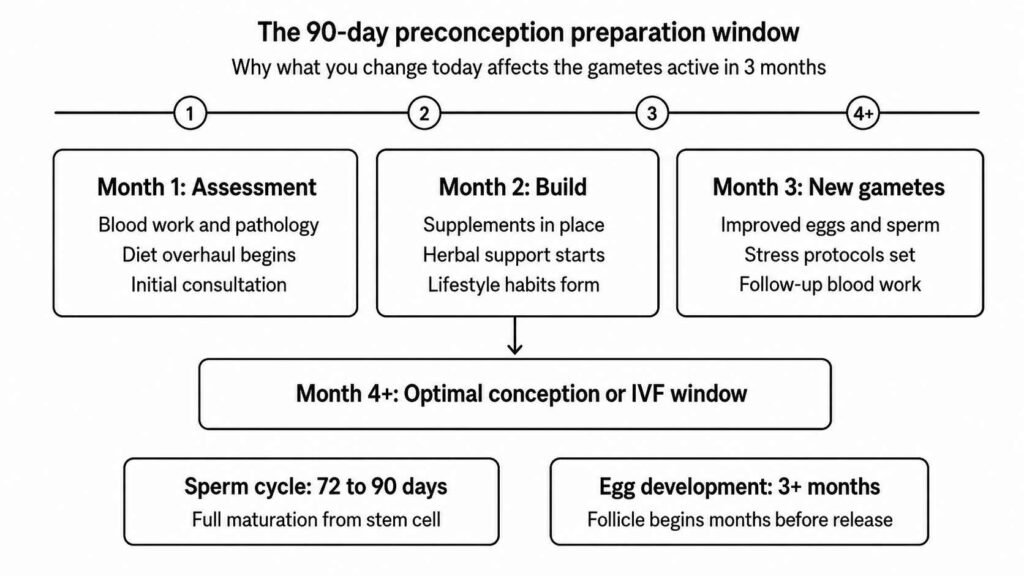
Sperm takes roughly 72 to 90 days to develop from spermatogonia (early stage cells) to mature spermatozoa fully. The follicle that releases your egg this cycle started developing several months ago. This means that anything you change today in terms of nutrition, supplementation, stress management, or lifestyle will affect the gametes that become active in approximately three months, not next week. The Mayo Clinic recommends that couples begin preparing their bodies for conception well in advance for this exact reason.
| Timeline | What Happens During This Phase |
| Month 1 | Comprehensive blood work and pathology, initial consultation, dietary overhaul begins |
| Month 2 | Targeted supplementation protocol in place, herbal support introduced, lifestyle changes becoming habitual |
| Month 3 | New gametes developing under improved conditions, stress management protocols established, follow-up blood work |
| Month 4 to 6 | Optimal window for natural conception attempts or IVF cycle, continued monitoring and protocol adjustments |
Couples who commit to a proper preconception preparation period tend to have better experiences regardless of whether they conceive naturally or pursue IVF. Those heading into assisted reproduction arrive with better baseline blood work, which their specialists consistently notice and appreciate.
Can Natural Fertility Support Work Alongside IVF?
There is a persistent myth that you must choose between medical treatment and natural approaches. In reality, most reputable fertility specialists actively encourage their patients to work on nutrition, lifestyle, stress regulation, and sleep quality alongside assisted reproduction. For couples concerned about the cost of IVF, exploring affordable ivf treatment through clinics with transparent pricing makes it easier to plan a coordinated approach that includes both natural support and assisted reproduction without the financial uncertainty that often delays treatment. Some clinics refer patients directly to naturopaths, particularly in cases involving recurrent implantation failure, poor egg quality, unexplained infertility, or repeated early pregnancy loss.
Why Communication Between Your Practitioners Is Essential
The key issue is not whether natural support helps during IVF. The evidence suggests it does. The critical factor is timing and coordination between your practitioners. Certain herbal medicines can interact with stimulation medications used in IVF protocols. Some supplements need to be paused around egg collection procedures. A practitioner who genuinely understands reproductive medicine will know exactly what to taper, what to continue, what to pause around procedures, and what to introduce only after embryo transfer.
If you are considering natural support alongside IVF, ask your practitioner directly: How often do you work with patients undergoing assisted reproduction? Do you communicate directly with the treating fertility clinic? A confident, detailed answer to both questions is the minimum standard you should accept.
How to Choose the Right Natural Fertility Practitioner
Not every naturopath is qualified to support fertility cases. This is a specialty area that requires advanced training beyond general naturopathic education. Here is what to look for when evaluating a practitioner.
Credentials and Qualifications to Verify
- Registration with a recognized professional body, such as the NHAA or ANTA in Australia, or equivalent national associations in other countries
- Postgraduate or advanced training specifically in reproductive medicine, fertility, or women’s health
- The practitioner routinely orders and interprets blood pathology, including iron studies, full thyroid panel, vitamin D, AMH, inflammatory markers, and hormonal profiles
- A clear working relationship with conventional fertility specialists, demonstrated by willingness to share results and coordinate care
- Treatment plans that run a minimum of three months, with six months common for complex cases involving PCOS, endometriosis, or recurrent miscarriage
Red Flags to Watch For
- Promises of results within four weeks show a fundamental misunderstanding of reproductive biology timelines
- Positioning natural treatment as a replacement for IVF or conventional medicine rather than a complement to it
- Prescribing supplements based purely on symptoms without ordering any blood work or pathology
- Reluctance to communicate with your GP or fertility specialist, or discouraging you from following medical advice
- One-size-fits-all protocols that do not account for your individual test results, diagnosis, or medical history
The National Herbalists Association of Australia (NHAA) maintains a directory of registered practitioners, and checking registration status is a smart first step.
Does Stress Actually Affect Fertility, or Is That Just Something People Say?
Both, depending on what kind of stress you are talking about. A single stressful day around ovulation probably has minimal impact on conception. Chronic sustained stress that persists over months and disrupts sleep, appetite, and hormonal balance is a different matter entirely.
How Chronic Stress Disrupts Reproductive Hormones
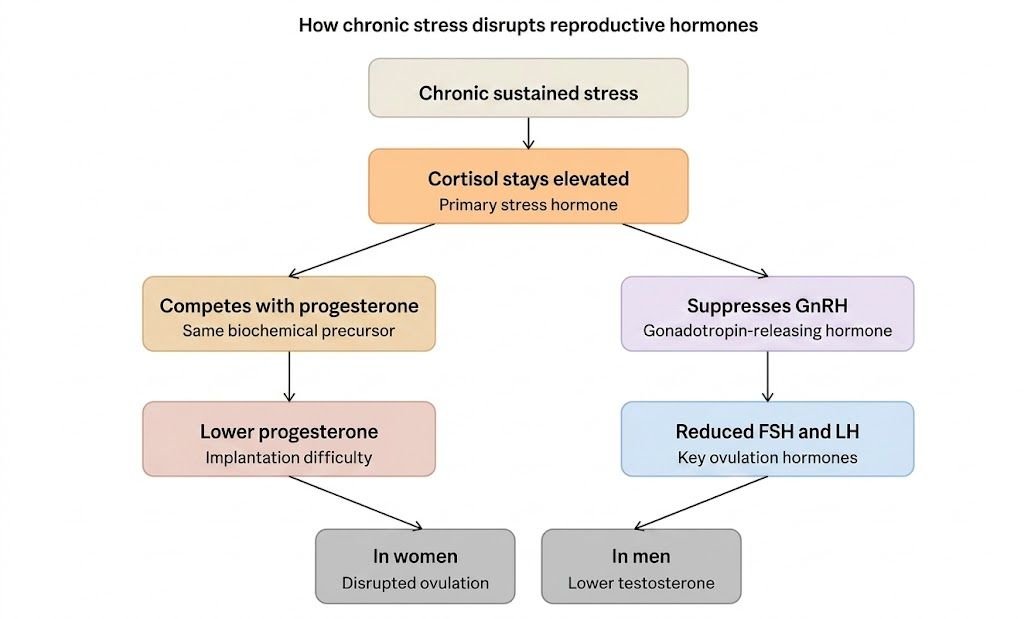
The mechanism is well understood in endocrinology. Cortisol (the primary stress hormone) competes with progesterone for the same biochemical precursor. When cortisol stays elevated over a prolonged period, it can suppress gonadotropin-releasing hormone (GnRH), which, downstream, reduces FSH and LH, both of which are essential for ovulation and sperm production. In men, sustained stress measurably reduces testosterone levels and sperm parameters, including count, motility, and morphology. Research published in the journal Fertility and Sterility has repeatedly confirmed these pathways.
None of this means stress causes infertility on its own. What it means is that for couples already dealing with marginal hormonal function, chronic unmanaged stress can be the factor that tips the balance in the wrong direction. This is why structured nervous system support through practices like clinical-grade herbal adaptogens, mindfulness protocols, and sleep optimization often features in naturopathic fertility plans, not as a wellness luxury, but as a clinical intervention with measurable hormonal effects.
Natural Approaches for Male Fertility: The Often Overlooked Half of the Equation
Fertility conversations still disproportionately focus on female factors, but male factor issues contribute to roughly half of all infertility cases. The National Library of Medicine hosts extensive research showing that sperm quality is highly responsive to nutritional and lifestyle interventions.
Practical Steps for Improving Sperm Health
- Antioxidant supplementation with zinc, selenium, vitamin C, and vitamin E to reduce oxidative damage to sperm DNA
- CoQ10 supplementation to support mitochondrial function and sperm motility
- Reducing or eliminating alcohol consumption, which is directly linked to lower sperm count and quality
- Avoiding excessive heat exposure to the testes from laptops, saunas, hot baths, and tight clothing
- Managing chronic stress through evidence-based techniques because sustained cortisol elevation suppresses testosterone
- Maintaining a healthy weight, as both obesity and being underweight negatively affect sperm parameters
- Getting a comprehensive semen analysis alongside blood work for hormones, vitamins, and inflammatory markers
The good news for men is that sperm quality can change relatively quickly compared to egg quality. Because sperm turns over every 72 to 90 days, consistent improvements in nutrition, supplementation, and lifestyle habits can show measurable results on a semen analysis within three to four months.
Specific Conditions That Respond Well to Natural Fertility Support
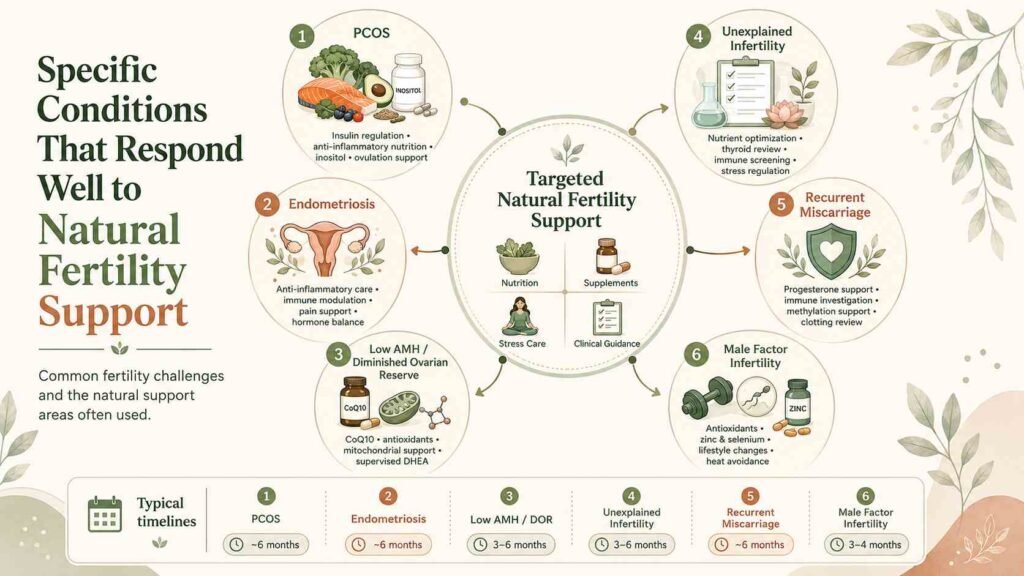
Not every fertility challenge responds equally to natural approaches. Some conditions have particularly strong evidence for improvement with targeted nutritional and naturopathic care.
| Condition | Natural Support Focus Areas | Typical Duration |
| PCOS | Insulin regulation, anti-inflammatory nutrition, inositol supplementation, herbal support for ovulation | 6 months recommended |
| Endometriosis | Anti-inflammatory protocols, immune modulation, pain management, hormonal balancing | 6 months recommended |
| Low AMH or Diminished Ovarian Reserve | Mitochondrial support with CoQ10, antioxidant therapy, DHEA (under supervision) | 3 to 6 months |
| Unexplained Infertility | Comprehensive nutrient optimization, thyroid and immune screening, stress regulation | 3 to 6 months |
| Recurrent Miscarriage | Progesterone support, immune investigation, methylation pathway optimization, clotting factor review | 6 months recommended |
| Male Factor Infertility | Antioxidant therapy, zinc and selenium supplementation, lifestyle modifications, heat avoidance | 3 to 4 months |
If you are dealing with any of these conditions, working with a qualified fertility naturopath who can tailor a protocol specifically for your diagnosis gives you the best chance of meaningful improvement. The National Institute of Child Health and Human Development provides additional information on these and other fertility-related conditions.
Final Consluion
The question that matters is not whether natural approaches replace conventional fertility medicine. They do not, and any credible practitioner will tell you the same. The real question is whether addressing the nutritional, hormonal, lifestyle and biochemical factors that influence your reproductive function over a sensible timeframe gives you a better chance at the outcome you are working towards.
For most couples, the answer is yes. Whether you are trying to conceive naturally, preparing for IVF or exploring your options after months of disappointment, giving your body the right foundation through structured preconception care is one of the most empowering steps you can take.
Start with a proper assessment. Get your blood work done. Find a qualified practitioner who understands reproductive medicine and is willing to work alongside your medical team. Give yourself the 90 day window your biology requires. And remember that preparing well is not the same as waiting. It is active, purposeful work that puts you in the strongest possible position for whatever comes next.
Disclaimer: This article is for informational purposes only and does not constitute medical advice. Always consult with a qualified healthcare professional before beginning any fertility treatment or supplement protocol. Individual results may vary depending on your specific health circumstances.