

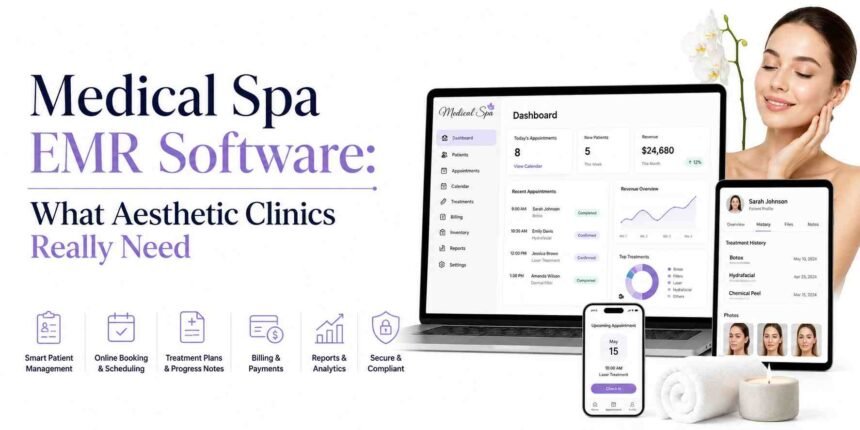
Running a medical spa is different from running a regular clinic or a salon. A salon booking app may handle appointments well, but it usually cannot track injectable products, lot numbers, consent forms, or patient treatment records. A hospital-style EMR may manage clinical notes, but it often focuses too much on insurance billing, which is not how most aesthetic clinics earn revenue.
Medical spas sit between healthcare and retail. They provide medical treatments, but they also depend on repeat visits, memberships, packages, product sales, and strong patient relationships. That is why they need software built specifically for aesthetic workflows.
Why Regular Clinic Software Does Not Fit Med Spas
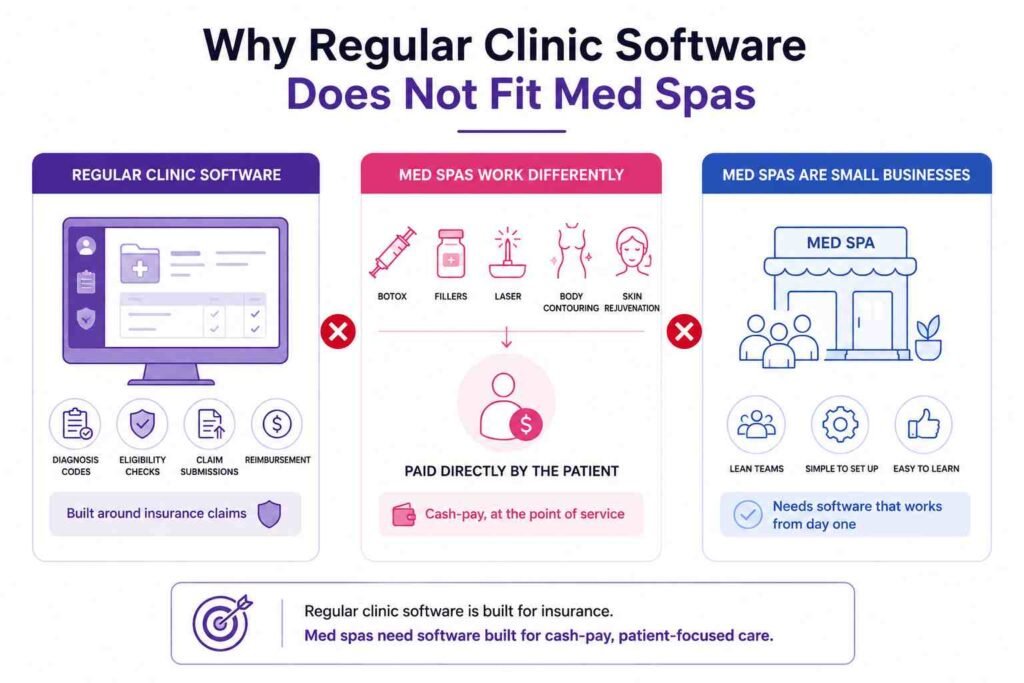
Most traditional practice management systems are designed around insurance claims. They focus on diagnosis codes, eligibility checks, claim submissions, and reimbursement.
Medical spas usually work differently. Treatments like Botox, fillers, laser resurfacing, body contouring, and skin rejuvenation are often paid for directly by the patient. Because of this, a system built mainly for insurance billing may not solve the daily problems an aesthetic clinic actually faces.
Most med spas are also small businesses with lean teams. They need software that is simple to set up, easy to learn, and useful from the first day.
Why Injectable Tracking Matters
Injectables are one of the biggest areas where general software falls short.
Every vial of filler or neuromodulator comes with a lot number and expiry date. If there is a product recall, patient concern, or compliance review, the clinic needs to know exactly which patients received the product from a specific lot.
A good medical spa EMR should track:
- Product name
- Lot number
- Expiry date
- Units drawn
- Units used
- Provider name
- Patient name
- Treatment area
- Treatment date
This helps protect the clinic, improves inventory accuracy, and makes treatment costs easier to understand. Instead of guessing how much product was used, the clinic can see the real numbers.
Before and After Photos Are More Than Marketing
Before and after photos are useful for showing treatment results, but they are also part of the patient record.
When a photo is connected to a patient’s identity, it becomes sensitive health information. That means photos should not be stored casually on personal phones or scattered across different devices.
A proper EMR should keep photos inside the patient’s chart. Photos should be easy to organize by visit, treatment type, and date. This makes comparisons clearer and helps protect the clinic if a patient ever questions a result.
Digital Consent Helps Protect the Clinic
Consent forms are very important in aesthetic treatments. Paper forms can get lost, damaged, or hard to find when needed later.
Digital consent makes the process cleaner. Patients can complete forms before the appointment. The forms can be signed electronically, time-stamped, and saved directly in the patient record.
This is especially useful for treatment-specific consent, photo permission, health history, and follow-up documentation.
Why One Connected System Works Better
Many clinics use separate tools for scheduling, charting, payments, photos, inventory, and memberships. At first, this may seem manageable. Over time, it creates confusion.
For example, a treatment may be charted, but the product may not be removed from inventory. A payment may be taken, but the membership credit may not update. A patient photo may be saved, but not connected to the correct visit.
The EmilyEMR All-in-One Platform is a good example of software made for aesthetic clinics because it brings charting, injectable tracking, before and after photos, payments, and patient records into one connected system.
EmilyEMR, for example, is designed around aesthetic clinic workflows. It brings charting, injectable tracking, before and after photos, payments, and patient records into one connected platform.
Features That Help Med Spa Revenue
A medical spa EMR should do more than store records. It should also support repeat business and patient retention.
Important revenue-focused features include:
- Membership tracking
- Treatment packages
- Automated reminders
- Follow-up reminders
- Retail product sales
- Gift card support
- Patient reactivation tools
These features help clinics reduce missed appointments, bring patients back at the right time, and make checkout easier.
What to Look for When Choosing a Medical Spa EMR
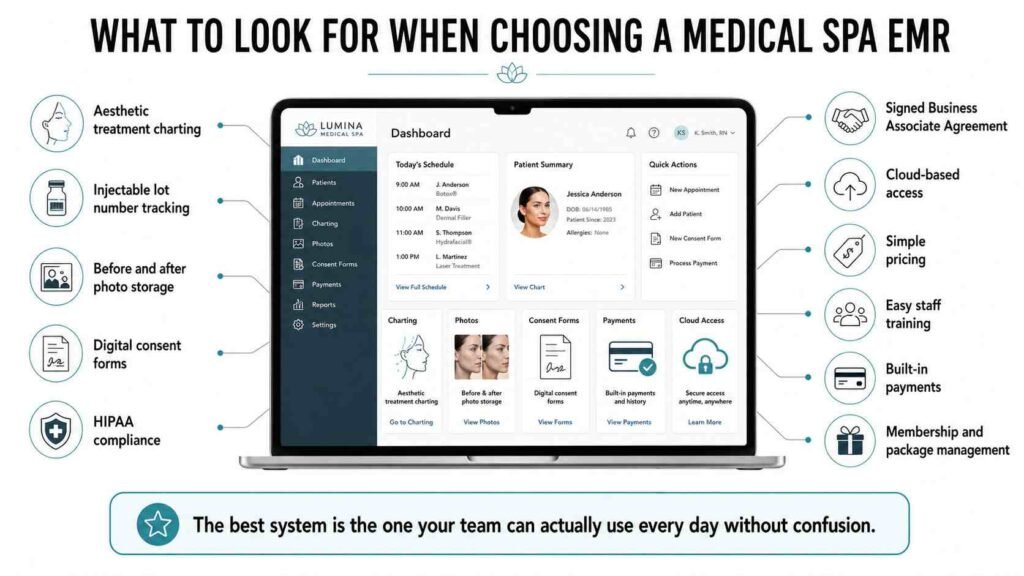
When comparing platforms, focus on the features that match how aesthetic clinics actually work.
Look for software that includes:
- Aesthetic treatment charting
- Injectable lot number tracking
- Before and after photo storage
- Digital consent forms
- HIPAA compliance
- A signed Business Associate Agreement
- Cloud-based access
- Simple pricing
- Easy staff training
- Built-in payments
- Membership and package management
The best system is not always the one with the longest feature list. The best system is the one your team can actually use every day without confusion.
Final Thoughts
Choosing a medical spa EMR is not just a software decision. It affects compliance, patient experience, inventory control, revenue tracking, and daily clinic operations.
Aesthetic clinics need tools built for their real workflow. When the system understands injectables, photos, consent, payments, memberships, and repeat visits, the clinic can run more smoothly and grow with fewer problems.
Disclaimer
This content is for general informational purposes only. It should not be taken as legal, medical, compliance, or software purchasing advice. Medical spa owners should speak with qualified legal, compliance, and healthcare professionals before making decisions about HIPAA, patient records, consent forms, or clinic operations.
Sources
- Mordor Intelligence. Medical Spa Market Size, Growth, Competitive Landscape 2025 to 2030.
- U.S. Department of Health and Human Services. HIPAA for Professionals, Covered Entities and Business Associates.
- Market.us. Medical Spa Market News 2025, Ownership and Service Segmentation.