

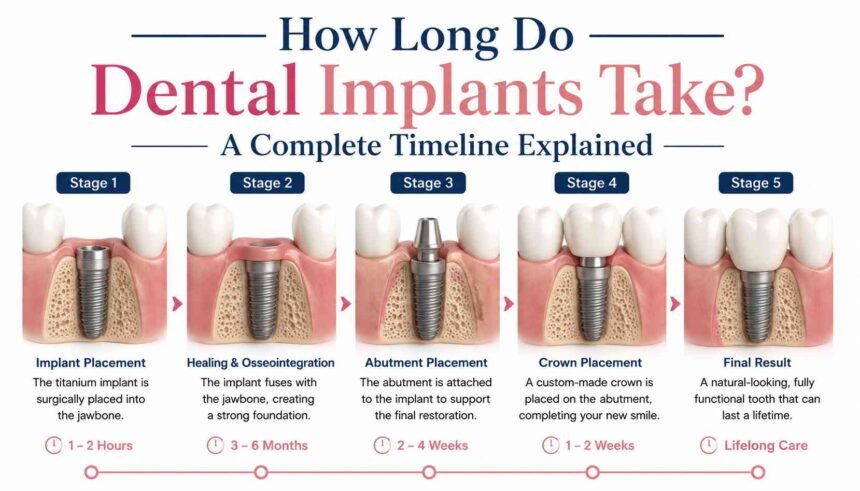
If you have been considering dental implants, you have probably already noticed that the answer to “how long does it take?” is rarely simple. Unlike a filling or a crown that can be finished in a single visit, dental implants involve a process that plays out over months, for most people, which comes as a surprise, and understandably so.
Here is the thing, though: that timeline exists for a very good reason. Dental implants work because they fuse directly with your jawbone, creating a foundation that is stable enough to last decades. That kind of biological integration cannot be rushed. And once you understand why each phase of the process matters, the wait starts to feel a lot more reasonable.
According to the American Dental Association’s 2023 treatment data, more than 5.5 million dental implant placements are performed annually in the United States, with success rates now climbing above 95%. Yet patient frustration around timelines remains one of the most common themes in pre-treatment consultations. This guide walks you through every stage of the dental implant process, what to expect, what can slow things down, and how implants compare to other tooth replacement options.
What Is the Typical Dental Implant Timeline?
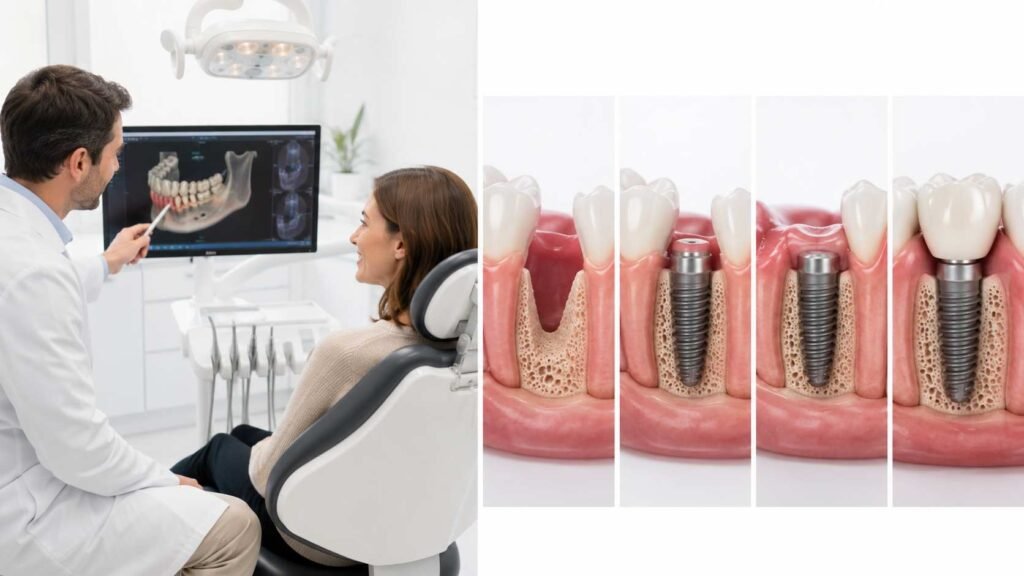
For most patients with straightforward cases, the dental implant timeline runs between three and six months from start to finish. However, that window assumes ideal conditions: adequate bone density, good general health, and no complications along the way. In reality, the full process often takes longer, and understanding why you do helps plan more effectively.
Here is how the phases generally break down.
Phase 1: Consultation and Treatment Planning (One to Two Weeks)
Everything starts with a comprehensive examination. Your dentist or oral surgeon will review your dental and medical history, take X-rays or 3D cone beam scans, and assess the quality and quantity of bone at the implant site. This phase typically takes one to two weeks and forms the foundation of your entire treatment plan.
If you still have a damaged or failing tooth that needs to come out, extraction adds another step. After extraction, most patients need six to eight weeks of healing before implant placement can begin, though some cases allow for immediate implant placement at the time of extraction.
Phase 2: Bone Grafting if Needed (Three to Six Additional Months)
This is the phase that catches many patients off guard. According to oral surgery data, roughly 30 percent of implant candidates require bone grafting before an implant can be placed. If your jawbone has experienced resorption due to long-term tooth loss, gum disease, or injury, there may not be enough stable bone to anchor an implant properly.
Bone grafting involves adding material to the deficient area to encourage new bone growth. The graft itself takes about an hour, but the healing and integration of the new bone takes three to six months before implant surgery can proceed. This is the most common reason a dental implant treatment stretches well beyond the six-month mark.
Phase 3: Implant Placement Surgery (One Appointment)
Once the bone is ready, the surgical placement of the titanium implant takes place. The procedure itself runs 60 to 90 minutes per implant under local anesthesia. Most patients describe the experience as comparable to a tooth extraction in terms of discomfort, which is generally less intense than people anticipate.
After placement, your body begins the osseointegration process, where bone cells gradually grow around and fuse with the implant surface. This phase is the heart of the dental implant timeline and takes three to six months to complete. There is no shortcut here. Attempting to load the implant with a permanent crown before osseointegration is complete significantly increases the risk of failure.
Phase 4: Abutment and Crown Placement (Two to Three Weeks)
Once osseointegration is confirmed, a minor second procedure attaches the abutment, which is the connecting piece that sits above the gum line and supports the final crown. In some cases, the gums need one to two weeks to heal around the abutment before impressions are taken.
Your dental lab then fabricates a custom crown designed to match the color, shape, and function of your surrounding teeth. This typically takes two to three weeks. The crown is then screwed or cemented onto the abutment, and within 24 hours, most patients can return to normal eating.
What Happens During Each Stage of the Surgery?
Understanding the surgical process in more detail can ease a lot of pre-treatment anxiety. Here is what actually happens during each appointment.
Implant Placement Procedure
After local anesthesia is administered, your surgeon makes a precise incision in the gum tissue to expose the jawbone. Specialized drills of gradually increasing diameter create a socket sized exactly for the implant. Continuous irrigation is used throughout to prevent heat from damaging the surrounding bone, which is critical for osseointegration.
The implant itself is a small titanium post, typically between 8 and 15 millimeters in length, depending on the location and available bone. Once seated, it is either covered with a protective cap and sutured closed or fitted with a healing cap that remains visible above the gum line. The approach depends on bone quality, implant location, and clinical judgment.
Abutment and Crown: The Final Steps
The second surgical appointment is considerably less involved. If the implant was buried under the gum, a small incision exposes the top of the implant and the protective cap is removed. The custom abutment is then threaded into place, and the gum tissue is allowed to heal around it.
Final impressions or digital scans capture the precise position needed for the crown. Two to three weeks later, the finished crown is attached, and your new tooth is complete. At this stage, the implant looks, feels, and functions like a natural tooth.
How Long Does Healing Take After Surgery?
Healing after dental implant surgery happens in layers, and each layer matters.
Osseointegration Process
Surface-level healing of the gum tissue happens within the first one to two weeks. Sutures dissolve or are removed, and the incision closes. But the deeper biological work takes considerably longer.
During the first month, specialized bone cells called osteoblasts begin depositing new bone material directly onto the implant surface. Activity accelerates during months two and three, when the bulk of osseointegration occurs. By the end of the integration period, the implant has transitioned from a foreign object to a functional part of your jawbone.
Research published in the Journal of Oral Implantology confirms that osseointegration success rates exceed 95 percent when patients follow proper healing protocols. Bone density, implant surface treatment, and overall health all influence how quickly this process unfolds. Patients with naturally dense bone tend to integrate faster, while those who require grafting may need more time.
After the crown is placed, bone remodeling continues for several additional months as the surrounding structure adapts to the functional forces of chewing. This final phase further strengthens the implant’s long-term stability.
Postoperative Care That Actually Makes a Difference
The first two weeks after surgery are when your habits matter most. Key practices during this period include:
- Rinsing gently with warm salt water several times a day
- Avoiding vigorous spitting, straws, and hard or crunchy foods
- Taking anti-inflammatory medications as directed to control swelling
- Avoiding smoking entirely, as tobacco significantly restricts blood flow to healing tissues and is the leading controllable cause of implant failure
Long-term care mirrors what you would do for natural teeth, with a few additions. Professional cleanings every three to six months help prevent peri-implantitis, an inflammatory condition around the implant that can threaten stability. Many patients find that water flossers or interdental brushes clean around implant crowns more effectively than traditional floss.
Those seeking dependable dental implant care in Las Vegas or other major cities should look for practices that emphasize thorough aftercare protocols alongside the surgical procedure itself. The quality of follow-up care has a measurable impact on long-term outcomes.
What Factors Affect the Dental Implant Timeline?
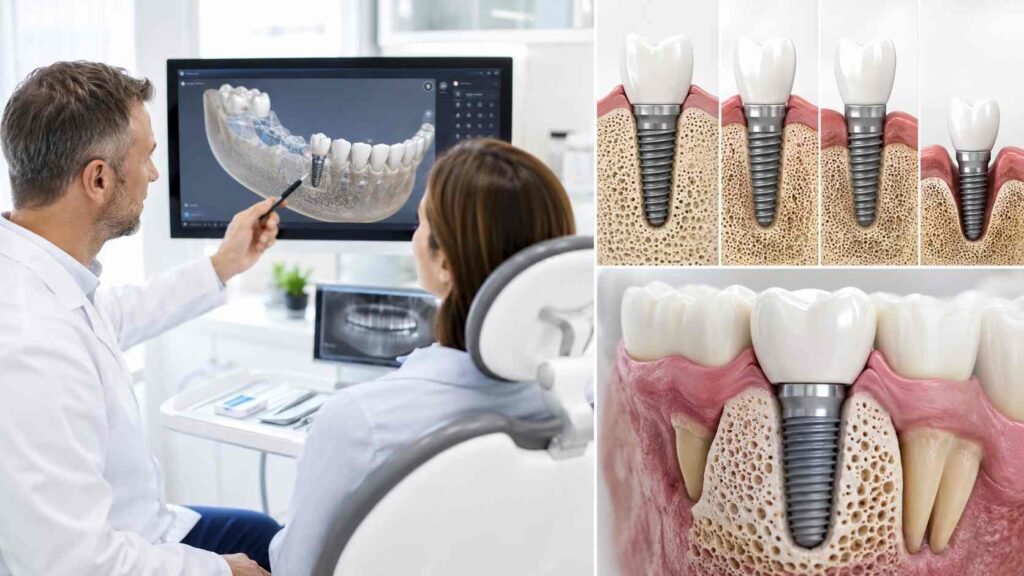
No two patients follow the same timeline. Several factors can push a straightforward three-month case into a year-long process.
Bone Quality and Quantity
This is the single biggest variable in most treatment plans. Patients with sufficient, dense bone can often move directly to implant placement after consultation. Those with significant bone loss from prolonged tooth absence, gum disease, or injury may need extensive grafting before surgery can begin. Age-related bone loss and genetics also play a role in this assessment.
Medical Conditions and Medications
Diabetes is one of the most common medical factors that extends the timeline, as it can slow osseointegration by weeks or months. Bisphosphonate medications, used to treat osteoporosis, may require treatment modifications or longer healing windows. Autoimmune conditions, blood clotting disorders, and a history of radiation therapy to the jaw all require more conservative, extended treatment approaches.
Lifestyle Factors
Smoking remains the most significant controllable risk factor in implant treatment. It can effectively double healing times and meaningfully increase failure rates. Heavy alcohol consumption, poor nutrition, and chronic sleep deprivation can each extend recovery periods as well. Patients who address these factors before treatment begins consistently see more predictable timelines and better outcomes.
Location and Anatomy
Upper jaw implants typically take longer to integrate than lower jaw implants due to naturally softer bone in the upper arch. Posterior sites, particularly the upper back molars, often heal more slowly due to differences in bone density and blood supply. Full-mouth reconstruction cases involving multiple implants naturally require longer overall treatment durations.
Implant Technology and Protocol
Traditional implant protocols require the full osseointegration period before any crown is placed. Certain immediate-load protocols allow a temporary crown to be fitted on the day of surgery, which can reduce the perceived treatment time. However, these techniques have strict patient selection criteria and slightly higher risk profiles, making them suitable only for specific cases.
Dental Implants vs. Bridges and Dentures: How the Timelines Compare
When patients are weighing their options, the timeline is often one of the deciding factors. Here is an honest comparison.
Traditional Dental Bridges
Bridges can typically be completed in two to three weeks. The process involves preparing the teeth on either side of the gap, taking impressions, and waiting for the lab to fabricate the bridge. This speed is genuinely appealing, particularly for patients who need a fast solution.
The trade-off is that placing a bridge requires permanently reshaping two healthy adjacent teeth to serve as anchors. Over time, the bone beneath the bridge continues to resorb because there is no implant root stimulating it, which can create additional problems down the line.
Dentures
Complete or partial dentures offer the fastest timeline of any tooth replacement option, often completed within four to six weeks from first consultation to final delivery. For patients who need a temporary or budget-conscious solution, this speed has real value.
What the initial timeline does not capture is the adjustment period. Dentures typically require multiple fittings and adjustments over the months following delivery as gum tissue changes shape. They also need relining and replacement every five to seven years, and the ongoing bone loss they fail to prevent can complicate future treatment options.
Why the Implant Timeline Is Worth It
The three to six-month osseointegration period that makes implants time-intensive is also the reason they last so long. The biological fusion between implant and bone creates a foundation that preserves jawbone health, eliminates the need to alter adjacent teeth, and functions like a natural tooth for decades with proper maintenance.
Bridges generally need replacement every 10 to 15 years. Dentures require more frequent attention and replacement. Most implants, by contrast, can last a lifetime with consistent care. For patients weighing short-term convenience against long-term value, the implant timeline often makes compelling sense.
Pros and Cons of Dental Implants
Pros
- Long-term durability. With proper care, dental implants can last a lifetime. No other tooth replacement option offers the same permanence.
- Bone preservation. The implant root stimulates the jawbone the same way a natural tooth root does, preventing the bone loss that follows tooth extraction.
- Natural feel and function. Implants look and function like real teeth. There are no adhesives, no removal at night, and no dietary restrictions once healing is complete.
- No impact on adjacent teeth. Unlike bridges, implants do not require any modification of neighboring healthy teeth.
- High success rate. Modern implants succeed in more than 95 percent of cases when placed by qualified practitioners and maintained properly.
Cons
- Long treatment timeline. For patients who need results quickly, the three-to-six-month minimum is a genuine drawback.
- Higher upfront cost. Implants cost more initially than bridges or dentures, though the long-term cost of replacement and maintenance often balances this out.
- Surgical requirements. Not every patient is immediately eligible. Bone deficiencies, certain medical conditions, and lifestyle factors can delay or complicate treatment.
- Healing variability. While most cases progress smoothly, complications during osseointegration can add time and stress to the process.
Disclaimer
The information provided in this article is intended for general educational purposes only and does not constitute professional dental or medical advice. Dental implant timelines, procedures, and outcomes vary based on individual patient factors, including bone health, medical history, and lifestyle. Always consult a qualified dental professional for a personalized treatment evaluation. References to success rates and clinical data are drawn from publicly available research and professional association reports and may not reflect every individual case.
Final Conclusion
Dental implants are one of the most effective and long-lasting solutions available for replacing missing teeth. Still, they ask something of patients that most other dental treatments do not: patience. The three to six-month timeline for osseointegration is not a flaw in the process. It is the process. That biological fusion between titanium and bone is exactly what gives implants their durability, their stability, and their ability to function like natural teeth for decades.
Understanding the timeline up front changes how you experience the treatment. When you know why each phase exists, waiting for osseointegration to complete feels like building something solid rather than sitting through a delay. When you know what factors can extend your timeline, you can take steps to address them before surgery begins.
Whether you are still deciding between implants, bridges, and dentures, or you are ready to move forward and want to know what the next several months will look like, the key is working with a practitioner who takes the time to evaluate your specific situation and sets honest expectations from the start.
The patients who are happiest with their implants are almost always the ones who understood what they were signing up for before they started. A longer road than you expected is still a road worth walking when the destination is a healthy, permanent smile.