

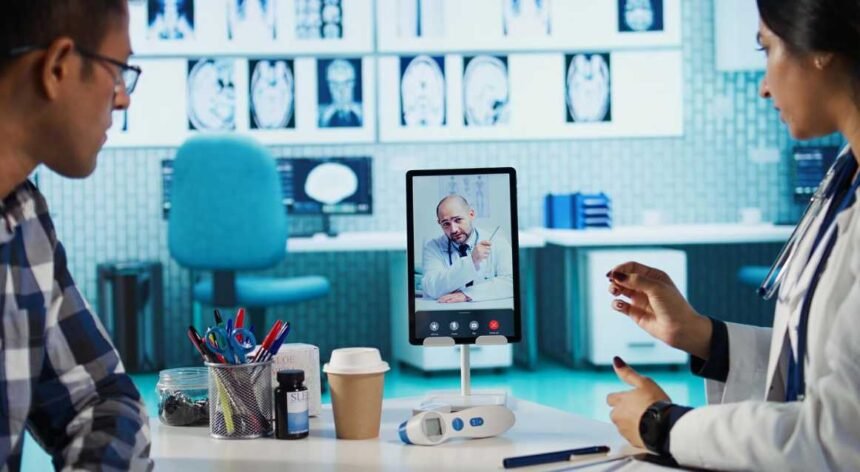
Running a busy clinic involves constant juggling. Front desk staff handle endless phone calls while doctors update paper files. This messy approach slows down care and frustrates patients. To fix this, medical facilities need practical digital tools that handle communication and daily workflows without a fuss. A good starting point is checking out options at https://topflightapps.com/healthcare/healthcare-app-developer/ to see how custom platforms operate. Bringing in expert healthcare app developers allows hospitals to build tools that actually fit their daily routines. These applications are no longer just optional tech novelties. Instead, they are core tools for managing a modern medical business effectively.
Why Healthcare Apps Now Matter in Daily Patient Care
Patients want medical care to feel as straightforward as checking their bank account online. They expect digital convenience. When a clinic offers a mobile application, patients can book appointments or text their care team instantly. Surveys show about 60% of people prefer online scheduling over waiting on hold. This matters because missed appointments throw off the whole day’s schedule. Apps also give people instant access to their lab results no more waiting days for a callback. Automated reminders help patients remember their medication doses, keeping their recovery on track. If someone needs a quick follow-up, they can use a video call feature from home. Building these systems requires a deep understanding of patient behavior, which is why clinics invest in healthcare mobile application development projects. These apps make healthcare feel accessible rather than intimidating. When people can reach their doctor easily, they stay on top of their treatments. It turns a fragmented healthcare experience into a continuous, manageable routine that keeps individuals healthier over time.
How Healthcare Apps Improve Hospital and Clinic Operations
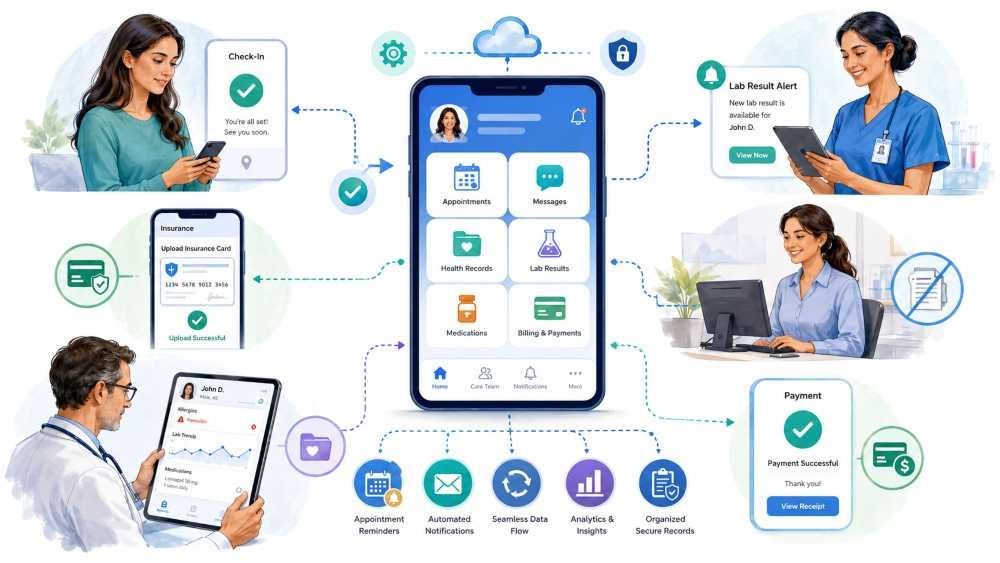
On the operational side, medical centers deal with massive paperwork and administrative bottlenecks. Staff spend hours copying data, which wastes time and increases human error. Choosing professional healthcare mobile app development services helps clean up these messy back-office processes. When you move routine workflows to a mobile platform, the entire facility runs more smoothly. Administrative expenses can eat up nearly 25% of a hospital’s total budget, so automation saves significant capital. Here is how these platforms optimize daily clinic flows:
- Automated alerts significantly drop the number of costly patient no-shows.
- Pre-visit digital check-ins eliminate long lines at the reception desk.
- Patients upload insurance cards through the app before their appointment.
- Internal notifications instantly alert nurses when lab results are ready.
- In-app payment portals let people view and settle bills immediately.
These features take the pressure off the front desk. Instead of fighting with paperwork, employees focus on helping the patients who are physically in the building. Data moves cleanly between departments without getting lost.
Reducing Administrative Pressure on Medical Staff
Nurses and medical receptionists face constant burnout from repetitive manual tasks. They answer identical phone questions and sort paper intake forms all day. App-based check-ins and automated notifications step in to handle this heavy lifting. When an app sends out a text reminder, a receptionist doesn’t have to make that phone call. This system doesn’t replace the human touch; it just gives staff their time back. Partnering with an experienced healthcare application development company ensures these tools work reliably under pressure. The result is a calmer workspace where medical professionals focus on clinical care rather than data entry.
Making Patient Data Easier to Access and Use
Doctors need accurate data immediately to make safe clinical choices. If a clinic uses scattered, old software, finding a patient’s recent lab report takes way too long. A well-built app connects patients and doctors to internal files instantly. An expert medical software development company knows how to sync these apps with existing Electronic Health Records. Doctors can review patient trends, update prescriptions, and check allergy lists right from their tablets. This setup cuts down on dangerous delays and ensures the entire care team sees identical data. It eliminates guesswork and prevents serious diagnostic mistakes.
Why Healthcare App Developers Are Important for Safe Digital Care
Building a medical app is completely different from building a retail or social media app. Healthcare software must comply with strict privacy laws like HIPAA to safeguard sensitive patient data. Experienced healthcare software developers know how to build data encryption and secure login protocols directly into the system code. This expertise is vital because healthcare data breaches are incredibly expensive, often averaging over $10 million per incident. Specialized mobile medical app developers also understand the high-stress environment of an emergency room or a busy clinic. They design simple, clean layouts so doctors can find critical information in seconds without clicking through endless menus. They ensure the software is fully accessible for elderly patients or people with disabilities. A generic tech provider doesn’t understand these nuances. Working with specialists protects your clinic from legal liabilities and guarantees that your software won’t crash when a provider needs it most.
Key Features Modern Healthcare Apps Should Include
To be truly useful, an app needs features that solve day-to-day problems for both patients and staff. A comprehensive patient profile is the starting point, giving users a clear view of their medical history and active prescriptions. Secure, encrypted messaging lets patients ask non-urgent questions without clogging up the clinic’s phone lines. Telehealth modules are essential for virtual consultations, offering stable video links for routine follow-ups. Real-time push notifications keep patients on track with their medication schedules and upcoming appointments. Inside the app, a simple payment gateway allows users to view balances and pay via credit card or insurance. For the medical team, seamless integration with Electronic Health Records prevents data isolation. Finally, built-in analytics dashboards help administrators track user engagement and appointment trends. Implementing mobile medical app development strategies ensures all these moving parts work together seamlessly. Instead of forcing staff to toggle between three different software programs, a unified app centralizes everything in one place.
What Clinics and Hospitals Should Consider Before Building an App
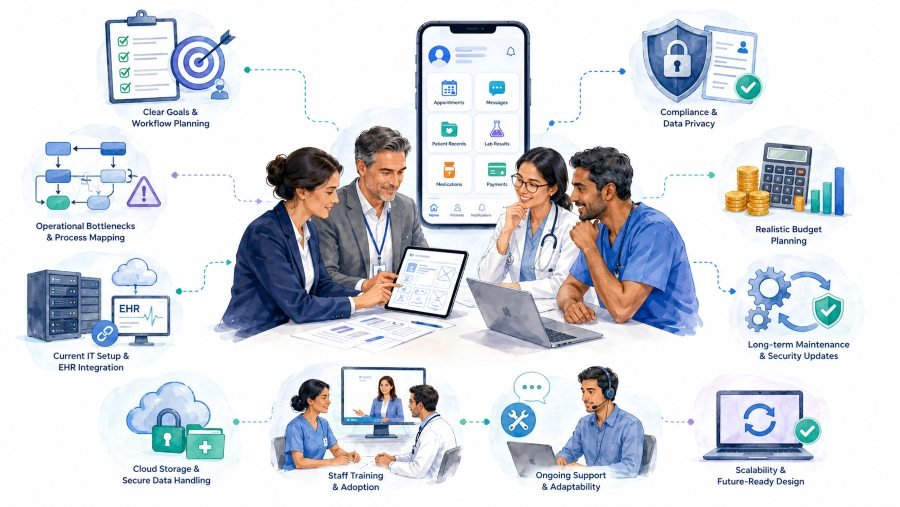
Launching a mobile platform requires clear goals and realistic planning. A clinic shouldn’t just copy a generic app; the software needs to solve specific operational bottlenecks. Administrators must evaluate their current IT setup and figure out compliance needs before writing any code. Budgets should account for initial development plus long-term costs like maintenance, security patches, and cloud storage. Staff training is another critical piece, as doctors and nurses must feel confident using the system daily. Partnering with an established healthcare app development company helps navigate these complex steps smoothly. They help manage the budget and pick the right technology stack. A successful digital tool requires ongoing support to adapt to changing medical laws and user needs. Ultimately, hospitals must treat software as a long-term clinical investment. Hiring dedicated healthcare app developers ensures your organization creates a reliable tool that protects patient health and improves daily clinic efficiency for years to come.
Disclaimer
This article is for general informational and educational purposes only. It should not be taken as medical, legal, compliance, cybersecurity, or professional healthcare technology advice. Clinics, hospitals, and healthcare businesses should consult qualified medical, legal, compliance, and software security professionals before choosing, building, or launching any healthcare application. Any digital health platform that handles patient data should be assessed for privacy, security, accessibility, clinical workflow suitability, and applicable regulatory requirements.
References
- Baldwin, J. L., Singh, H., Sittig, D. F., & Giardina, T. D. (2017). Patient portals and health apps: Pitfalls, promises, and what one might learn from the other. Healthcare, 5(3), 81–85. DOI: 10.1016/j.hjdsi.2016.08.004
- Iribarren, S. J., Akande, T. O., Kamp, K. J., Barry, D., Kader, Y. G., & Suelzer, E. (2021). Effectiveness of mobile apps to promote health and manage disease: Systematic review and meta-analysis of randomized controlled trials. JMIR mHealth and uHealth, 9(1), e21563. DOI: 10.2196/21563
- Wang, C., & Qi, H. (2021). Influencing factors of acceptance and use behavior of mobile health application users: Systematic review. Healthcare, 9(3), 357. DOI: 10.3390/healthcare9030357
- Aljedaani, B., & Babar, M. A. (2021). Challenges with developing secure mobile health applications: Systematic review. JMIR mHealth and uHealth, 9(6), e15654. DOI: 10.2196/15654
- Kruse, C. S., Krowski, N., Rodriguez, B., Tran, L., Vela, J., & Brooks, M. (2017). Telehealth and patient satisfaction: A systematic review and narrative analysis. BMJ Open, 7(8), e016242. DOI: 10.1136/bmjopen-2017-016242