

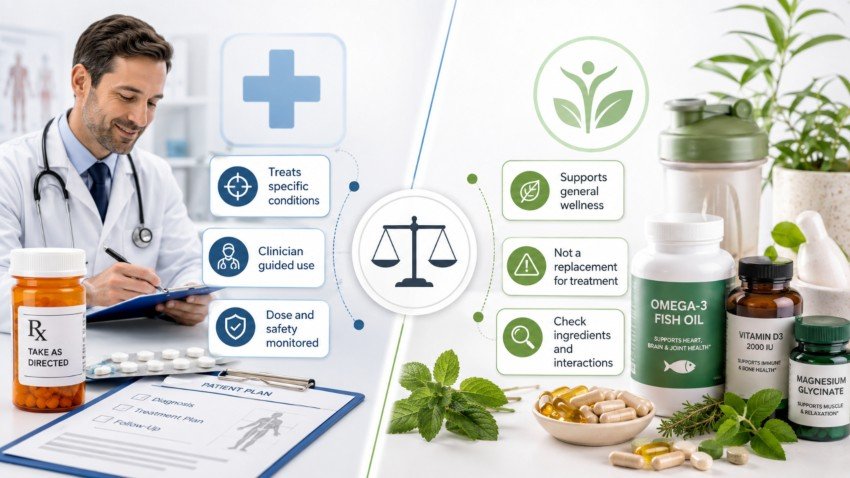
It usually starts the same way. You have been tired for three weeks, sleeping badly, waking at four in the morning for no reason you can name. At some point, you give in and type the symptoms into a search bar. Within a minute you are looking at a prescription drug, an over-the-counter tablet, and a subscription bottle of capsules promising “balance.” All three are photographed against the same clean white background. All three cost roughly the same. Nothing on the page tells you they come from entirely different regulatory worlds.
They do. And the distance between those worlds is wider than most people realize.
Real Dividing Line Is Proof, Not Ingredients
Most explanations of this topic get stuck on what is inside the bottle: chemicals versus botanicals, synthetic versus natural, pharmacy versus health food aisle. That framing is close to useless. Aspirin comes from willow bark. Metformin traces back to French lilac. Digoxin, still prescribed for heart failure, comes from foxglove. Plenty of drugs are plants, and plenty of supplements are manufactured in the same kind of facility as drugs.
The distinction that actually matters is this: who had to prove what, to whom, and when.
A medical treatment has to satisfy a regulator before it reaches you. A supplement, in most cases, satisfies its manufacturer, and the regulator arrives afterward if something goes wrong. Everything else about how these two categories behave follows from that single structural difference.
Once you see it that way, the rest of the confusion clears up quickly.
What Has to Happen Before a Medicine Reaches a Pharmacy
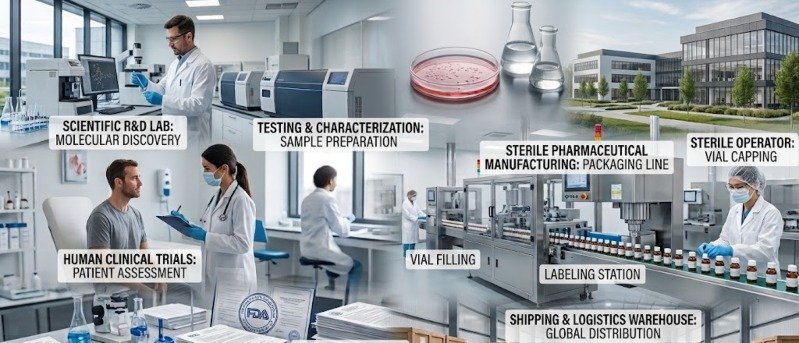
Before a new prescription drug is sold in the United States, it moves through a sequence that is deliberately slow and adversarial. Laboratory work comes first, then animal studies, then an application to test the compound in humans at all. Only then do the human trials begin: a small safety trial, a larger trial to find a workable dose, and a large controlled trial measuring whether the drug actually does what it claims against a comparison group.
The FDA’s drug development and approval process generally expects results from two well-designed clinical trials, so that a promising result from the first is not simply chance or bias. Reviewers then weigh the evidence of benefit against the known risks for the specific population the drug is meant for. Approval is not a declaration that the drug is safe in the abstract. It is a judgment that for this condition, in these patients, the benefits outweigh the harms. If later trials fail to confirm the expected benefit, approval can be withdrawn.
That process is why a prescription arrives attached to so much machinery: a diagnosis, a dose, a label listing interactions, and a clinician who is supposed to check on you. Medical treatment is not just the substance. It is the substance plus the oversight.
The same logic extends beyond pills. Surgery, physical therapy, implanted devices, and clinical therapies all sit inside a system where someone with training assessed your particular situation, chose an intervention, and remains accountable for what happens next.
What a Supplement Is, in the Legal Sense
A different statute and a different philosophy govern supplements. Under U.S. law, they are products intended to supplement the diet, and as the NIH Office of Dietary Supplements explains in its consumer guidance, they are not medicines. They are not intended to treat, diagnose, mitigate, prevent, or cure disease. The FDA oversees both categories, but the rules diverge sharply. Medicines require approval before they can be sold. Supplements do not.
The responsibility sits with the company. Manufacturers are obliged to have evidence that their products are safe, and that label claims are truthful. Still, unless a product contains a dietary ingredient introduced after October 1994, that evidence never has to be shown to the FDA before the product goes on sale. The agency does not review supplements for effectiveness the way it reviews drugs. It acts after the fact, against products found to be adulterated or misbranded.
None of this makes supplements inherently dangerous or useless. A great many are made carefully by companies with real quality systems. It does mean that the burden of evaluation, which the approval system carries for prescription drugs, shifts onto the shopper. You are doing the due diligence yourself, whether or not you know it.
And a large number of people are in that position. According to the most recent National Center for Health Statistics data on supplement use, 60.2 percent of U.S. adults aged 20 and over took a dietary supplement in the previous 30 days, and 38.7 percent took two or more.
Where CBD Sits, and Why It Is Complicated
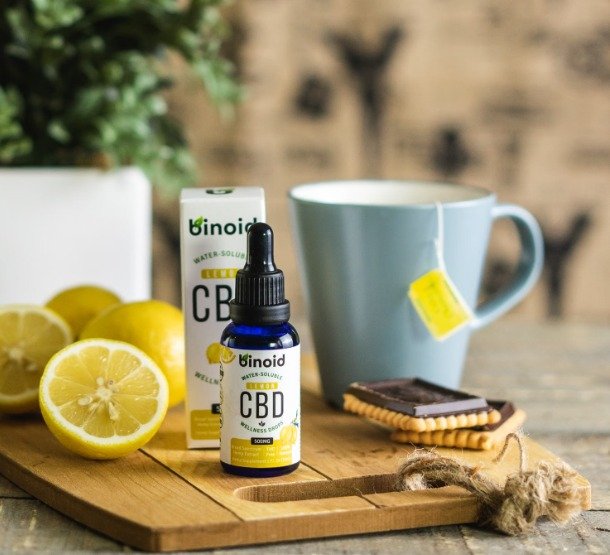
Cannabinoid products deserve a specific mention, because they are routinely described as supplements when, legally, they are not.
The FDA has concluded that CBD products are excluded from the dietary supplement definition under section 201(ff)(3)(B) of the Federal Food, Drug, and Cosmetic Act. The reason is procedural rather than moral: CBD is the active ingredient in an approved prescription drug, and a substance approved as a drug generally cannot then be marketed as a dietary ingredient. The agency has said the same about THC.
So CBD occupies an unusual middle ground. It is widely sold, widely used, and sits on shelves next to vitamins, but it does not carry the legal status of a dietary supplement, and it has not been through drug approval either. If you choose to use it, that ambiguity is worth knowing about rather than glossing over, and it raises the value of everything in the next two sections.
Comparison, Side by Side
| Medical Treatments | Wellness Supplements | |
|---|---|---|
| What it is for | A diagnosed condition, in a specific patient | General dietary and lifestyle support |
| Proof required before sale | Clinical trials and regulatory approval | Manufacturer holds the evidence; no pre-market approval |
| Who decides you should use it | A clinician, after examination and history | You, usually without a formal assessment |
| Who watches for problems | A prescriber monitoring response and side effects | The user, plus post-market enforcement |
| What a claim can say | Treats, prevents, or cures a named disease | Supports normal function; no disease claims permitted |
| Typical examples | Prescription drugs, surgery, physical therapy, devices | Vitamins, minerals, botanicals, probiotics, omega-3s |
The practical consequence is one of expectations. Treating a supplement as though it were a medicine tends to produce two failures at once: the product underdelivers against a hope it was never designed to meet, and the underlying problem goes uninvestigated for weeks or months while you wait for it to work.
Conversation Most People Skip
Here is the assumption that causes the most avoidable harm: that anything available without a prescription must be gentle enough not to matter.
It matters. Some supplements may interact with medications by changing how a drug is absorbed, metabolized, or cleared from the body, which can leave you with more or less of the medication than you need. The FDA’s examples are not exotic. St. John’s wort can reduce the effectiveness of drugs for HIV, heart disease, and depression, along with transplant medications and birth control pills. Warfarin, ginkgo biloba, aspirin, and vitamin E each thin the blood, and combining them raises the risk of internal bleeding. If you have surgery scheduled, your clinician may ask you to stop supplements two or three weeks beforehand.
The scale is measurable. A national surveillance study published in the New England Journal of Medicine estimated roughly 23,000 emergency department visits per year in the United States attributed to adverse events involving dietary supplements, leading to around 2,150 hospitalizations annually. Weight-loss and energy products accounted for the majority of cases involving palpitations, chest pain, or rapid heartbeat, mostly in adults aged 20 to 34.
Against a backdrop of tens of millions of users, 23,000 is not a catastrophe. But it is not zero either, and almost all of it is preventable with a conversation that takes five minutes.
The National Center for Complementary and Integrative Health, which studies exactly these products, recommends telling your health care providers about any complementary approaches you use so your care can be managed as a whole. A pharmacist counts. Pharmacists are the most underused interaction-checkers in the system; they are free to talk to, and they do not need an appointment.
Distance is less of an excuse than it used to be. Telehealth, defined by HRSA as the use of electronic and telecommunication technologies to support care at a distance, has made a short consultation about a supplement question far easier to arrange than a clinic visit.
How to Read a Label Like a Skeptic
Because you are doing the evaluating, it helps to know what actually signals quality rather than merely suggesting it.
- Look for independent verification, not self-description. Words like premium, clinical-grade, and doctor-formulated carry no regulatory meaning. Third-party certification does. The USP Dietary Supplement Verification Program audits manufacturing facilities, reviews quality documentation, and tests product samples to confirm that the contents match the label and fall within acceptable limits for contaminants such as heavy metals and pesticides. USP verification is voluntary, and it is not the same thing as FDA approval, but it is a genuine external check.
- Ask whether you can see the test results for your specific bottle. Batch-level transparency is the most demanding standard a company can hold itself to, because it removes the gap between a general quality claim and the product in your hand. Some companies now publish per-batch certificates of analysis and print a code on the bottle that leads to them. Joy Organics, for instance, publishes third-party lab reports accessible by scanning the individual product. Whatever category you are shopping in, that is the level of documentation worth asking for, and its absence tells you something.
- Read the ingredient panel for what is not listed. Proprietary blends that give a total milligram figure without breaking out individual amounts make it impossible to know what dose you are taking of anything.
- Be suspicious of disease claims. A supplement is not permitted to claim it treats or cures a named condition. A product that does so is telling you it is either mislabeled or operating outside the rules, and neither inspires confidence about the rest of the manufacturing.
- Remember that more is not better. Fat-soluble vitamins accumulate. Excess vitamin A can damage the liver and weaken bone; excess iron causes nausea, vomiting, and organ damage. Supplement ingredients are also added to fortified cereals and drinks, so your actual intake may be higher than the bottle suggests.
Part Neither Category Can Do for You
There is a version of this discussion that ends with the reader picking a side, as though the choice were medicine or wellness. It is not, and framing it that way obscures the largest factor.
Sleep, movement, food, and stress load do more day-to-day work on how you feel than either a prescription or a capsule, and neither category substitutes for them. A medication manages a diagnosed condition. A supplement fills a dietary gap or supports a routine. Neither one compensates for five hours of sleep a night indefinitely.
This is also why the fatigue that sent you searching at eleven at night deserves an actual answer rather than a purchase. Persistent tiredness can reflect anemia, thyroid dysfunction, sleep apnea, depression, or medication side effects. Every one of those is identifiable with a conversation and a blood test. None of them is solved by a bottle chosen from a search results page.
The most useful thing to take from all this is not a rule about which category is better. It is a habit: know which one you are dealing with, know what it was required to prove, and know who is watching to see whether it works.
Closing Note and Disclaimer
This article is provided for general information and educational purposes only. It is not medical advice, and it is not a substitute for diagnosis, treatment, or guidance from a qualified health care professional who knows your history.
Do not start, stop, or change any medication or supplement based on what you have read here. Talk to a physician, pharmacist, or registered dietitian first, particularly if you take prescription medication, are pregnant or breastfeeding, have a diagnosed condition, or have surgery scheduled. If you are experiencing symptoms that concern you, seek professional medical care rather than self-treating.
No product mentioned in this article is endorsed as safe or effective for any individual, and the U.S. Food and Drug Administration has not evaluated any statement here. Regulatory status, particularly for cannabinoid products, varies by jurisdiction and changes over time. Verify current rules that apply where you live.
References
- U.S. Food and Drug Administration. Mixing Medications and Dietary Supplements Can Endanger Your Health. FDA Consumer Updates, Office of the Commissioner and Center for Food Safety and Applied Nutrition. https://www.fda.gov/consumers/consumer-updates/mixing-medications-and-dietary-supplements-can-endanger-your-health
- U.S. Food and Drug Administration. Development & Approval Process | Drugs. Center for Drug Evaluation and Research. https://www.fda.gov/drugs/development-approval-process-drugs
- National Institutes of Health, Office of Dietary Supplements. Dietary Supplements: What You Need to Know. Consumer Fact Sheet, U.S. Department of Health and Human Services. https://ods.od.nih.gov/factsheets/WYNTK-Consumer/
- Stierman B, Couch CA, Gahche JJ, Mishra S. Dietary Supplement Use: United States, August 2021–August 2023. NCHS Data Brief No. 561. Hyattsville, MD: National Center for Health Statistics, May 2026. https://www.cdc.gov/nchs/products/databriefs/db561.htm
- U.S. Food and Drug Administration. FDA Regulation of Cannabis and Cannabis-Derived Products, Including Cannabidiol (CBD). Public Health Focus. https://www.fda.gov/news-events/public-health-focus/fda-regulation-cannabis-and-cannabis-derived-products-including-cannabidiol-cbd
- Geller AI, Shehab N, Weidle NJ, Lovegrove MC, Wolpert BJ, Timbo BB, Mozersky RP, Budnitz DS. Emergency Department Visits for Adverse Events Related to Dietary Supplements. New England Journal of Medicine. 2015;373(16):1531–1540. doi:10.1056/NEJMsa1504267.