

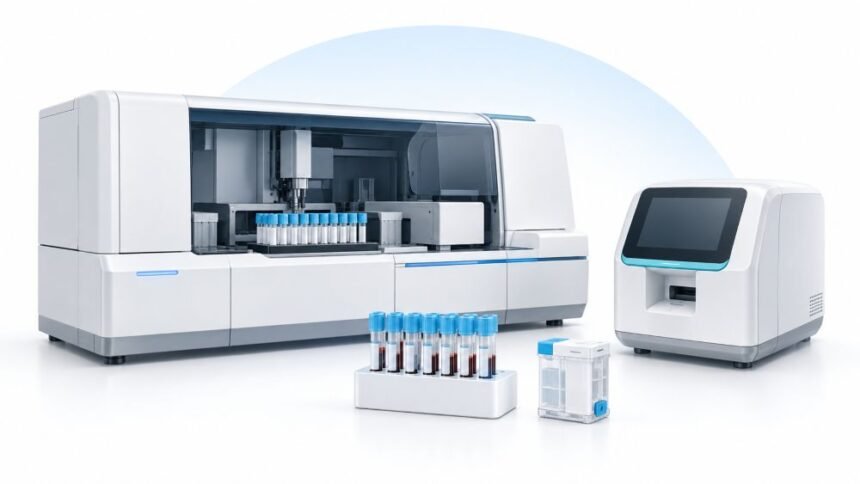
D-dimer testing is a very important method of assessing venous thromboembolism (VTE) promptly. It is used by medical workers to rule out the diagnosis of deep vein thrombosis (DVT) and pulmonary embolism (PE). With a growing trend in healthcare institutions incorporating speedy and precise diagnostic systems, major medical equipment vendors are developing D-dimer testing systems to promote timely clinical action. Firms like Response Biomedical are playing their part in this evolution with novel rapid tests like the RAMP® D-Dimer Test, providing quantitative results within minutes and assisting in improving workflow and patient triage and increasing diagnostic confidence in emergency and acute care practices. With the increasing diagnostic needs in 2026, such innovations are aiding in the scaling of quicker and more efficient cardiovascular testing on an international scale.
What Is a D-Dimer Test and Why Is It Important?
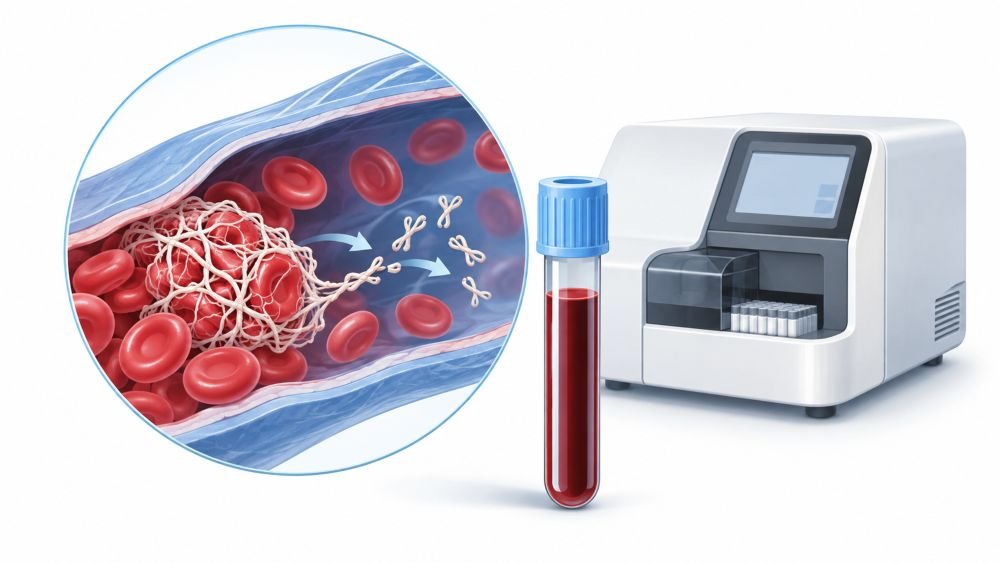
A D-dimer test measures levels of D-dimer, a fibrin degradation product (FDP) produced during the breakdown of blood clots through the fibrinolytic process. D-dimer testing provides information about coagulation activity and is used as an aid in the clinical assessment of thromboembolic conditions, including venous thromboembolism (VTE), deep vein thrombosis (DVT), and pulmonary embolism (PE). While elevated D-dimer levels can occur in various clinical conditions and are not specific to a single disease state, a negative D-dimer result may help support the exclusion of VTE in appropriate clinical settings. Rapid and reliable D-dimer testing solutions support timely clinical evaluation and informed decision-making across emergency, hospital, and laboratory environments.
Why Is D-Dimer Testing Important?
- Supports the clinical assessment of patients with suspected thromboembolic conditions.
- Used as an aid in the evaluation of venous thromboembolism (VTE), including deep vein thrombosis (DVT) and pulmonary embolism (PE), in appropriate clinical settings.
- Provides timely diagnostic information to support clinical decision-making and patient management.
- May help reduce the need for additional diagnostic investigations when used according to clinical guidelines and established algorithms.
- Supports efficient healthcare workflows by providing rapid access to relevant diagnostic information.
- Contributes to the assessment of thrombotic risk as part of a broader clinical evaluation.
Factors Driving Growth in D-Dimer Diagnostic Devices
The demand for D-dimer diagnostic devices is on the rise because medical practitioners are determined to get quicker and more precise tools for blood clot diagnosis. The trend towards a growth in the number of cardiovascular diseases, the growing use of rapid testing, and the demand for the rapidity of the clinical decision-making process are factors that motivate healthcare facilities to invest in high-quality D-dimer testing technologies. Consequently, the major players in medical device manufacturing are coming up with new diagnostic devices that enhance efficiency, accuracy, and patient care.
Key Factors Driving Market Growth
- Increasing cases of deep vein thrombosis (DVT) and pulmonary embolism (PE).
- Increasing need for timely and precise diagnostic tests.
- Raised usage of rapid testing solutions.
- Development of emergency and acute care services in the global arena.
- Improvement of diagnostic technology and automation.
- More emphasis on the prevention and early detection of diseases.
- Better healthcare facilities and laboratory facilities.
- Growing demand for effective patient triage and workflow streamlining.
Top 8 D-Dimer Test Medical Device Manufacturers
The D-dimer test manufacturers are creating new diagnostic solutions to aid healthcare providers as the need to detect blood clots quickly and efficiently remains increasing. The companies are assisting hospitals, labs and emergency care units to enhance accurate diagnoses, expedite operations and swiftly identify conditions like deep vein thrombosis (DVT) and pulmonary embolism (PE).
1. Siemens Healthineers
Siemens Healthineers is a diagnostic testing and laboratory solutions industry player throughout the world. The company provides superior D-dimer testing technologies that are used to help healthcare providers to identify blood clot-related conditions, enhance diagnostic accuracy of diagnosis, and aid rapid clinical decision-making.
2. Response Biomedical
Response Biomedical has established a strong reputation in diagnostic testing, with the RAMP D-Dimer Test providing rapid and quantitative measurement of D-dimer levels. The test is designed to aid healthcare professionals in the assessment of thromboembolic conditions, including deep vein thrombosis (DVT), pulmonary embolism (PE), and venous thromboembolism (VTE), by delivering quantitative results in minutes. These results can support clinical decision-making and patient management when used in conjunction with clinical evaluation and other diagnostic information.
3. Werfen
Werfen is the haemostasis and coagulation diagnostics company specializing in the supply of state-of-the-art D-dimer testing solutions to hospitals and laboratories. Its technologies will assist in efficient clot diagnosis and care for blood clotting problems.
4. Sysmex Corporation
Sysmex designs innovative systems of haematology and coagulation testing to assist healthcare providers in conducting accurate D-dimer tests and enhancing lab efficiency and laboratory workflow management.
5. Roche Diagnostics
Roche Diagnostics provides numerous diagnostic solutions that support D-dimer testing and cardiovascular diagnostics. Its sophisticated technologies assist laboratories in providing credible and consistent test results.
6. Abbott
Abbott offers diagnostic platforms to assist with speedy, dependable D-dimer testing. The solutions provided by the company have assisted healthcare facilities in improving the performance of their diagnostics and better patient care results.
7. QuidelOrtho
QuidelOrtho is the developer of diagnostic technologies, which aim to speed up the testing process and enhance clinical efficiencies. Its solutions assist healthcare providers in providing timely diagnostic results.
8. bioMérieux
bioMérieux is an influential diagnostic firm renowned for creating innovative lab solutions. Its technologies enable healthcare organizations to enhance the accuracy of testing and workflow efficiency and address the increasing diagnostic requirements.
Key Features to Consider When Choosing a D-Dimer Testing Device
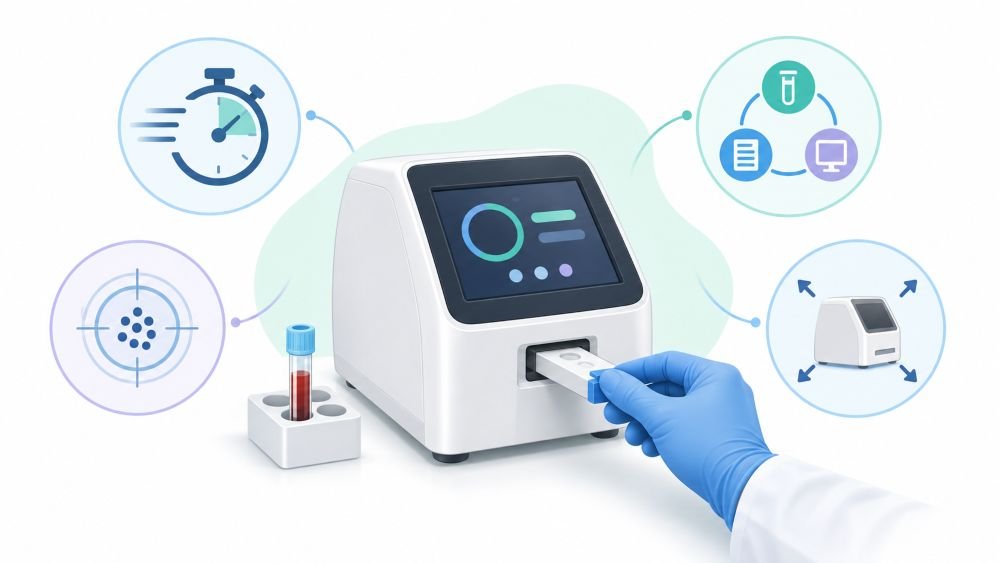
The selection of an adequate D-dimer testing device can assist healthcare practitioners in enhancing the accuracy, acceleration of patient testing, and beneficence of clinical results. Since the need to detect blood clots at a high speed remains high, it is important to consider the selection of an efficient and reliable solution to test blood clots in a hospital, laboratory, and emergency care environment.
Major features to be considered
Rapid Results – Provides timely D-dimer measurements to support clinical assessment and decision-making.
Clinical Support – Aids healthcare professionals in the evaluation of patients with suspected thromboembolic conditions, including DVT, PE, and VTE, when used alongside clinical assessment and other diagnostic information.
Ease of Use: Supports streamlined testing workflows with simplified operation and minimal training requirements.
Reliable Performance – Delivers consistent and dependable results to support patient evaluation.
Workflow Optimization – Helps improve efficiency in clinical and laboratory workflows by providing access to quantitative D-dimer results when needed.
Flexible Implementation: Compact design supports integration into a variety of healthcare environments.
Future Trends in D-Dimer Diagnostic Technology
The future of D-dimer diagnostic technology lies in providing improved, faster, and more accessible test solutions. In a bid to enhance the quality of care provided to patients as well as the efficiency of diagnosis, manufacturers are designing new D-dimer testing devices that assist in the rapid detection of blood clots, particularly when there are potential threats to patients like deep vein thrombosis (DVT), pulmonary embolism (PE), and venous thromboembolism (VTE).
Emerging Trends in D-Dimer Testing
- Advancements in Rapid Testing Technologies: Evolving diagnostic technologies are enabling faster access to D-dimer results to support timely clinical assessment and decision-making.
- Enhanced Analytical Performance: Improvements in assay technologies are focused on delivering reliable and consistent test performance.
- Streamlined Testing Workflows: Modern testing platforms are designed to simplify operation, improve efficiency, and support standardized testing processes.
- Faster Diagnostic Assessment: Rapid D-dimer testing provides timely quantitative results to support the evaluation of patients with suspected thromboembolic conditions.
- Digital Healthcare Integration: Increasing connectivity with laboratory and healthcare information systems is supporting improved data management and workflow integration.
- Growing Use in Acute Care Environments – The demand for rapid diagnostic solutions continues to expand as healthcare systems prioritize efficient clinical evaluation.
- Expanded Testing Accessibility: Compact and user-friendly testing solutions are supporting broader implementation across diverse healthcare environments.
These innovations are helping healthcare organizations improve diagnostic workflows, enhance operational efficiency, and support informed clinical decision-making through timely access to D-dimer results.
Benefits of Modern D-Dimer Diagnostic Solutions
The current options for D-dimer diagnosis solutions are enhancing the manner in which medical practitioners identify and treat conditions associated with blood clots. These advanced testing systems provide rapid, high-quality results and efficiency in clinical practice to enable clinicians to make rapid and insightful decisions to improve patient care.
| Benefit | Description |
|---|---|
| Faster Diagnosis | Facilitates early detection of conditions associated with blood clots, enabling clinicians to make sound treatment choices in emergencies. |
| Accurate and Reliable Results | Produces consistent results, supporting diagnostic confidence and reducing ambiguity in clinical diagnosis. |
| Better Workflow Efficiency | Standardizes laboratory and hospital processes, reducing turnaround times and improving patient management. |
| Rapid Result Accessibility | Provides quick access to diagnostic results, supporting efficient clinical workflows and timely evaluation in emergency and acute care settings. |
| Improved Patient Outcomes | Enables earlier diagnosis and treatment, potentially improving treatment success and reducing complications. |
| Reduced Need for Imaging | Helps rule out certain conditions with less reliance on imaging, potentially reducing related healthcare costs. |
| Strong Clinical Support | Helps medical staff make informed clinical decisions more quickly and accurately. |
Conclusion
As the demand for timely and reliable assessment of thromboembolic conditions continues to grow, manufacturers of D-dimer diagnostic solutions are advancing technologies designed to support faster access to quantitative results and informed clinical decision-making. Emerging D-dimer testing technologies are helping healthcare professionals evaluate patients with suspected thromboembolic conditions, including deep vein thrombosis (DVT), pulmonary embolism (PE), and venous thromboembolism (VTE), while supporting efficient clinical workflows. Response Biomedical continues to contribute to diagnostic innovation with the RAMP D-Dimer Test, which provides quantitative D-dimer results to aid in the clinical assessment of patients. As healthcare delivery models continue to evolve, demand for reliable and efficient D-dimer testing solutions is expected to increase, supporting improved diagnostic pathways and workflow optimization across healthcare environments.
Disclaimer
This article is provided for general informational and educational purposes only and does not constitute medical advice, clinical guidance, or a recommendation to use any specific test, device, or manufacturer. D-dimer results must be interpreted by qualified healthcare professionals in conjunction with clinical assessment, pretest probability, and other diagnostic information, as a single test result cannot confirm or exclude a condition on its own. Product availability, intended use, regulatory clearance, and labelling differ between countries and regions, so readers should refer to the manufacturer’s official instructions for use and applicable regulatory approvals before making any purchasing or clinical decision. Company and product names are mentioned for informational purposes only and do not imply endorsement, affiliation, or ranking by performance. Anyone with concerns about symptoms of a blood clot should seek immediate medical attention from a licensed healthcare provider.