

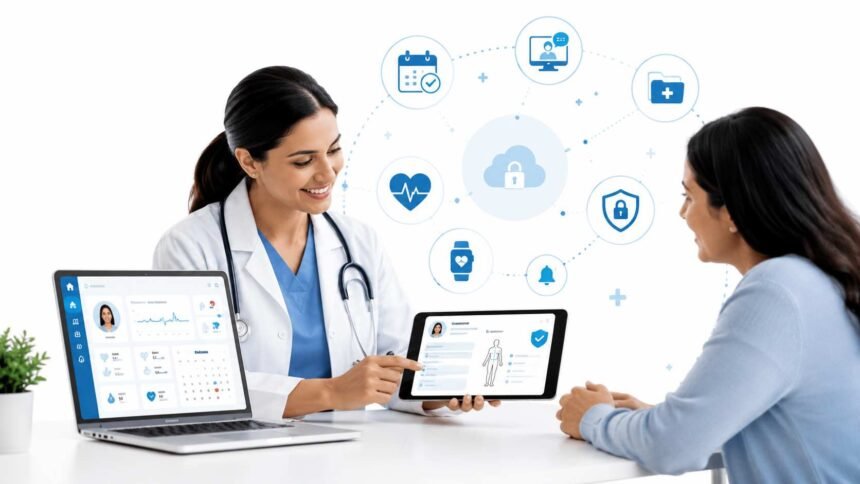
Technology is now part of everyday healthcare. Patients book appointments online, receive test results through secure portals, speak to clinicians by video, and use apps to track symptoms, medicines, sleep, blood pressure, or fitness.
For clinics, health startups, and wellness providers, technology is also changing how the business side works. Better systems can reduce paperwork, improve appointment flow, protect patient information, and help teams make safer, faster decisions.
Good healthcare still depends on trained professionals, careful judgment, and patient trust. Technology should support that care, not replace it.
Why Healthcare Organisations Are Moving Away From Manual Systems
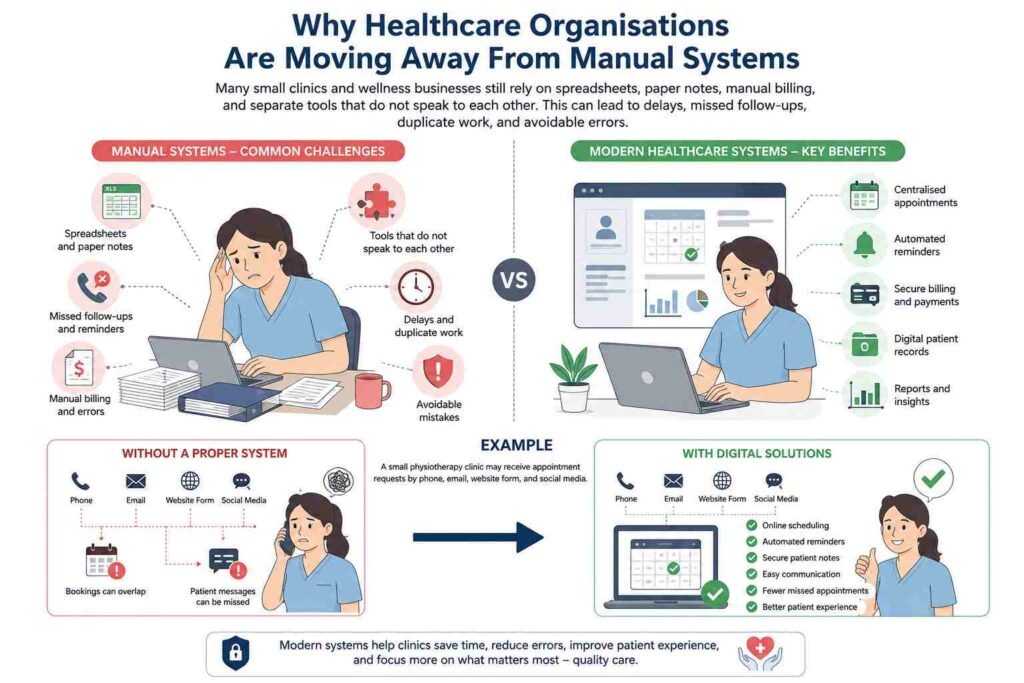
Many small clinics and wellness businesses still rely on spreadsheets, paper notes, manual billing, and separate tools that do not speak to each other. This can lead to delays, missed follow-ups, duplicate work, and avoidable errors.
In healthcare, small mistakes can have a real impact. A missed appointment reminder, an incorrect invoice, or a delayed test result can affect both patient experience and clinical safety.
Modern healthcare systems help by keeping key information in one secure place. This makes it easier for staff to manage appointments, payments, patient records, reminders, and reporting without wasting time on repeated manual tasks.
Example
A small physiotherapy clinic may receive appointment requests by phone, email, website form, and social media. Without a proper system, bookings can overlap, or patient messages can be missed.
With digital scheduling, automated reminders, and secure patient notes, the clinic can reduce missed appointments, organise follow-ups, and give patients a smoother experience.
How Technology Supports Better Patient Care
Healthcare technology is most useful when it improves safety, access, and communication.
Online Booking and Appointment Reminders
Online booking allows patients to choose available times without waiting for a phone call. Automated reminders by text or email can reduce missed appointments and help patients prepare for their visit.
For example, a patient attending a blood test may receive a reminder about fasting instructions if required. This can prevent wasted appointments and repeat testing.
Secure Patient Portals
Patient portals allow people to view results, prescriptions, appointment history, and care instructions in one place. This can help patients understand their treatment and ask better questions during appointments.
However, medical results should always be explained by a qualified healthcare professional when there is any confusion or concern.
Telehealth and Remote Consultations
Video consultations can help patients who live far away, have mobility problems, or need simple follow-up advice. They are useful for medication reviews, mental health support, lifestyle coaching, and some routine checks.
Telehealth is not suitable for every situation. Chest pain, severe breathing problems, stroke symptoms, heavy bleeding, severe allergic reactions, or sudden confusion need urgent in-person medical care.
Technology Behind Healthcare Business Operations
Behind every patient appointment is a system that manages records, billing, compliance, staffing, and reporting. When these systems work well, healthcare teams can spend more time supporting patients and less time fixing admin problems.
Digital Billing and Payment Systems
Digital billing tools help clinics send invoices, track payments, and reduce confusion over patient charges. This is especially important for private healthcare providers, wellness clinics, dental practices, therapy services, and health startups.
Clear payment records also help patients understand what they are being charged for and reduce disputes.
Accounting and Financial Planning
Health businesses need strong financial systems to stay stable. Poor financial management can affect staffing, equipment, patient communication, and service quality.
For new healthcare companies, using professional accounting services for startups can help build clean financial records from the beginning, especially when managing clinic expenses, payroll, tax records, investor reporting, or growth planning.
Inventory and Medicine Tracking
Digital stock systems can help clinics track medical supplies, equipment, and commonly used products. This reduces the risk of running out of important items such as gloves, testing kits, wound care supplies, or vaccines.
For pharmacies and medical clinics, stock control also supports safer handling of medicines and expiry dates.
Artificial Intelligence in Healthcare Operations
Artificial intelligence is becoming more common in healthcare support systems. It can help with appointment triage, admin tasks, document scanning, data review, and pattern detection.
Where AI Can Help
AI tools may support:
- Sorting patient enquiries by urgency
- Flagging missing information in forms
- Helping with appointment scheduling
- Reviewing large sets of data
- Detecting unusual billing or record patterns
- Supporting symptom checkers with basic guidance
Safety Point: AI Should Not Replace Medical Judgment
AI tools can make mistakes. They may miss context, misunderstand symptoms, or give information that is too general. Patients should not rely on AI alone for diagnosis, treatment decisions, or urgent medical problems.
A qualified doctor, nurse, pharmacist, or relevant healthcare professional should always guide medical decisions.
Cybersecurity and Patient Privacy
Healthcare organisations handle sensitive personal and medical information. This makes cybersecurity essential.
A data breach can expose private health details, damage trust, and create legal problems. Clinics and health businesses should use secure systems that protect patient records and payment information.
Basic Safety Measures
Healthcare providers should consider:
- Strong passwords and multi-factor authentication
- Limited staff access based on role
- Encrypted patient records
- Regular system updates
- Secure payment processing
- Staff training on phishing emails
- Clear backup and recovery plans
Patients can also protect themselves by using strong passwords, avoiding public Wi-Fi for medical portals, and checking that healthcare websites are secure before sharing personal details. Healthcare providers also need to protect the systems and patient information they manage, which may require support from cyber security services UK to identify potential weaknesses.
How Technology Helps With Prevention and Wellness
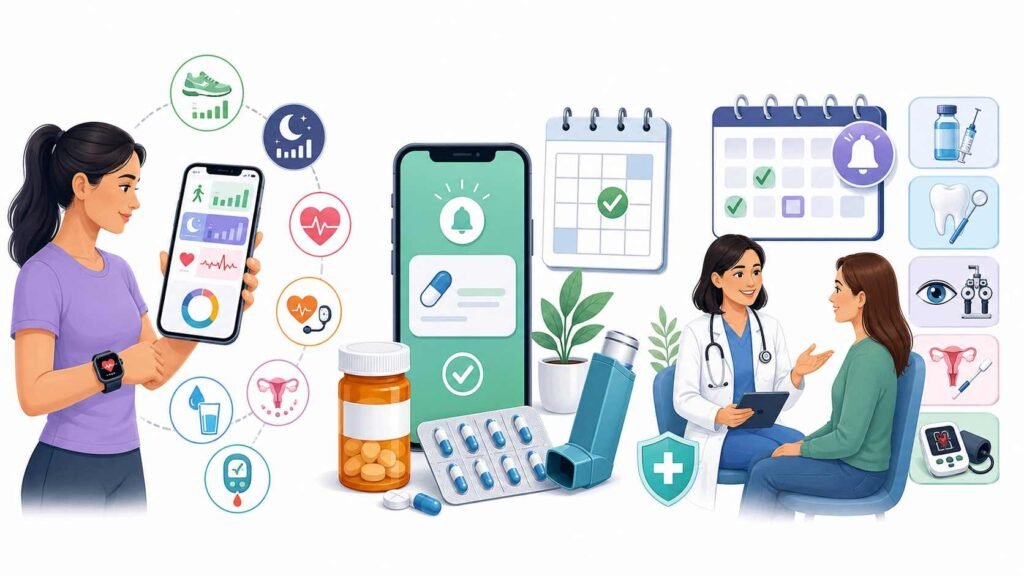
Technology is not only useful when someone becomes unwell. It can also support prevention and healthier daily habits.
Health Tracking Apps
Apps and wearable devices can help people monitor steps, sleep, heart rate, blood pressure, menstrual cycles, hydration, or glucose levels. These tools can encourage better routines and help people notice changes early.
The data should be treated as a guide, not a diagnosis. A high or unusual reading should be discussed with a healthcare professional, especially if symptoms are present.
Medication Reminders
Medication reminder apps can help people take medicines on time. This is useful for people managing long-term conditions such as diabetes, high blood pressure, asthma, or thyroid problems.
Patients should never change, stop, or double their medicine dose without medical advice.
Preventive Screening Reminders
Digital systems can remind patients about health checks, vaccinations, dental visits, eye tests, cervical screening, or blood pressure checks. These reminders can help detect problems earlier and support long-term wellbeing. When paired with preventive care, they encourage individuals to stay proactive about their health, making it easier to identify potential issues before they become more serious.
When to See a Doctor Instead of Relying on Technology
Digital tools are helpful, but they cannot replace urgent care when symptoms are serious.
Seek medical help quickly if you experience:
- Chest pain or pressure
- Severe shortness of breath
- Sudden weakness, facial drooping, or speech problems
- Severe allergic reaction
- Fainting or sudden confusion
- Heavy bleeding
- Severe abdominal pain
- A high fever that does not improve
- Symptoms that get worse despite self-care
- New or worrying symptoms in a baby, child, older adult, or pregnant person
If symptoms feel urgent or life-threatening, contact emergency medical services immediately.
Choosing the Right Healthcare Technology
Not every tool is suitable for every clinic or patient. The best technology is simple, secure, and genuinely useful.
For Healthcare Providers
Before choosing a platform, providers should ask:
- Does it protect patient data properly?
- Is it easy for staff to use?
- Can it connect with existing systems?
- Does it support secure billing and reporting?
- Can it grow with the business?
- Does it meet relevant healthcare and privacy rules?
- Will staff receive proper training?
For Patients
Patients should choose health apps and online services carefully. Look for clear privacy policies, trusted providers, professional medical oversight, and easy ways to contact support.
Avoid apps that promise instant cures, guaranteed results, or medical advice without proper professional backing.
Future of Technology in Healthcare
The next stage of healthcare technology will likely include better remote monitoring, smarter patient portals, faster digital payments, improved data security, and more personalised health support.
For patients, this could mean easier access to care and clearer communication. For healthcare providers, it could mean better organisation, safer records, and stronger business stability.
The most important point is balance. Technology should make healthcare more human, not less. It should reduce confusion, protect privacy, improve safety, and give professionals more time to focus on patients.
Final Thoughts
Technology is transforming healthcare operations from the front desk to the consultation room. Online booking, secure records, digital billing, AI support, and patient portals can all improve how care is delivered and managed.
Still, healthcare decisions should always involve qualified professionals. Digital tools are useful, but they work best when combined with medical expertise, patient education, and strong safety standards.
Medical Disclaimer
This article is for general information only and does not replace professional medical advice, diagnosis, or treatment. Always speak with a qualified healthcare professional about personal symptoms, medication, test results, or treatment decisions.