

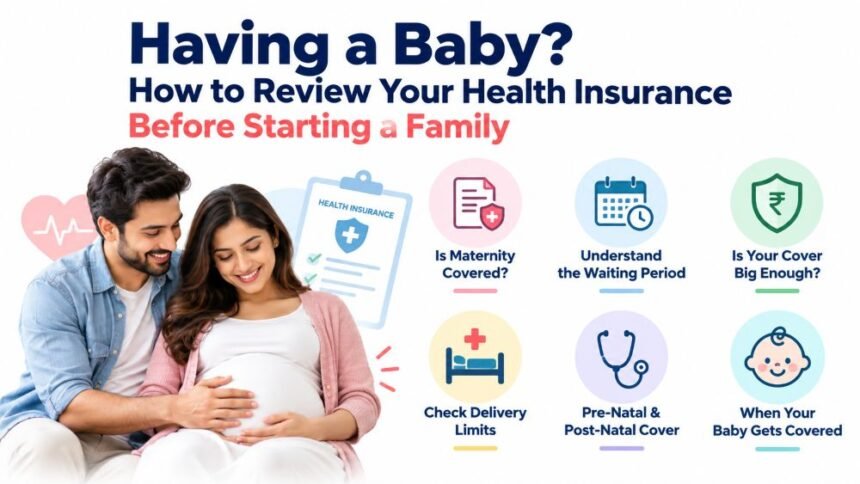
If you’re planning a baby, check four things in your health insurance: whether maternity is covered, how long you’ll wait before you can claim it, how much the policy will actually pay for delivery, and when your newborn gets covered. Do this review early, ideally two to four years before you try to conceive, because many maternity benefits come with a waiting period.
It’s easy to forget about a health policy once it’s bought. But pregnancy is precisely the moment you’ll lean on it, so it pays to open that policy document now rather than in the third trimester.
Start with the Basics: Is Maternity Even Covered?
You’d be surprised how many couples assume it is. Plenty of individual plans bought in someone’s early twenties don’t cover childbirth at all.
So before anything else, find the maternity section in your policy wording. If you’re shopping around and want to compare health insurance plans properly, you’ll generally see three setups:
- Plans that leave maternity out altogether
- Plans that let you add it as a rider for an extra premium
- Family plans that include it as part of the package
You can also consult the IRDAI health insurance product listings to identify insurance products and review available documentation. However, always confirm the benefits of the exact policy you intend to purchase.
If yours is in the first group, don’t panic. It just means your review has found its first job.
Waiting Period Is What Catches People Out
Here’s the honest truth: a maternity benefit you can’t use yet is worth very little. That’s why the waiting period deserves more of your attention than almost anything else.
Depending on the insurer and plan, you could be looking at anything from about nine months to four years, although actual terms vary. And the clock generally starts when your eligible cover begins, not when you find out you’re expecting.
Some plans offer shorter waiting periods at a higher premium. If your timeline is tight, compare that additional cost against the benefits you’re likely to receive. A shorter waiting period is only worthwhile when the overall policy suits your needs.
Also, check whether the waiting period applies separately to delivery expenses, pregnancy complications and newborn benefits. These may have different conditions.
Is Your Cover Big Enough For Three?
A sum insured that felt fine when you were single can look rather thin once a baby arrives. Delivery, possible complications, and newborn care can all come from the same budget.
For many young couples, a health insurance 5 lakh policy may be a starting point for comparison, particularly in smaller cities where hospital bills may be lower. In metros, or where additional medical care might be necessary, higher coverage may be worth considering.
However, a ₹5 lakh sum insured does not mean the insurer will pay ₹5 lakh towards maternity expenses. The policy may have a separate maternity sub-limit or exclude maternity entirely.
A family floater with a bigger sum insured, a super top-up layered on top, or a plan with a restoration benefit may help with wider healthcare expenses. Just remember that these features do not automatically extend maternity coverage.
Read the Fine Print on Delivery Limits

Even good policies may put a ceiling on maternity claims. This limit usually sits separately from your main sum insured, so a large overall cover doesn’t automatically mean a large delivery payout.
A few things to look for:
- The amount allowed for a normal delivery versus a C-section, as these may differ
- Whether pregnancy complications fall under the maternity limit or the main cover
- Whether room rent, doctor fees and hospital charges have separate restrictions
- How these figures stack up against what hospitals near you actually charge
That last point matters. A limit means nothing until you hold it up against real hospital rates in your area.
India’s insurance policyholder protection regulations provide an important regulatory framework. Ask your insurer for the Customer Information Sheet and complete policy wording so you can review exclusions, waiting periods and financial limits together.
Don’t Skip Pre-Natal and Post-Natal Cover
Pregnancy isn’t just the day you’re admitted. There are months of check-ups, scans and tests beforehand, and follow-up visits afterwards.
The World Health Organization’s antenatal care guidance highlights the importance of routine pregnancy assessments, appropriate screening and timely care throughout pregnancy.
Check whether your plan pays for any of these services and for how many days before admission and after discharge. Policies vary quite a bit here.
Also, don’t assume that routine pregnancy check-ups qualify as pre-hospitalisation expenses. Some policies only cover expenses directly related to an admissible hospitalisation claim, while others may offer specific outpatient maternity benefits.
Find Out When Your Baby Gets Covered
This one’s easy to overlook until you need it. Some policies cover a newborn from the day they’re born, potentially including neonatal intensive care under specified conditions. Others start coverage later or require the child to be formally added to the policy.
While you’re checking, see whether first-year vaccinations are included, and note the deadline for adding your child to the policy after birth.
For medical planning, UNICEF India’s childhood immunisation guidance explains when routine vaccinations begin and how India’s Universal Immunisation Programme supports newborn and child health.
Ask your insurer three specific questions: when newborn coverage begins, whether NICU treatment is included, and whether there are separate limits for newborn expenses.
Getting written answers before delivery can help prevent unexpected bills.
What About Your Company’s Health Plan?
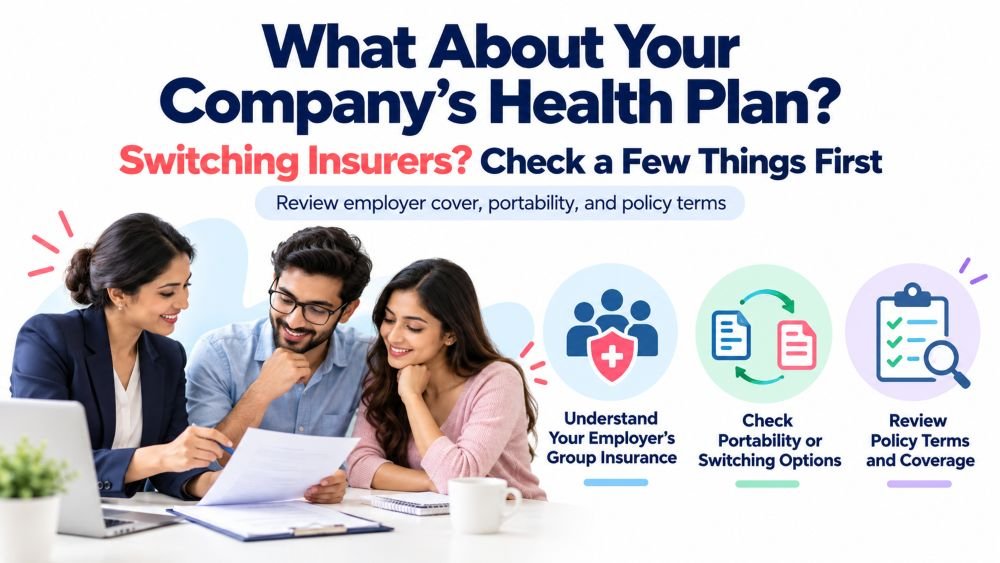
Group cover from your employer may include maternity without a waiting period, and that’s genuinely handy. Still, I wouldn’t build your whole plan around it.
Change jobs, take a sabbatical or lose your role, and that cover may end, depending on your employer’s policy terms. Group maternity limits can also be modest.
Think of it as a useful extra, not necessarily your foundation.
Ask your HR department for the group policy’s maternity benefit schedule, hospital network, newborn coverage and any conditions that apply when employment ends.
Switching Insurers? Check a Few Things First
If your review shows your current policy simply isn’t up to it, moving to a better one is a reasonable step. Just do it carefully.
- Ask whether your waiting-period credit carries over through portability, particularly for maternity benefits
- Be completely honest about any existing health conditions on the proposal form
- Read the new policy’s maternity section before you sign, not after
- Check whether the new insurer provides continuity for the benefits you actually need
Portability may preserve eligible continuity benefits, but it does not guarantee that a newly introduced maternity benefit will be available without a fresh waiting period. Get confirmation from the new insurer before cancelling your existing cover.
If you have an unresolved dispute about policy terms or claims, the IRDAI’s Bima Bharosa grievance portal provides an official channel for registering and tracking insurance complaints after approaching your insurer.
Conclusion
A little homework now can save a great deal of stress later. Confirm that maternity is covered, understand the waiting period, make sure your sum insured fits a family of three, and know exactly when your baby comes under the policy.
Start early, give your cover time to mature, and you’ll be free to focus on the part that really matters: getting ready to meet your little one.
Disclaimer
This article is intended for general informational and educational purposes only and does not constitute professional insurance, financial, legal or medical advice. Health insurance benefits, maternity waiting periods, exclusions, premiums, claim limits and newborn coverage vary between insurers and individual policies. Coverage is subject to the applicable policy wording, eligibility requirements, underwriting conditions and insurer approval. Before purchasing, renewing, switching or making a claim under any health insurance policy, carefully review the official policy documents and consult a licensed insurance professional or your insurer for personalised guidance. Medical decisions should be discussed with a qualified healthcare professional.