


Hello. Many of my patients are becoming more aware of what’s in their food, especially when it comes to gluten. Whether it’s due to a diagnosis of celiac disease, a personal gluten sensitivity, or simply a desire to eat healthier, understanding food labels can feel like a puzzle.
A common question I hear is about corn tortillas:
“Do corn tortillas have gluten?”
It seems like a simple question, but the answer has a few critical nuances. Let’s clear up the confusion.
Short Answer: Pure Corn Is Naturally Gluten-Free
Corn itself is naturally gluten-free. That means if a tortilla is made only from corn (typically masa harina), water, and a bit of salt, it should be gluten-free.
This is excellent news for patients who miss bread or other wheat-based products. Pure corn tortillas can be a delicious and versatile staple in a gluten-free diet.
Important “But”: Where Gluten Can Sneak In
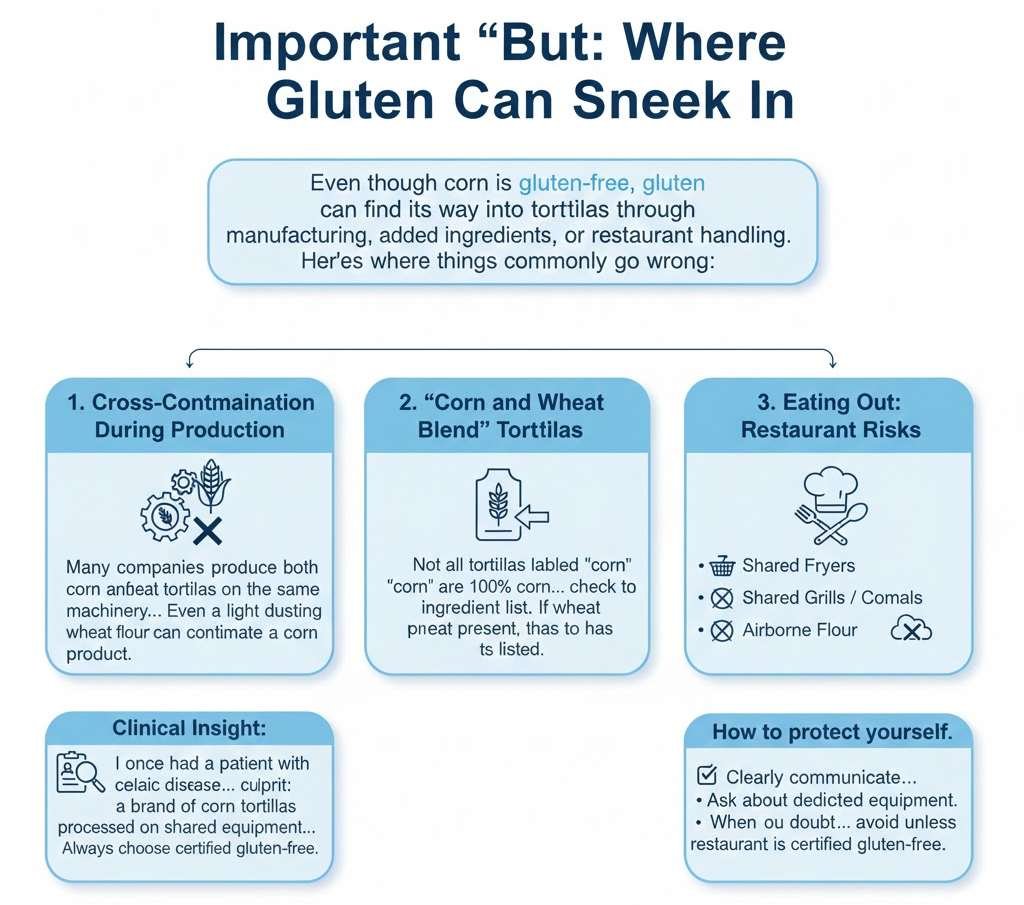
Even though corn is gluten-free, gluten can find its way into tortillas through manufacturing, added ingredients, or restaurant handling.
Here’s where things commonly go wrong:
1. Cross-Contamination During Production
This is the most significant hidden risk.
Many companies produce both corn and wheat tortillas on the same machinery or in the same facility. Even a light dusting of wheat flour can contaminate a corn product.
Clinical Insight:
I once had a patient with celiac disease who was extremely careful about her diet. Despite her diligence, she began experiencing symptoms again. We eventually identified the culprit: a brand of corn tortillas processed on shared equipment with wheat tortillas. Even tiny traces of gluten can cause symptoms in someone with celiac disease.
If you have celiac disease or severe sensitivity:
Always choose brands that are certified gluten-free, meaning the product has been independently tested to contain less than 20 parts per million of gluten.
2. “Corn and Wheat Blend” Tortillas
Not all tortillas labeled “corn” are 100% corn.
Manufacturers sometimes add wheat flour to make tortillas more pliable or softer. These will usually be labeled “corn and flour tortillas,” “blend,” or something similar.
Always check the ingredient list.
If wheat is present, it has to be listed.
3. Eating Out: Restaurant Risks
Even if a restaurant uses corn tortillas, gluten can appear through:
Shared Fryers
Tortilla chips or fried tacos cooked in a fryer that also handles breaded items become contaminated.
Shared Grills / Comals
Corn tortillas may be warmed on the same surface as flour tortillas.
Airborne Flour
In busy kitchens, flour particles from wheat-based items can settle onto corn products.
How to protect yourself in restaurants:
- Clearly communicate gluten-free requirements
- Ask about dedicated fryers, grills, or prep surfaces
- When in doubt, choose dishes you know are safe
- For highly sensitive individuals: avoid tortillas unless the restaurant is certified gluten-free
Understanding Labels: “Gluten-Free” vs. “Made With Corn”
This distinction matters.
“Made with Corn”
Means corn is an ingredient, nothing more. It does not guarantee the product is gluten-free.
“Gluten-Free” (with certification)
This is the gold standard. It tells you the product meets FDA guidelines (<20 ppm gluten) and has been produced with practices that prevent cross-contamination.
Blue Corn, White Corn, Yellow Corn—Does the Color Matter?
All types of corn—blue, white, yellow—are naturally gluten-free.
The color affects flavor and texture, but not gluten content.
The same rules still apply:
- Check for added wheat
- Check for contamination
- Look for gluten-free labeling if needed
Making Your Own: The Safest Option
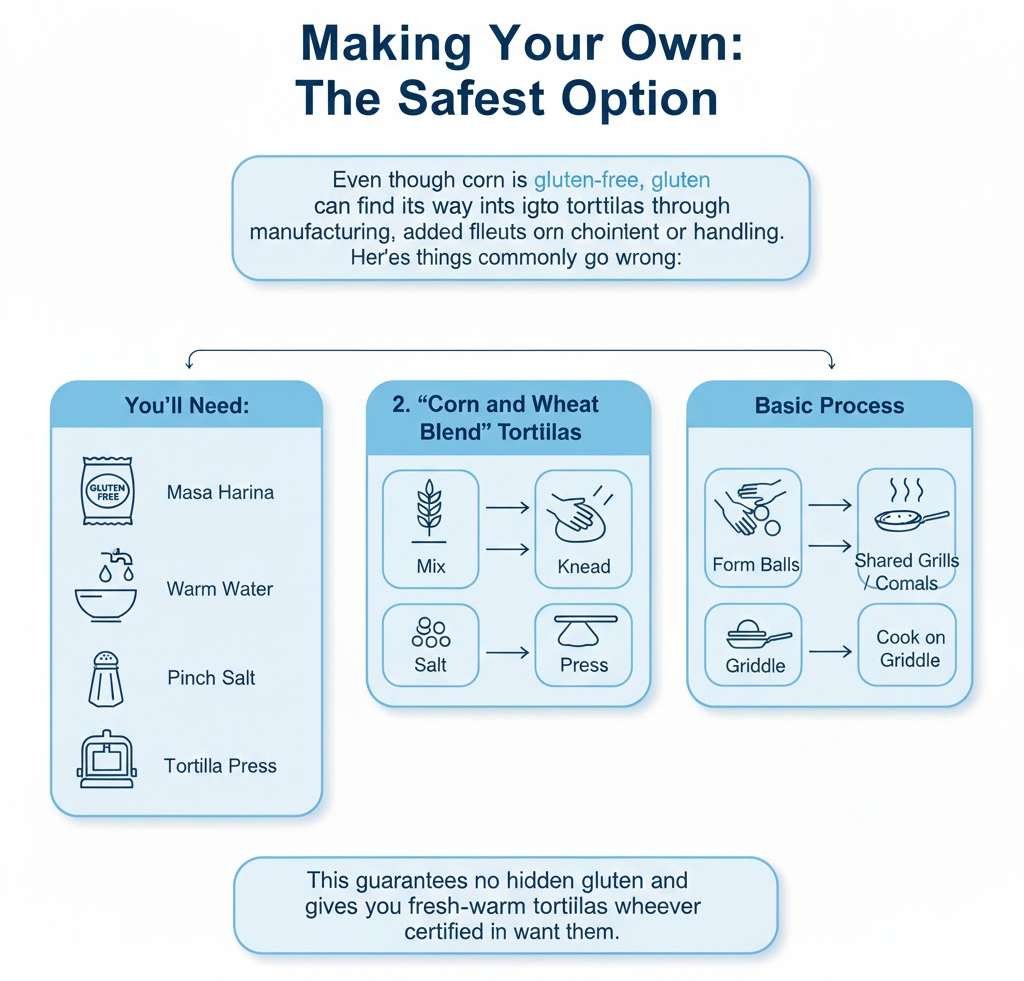
If you want complete control over ingredients and contamination, homemade tortillas are your safest bet. The process is simple and surprisingly satisfying.
You’ll need:
- Gluten-free masa harina (be sure the label says “gluten-free”)
- Warm water
- A pinch of salt
- A tortilla press (optional, but helpful)
Basic Process:
Mix → knead → form small balls → press → cook on a hot griddle.
This guarantees no hidden gluten and gives you fresh, warm tortillas whenever you want them.
Your Health, Your Responsibility
Managing a gluten-free diet requires awareness and consistency. Corn tortillas can absolutely be part of a safe, gluten-free lifestyle—you need to approach them with the same diligence you use with any packaged or restaurant food.
Stay mindful of:
- Ingredient lists
- Gluten-free certifications
- Cross-contamination risks
- Restaurant practices
With the proper knowledge, you can enjoy corn tortillas confidently and comfortably.
Final Recommendation
If corn tortillas are part of your weekly rhythm, let them remain a source of nourishment—not anxiety. Pure corn is gluten-free, but what happens to it during processing determines whether the final product is safe. By reading labels carefully, choosing certified gluten-free products when necessary, asking clear questions at restaurants, and preparing tortillas at home when possible, you give yourself the best protection against accidental gluten exposure. A few intentional habits can make gluten-free living far more predictable and empowering.
References
- Celiac Disease Foundation – Gluten-free labeling and cross-contact guidance
- FDA – Gluten-free food labeling regulations (20 ppm standard)
- Academy of Nutrition and Dietetics – Gluten-free diet and food safety resources
- National Institutes of Health – Information about celiac disease and gluten sensitivity
- Studies on gluten cross-contact risks in shared manufacturing and restaurant environments
(These sources summarize reputable, publicly available information relevant to gluten-free eating.)
Disclaimer
This article is intended for general educational purposes and does not replace personalized medical advice. If you have celiac disease, gluten sensitivity, or persistent gastrointestinal symptoms, speak with a qualified healthcare professional or registered dietitian for individualized guidance. Seek medical attention for any new, severe, or worsening symptoms.