


As a medical professional, I often meet patients who are curious about 7‑day water fasting. Online stories can be very appealing, with claims of rapid weight loss, metabolic “resets,” and deep cellular cleansing through autophagy.
Fasting itself is not inherently harmful. In fact, shorter forms of fasting, such as intermittent fasting, can offer real benefits for metabolic health and blood sugar control when done correctly. However, a strict 7‑day water fast, where only water is consumed for an entire week, is a very different matter.
This type of prolonged fasting places significant stress on the body. It triggers major physiological changes, carries real medical risks, and should never be approached casually. Proper knowledge, preparation, and medical oversight are essential.
In the following discussion, we’ll look at what actually happens in the body during a prolonged fast, who should not attempt it under any circumstances, and how to think about safety if this approach is being considered in consultation with a healthcare professional.
What Happens During a 7 Day Water Fast?
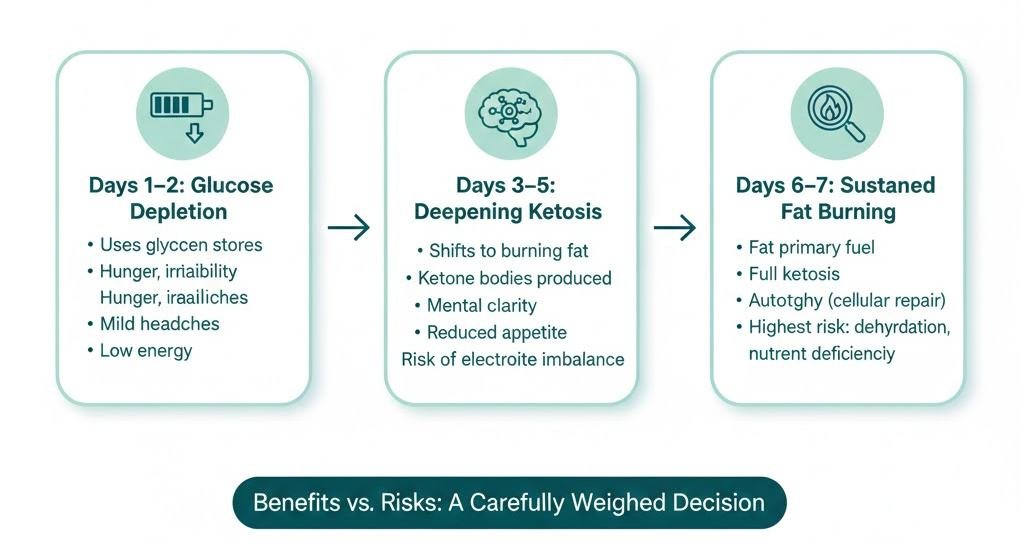
When you go without food for a whole week, your body moves through several distinct phases as it searches for energy:
Days 1–2: Glucose Depletion
- Your body first uses glycogen stores in the liver and muscles for energy.
- Common effects include hunger, irritability, mild headaches, and low energy.
Days 3–5: Deepening Ketosis
- The body shifts to burning fat for fuel, producing ketone bodies.
- Many people notice mental clarity and reduced appetite.
- However, this metabolic shift also carries risks, including electrolyte imbalance and fatigue.
Days 6–7: Sustained Fat Burning
- Fat becomes the primary fuel source, and the body is entirely in ketosis.
- Hunger may decrease, but the strain on the body’s systems, especially electrolyte balance and kidney function, is at its highest.
During this period, people often seek benefits like fat loss and autophagy (cellular repair). While these effects can be significant, they must be carefully weighed against the potential risks, including dehydration, nutrient deficiencies, and cardiovascular stress.tained period of caloric deficit. But these benefits must be carefully weighed against the risks.
A Critical Safety Warning: Medical Supervision Is Key
For a long fast like a 7-day water fast, having a doctor or medical supervision is absolutely necessary. This is not something to try just based on things you read online.
Why is Supervision Necessary?
The biggest danger during a prolonged water fast isn’t starvation; it’s electrolyte imbalance and dehydration.
- When you stop eating, your kidneys flush out electrolytes like sodium, potassium, and magnesium much more rapidly.
- Clinical Example: I treated a patient attempting a 5 day fast who ended up in the emergency room on Day 4. He was drinking plenty of plain water but not supplementing salts. His hyponatremia (dangerously low sodium) caused extreme dizziness and rapid heart rate. Simple low sodium can be fatal if it leads to seizures or severe brain swelling.
If you choose to do a 7 day water fast, you must monitor your electrolyte levels and blood pressure daily. This is virtually impossible to do safely without access to testing and professional guidance.
Who Must AVOID a Prolonged Water Fast
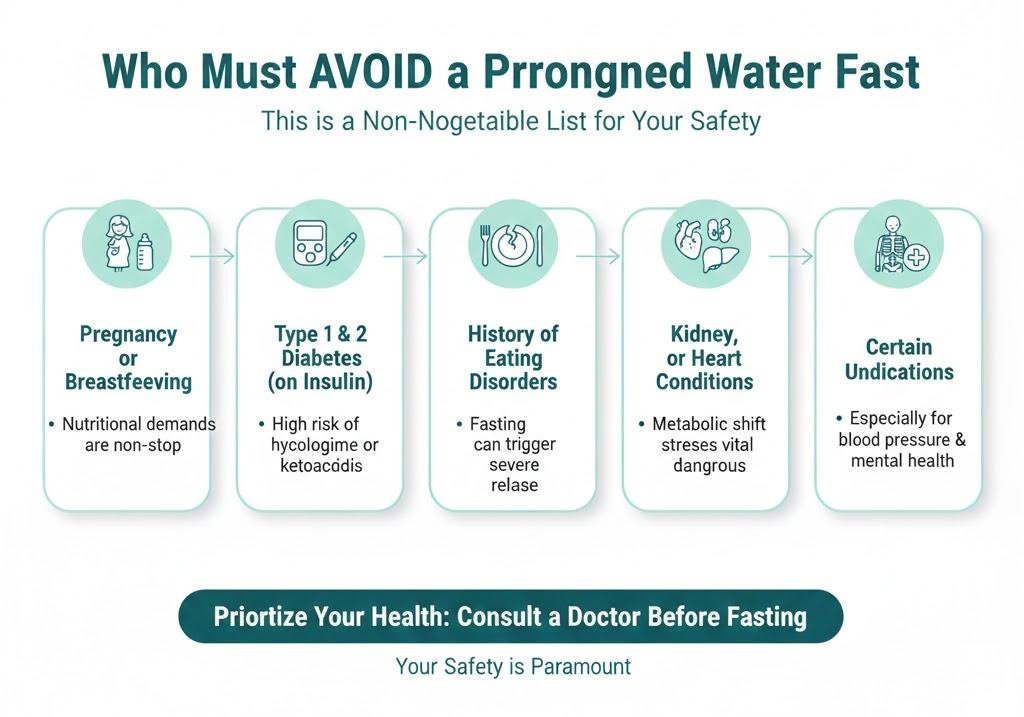
This is a non-negotiable list. If any of these apply to you, a 7 day water fast is too dangerous:
- Pregnancy or Breastfeeding: Nutritional demands are non-stop.
- Type 1 Diabetes or Type 2 Diabetes on Insulin: High risk of dangerous hypoglycemia or ketoacidosis.
- History of Eating Disorders: Fasting can trigger severe relapse.
- Kidney, Liver, or Heart Conditions: The metabolic shift places undue stress on these vital organs.
- Being Significantly Underweight (BMI under 18.5).
- Certain Medications: Especially for blood pressure (which can drop dangerously) or mental health.
Preparation: Making the Transition Gradual
If, after consulting your doctor, you are cleared for a shorter, medically supervised fast, the preparation is everything. You cannot go from eating a heavy diet one day to a water fast the next.
- Taper Down: Spend 3 to 5 days leading up to the fast gradually eliminating sugar, processed foods, and high carbohydrates. Focus on light vegetables and small amounts of lean protein. This helps ease your body into fat-burning mode.
- Hydration Practice: Ensure you are already drinking enough water and consider starting light electrolyte supplementation (a pinch of salt) a day or two early.
- Reduce Activity: Treat the fasting period as a time for rest. Avoid strenuous exercise. Your body is already under stress; conserve energy.
Breaking the Fast: Slow and Steady Wins
After a 7 day water fast, your digestive system has been dormant. Throwing a large, heavy meal at it is the fastest way to cause severe discomfort, bloating, and a condition called refeeding syndrome, which can be dangerous due to rapid electrolyte shifts.
- Days 8 and 9 (Reintroduction): Start with small amounts of bone broth (excellent for easily absorbed nutrients and electrolytes) and very light, fermented foods like sauerkraut (to gently wake up gut bacteria).
- Days 10 and 11 (Soft Foods): Gradually introduce soft, easy-to-digest foods like steamed vegetables, small amounts of lean protein, and healthy fats (like avocado).
- Avoid: Large quantities of sugar, heavy fats, dairy, and raw vegetables for at least the first four days after the fast.
Long Term Health: Fasting vs. Lifestyle
I often tell my patients that the benefits they seek from a 7 day water fast can largely be achieved through sustainable, consistent time-restricted eating (like a 16 hour daily fast) and a healthy diet.
A prolonged water fast is a radical tool for a specific purpose, often involving health conditions like severe insulin resistance or obesity, and it is best used under a doctor’s guidance. For everyday, long term health and wellness, consistency in diet, movement, and sleep always trumps the quick, intense fix.
Please, if you are considering a 7 day water fast, make your first step a consultation with a healthcare professional to discuss your full medical history and safety plan.
Common Myths About 7‑Day Water Fasting
There is a lot of misleading information online about prolonged fasting. Understanding these myths is essential for safety.
| Myth | Reality / Explanation |
|---|---|
| Longer fasts always bring more benefits | Many benefits, like improved insulin sensitivity and autophagy, start early. Extending the fast mainly increases risk rather than reward. |
| Feeling fine means it’s safe | Electrolyte imbalances can occur before symptoms appear. Feeling okay does not guarantee safety. |
| Drinking only water is enough | Water alone can dilute sodium and other electrolytes, increasing the risk of serious complications, including heart rhythm problems. |
| Anyone can do a 7-day fast | Fasting affects people differently. What is safe for one person may be dangerous for another, especially with underlying health conditions. |
Mental and Emotional Effects of a Prolonged Water Fast
A 7‑day water fast affects both physical and mental health.
| Phase | Days | Common Mental & Emotional Effects |
|---|---|---|
| Early Phase | 1–3 | Mood swings, irritability, anxiety, headaches, intense food cravings |
| Middle Phase | 4–5 | Calmness or mental clarity for some; fatigue, brain fog, low motivation, emotional flatness for others |
| Late Phase | 6–7 | Fatigue, slowed thinking, poor concentration, increased emotional sensitivity |
People with a history of anxiety, depression, or eating disorders are at higher risk of adverse psychological effects during prolonged fasting.
Final Conclusion
A 7‑day water fast is not a casual wellness practice. It places significant stress on the body and triggers major metabolic and electrolyte changes. While some people seek fat loss, metabolic improvement, or cellular repair, these potential benefits come with real and sometimes serious risks.
For most individuals, safer approaches such as intermittent fasting, time‑restricted eating, and long‑term lifestyle changes offer similar benefits with far fewer dangers. When prolonged fasting is considered, it should only be done with careful preparation, medical supervision, and a clear understanding of who should avoid it entirely.
Proper health is built through consistency, balanced nutrition, movement, and recovery, not extreme shortcuts. If you are considering a 7‑day water fast, your first and most crucial step should be to discuss it with a qualified healthcare professional.