

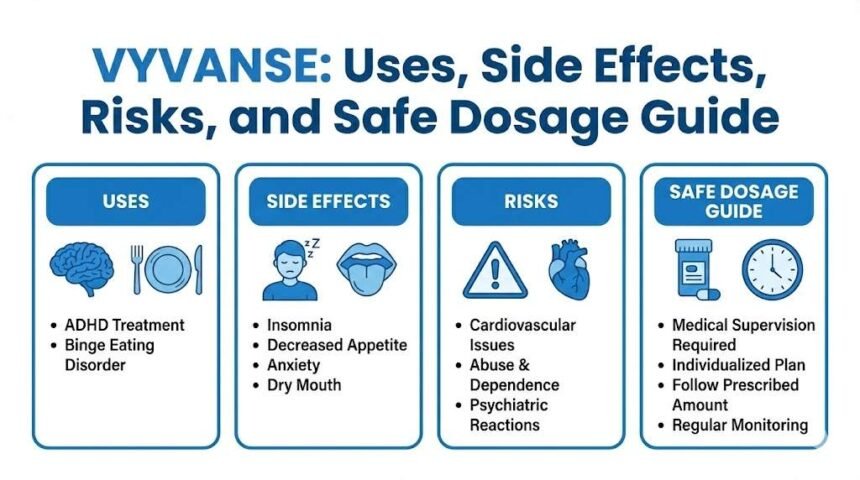
Many patients come to me curious about Vyvanse, which is the brand name for lisdexamfetamine. Like Adderall, it is a central nervous system (CNS) stimulant used primarily to treat Attention Deficit Hyperactivity Disorder (ADHD) and also approved for treating moderate to severe binge eating disorder (BED) in adults. What makes Vyvanse unique is that it is a prodrug: it’s inactive until the body metabolizes it. This difference is key to how it works, its long duration, and its potential for abuse. Understanding this mechanism is vital to using it responsibly.
We’ll discuss the science behind this unique delivery system, its primary uses, the specific risks it carries, and the practical steps you can take to use this powerful medication safely under medical supervision.
What is Vyvanse and How Does it Affect the Brain?

Vyvanse is chemically distinct from other amphetamines because it is an inactive molecule until it is processed by the body. This is called a prodrug mechanism.
- The Prodrug Mechanism: The active ingredient, lisdexamfetamine, is made up of dextroamphetamine chemically bonded to an amino acid called L-lysine. When you swallow the capsule, it travels to your gastrointestinal tract.
- Activation: Enzymes in the blood and gut slowly cleave (cut) the L-lysine off the dextroamphetamine. This slow, predictable, enzyme-dependent process activates the medication.
- The Effect on the Brain: Once activated, the released dextroamphetamine works like other stimulants, increasing the levels of dopamine and norepinephrine in the brain. This action improves focus, attention, and impulse control in ADHD. The controlled release mechanism prevents the rapid peak and drop associated with other stimulants.
Primary Uses and Therapeutic Benefits
The unique action of Vyvanse provides distinct advantages for two specific health issues.
- Attention Deficit Hyperactivity Disorder (ADHD): Vyvanse is effective across the lifespan, from children aged 6 to adults. Its main therapeutic advantage is its smooth, long duration (up to 14 hours), which eliminates the need for midday dosing and often reduces the severe “crash” some patients experience when the drug wears off. This sustained action is often preferred for managing symptoms throughout a full school or workday.
- Moderate to Severe Binge Eating Disorder (BED): This is a unique FDA approval. The medication helps reduce the number of binge eating episodes by modulating dopamine pathways that are involved in reward and impulse control.
Clinical Insight: I’ve seen Vyvanse effectively help patients with BED regain control. One patient noted that the medication reduced the intrusive thoughts and intense cravings that previously dominated her evening hours, allowing her to implement healthier coping strategies learned in therapy. It addresses the neurological impulsivity tied to the behavior.
Dosage Forms, Schedules, and Safe Use
Vyvanse is available in capsules and chewable tablets, but its delivery system requires specific attention to safe usage.
- Once Daily Dosing: Due to its long activation process, Vyvanse is taken only once daily, typically first thing in the morning. Taking it later than mid morning can easily lead to severe insomnia.
- Consistent Timing: Maintain the same dose time each day to establish a predictable routine and therapeutic effect.
- Flexibility in Administration: Unlike some extended release medications, Vyvanse capsules can be opened and the powder dissolved in water, yogurt, or orange juice, which is very helpful for children or adults who struggle to swallow pills. Crucially, this does not change the extended release mechanism because the drug activation depends on enzymes in the body, not on the capsule coating.
Safe Dosage Practices
- Titration is Key: Your doctor will always start you on a low dose (e.g., 30 mg) and increase it gradually, usually weekly, to find the lowest dose that provides effective symptom relief without unacceptable side effects.
- Example: A patient starts at 30 mg for one week, moves to 50 mg the next, and may settle at 70 mg, which is the maximum dose for BED and ADHD.
- Maximum Dose Limit: Never exceed the maximum prescribed dose. The maximum dose for both ADHD and BED is 70 mg per day.
Practical Risks and Common Side Effects
Like all stimulants, Vyvanse carries side effects, which tend to be related to its activating nature.
| Body System | Common Side Effect | Clinical Guidance |
| Gastrointestinal | Decreased Appetite, Weight Loss | Schedule high-calorie meals early or late; use protein shakes to supplement. |
| Cardiovascular | Increased Heart Rate & Blood Pressure | Monitor blood pressure weekly; avoid excessive caffeine. |
| Neurological | Insomnia, Dry Mouth, Irritability | Ensure dose is taken early (before 9 AM); prioritize hydration. |
| Psychological | Jitteriness, Anxiety | If persistent, the dose may be too high or the drug may be inappropriate. |
Long Term Risks and Misuse Concerns
Vyvanse is a Schedule II controlled substance, indicating a high potential for abuse and dependence.
- Dependence and Abuse: While the prodrug mechanism slows the speed at which the drug hits the brain, it does not eliminate the risk of dependence. Abruptly stopping the medication after long term use can cause severe fatigue, depression, and psychological withdrawal.
- Reduced Abuse Potential: The main advantage of the prodrug system is that it makes it difficult to abuse via snorting or injection (because the lysine must be enzymatically cleaved for the drug to become active). This slow conversion provides a smoother effect and reduces the immediate “rush” that fuels addictive behavior with immediate-release stimulants.
- Cardiovascular Monitoring: Long term use requires consistent monitoring of blood pressure and heart rate due to the sustained stimulant effect. Patients with pre existing heart conditions should not use Vyvanse.
Simple Onset/Duration Comparison
| Drug Form | Peak Effect Time | Total Duration | Addiction Risk (Due to Onset) |
| Immediate Release (IR) | 1-2 hours | 4-6 hours | Higher (rapid peak) |
| Vyvanse (Prodrug) | 3-4 hours | Up to 14 hours | Lower (gradual, controlled release) |
When to See a Doctor
It is crucial to contact your prescribing physician immediately if you experience any of the following symptoms:
- Cardiovascular Issues: Chest pain, severe shortness of breath, unexplained dizziness, or persistent pounding heartbeat.
- Psychological Changes: New onset of hallucinations, paranoid thoughts, extreme mania, or uncontrolled aggression.
- Severe Symptoms: Unexplained fever, muscle stiffness, or seizures.
Improvement Timeline
Understanding the timeline helps manage expectations, especially when optimizing the dose.
| Time Frame | Expected Changes | What to Monitor |
| Day 1 | Subtle increase in focus and wakefulness; may notice decreased appetite. | Note when the drug wears off to gauge optimal timing. |
| Weeks 1–2 | Side effects (insomnia, dry mouth) are most noticeable; initial titration phase. | Monitor blood pressure and sleep quality closely. |
| Weeks 3–4 | Side effects usually stabilize; core symptoms (focus, impulsivity) show significant improvement at therapeutic dose. | Gather feedback from teachers, family, or supervisors. |
Final Advice
Vyvanse is a highly effective, long-acting stimulant that offers a smoother therapeutic profile for many managing ADHD or BED. Because of its unique prodrug mechanism, it provides reliable, all-day coverage. Always use this medication precisely as prescribed. Never share it, never take extra doses, and maintain clear, honest communication with your prescribing doctor about its effects. Your commitment to responsible use ensures you maximize the benefits for your health and performance.
Medical Disclaimer
The information provided in this article is for informational purposes only and is not intended as medical advice, diagnosis, or treatment. It is not a substitute for professional medical care. Always seek the advice of a qualified healthcare provider with any questions you may have regarding a medical condition, the use of stimulants (including starting, stopping, or managing side effects of Vyvanse), or any concerns about dependence or misuse. Do not stop or change any prescribed medication without consulting your prescribing physician.
References
- U.S. Food and Drug Administration (FDA). (2023). Vyvanse (Lisdexamfetamine Dimesylate) prescribing information.
- Biederman, J., et al. (2007). Lisdexamfetamine dimesylate and its clinical profile in the treatment of attention deficit hyperactivity disorder. Expert Review of Neurotherapeutics.
- Zimmerman, C., et al. (2014). Cardiovascular safety of stimulants in ADHD. Current Psychiatry Reports.
- McDonagh, M. S., et al. (2018). Pharmacologic Treatment of Adult Attention Deficit Hyperactivity Disorder: A Systematic Review and Meta analysis. Journal of General Internal Medicine.
- Faraone, S. V., et al. (2020). Lisdexamfetamine dimesylate in the treatment of attention deficit hyperactivity disorder. Expert Opinion on Pharmacotherapy.
- American Psychiatric Association (APA). (2022). Diagnostic and Statistical Manual of Mental Disorders (5th ed., text rev.).
- Kooij, J. J. S., et al. (2019). European consensus statement on diagnosis and treatment of adult ADHD. BMC Psychiatry.