

When a doctor says that you are in remission, it can feel like the finish line. On the other hand, when someone mentions “recurrence”, it can sound like the whole journey was for nothing. Both reactions are normal, but both can create confusion.
Mesothelioma follow-up care involves new terms, scans, and waiting. Understanding what remission and recurrence really mean helps you ask better questions, plan week to week, and protect your energy. Here are common misunderstandings.
Remission Is Not The Same As Being Cured
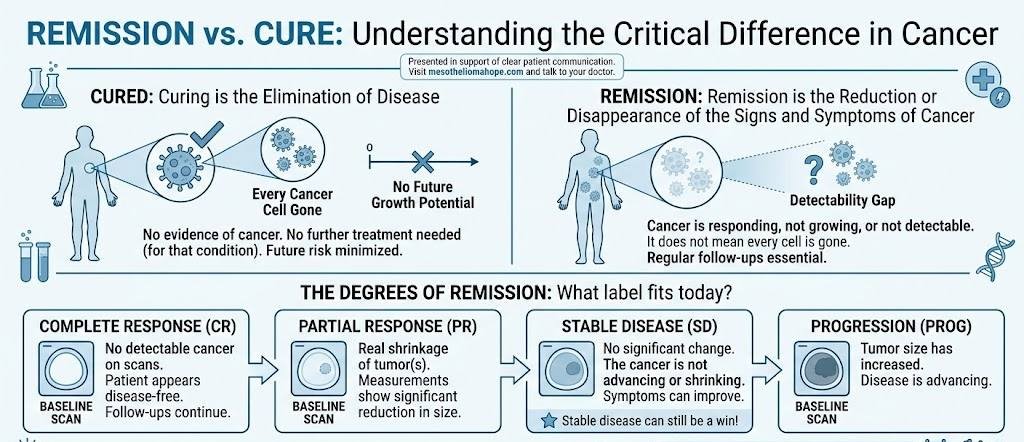
Remission means the cancer is responding to treatment and is not growing, or that it is no longer detectable with current tests. It does not automatically mean every cancer cell is gone. That gap is why follow-ups matter. If you want a clear, plain explanation of the terms and what they can mean over time, check out mesotheliomahope.com, and be sure to bring your questions to your doctor.
Additionally, remission has degrees. It may be a complete response, a partial response, stable disease, or progression. These labels describe what scans and measurements show compared to the last check. A partial response can still mean real shrinkage and better breathing. Stable disease can be a win, too, if symptoms improve and the cancer is not advancing. Ask which label fits today, and what changes it.
No Evidence Of Disease Is A Testing Statement, Not A Promise
Families hear no evidence of disease and assume certainty. In reality, it means scans, exams, and labs did not show active disease at that time. Imaging has limits, and microscopic disease can be invisible. This does not mean treatment failed. It means monitoring is part of the plan, even when the news is good.
Follow-Up Schedules Are About Risk, Not Punishment
Some families feel like frequent scans mean something is wrong. Usually, it is the opposite. A schedule is built around your loved one’s stage, treatment history, and overall health. The goal is to spot meaningful change early, when there are more options. Be sure to ask what meaningful change looks like and what the next step would be if a scan is unclear.
Recurrence Can Show Up In Different Ways
Recurrence is not one thing. It may be local, near the original site, regional, or farther away. It can also appear as slow changes that look like scar tissue at first, especially after surgery or radiation. Ask the care team what patterns they watch for in your loved one’s specific case, and what symptoms should trigger a call.
Emotional Swing Is Normal, And You Should Plan For It Anyway
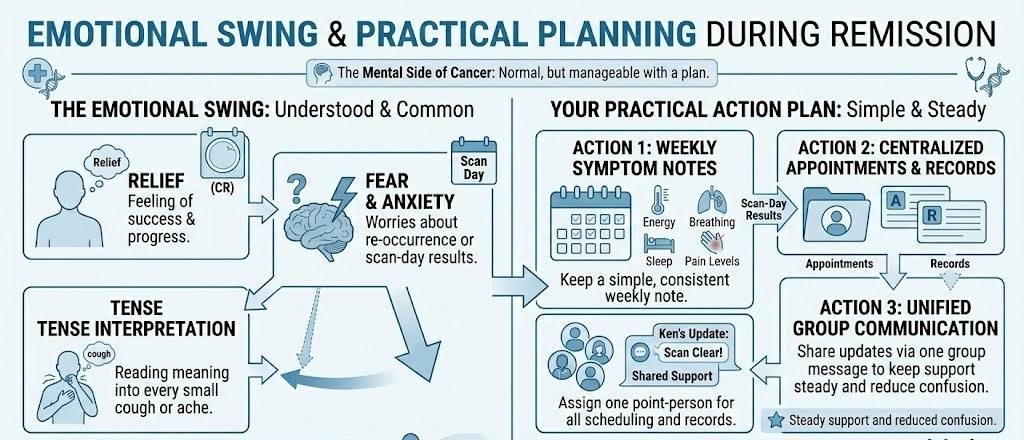
Even in remission, many families stay tense. Relief shows up, then fear creeps in before the next scan, then your brain tries to read meaning into every cough or ache. That push and pull is common. What helps is turning anxiety into a simple plan.
Keep a short weekly symptom note, track energy, breathing, sleep, and pain levels, and list questions as they come up. Assign one person to manage appointments and records, then share updates in one group message. It reduces confusion, and it keeps support steady.
Endnote
Remission and recurrence are medical terms, but they affect day-to-day decisions. Bring a trusted person to hospital visits, and take notes together. The best way to reduce fear is to trade assumptions for questions. Write down unfamiliar words, ask for definitions, and request the “why” behind each decision.
Disclaimer
This article is intended for general informational purposes only and does not constitute medical, legal, or professional advice. The information provided should not be used as a substitute for consultation with a qualified healthcare professional. Every patient’s situation is unique, and treatment outcomes, including remission and recurrence, vary significantly based on individual factors. Always consult your medical team regarding diagnosis, treatment options, and follow-up care specific to your loved one’s condition.
References
1. American Cancer Society. (2023). “Mesothelioma.” Retrieved from https://www.cancer.org/cancer/malignant-mesothelioma.html
2. National Cancer Institute. (2024). “Mesothelioma Treatment (PDQ®)Patient Version.” Retrieved from https://www.cancer.gov/types/mesothelioma/patient/mesothelioma-treatment-pdq