
A guide to accessing credentialed Ayurvedic, integrative, and natural health practitioners from anywhere in the world.
When most people think of telemedicine, they picture a video call with a doctor to renew a prescription. That is where it started. But the same infrastructure, secure consultations, digital health records, and cross-border access to specialists apply equally to natural and integrative healthcare. And for millions of people seeking alternatives to conventional medicine, that shift is long overdue.
Natural healthcare encompasses Ayurveda, Traditional Chinese Medicine (TCM), naturopathy, herbal medicine, and more. These systems share a common philosophy: treating the whole person, supporting the body’s innate capacity to heal, and emphasizing prevention as much as cure. They also share a common problem: access. The most rigorously trained natural health practitioners are often thousands of miles away from the patients who need them. Telemedicine is beginning to close that gap.
What Is Natural Healthcare? A Quick Overview
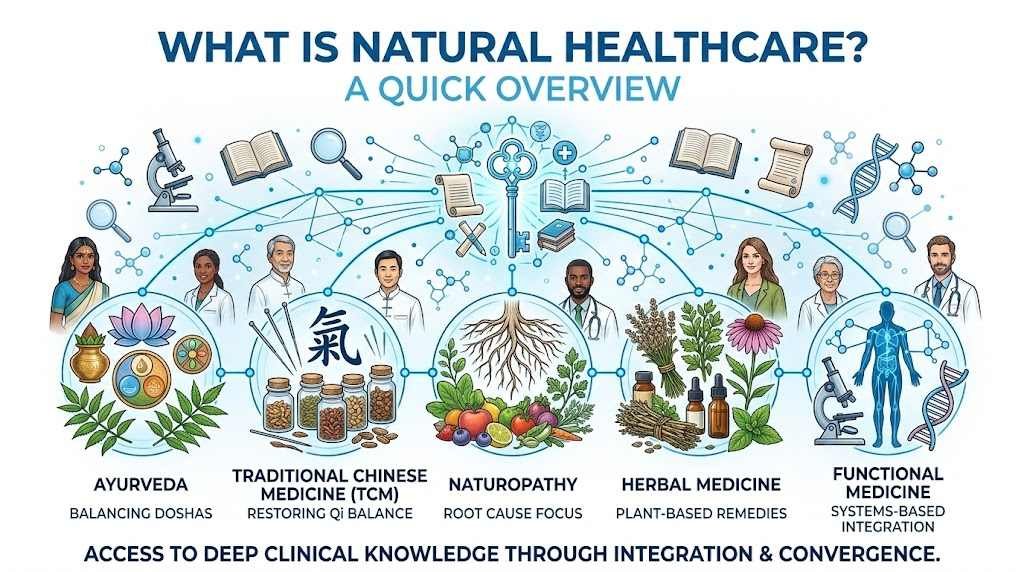
Natural healthcare is an umbrella term for health systems and therapies that work with the body’s own healing mechanisms rather than relying solely on pharmaceutical intervention to suppress symptoms. The major traditions include:
- Ayurveda: A 5,000-year-old Indian medical system based on balancing individual constitution (dosha) through diet, herbs, lifestyle, and therapies.
- Traditional Chinese Medicine (TCM): Encompasses acupuncture, herbal medicine, and practices aimed at restoring Qi (energy) balance.
- Naturopathy: Integrates nutrition, botanical medicine, and lifestyle medicine with a focus on the root cause of illness.
- Herbal Medicine: The use of plant-based remedies to support health, practiced across virtually every culture in the world.
- Functional Medicine: A systems-based approach that bridges conventional and integrative methods to treat underlying dysfunction.
Each of these systems has produced generations of trained practitioners with deep clinical knowledge. The challenge has never been the knowledge; it has been access.
Ayurveda: A Complete Medical System Out of Reach
Of all the world’s natural healing traditions, Ayurveda illustrates the access problem most clearly. Ayurveda is not a wellness trend, it is a fully codified medical system practiced for more than 5,000 years. The Indian government recognizes it as such. Under the official AYUSH ministry, Ayurveda is recognized as a traditional system of medicine. Dedicated Ayurveda hospitals operate throughout India, staffed by physicians who have completed rigorous five-and-a-half-year BAMS (Bachelor of Ayurvedic Medicine and Surgery) degree programs. These practitioners diagnose, prescribe herbal medicines, perform Panchakarma detoxification therapies, and manage complex chronic conditions with full institutional authority.
The contrast with what is available in the West is stark. In the United States, the United Kingdom, and most of Europe, Ayurveda has no formal medical recognition. There are no Ayurveda hospitals. No licensing bodies are credentialing Ayurvedic physicians the way India does. As a result, most Westerners who encounter Ayurveda encounter only its surface layer: basic dosha assessments, general dietary advice, and digestive or sleep support tips. These are valuable, but they represent a fraction of what Ayurveda actually offers.
To access deeper Ayurvedic caretreatment of chronic inflammatory conditions, hormonal imbalances, autoimmune support, and the intensive therapies of Panchakarma, Western patients have historically had one real option: travel to India. For most people, that is not feasible.
Understanding Your Dosha: Starting Point of Ayurvedic Care
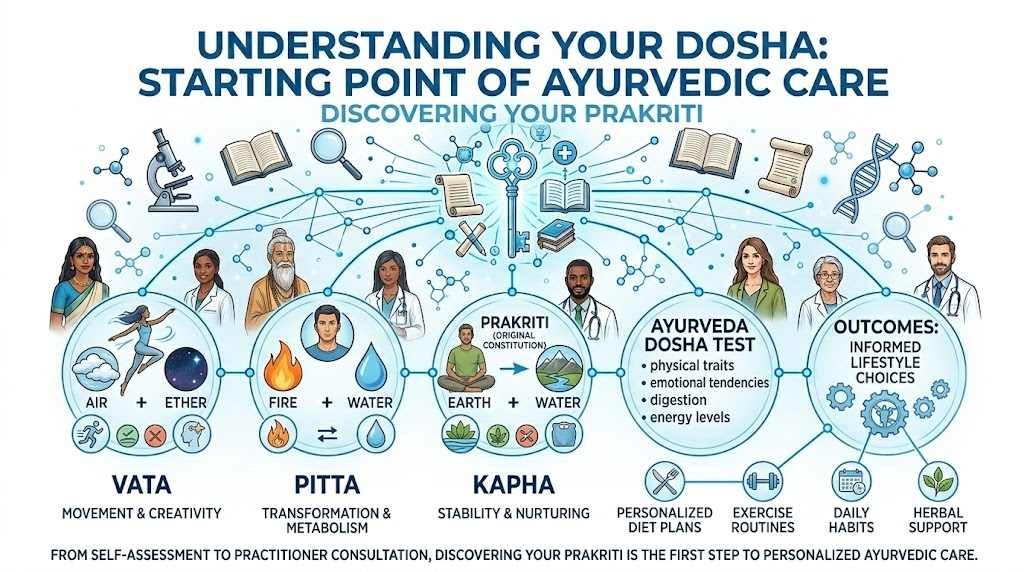
Central to Ayurvedic practice is the concept of the three doshas, Vata, Pitta, and Kapha, which represent distinct combinations of the five elements (earth, water, fire, air, and ether). Every individual has a unique doshic constitution, called Prakriti, determined at birth. Understanding your Prakriti is the first step toward personalized Ayurvedic care.
One of the most effective ways to discover your natural balance is to take an Ayurveda dosha test. This simple assessment evaluates your physical traits, emotional tendencies, digestion, energy levels, and behavioral patterns to identify which dosha is most dominant in your constitution. While self-assessment quizzes can provide helpful insight, a detailed consultation with a qualified Ayurvedic practitioner offers the most accurate understanding of your Prakriti and current imbalances (Vikriti).
By identifying your dominant dosha through an Ayurveda dosha test, you can make informed lifestyle choices, including personalized diet plans, exercise routines, daily habits, and herbal support tailored specifically to your body and mind.
Three Doshas at a Glance
- Vata (Air + Ether): Associated with movement, creativity, and change. Vata types tend to be energetic and imaginative but prone to anxiety, dry skin, and irregular digestion when imbalanced.
- Pitta (Fire + Water): Associated with transformation, intelligence, and metabolism. Pitta types tend to be driven and focused but prone to inflammation, irritability, and digestive acidity when imbalanced.
- Kapha (Earth + Water): Associated with stability, nurturing, and endurance. Kapha types tend to be calm and grounded but prone to weight gain, congestion, and lethargy when imbalanced.
Most people are a combination of two doshas, with one dominant. A qualified Ayurvedic practitioner assesses your Prakriti through pulse diagnosis (Nadi Pariksha), physical examination, and detailed health history, a process far deeper than any online quiz.
Tip: Online dosha quizzes can offer a helpful starting point for self-exploration. However, for accurate constitutional assessment and personalized treatment, always consult a credentialed Ayurvedic practitioner.
What Genuine Ayurvedic Care Can Address
When practiced at a clinical level, Ayurveda offers structured treatment protocols for a wide range of conditions. Some of the areas where evidence and clinical experience are strongest include:
- Digestive disorders: IBS, SIBO, chronic bloating, and sluggish digestion.
- Hormonal imbalances: Thyroid dysfunction, PCOS, perimenopause, and adrenal fatigue.
- Chronic inflammatory conditions: Arthritis, psoriasis, and inflammatory bowel conditions.
- Autoimmune support: Working alongside conventional treatment to reduce flare frequency and severity.
- Mental and emotional health: Anxiety, stress-related insomnia, burnout, and cognitive fog.
- Metabolic health: Weight management, blood sugar regulation, and lipid balance.
Panchakarma, the system’s most intensive therapeutic modality, involves a multi-day series of treatments including medicated oil therapies, herbal steam, dietary protocols, and targeted cleansing procedures. Administered by trained practitioners, it is considered Ayurveda’s most powerful tool for resetting systemic imbalance.
How Telemedicine Is Changing the Access Equation
For natural healthcare, the telemedicine revolution has several specific implications worth understanding:
Cross-Border Practitioner Access
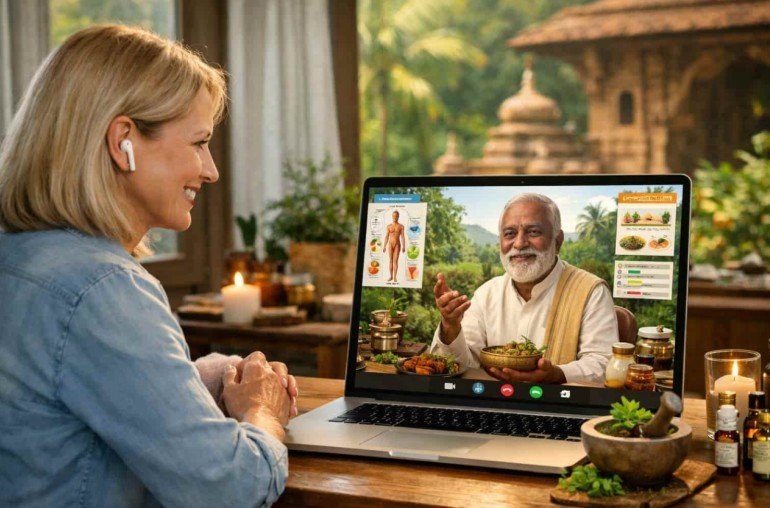
A patient in London or Los Angeles can now consult with a BAMS-qualified Ayurvedic physician in Kerala or Pune without leaving their home. The same applies to TCM practitioners in China, naturopathic doctors in Canada, and functional medicine specialists worldwide. Geographic barriers that once made genuine natural healthcare inaccessible are rapidly dissolving.
Continuity of Care
Many natural health systems are designed around ongoing practitioner-patient relationships. Seasonal changes in protocol, response monitoring, and dosage adjustments all require regular contact. Telemedicine makes this continuity practical in a way that in-person international consultations never could.
Integrated Health Records
Good telemedicine platforms allow practitioners to maintain detailed case notes, track herbal protocols, and securely share records, bringing the documentation standards of conventional medicine to natural healthcare for the first time.
Education Between Consultations
Unlike a pharmacy prescription, Ayurvedic and integrative protocols require active patient participation: specific foods to eat or avoid, lifestyle adjustments, breathing practices, and herbal preparations to prepare. Education platforms built alongside telemedicine help patients follow through effectively.
Bringing Credentialed Ayurveda Online: CureNatural Approach
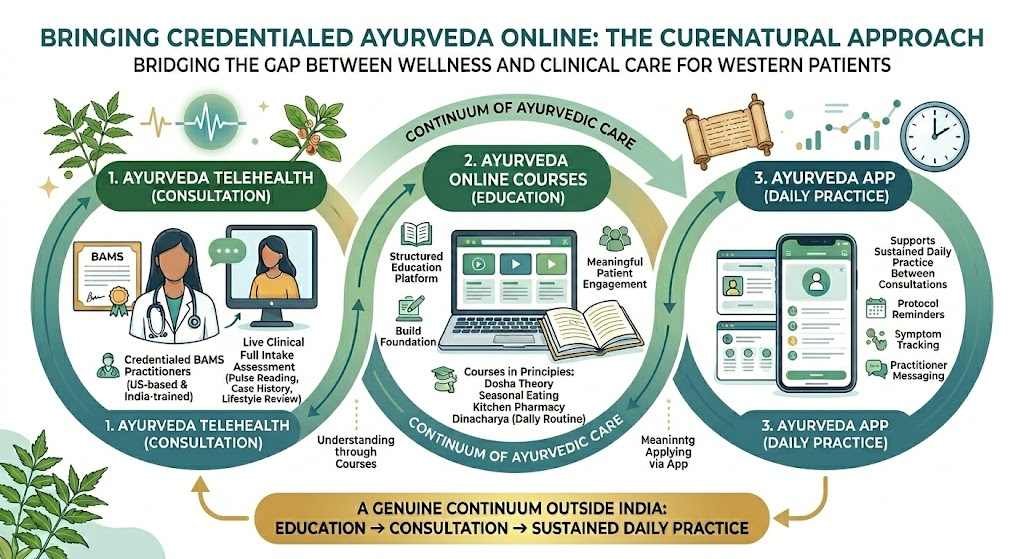
This is the gap that CureNatural is built to fill. Rather than offering generalized wellness content, CureNatural connects people with properly credentialed Ayurvedic practitioners, both US-based and India-trained, who conduct full clinical assessments, develop personalized protocols, make recommendations on specific herbal formulations, and provide ongoing care.
For patients in the West seeking genuine Ayurvedic medicine, not just Ayurvedic wellness and dietary recommendations, this distinction matters enormously. CureNatural’s approach works across three integrated pillars:
1. Ayurveda Telehealth
Live consultations with credentialed practitioners who practice at a clinical level, not a wellness coaching level. Practitioners hold formal qualifications (BAMS or equivalent) and conduct full intake assessments, including pulse reading, lifestyle evaluation, and case history review.
2. Ayurveda Online Courses
A structured education platform offering courses in Ayurvedic principles, so patients can engage meaningfully with their practitioners and apply the system to their daily lives. Topics range from foundational dosha theory to seasonal eating, kitchen pharmacy, and daily routine (Dinacharya).
3. Ayurveda App
A dedicated application that supports ongoing practice between consultations, helping patients stay connected to their health protocols day to day. Features include protocol reminders, symptom tracking, and practitioner messaging.
Together, these create something that has not existed before: a genuine continuum of Ayurvedic care for people outside India, from education through consultation to sustained daily practice and support.
Practical Guide: How to Get Started with Ayurvedic Telehealth
If you are new to Ayurveda and considering a telehealth consultation, here is what to expect and how to prepare:
Before Your Consultation
- Keep a 3-5 day food and symptom diary to share with your practitioner.
- Note the timing and pattern of any recurring symptoms — Ayurveda pays particular attention to the time of day and season when issues arise.
- List all supplements, medications, and herbal products you currently take.
- Prepare questions: What do you most want to address? What have you already tried?
During Your Consultation
A qualified Ayurvedic practitioner will typically conduct a comprehensive intake covering digestive patterns, sleep quality, emotional tendencies, skin characteristics, and medical history. Pulse diagnosis is conducted remotely through guided self-assessment or, increasingly, through guided video technique. The session typically concludes with a personalized protocol outline.
After Your Consultation
Expect a written protocol covering dietary modifications, herbal recommendations, and lifestyle adjustments. Follow-up consultations are typically scheduled at 4-8 week intervals to assess progress and adjust the protocol. Consistency and patient engagement are the primary determinants of outcomes in Ayurvedic care.
Questions to Ask Before Choosing a Natural Health Practitioner Online
• What formal qualification does the practitioner hold, and from which institution?
• Is the platform transparent about practitioner credentials and verifiable training?
• Does the practitioner take a full health history, or only address the presenting complaint?
• How are herbal recommendations made generic or specifically formulated for your case?
• What follow-up support is provided between consultations?
• Are there clear protocols for referral if a condition is outside Ayurvedic scope?
These questions apply whether you are seeking Ayurvedic care, TCM, naturopathy, or any other natural health consultation online.
Disclaimer
Important: This article is intended for general informational and educational purposes only. It does not constitute medical advice, diagnosis, or treatment, and should not be used as a substitute for professional medical consultation. Ayurveda and other natural health systems described herein are not recognized medical specialties in most Western countries, and their treatments vary in the level of scientific evidence. Always consult a licensed healthcare professional before beginning any new health regimen, discontinuing existing medication, or making significant dietary or lifestyle changes. If you are experiencing a medical emergency, contact emergency services immediately. The mention of any platform, service, or practitioner in this article does not constitute a medical endorsement.
References and Further Reading
- Ministry of AYUSH, Government of India. Official recognition and scope of Ayurvedic practice. ayush.gov.in
- Chopra A, Doiphode VV. Ayurvedic medicine: core concept, therapeutic principles, and current relevance. Medical Clinics of North America. 2002;86(1):75-89.
- Pole S. Ayurvedic Medicine: The Principles of Traditional Practice. Singing Dragon, 2013.
- World Health Organization. WHO Traditional Medicine Strategy 2014-2023. Geneva: WHO, 2013.
- Lad V. Textbook of Ayurveda: Fundamental Principles. Ayurvedic Press, 2002.
- Tirtha SS. The Ayurveda Encyclopedia. Bayville: Ayurveda Holistic Center Press, 1998.
- Rastogi S. Ayurvedic Science of Food and Nutrition. Springer, 2014.
- Featherstone C. Telemedicine and integrative medicine: policy and access considerations. Journal of Alternative and Complementary Medicine. 2021.
- CureNatural Platform. curenatural.com for practitioner credentials and consultation booking.