

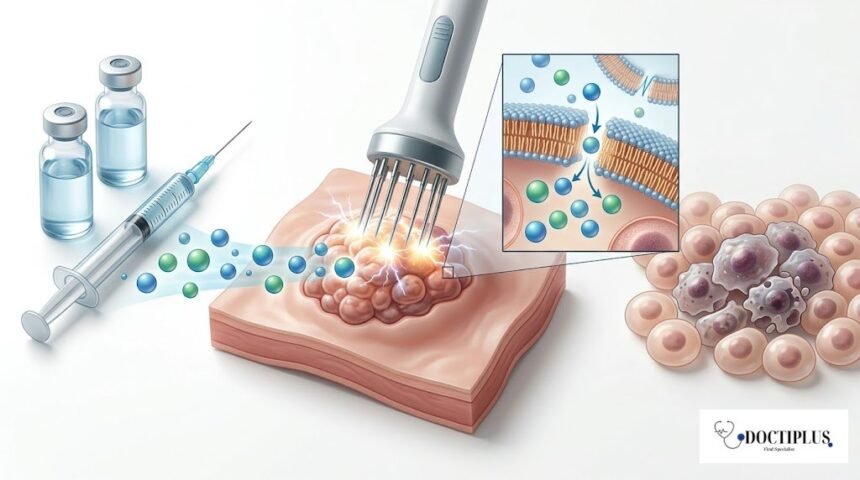
This article aims to explain electrochemotherapy (ECT)in simple, practical terms so patients and caregivers can understand how it works, where it fits in modern cancer care, and when it may be considered as part of a treatment plan. It is designed to reduce confusion around newer therapies and support informed discussions with oncology specialists.
What does the term “electrochemotherapy” hide?Electrochemotherapy procedure: from planning to recoveryProspects and economic aspects: future of cancer therapyEffective treatment in German centersTreatment through Booking HealthWho Is a Suitable Candidate for Electrochemotherapy?Benefits and Limitations of ElectrochemotherapyClosing ThoughtsReferences
What does the term “electrochemotherapy” hide?
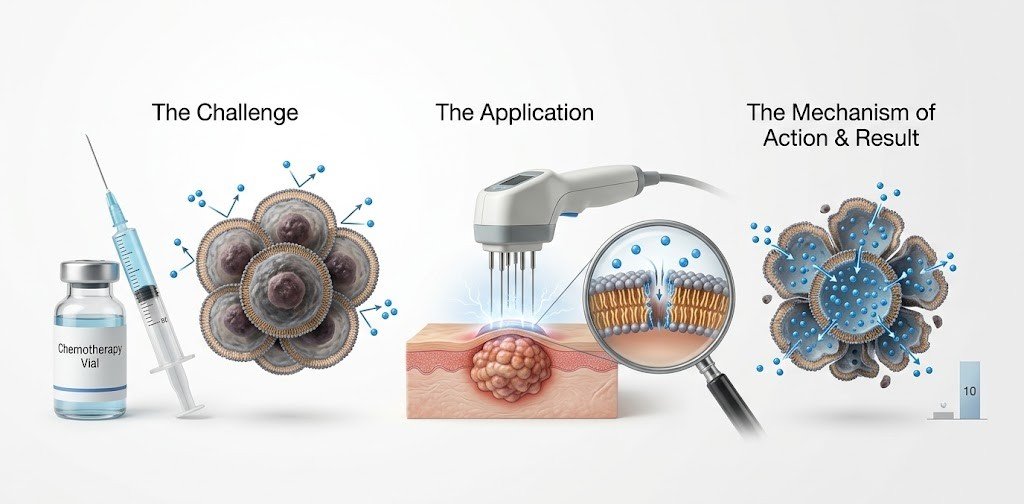
One of the most popular questions among innovative methods is “What is electrochemotherapy?” It is important to understand that this is a method in which short, high-voltage electrical pulses create temporary nanopores in cell membranes. Through these microscopic channels, drugs that usually have low permeability enter directly inside the cancer cell. This increases the local effect of the drug tenfold, without increasing its total dose in the body.
Unlike standard treatment, electrochemotherapy for cancer treatment shows high effectiveness even in cases where the tumor becomes resistant to conventional chemotherapy. This makes the method indispensable for patients who are looking for alternative cancer treatments that can preserve their quality of life.
Electrochemotherapy procedure: from planning to recovery
The treatment process itself is minimally invasive and clearly structured. The electrochemotherapy procedure usually involves the administration of a chemotherapy drug (locally or systemically in a low dose), after which the tumor zone is affected by special electrodes. The session lasts from 10 to 30 minutes under general or local anesthesia, depending on the location of the neoplasm.
For a better understanding of the place of this method in modern medicine, let’s give a comparative table:
| Characteristics | Standard systemic chemotherapy | Electrochemotherapy |
| Mechanism of action | Distribution of the drug through blood flow throughout the body | Directed penetration through the electroporation of membranes |
| Toxicity | High (nausea, hair loss, immunosuppression) | Minimal, mostly local |
| Impact on quality of life | Often significant deterioration | Preservation of organ functionality and comfort |
| Procedure duration | From several hours to days | 15-30 minutes |
Prospects and economic aspects: future of cancer therapy
Today, the future of cancer therapy is inextricably linked to personalization. The development of technologies allows the usage of ECT for the treatment of not only superficial skin tumors, but also deeply located metastases in internal organs.
Of course, patients are interested not only in the result but also in the electrochemotherapy cost. The cost of treatment depends on the stage of the disease, the number of affected areas and the necessary equipment. If you are considering such a modern method of treatment as electrochemotherapy, the cost in Germany includes high-tech diagnostics, the work of a multidisciplinary team of specialists and the use of certified equipment.
Effective treatment in German centers
Today, Germany is a recognized leader in the implementation of advanced oncology technologies, which makes it a priority direction for patients considering electrochemotherapy treatment abroad. German specialists have many years of experience in the usage of regional treatment methods aimed at achieving high concentrations of drugs directly in the tumor zone with minimal systemic impact on the body.
The usage of electrochemotherapy for cancer treatment in combination with other local control methods, such as short-term intra-arterial infusion, allows significant results to be achieved even in cases of advanced cancers where traditional chemotherapy has been ineffective or caused severe side effects.
Treatment through Booking Health
The success of therapy depends not only on medical technology, but also on the efficiency and quality of the process organization. Booking Health is a recognized global leader in medical tourism, helping patients gain access to state-of-the-art cancer control methods.
When it comes to complex procedures such as electrochemotherapy, Booking Health takes on all bureaucratic and organizational challenges. The company provides:
- Highly qualified medical consultations: involvement of the world’s leading experts to assess the patient’s condition and choose the optimal strategy.
- Medical support at each stage: support of specialists from the moment of the first application to the full completion of the therapeutic course.
- Maximum therapeutic effect: implementation of all available methods and their combinations for the most effective tumor control.
- Long-term support: medical monitoring of the patient’s condition continues even after his return home.
Who Is a Suitable Candidate for Electrochemotherapy?
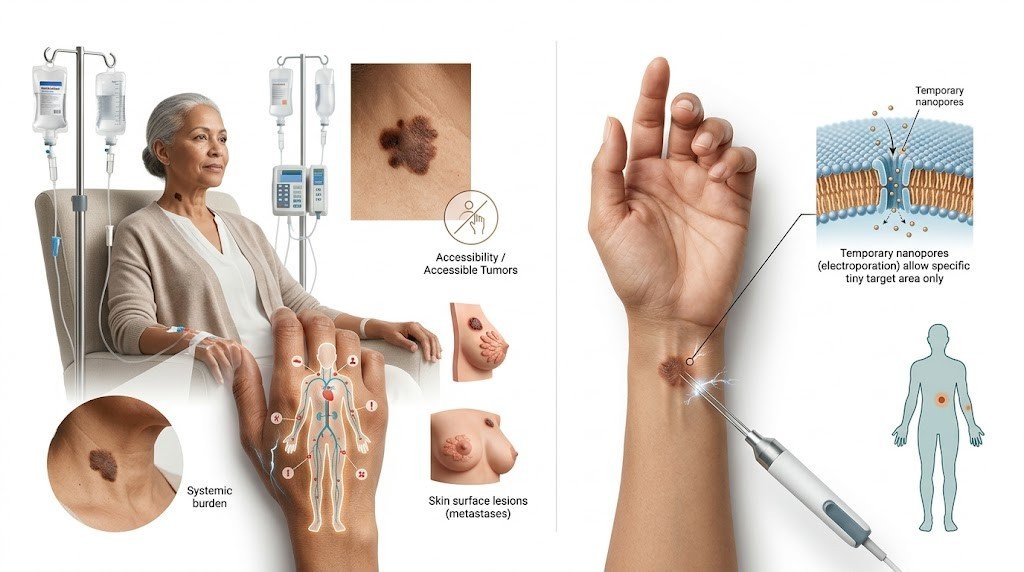
Electrochemotherapy is not used for every type of cancer, but it can be highly effective in specific cases. Doctors usually recommend it when tumors are accessible or when other treatments have not worked well.
Patients who may benefit include:
- Individuals with skin tumors or metastases, such as melanoma or breast cancer spread to the skin
- Patients with recurrent tumors that did not respond to standard chemotherapy
- Those who cannot tolerate high-dose systemic chemotherapy due to side effects
- Patients seeking localized treatment with minimal impact on the rest of the body
Suitability always depends on tumor size, location, and overall health condition. A specialist evaluation is required before starting treatment.
Benefits and Limitations of Electrochemotherapy
While electrochemotherapy offers many advantages, it is important to understand both its strengths and its limitations to make an informed decision.
| Aspect | Benefits | Limitations |
|---|---|---|
| Treatment Precision | Targets tumor directly with minimal damage to healthy tissue | Not suitable for all deep internal cancers |
| Side Effects | Lower systemic toxicity compared to standard chemotherapy | Mild local pain or swelling may occur |
| Procedure Time | Short sessions, usually 10 to 30 minutes | May require multiple sessions |
| Recovery | Faster recovery and minimal hospital stay | Availability may be limited in some countries |
| Effectiveness | Works even in chemo-resistant tumors | Best results seen in localized or accessible tumors |
Closing Thoughts
Electrochemotherapy represents a meaningful step forward in cancer treatment, especially for patients who need targeted, less invasive options. It bridges the gap between traditional chemotherapy and modern precision medicine by delivering stronger effects exactly where they are needed.
While it is not suitable for every case, it offers real benefits for selected patients, particularly in improving local tumor control and maintaining quality of life.
The most important step is proper medical evaluation. Patients should discuss all available options with their oncology team to determine whether electrochemotherapy fits into their overall treatment plan.
References
- Marty, M. et al. (2006). Electrochemotherapy: An easy, highly effective and safe treatment of cutaneous and subcutaneous metastases. European Journal of Cancer Supplements, 4(11), pp. 3–13. DOI: 10.1016/j.ejcsup.2006.08.002
- Mir, L.M. et al. (1991). Electrochemotherapy: A new antitumor treatment. Cancer Research, 51(3), pp. 716–721. DOI: Not available
- Campana, L.G. et al. (2019). Electrochemotherapy in the treatment of cutaneous metastases from breast cancer. Cancer Treatment Reviews, 82, 101915. DOI: 10.1016/j.ctrv.2019.101915
- Gehl, J. et al. (2018). Updated standard operating procedures for electrochemotherapy. Acta Oncologica, 57(7), pp. 874–882. DOI: 10.1080/0284186X.2018.1454602
- Testori, A. et al. (2016). Electrochemotherapy for cutaneous and subcutaneous tumors: Clinical outcomes. Journal of Clinical Oncology, 34(15_suppl), e21030. DOI: 10.1200/JCO.2016.34.15_suppl.e21030
- Miklavčič, D. et al. (2014). The importance of electroporation in oncology. Radiology and Oncology, 48(2), pp. 127–137. DOI: 10.2478/raon-2014-0014
- Sersa, G. et al. (2008). Electrochemotherapy in treatment of tumors. European Journal of Surgical Oncology, 34(2), pp. 232–240. DOI: 10.1016/j.ejso.2007.03.016
- World Health Organization (WHO). (2023). Cancer treatment and care guidelines. DOI: Not available
- National Cancer Institute. (2022). Cancer treatment overview. DOI: Not available