


Scroll through TikTok or Instagram for a few minutes, and a clear pattern emerges: people are reading labels. Not just calorie counts or protein grams, but full ingredient lists, unfamiliar chemical names, and the details behind everyday products. Social media has transformed many ordinary consumers into curious investigators who want to understand exactly what they are eating, wearing, and using in their homes.
This shift reflects a larger cultural change. Information that once required guidance from dietitians, chemists, or medical professionals is now being discussed in short videos and viral posts watched by millions. While this content can sometimes oversimplify complex science, it also highlights something meaningful: people want transparency. They want clear explanations of ingredients, realistic guidance on nutrition, and the ability to make informed decisions about the products they buy.
From daily protein targets to the formulas inside household cleaners, ingredient transparency has become a modern consumer expectation. Understanding what these ingredients mean, how they affect health, and how to separate credible advice from viral misinformation is becoming an essential skill in the social media era.
Why Everyone Is Suddenly Reading Labels
Scroll through TikTok or Instagram for a few minutes, and a pattern becomes obvious: people are reading labels. Not just calorie counts. Not just protein grams. Full ingredient lists. Chemical names. Surfactant disclosures. Emulsifier explanations.
Social media has transformed everyday consumers into informed amateur analysts. What once required a registered dietitian or a chemistry background now unfolds in 60-second videos watched by millions. While some of this content oversimplifies complex science, it reflects something genuine: people want specifics. They want to understand what goes into the products they eat, wear, and use in their homes every day.
From daily protein targets to household cleaning formulas, ingredient transparency has become both a consumer expectation and a cultural norm. This guide breaks down the most important dimensions of that shift, with practical, evidence-based guidance you can actually use.
Quick summary: Social media has accelerated ingredient literacy. This guide covers what the research actually says about protein intake for weight loss, how to evaluate household product labels, how to distinguish credible advice from viral misinformation, and what questions to ask when a product claim seems too vague.
Protein Question: What the Evidence Actually Says
One of the most searched health questions circulating online today is deceptively straightforward. Search engines and social platforms are saturated with conflicting answers, ranging from one gram per pound of body weight to aggressive high-protein protocols that may not be appropriate for everyone.
Understanding how much protein I should eat to lose weight requires moving past one-size-fits-all numbers and toward a framework grounded in evidence. Here is what current research supports.
What the research recommends
The Dietary Reference Intake (DRI) established by the National Academies of Sciences sets the minimum protein requirement for sedentary adults at 0.8 grams per kilogram of body weight per day. However, research on weight loss and body composition consistently shows that higher protein intakes produce better outcomes for most adults.
A comprehensive review published in the American Journal of Clinical Nutrition found that protein intakes between 1.2 and 1.6 grams per kilogram of body weight per day are associated with greater fat loss, better preservation of lean muscle mass during caloric restriction, and improved satiety compared to lower protein intakes, for a 70-kilogram adult, that translates to roughly 84 to 112 grams of protein per day.
Evidence-based range for weight loss: Most research supports 1.2 to 1.6 grams of protein per kilogram of body weight per day for adults actively trying to lose weight. For context, a 150-pound person weighs approximately 68 kilograms, putting their evidence-based target at roughly 82 to 109 grams of protein per day.
Why context matters more than a single number
The right protein intake for you depends on factors that no viral video can fully account for. These include your current body weight and composition, your activity level and exercise type, your age (older adults typically need more protein to preserve muscle), any existing medical conditions such as kidney disease that may require protein restriction, and your overall caloric intake and dietary pattern.
Important caution: Very high protein intakes above 2.5 grams per kilogram of body weight per day are not supported by additional benefit for most people and may place unnecessary strain on the kidneys in individuals with pre-existing renal conditions. Anyone with kidney disease, diabetes, or other chronic conditions should consult their physician or a registered dietitian before significantly increasing protein intake.
Practical tips for meeting your protein target
- • Prioritize whole food sources: Chicken, fish, eggs, Greek yogurt, legumes, tofu, and cottage cheese are dense, minimally processed protein sources
- • Distribute intake across meals: Research shows that spreading protein intake across three to four meals produces better muscle protein synthesis than consuming it all at once
- • Use supplements strategically: Whey, casein, and plant-based protein powders can help close gaps, but should supplement whole foods rather than replace them
- • Track for awareness, not obsession: Logging protein intake for two to four weeks helps most people understand their baseline without requiring permanent calorie counting
- • Adjust for activity: Individuals doing resistance training or high-intensity exercise may benefit from intakes toward the higher end of the evidence-based range
How to evaluate protein claims on social media
When you encounter protein advice online, ask these questions before acting on it. Does the creator cite peer-reviewed research or clinical guidelines? Do they acknowledge that recommendations vary by individual? Are they selling a specific product that benefits from a particular recommendation? Do they have formal credentials in nutrition, dietetics, or medicine?
Influencers who provide specific numbers without these qualifications may be sharing genuine enthusiasm rather than evidence. That enthusiasm is not harmful on its own, but following highly specific protocols based on anecdote rather than research can lead to unnecessary restriction or supplementation.
Clean Labels and Household Products: Reading Beyond the Marketing
The same analytical impulse driving protein conversations has moved into household product categories. Laundry detergents, cleaning sprays, personal care products, and kitchen staples are now scrutinized with the same intensity once reserved for food labels.
Understanding laundry detergent ingredients is a good example of how ingredient literacy applies outside of nutrition. Most consumers have never read the full ingredient list on a detergent bottle, yet these products contact skin directly through clothing and bedding and are present in homes with children, pets, and individuals with sensitivities.
Common laundry detergent ingredients explained.
- • Surfactants (e.g., sodium lauryl sulphate, linear alkylbenzene sulfonate): These are the active cleaning agents that lift dirt and oils from fabric. They are effective and widely used, but some individuals with sensitive skin may react to certain surfactant types. Enzyme-based detergents often require fewer surfactants to achieve the same cleaning performance.
- • Optical brighteners: These UV-reactive compounds make fabrics appear whiter and brighter under light. They do not actually clean but remain on fabric after washing. Some research suggests they may cause skin irritation in sensitive individuals and are toxic to aquatic organisms, raising environmental concerns.
- • Fragrances: Listed as a single ingredient despite often containing dozens of chemical compounds. Fragrance formulations are considered proprietary, meaning manufacturers are not required to disclose individual components. This is a significant limitation for people managing allergies or chemical sensitivities.
- • Preservatives (e.g., methylisothiazolinone, benzisothiazolinone): Used to prevent microbial growth in liquid detergents. Methylisothiazolinone in particular has been flagged by dermatological organizations as a common contact allergen. The European Union has restricted its use in leave-on products.
- • Enzymes (protease, amylase, lipase): Biological catalysts that break down specific stain types, proteins, starches, and fats, respectively. Generally considered effective and low-risk for most users.
- • Phosphates: Once common in detergents as water softeners, phosphates have been largely phased out in the United States and European Union due to their contribution to aquatic ecosystem damage through nutrient pollution.
Practical guidance: If you or a family member experiences skin irritation, rashes, or respiratory sensitivity, switching to a fragrance-free, dye-free detergent with a minimal ingredient list is a reasonable first step. The Environmental Working Group (EWG) maintains a free, searchable database of household product ingredient ratings at ewg.org.
How to evaluate any household product label
- Look for fragrance-free or unscented designations rather than natural fragrance, which still involves undisclosed compounds.
- Search the product name in the EWG Healthy Living database for a safety rating and ingredient breakdown.
- Check for third-party certifications such as EPA Safer Choice, USDA Certified Biobased, or Leaping Bunny for cruelty-free verification.
- Prioritize short ingredient lists when functionality is equal. Simpler formulations generally carry lower sensitization risk.
- Be skeptical of terms like clean, natural, and non-toxic, which have no standardized regulatory definition in the United States for cleaning products.
Social Media as a Transparency Engine: Benefits and Risks
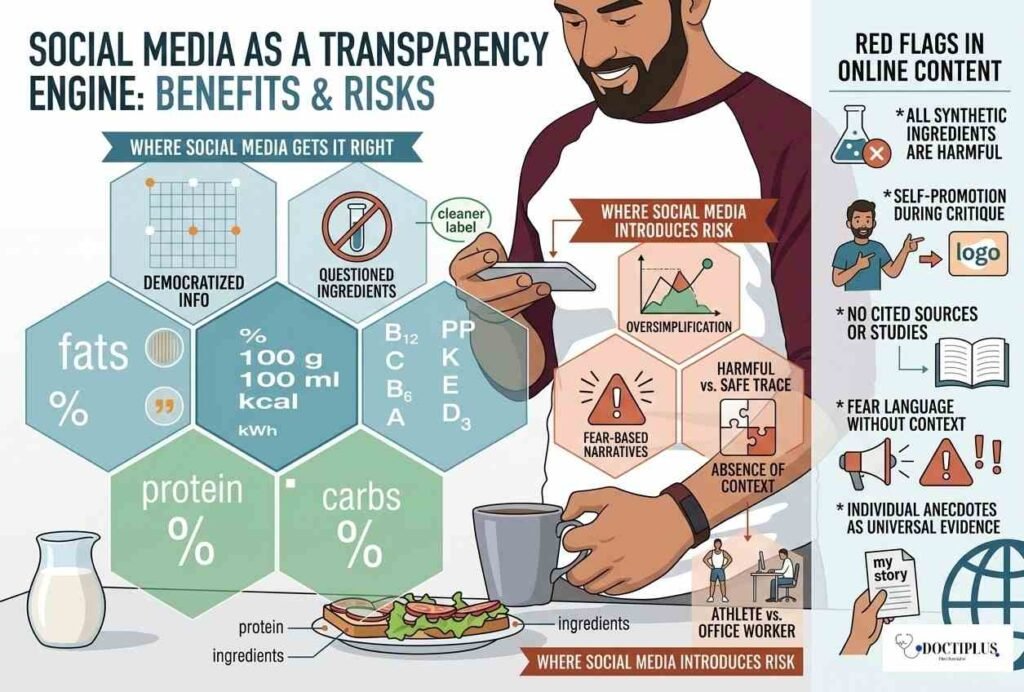
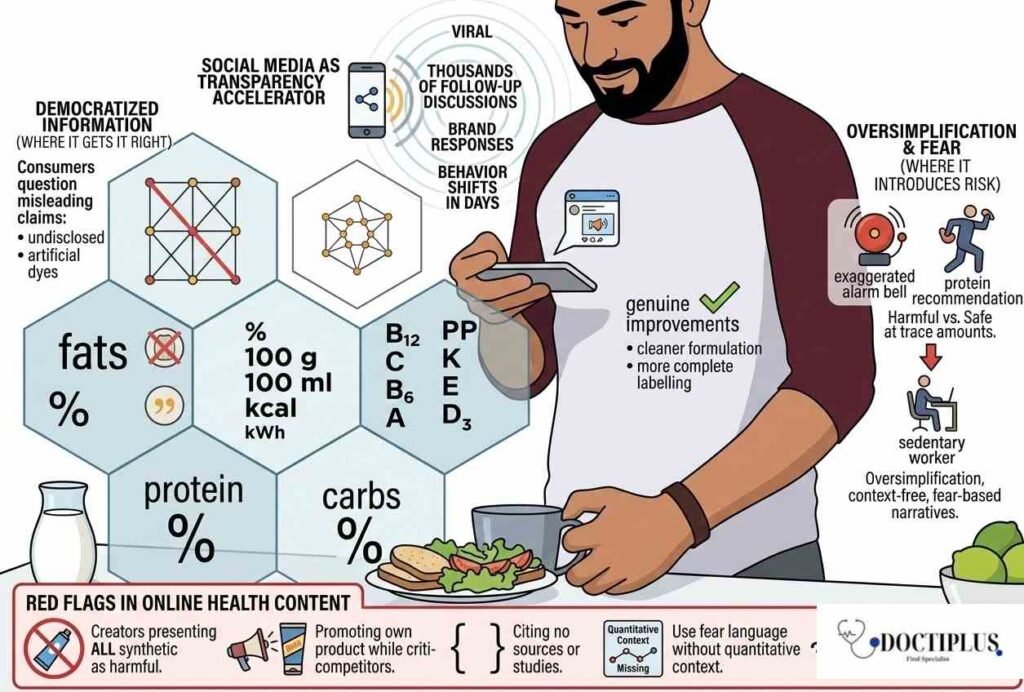
Platforms like TikTok, YouTube Shorts, and Instagram Reels act as powerful transparency accelerators. A single viral breakdown can spark thousands of follow-up discussions, brand responses, and consumer behavior shifts in days. This feedback loop has raised consumer expectations in ways that formal regulation has not always kept pace with.
Where social media gets it right
Social platforms have successfully democratized information that was once accessible only to professionals. Consumers have learned to question artificial dyes, undisclosed fragrance compounds, and misleading health claims that previously went unchallenged on packaging. This scrutiny has prompted genuine improvements from some brands, including cleaner formulations, more complete labelling, and clearer sourcing information.
Where social media introduces risk
The same speed that makes social platforms effective at spreading useful information also spreads oversimplification and fear-based narratives. The absence of context is the most common problem. An ingredient that is genuinely harmful at high concentrations or through direct skin contact may be perfectly safe at the trace amounts found in a finished consumer product. A protein recommendation appropriate for a competitive athlete training twice per day may be excessive and unnecessary for a sedentary office worker.
Red flags in online health and ingredient content: Watch for creators who present all synthetic ingredients as harmful, who promote their own product in the same video critiquing competitors, who cite no sources or studies, who use fear language without quantitative context, or who present individual anecdotes as universal evidence.
Psychology of Ingredient Curiosity
Understanding why people are so drawn to ingredient details helps explain both the value and the limits of this cultural moment. At its core, ingredient literacy offers a sense of agency. Modern life carries considerable uncertainty, economic, environmental, and social. Understanding exactly what is in your protein powder or laundry detergent creates a concrete, manageable domain of control.
Social media amplifies this empowerment through validation. When someone posts a thoughtful ingredient breakdown and receives thousands of positive responses, the behavior is reinforced. Transparency becomes a form of social identity, a signal of informed, conscious living.
This is largely positive. Informed consumers drive market improvements and hold manufacturers accountable in ways that regulation alone cannot. The challenge is maintaining proportionality, distinguishing between ingredients that carry genuine evidence of harm and those that simply sound unfamiliar or chemical.
Practical mindset: Not all synthetic ingredients are harmful. Not all natural ingredients are safe. The dose, concentration, route of exposure, and individual sensitivity all determine whether an ingredient poses a meaningful risk. Evidence-based ingredient literacy means evaluating these factors rather than reacting to chemical names alone.
What Brands Are Getting Right and Wrong
Companies operating in food, wellness, and household goods now function in an environment where ingredient education is not optional. The brands navigating this landscape most effectively share several characteristics.
They provide detailed ingredient explanations on their websites rather than burying them in fine print. They engage transparently with consumer questions on social platforms rather than deflecting. They pursue third-party certifications that provide external verification of their claims. They distinguish clearly between what their products contain and what claims about those ingredients are supported by evidence.
By contrast, brands that rely on vague marketing language, such as powered by nature or advanced proprietary formula without substantiation, are increasingly called out by informed consumers. Opacity that once went unquestioned now invites scrutiny.
Where Ingredient Culture Is Heading
As artificial intelligence tools become more accessible, ingredient literacy will continue to expand. Consumers will be able to scan a product barcode and receive instant, plain-language explanations of every listed compound. Personalized nutrition guidance calibrated to individual health data will become more common. Household product comparisons will grow more sophisticated and more immediate.
At the same time, information saturation may push a meaningful segment of consumers toward trusted, centralized sources rather than relying entirely on social feeds. The long-term winners in this environment will be brands, educators, and platforms that consistently pair accessibility with accuracy.
Informed consumers are not a temporary phenomenon. They represent a permanent shift in the relationship between people and the products they choose. Whether the question is about daily protein targets or detergent surfactants, the underlying demand is the same: credible, specific, actionable information.
Disclaimer
This article is provided for general informational and educational purposes only. It does not constitute medical, nutritional, dietary, or professional product safety advice and should not be relied upon as a substitute for consultation with a registered dietitian, licensed physician, or qualified health professional. Nutritional recommendations vary significantly based on individual health status, age, activity level, and medical history. Ingredient safety assessments referenced in this article reflect publicly available research and regulatory guidance at the time of writing and do not constitute a comprehensive safety evaluation of any specific product. Always consult a qualified professional before making significant changes to your diet, supplementation, or household product use, particularly if you have existing health conditions or sensitivities.
References and Resources
Nutrition and Protein Research
- • Stokes T, et al. (2018). Recent Perspectives Regarding the Role of Dietary Protein for the Promotion of Muscle Hypertrophy with Resistance Exercise Training. Nutrients, 10(2), 180. https://doi.org/10.3390/nu10020180
- • Leidy HJ, et al. (2015). The role of protein in weight loss and maintenance. American Journal of Clinical Nutrition, 101(6), 1320S-1329S. https://doi.org/10.3945/ajcn.114.084038
- • National Academies of Sciences. Dietary Reference Intakes for Energy, Carbohydrate, Fibre, Fat, Fatty Acids, Cholesterol, Protein, and Amino Acids. https://www.nationalacademies.org
- • Harvard T.H. Chan School of Public Health. The Nutrition Source: Protein. https://www.hsph.harvard.edu/nutritionsource/what-should-you-eat/protein
Ingredient Safety and Household Products
- • Environmental Working Group (EWG). Guide to Healthy Cleaning. Searchable ingredient database for household products. https://www.ewg.org/guides/cleaners
- • U.S. Environmental Protection Agency. Safer Choice Program. Certified product directory and ingredient standards. https://www.epa.gov/saferchoice
- • American Contact Dermatitis Society. Allergen of the Year Archives and Sensitization Data. https://www.contactderm.org
- • European Chemicals Agency (ECHA). Substance Evaluation and Restriction Data. https://echa.europa.eu
Consumer Guidance and Health Literacy
- • U.S. Food and Drug Administration (FDA). How to Understand and Use the Nutrition Facts Label. https://www.fda.gov/food/new-nutrition-facts-label/how-understand-and-use-nutrition-facts-label
- • Academy of Nutrition and Dietetics. Find a Registered Dietitian Nutritionist. https://www.eatright.org/find-a-nutrition-expert
- • National Institutes of Health (NIH). Office of Dietary Supplements. Fact sheets on nutrients and supplements. https://ods.od.nih.gov
- • Centers for Disease Control and Prevention (CDC). Healthy Weight, Nutrition, and Physical Activity. https://www.cdc.gov/healthyweight