


For many adults today, feeling mentally overwhelmed has become almost routine. Long hours, constant screen time, and everyday pressures quietly build up, leaving people searching for simple ways to feel better. Increasingly, the answer is not complicated. It starts with moving the body.
Across different lifestyles and environments, people are rediscovering that even small amounts of movement can shift how they think and feel. Whether it is a short walk, a stretch between tasks, or a few minutes of activity at home, movement is becoming less about fitness goals and more about mental well-being.
Why Movement and Mental Health Are Not Separate Topics
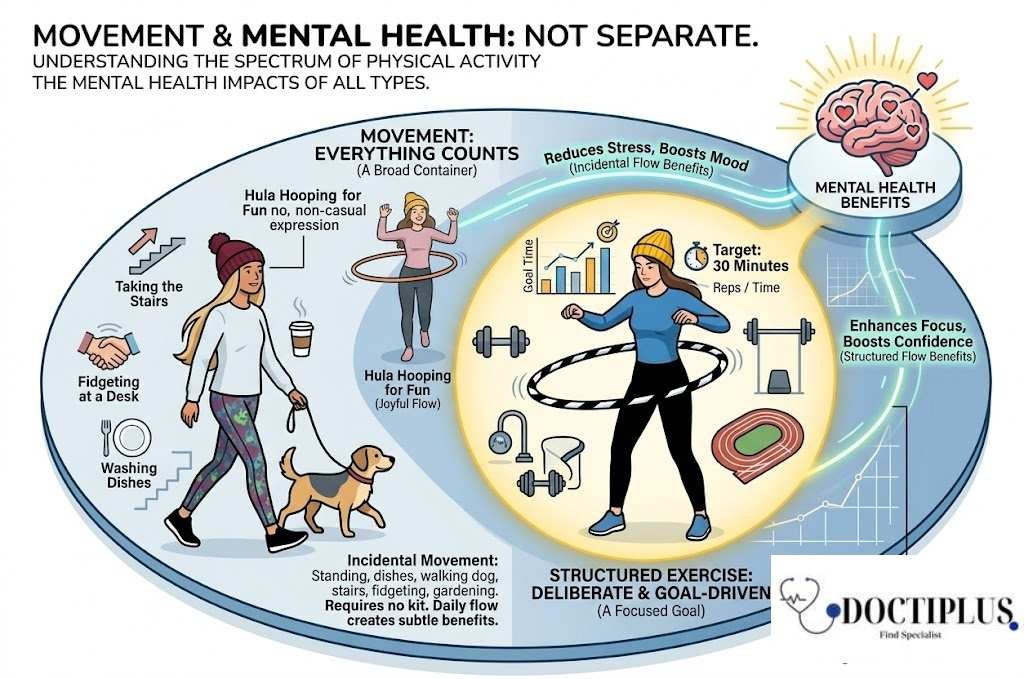
Let us clear something up. Movement and exercise are not the same thing. Movement is everything. Standing up, doing the dishes, walking to grab coffee. Exercise is deliberate, structured, and goal-driven. Both carry mental health value, and daily incidental movement may deserve more credit than it typically gets.
Difference Between Movement and Structured Exercise
Structured exercise is what most people picture when they hear the word fitness: a planned workout, a gym session, a run with a target distance. Movement is the broader category that encompasses all of it. Walking your dog, taking the stairs, fidgeting at your desk, gardening on a Sunday afternoon, all of it counts. The mental health value of movement does not require a sports kit or a heart rate monitor.
Where Physical Activity and Mental Well-Being Actually Intersect
The relationship between physical activity and mental well-being runs through mood regulation, sleep quality, stress response, attention span, and emotional resilience. Even modest amounts, think short walks, not marathons, reduce measurable risk for depression and anxiety. You do not need intensity. You need consistency.
How Movement Changes Brain Chemistry
When you move, your brain releases serotonin, dopamine, endorphins, and endocannabinoids. These are not buzzwords. They are the chemicals determining how you feel right now. Sustained movement also supports neuroplasticity, meaning your brain literally gets better at managing difficult emotions over time. It pulls your nervous system out of the stress spiral and into something more grounded.
Sleep, Energy, and Self-Perception Benefits
Improved sleep, less physical pain, steadier energy, all of these reduce emotional reactivity in ways that compound quietly over time. The link between regular activity and better sleep is one of the most consistent findings in the research. Movement and mental health intersect through self-perception, too. Not because of aesthetics, but because doing something with your body shifts what you believe you are capable of. Whether it is a walk outdoors, a group activity, or something like rebounding exercise at home, moving in ways that feel accessible and enjoyable adds layers of meaning that are genuinely difficult to manufacture any other way.
What the Research Says About Movement and Mood
The evidence is not ambiguous. Movement works consistently across mood, cognition, and long-term resilience.
How Exercise Reduces Stress, Anxiety, and Emotional Reactivity
Regular movement reduces clinical symptoms of depression and anxiety. A large 2023 umbrella review in the British Journal of Sports Medicine concluded that physical activity is highly beneficial for mental health, with effects on depression, anxiety, and psychological distress that are at least comparable to many established treatments. Movement also cultivates positive emotional states such as calm, hope, and even joy, and builds the kind of resilience that helps you absorb hard days without completely unraveling.
Movement, Focus, Memory, and Productivity at Work
Short movement breaks of five to fifteen minutes noticeably improve cognitive performance: sharper focus, better recall, and stronger decision-making. At the same time, Gallup data on global workplace well-being shows that a large share of employees report moderate to serious struggles with overall well-being across different areas of life. Movement during the workday remains one of the most underutilized tools to counter this. Even brief activity can reset attention, reduce mental fatigue, and help you return to tasks with greater clarity and efficiency.
Long-Term Mental Health Protection From Consistent Movement
Think of consistent movement as preventive care for your mind. It buffers chronic stress, softens the effects of social isolation, and counteracts the cognitive fatigue that comes from too much screen time. Small and regular beats intense and occasional, every single time.
Finding the Right Type of Movement for Your Lifestyle
Knowing movement helps is one thing. Knowing which kind fits your life is where things get practical.
Everyday Habits That Already Count as Movement
Walking to work, gardening and chasing your kids around the yard are all valid forms of movement. You can deliberately upgrade your daily routine into something mentally restorative without setting foot in a gym. Two-to-five-minute movement snacks every hour are particularly effective for breaking up sedentary stretches and resetting your emotional baseline mid-afternoon.
Structured Exercise for Emotional Well-Being
Exercise for emotional well-being does not require complexity. Brisk walking, swimming, and dancing effectively reduce rumination. Strength training builds genuine confidence over time. Yoga and tai chi combine breath with movement in ways that feel profound when you are carrying a lot.
Gentle and Creative Movement Alternatives
Not everyone connects with conventional workouts, and that is completely fine. If you are looking for something low-impact, joint-friendly, and genuinely enjoyable, rebounding exercise on a mini-trampoline is worth serious consideration. It is accessible across fitness levels, easy on the body, and delivers a real mood lift. Walking meetings, VR fitness games, and pre-sleep mobility flows are equally legitimate options. The right movement is whatever you will actually do.
How to Stay Consistent Without Burning Out

Starting is relatively easy. Sustaining, without guilt or rigidity, is the harder skill.
Reframing What Success Looks Like
When you chase appearance-based goals, guilt tends to follow any imperfection. Shift the frame and measure success by sleep quality, emotional steadiness, afternoon energy, and focus. The benefits of movement on mood become far more obvious when you track how you feel rather than what you weigh.
Staying in Motion on Your Hardest Days
Everyone has days when even minor effort feels enormous. On those days, the minimum viable movement approach matters most: two minutes, one Song of dancing, a slow lap around the block. The goal is not perfection. It is keeping the habit alive in whatever honest form it can take right now.
When Movement Becomes Clinical Support
Movement therapy for mental health is a legitimate, structured clinical discipline. Exercise physiologists, occupational therapists, and movement-informed mental health professionals can build personalized plans for depression, ADHD, anxiety, and trauma recovery. If symptoms persist or are severe, movement is most effective within a broader care plan. It supplements professional support, not replaces it. If you are struggling with your mental health, please reach out to a qualified clinician or your GP.
Frequently Asked Questions About Movement and Mental Health
1. Is walking genuinely enough to improve mood?
- Yes. Brisk walking reliably reduces anxiety and elevates mood. Even ten minutes produces measurable emotional shifts. Consistency outperforms intensity here.
2. What helps when energy is near zero?
- Two minutes of gentle stretching or slow movement. Do not wait for motivation to arrive. Movement tends to generate that emotional lift rather than follow it.
3. Can too much exercise hurt mental health?
- It can. Rigid rules, guilt around rest days, or training through injury are warning signs. If movement starts feeling punishing rather than restorative, that is worth addressing with professional support.
4. How much movement do I actually need each week?
- Most public health bodies suggest at least 150 minutes of moderate activity per week, but mental health benefits begin well before you hit that number. Even 10 to 20 minutes a day is enough to start noticing real changes in mood and stress.
Final Conclusion
Movement does not have to be dramatic to matter. It is not about perfect routines or pushing your limits. It is about showing up for yourself in small, repeatable ways. The real impact builds quietly, through consistency rather than intensity. A ten-minute walk, a few minutes of stretching at your desk, a song-long dance break in the kitchen, all of these carry genuine weight when they happen often enough.
Start with what feels manageable today and let that be enough. Track how you feel rather than how you look, protect your hardest days with the smallest possible version of your habit, and bring in professional support when symptoms run deeper than a tough week. Over time, those small moments of movement can reshape not just how your body feels, but how you think, respond, and move through your day. That is where the real shift in mental well-being begins.
Medical Disclaimer
The information provided in this article is for general educational and informational purposes only. It is not intended as a substitute for professional medical, mental health, or fitness advice, diagnosis, or treatment. Always seek the guidance of your GP, a qualified mental health professional, or another suitable healthcare provider before making significant changes to your physical activity, exercise routine, or treatment plan, particularly if you have an existing medical condition, injury, pregnancy, or mental health diagnosis. If you are experiencing severe or persistent symptoms of depression, anxiety, or any other mental health concern, please get in touch with a qualified clinician, your local crisis service, or, in the UK, NHS 111. In an emergency, call 999 or your local emergency number. Reliance on any information in this article is solely at your own risk.
References
- World Health Organization (2024) Physical Activity Fact Sheet
- Harvard Health Publishing, Harvard Medical School (2023) Exercise Is an All-Natural Treatment to Fight Depression
- Cleveland Clinic (2024) Endorphins: What They Are and How to Boost Them
- National Center for Biotechnology Information, U.S. National Library of Medicine Neuroplasticity
- Sleep Foundation (2024) Exercise and Sleep: How Physical Activity Improves Sleep Quality
- Singh B et al (2023) Effectiveness of Physical Activity Interventions for Improving Depression, Anxiety and Distress: An Overview of Systematic Reviews, British Journal of Sports Medicine
- American Psychological Association (2020). The Cognitive Benefits of Movement and Exercise
- Gallup (2024) State of the Global Workplace Report
- National Center for Complementary and Integrative Health, NIH (2023) Yoga: What You Need To Know
- American Dance Therapy Association (2024). What Is Dance Movement Therapy
- National Health Service UK (2024) NHS Mental Health Information and Support