


Having acne-prone skin is not only about dealing with pimples. Many people also struggle with rough areas, uneven tone, visible pores, and marks that stay behind long after blemishes disappear. Even when active flare-ups calm down, the surface can still look dull or bumpy.
The good news is that improving texture does not always require harsh methods or complicated routines. In many cases, steady habits and gentle care work better in the long run. Skin usually responds best when it is treated consistently instead of aggressively.
Making small adjustments can gradually create visible changes. While results rarely happen overnight, a balanced approach often leads to healthier-looking skin over time.
Why Uneven Texture Happens
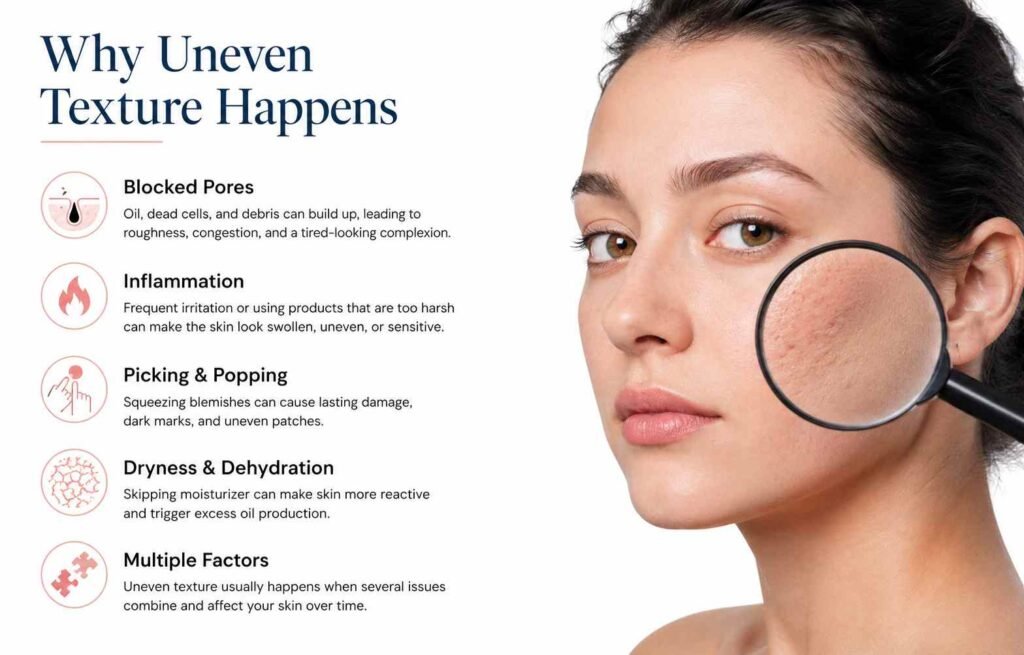
Several things can affect how smooth the surface appears. Blocked pores are one of the biggest reasons. When oil, dead cells, and debris build up, the complexion may start looking rough or congested. Repeated flare-ups can also leave behind lingering marks and uneven areas.
Inflammation plays a role, too. When irritation becomes frequent, the surface may appear swollen, uneven, or tired. This is especially common for people who constantly switch products or use formulas that are too strong for daily use.
Another factor many overlook is damage caused by picking. Squeezing blemishes may seem harmless in the moment, but it can leave long-lasting effects. Even small spots can turn into darker marks or uneven patches after being touched repeatedly.
Dryness can also contribute. Many individuals with oily complexions avoid moisturizer because they worry it will clog pores. In reality, dehydrated skin may become more reactive and uncomfortable. Sometimes the surface even produces extra oil to compensate for the lack of moisture.
None of these factors works alone. Usually, several issues combine together and affect the complexion gradually.
Keep Cleansing Simple
One of the easiest ways to support a smoother look is by using a mild cleanser. A lot of foaming washes remove too much natural moisture and leave the face feeling tight afterward. That tight feeling is not always a good sign.
Gentle formulas usually work better because they remove dirt and oil without irritating. Ingredients like glycerin and ceramides can help maintain balance while still cleaning properly. Washing twice daily is enough for most people. More than that may lead to dryness and sensitivity. It is also important to avoid hot water, since excessive heat can strip natural oils and worsen redness.
Consistency matters more than using expensive products. A simple routine followed regularly often produces better results than constantly trying new trends.
Exfoliation is Great, But Too Much Causes Problems
Removing dead buildup may help the surface appear brighter and smoother. However, overdoing exfoliation is one of the most common mistakes among people with acne-prone complexions.
Physical scrubs with rough particles can sometimes create tiny injuries, especially when used aggressively. Chemical exfoliants are often gentler because they work without heavy rubbing. Salicylic acid is popular since it helps clear buildup inside pores. Lactic acid is another option that tends to feel softer on sensitive areas. Some individuals also prefer PHAs because they are milder than stronger acids.
Still, moderation is important. Using exfoliating products every day may weaken the barrier and increase irritation. Starting slowly usually works better. Once or twice weekly is often enough at first. When redness, burning, or peeling appear, it may be a sign that the routine is becoming too intense. Things usually improve gradually, not through constant stripping.
Hydration Is Still Important
There is a common belief that oily complexions should avoid moisturizer, but in reality, hydration plays a major role in maintaining a smoother appearance. When the barrier becomes dry or damaged, rough patches may become more noticeable. The surface can also feel tight while still looking shiny at the same time.
Lightweight creams or gels often work well because they provide moisture without feeling heavy. Ingredients like hyaluronic acid and niacinamide are commonly included in products designed for breakout-prone complexions.
Hydrated skin often looks calmer and healthier overall. It may also tolerate active ingredients better. Skipping moisturizer completely can sometimes create more imbalance instead of less.
Professional Support Can Help
At-home care is important, but some people look into professional options when roughness or lingering congestion continues despite consistent habits. Treatments performed by trained providers may support a smoother look when chosen carefully. These approaches usually work best alongside a steady home routine instead of replacing it completely.
Chemical peels are often used for uneven texture because they help remove buildup from the outer layer and may leave the complexion looking fresher afterward. Many also choose gentle hydrafacial treatments when dealing with acne because they combine cleansing, exfoliation, and hydration during one appointment and are normally considered less aggressive than stronger resurfacing procedures, which makes them appealing for sensitive or breakout-prone complexions.
Professional guidance is important because not every method suits every person. A provider can assess sensitivity levels, inflammation, and overall condition before recommending anything. This lowers the chance of unnecessary irritation.
Stronger procedures are not always better. In many situations, milder approaches performed consistently may produce more natural-looking results over time.
Ingredients That May Support a Smoother Look
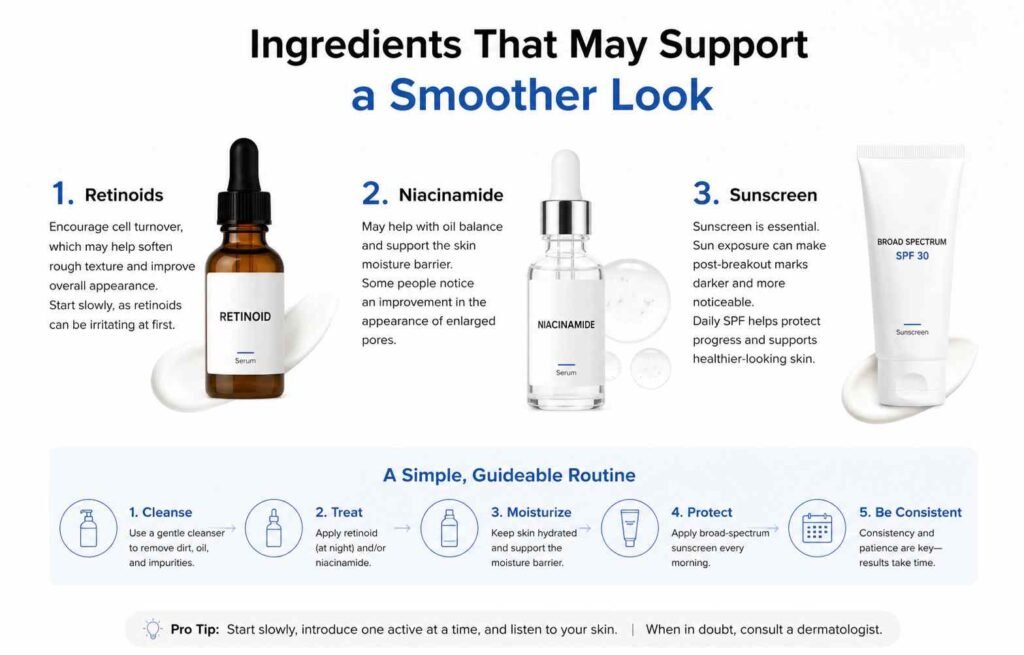
Certain ingredients are commonly used to improve uneven areas gradually.
Retinoids are among the best-known options because they encourage cell turnover. Over time, this process may help soften roughness and improve overall appearance. However, retinoids can feel irritating in the beginning, especially when introduced too quickly. Starting slowly often helps reduce discomfort.
Niacinamide is another ingredient many people tolerate well. It may help with oil balance while supporting the moisture barrier. Some individuals also notice improvement in the appearance of enlarged pores.
Sunscreen is essential, too. Sun exposure can make post-breakout marks appear darker and more noticeable. Daily SPF use helps protect progress and supports healthier-looking skin over time. Lightweight sunscreen formulas are now much easier to find than they were years ago. Many options are designed specifically for breakout-prone complexions and do not feel greasy or heavy.
Bottom Line
One of the hardest parts of improving the texture of the skin is waiting for changes to happen. Many people expect fast results, but the process normally takes time, because the skin renews itself gradually. Visible improvement may require several weeks or even months of consistency. This is completely normal.
Switching products constantly often delays progress. When people try something new every few days, it becomes impossible to know what is helping or causing irritation. A calmer approach usually works better. Gentle cleansing, controlled exfoliation, hydration, sun protection, and healthy habits can slowly improve overall appearance without overwhelming the skin.
Perfection is unrealistic for most people, and the goal is not flawless skin. The goal is to create a healthier, smoother, and more balanced appearance that feels comfortable long-term. Over time, small, consistent choices often create the biggest difference.
Disclaimer
This article is for general educational and informational purposes only. It is not medical advice and should not be used as a substitute for diagnosis, treatment, or guidance from a qualified dermatologist or healthcare professional.
Acne-prone skin can react differently from person to person. Ingredients such as salicylic acid, retinoids, exfoliating acids, and professional treatments may cause dryness, peeling, irritation, or sensitivity in some people. Anyone with severe acne, painful breakouts, scarring, skin infection, pregnancy-related skin concerns, or a history of sensitivity should speak with a dermatologist before starting new products or treatments.
Professional treatments such as chemical peels, hydrafacial-style treatments, laser procedures, or other resurfacing methods should only be performed by trained and licensed providers. Results may vary depending on skin type, acne severity, product use, lifestyle, and consistency.
References
- Reynolds RV, Yeung H, Cheng CE, Cook-Bolden F, Desai SR, Druby KM, Freeman EE, Keri JE, Stein Gold LF, Tan JKL, Tollefson MM, Weiss JS, Wu PA, Zaenglein AL, Han JM, Barbieri JS. Guidelines of care for the management of acne vulgaris. Journal of the American Academy of Dermatology. 2024;90(5):1006.e1-1006.e30. doi:10.1016/j.jaad.2023.12.017. PMID: 38300170.
- Ogé LK, Broussard A, Marshall MD. Acne Vulgaris: Diagnosis and Treatment. American Family Physician. 2019;100(8):475-484. Published October 15, 2019. This review discusses acne causes, topical treatments, retinoids, benzoyl peroxide, antibiotics, scarring risk, and treatment selection by severity.
- National Guideline Alliance (UK). Skin care advice for people with acne vulgaris. In: Acne Vulgaris: Management. Evidence Review B. NICE Guideline, No. 198. London: National Institute for Health and Care Excellence; June 2021. ISBN-13: 978-1-4731-4147-6. This evidence review covers cleansing, moisturising, sunscreen use, and daily skin care advice for acne-prone skin.
- Kurokawa I, Kobayashi M, Nomura Y, Abe M, Kerob D, Dréno B. The Role and Benefits of Dermocosmetics in Acne Management in Japan. Dermatology and Therapy. 2023;13:1423-1433. Published June 20, 2023. doi:10.1007/s13555-023-00943-x. This paper discusses acne-supportive skincare ingredients such as niacinamide, salicylic acid, ceramides, glycerin, moisturizers, cleansers, and photoprotection.
- American Academy of Dermatology Association. Acne: Diagnosis and Treatment. Updated patient guidance. This resource explains common acne treatments, including salicylic acid, azelaic acid, retinoids, benzoyl peroxide, oral medications, and dermatologist-guided procedures.
- American Academy of Dermatology Association. Acne Scars: Consultation and Treatment. Updated December 8, 2023. This resource explains why active acne should be controlled before scar treatment and describes dermatologist-led options such as chemical peels and other acne scar procedures.