

Walk into any med spa and you will hear the same promises. Glowing skin. Younger skin. Skin that behaves. What actually separates one clinic from another is rarely the brochure language. It comes down to which treatments are on the menu, who performs them, and whether the protocols behind them hold up to scrutiny.
That is the lens worth applying to Bonita Springs Medical Spa, where the treatment list reads less like a trend report and more like a considered toolkit. Some services work at the surface. Others reach into the deeper layers where collagen is made and scars are remodeled. Together, they cover most of the concerns that bring people through the door in the first place: sun damage, texture, acne, volume loss, and the general fatigue that skin picks up over the years.
Here are seven treatments that show how that toolkit fits together, along with what each one realistically involves.
1. LED Phototherapy Facials
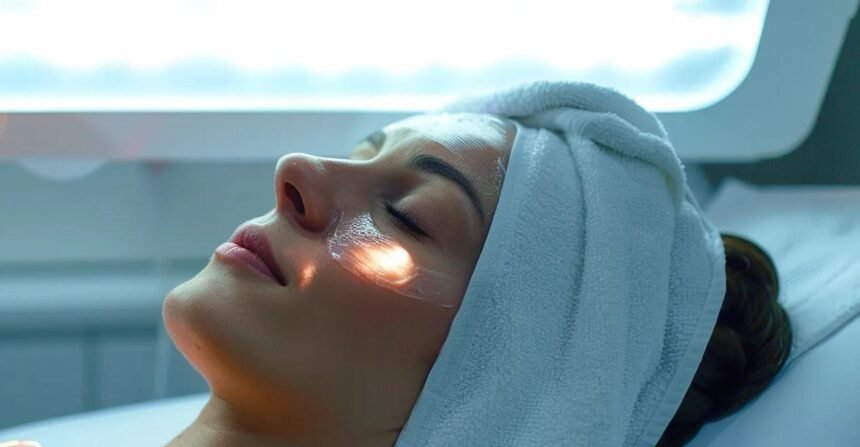
Light as a skincare treatment sounds like wellness marketing until you look at the research. Clinical trials, including a randomized, sham-controlled study on LED phototherapy, have found that specific wavelengths of red and near-infrared light can stimulate cells in the dermis and measurably improve wrinkles, with a strong safety record and no downtime to speak of.
The spa builds this into its facial treatments, using light-emitting diodes to encourage collagen production and improve overall clarity. It suits people bothered by fine lines, dullness, or uneven tone who are not ready for anything more aggressive. A session runs about an hour and follows a multi-step protocol matched to the client’s skin.
The honest caveat: one session gives you a glow, not a transformation. The meaningful changes are cumulative, which means committing to a series. For many clients, that trade feels fair. There is no peeling, no redness worth mentioning, and nothing to explain at work the next day.
2. Laser Skin Resurfacing
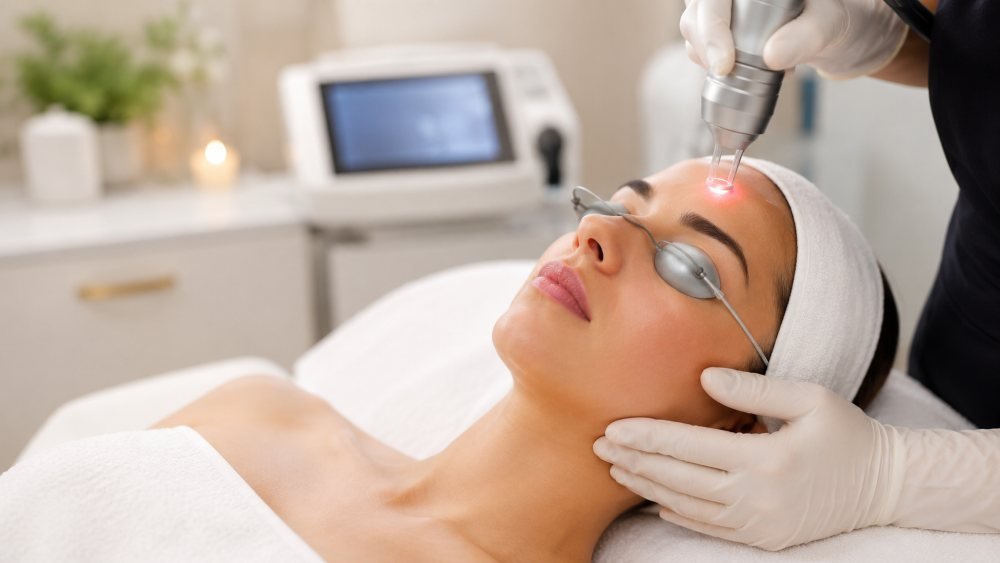
When the damage sits deeper, light of a different kind does the heavier lifting. Laser resurfacing removes the outer layers of skin in precise, controlled passes while heating the tissue underneath, which prompts the skin to rebuild itself with fresh cells and new collagen. The American Society of Plastic Surgeons describes it as one of the most effective options for stubborn wrinkles, scars, and blemishes, precisely because modern lasers allow that layer-by-layer control even in delicate areas.
At Bonita Springs Medical Spa, this is where state-of-the-art laser technology earns its keep. The treatment targets the kind of concerns that surface treatments cannot reach: entrenched sun damage, stubborn pigmentation, and texture problems that have resisted everything else.
It asks more of you than a facial does. Expect some redness and peeling during recovery, and expect the price to sit above most other treatments on this list. What you get in return is a result that tends to be more dramatic and considerably longer-lasting, which is why resurfacing remains the benchmark against which gentler options are measured.
3. Customized Chemical Peels
Chemical peels are one of the oldest tools in aesthetic medicine, and they have stayed on treatment menus for a simple reason: they work. A carefully chosen acid solution lifts away the damaged outer layers of skin, and what grows back is smoother and more even. The American Academy of Dermatology notes that peels can soften many signs of aging and are also used to treat certain types of acne and discoloration.
The spa’s Chemical Peel Protocol includes options such as the TCA peel, a medium-depth workhorse aimed at aging and sun-damaged skin. Depth is the key variable. Lighter peels mean minimal downtime and modest results, while deeper formulas trade a few days of redness and flaking for more significant change. The spa’s practitioners match the peel to the client’s skin type, concern, and tolerance for recovery.
One thing worth knowing before you book: the peel itself is only half the treatment. Aftercare determines how well the results hold, which is why clients leave with detailed post-treatment instructions covering sun protection and skincare. Follow them and the payoff lasts. Skip them and you undo a good portion of what you paid for.
4. Personalized Microneedling
Microneedling operates on a counterintuitive principle: injure the skin slightly, on purpose, and it repairs itself better than before. Fine needles create thousands of microscopic channels, and the healing response that follows produces new collagen. The American Academy of Dermatology points to it as a reliable option for fading scars and evening out skin tone, and the FDA has authorized microneedling devices specifically for improving facial acne scars and wrinkles, which says something about the evidence behind it.
What makes the service at Bonita Springs Medical Spa worth singling out is the personalization. Needle depth and technique are adjusted to the individual, because the skin under your eyes is not the skin on your cheeks, and treating them identically wastes the procedure’s potential.
Downtime is minimal. Most clients deal with a day or so of redness that looks like mild sunburn, then watch improvements in pore size, firmness, and tone develop over the following weeks. Like LED therapy, this is a treatment where patience is rewarded, since collagen remodeling happens on the skin’s schedule, not yours.
5. Injectable Treatments
Fillers occupy a different category from everything above. Instead of coaxing the skin to repair itself, they restore volume directly. The spa’s injectable menu includes hyaluronic acid fillers, which rely on a substance the body already produces naturally to keep skin hydrated and plump. Because the body eventually breaks hyaluronic acid down, results are temporary, which many clients consider a feature rather than a flaw.
Who performs the injection matters as much as what is injected. The FDA’s guidance on dermal fillers is blunt on this point: work with a licensed, experienced provider who understands facial anatomy and can manage complications. At Bonita Springs Medical Spa, injectables are administered by trained Aesthetic Nurse Practitioners whose brief is natural-looking enhancement rather than the overfilled look that gives fillers a bad name.
Results are immediate, recovery time is negligible, and pricing runs per syringe, so the total depends on the area treated. Plan on maintenance appointments to keep the effect, since the product gradually absorbs over time.
6. Acne and Scar Treatments
Acne is rarely a single problem. There are the active breakouts, and then there is the scarring and discoloration they leave behind, and the two need different tools. Dermatologists have long emphasized that there is no one-size-fits-all acne treatment, which is why the spa approaches it as a combination problem rather than a single-procedure fix.
Its Skin Rejuvenation System anchors this category, layering therapies to address blemishes and residual scarring together. Treatment plans typically unfold over a series of sessions, with clarity and texture improving gradually rather than overnight.
The realistic expectation to set here is ongoing care. Skin that is prone to breakouts tends to stay that way, so maintenance visits are often part of the long game. Costs vary with the complexity of the case, but for clients who have cycled through drugstore products for years without progress, a structured clinical plan is usually the turning point.
7. Relaxing Spa Services and Dermaplaning
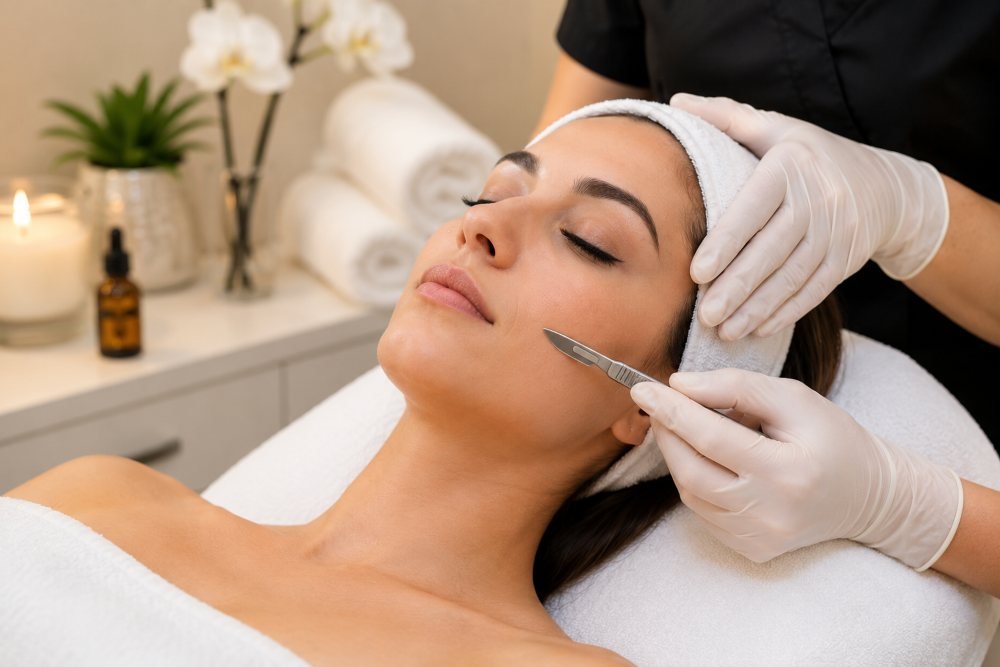
Not every visit needs to involve lasers or needles. The spa’s relaxation-focused services round out the menu, and dermaplaning is the standout among them. A practitioner uses a sterile blade to gently remove the outermost layer of dead skin cells along with fine vellus hair, the peach fuzz that makes makeup sit unevenly and skin look faintly dull.
The result is immediate: smoother texture, a brighter surface, and skincare products that absorb noticeably better. Sessions run 60 to 90 minutes and are priced accessibly enough to work as regular maintenance rather than an occasional splurge.
Nobody should expect dermaplaning to compete with resurfacing or microneedling on results. That is not its job. Its job is keeping skin in good condition between bigger treatments, and as a habit, the cumulative effect on skin health is real.
Choosing What Fits
The pattern across all seven treatments is worth noticing. None of them is pitched as a miracle, and the sensible ones come with trade-offs the spa is upfront about: sessions required, recovery days, maintenance schedules. That candor is usually the mark of a clinic more interested in outcomes than in bookings.
The practical path is a consultation. Skin concerns overlap, treatments combine, and the right plan for sun damage at 55 looks nothing like the right plan for acne scarring at 28. With a menu that spans gentle light therapy through medical-grade resurfacing, Bonita Springs Medical Spa has the range to build that plan around the client rather than forcing the client into whatever machine happens to be popular this year.
Disclaimer: This article is for general informational purposes only and does not constitute medical advice. Individual results vary. Always consult a qualified healthcare or licensed aesthetic professional before undergoing any cosmetic treatment.