

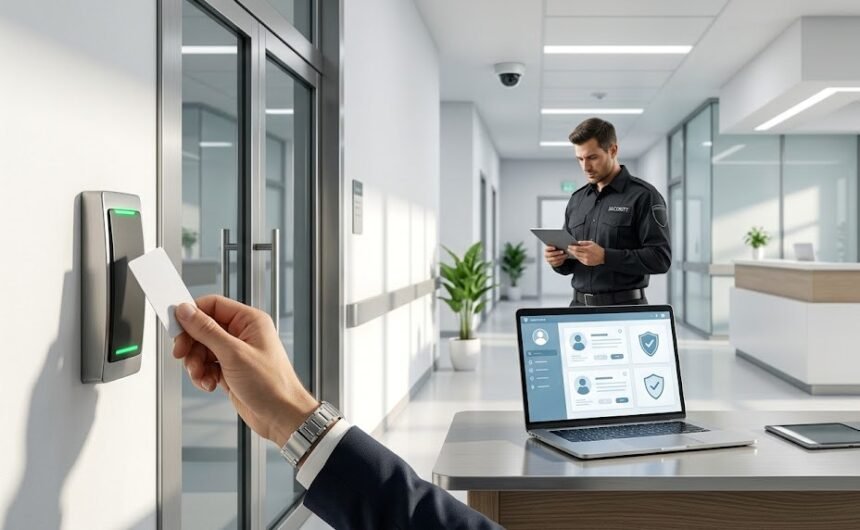
Patient privacy is one of the most critical responsibilities in healthcare. Hospitals handle sensitive information every minute, from medical records and diagnoses to personal identity details and treatment histories. Any breach, whether physical or digital, can have serious consequences for both patients and healthcare providers.
The scale of the challenge is growing. Hospitals operate 24/7, with thousands of people moving through facilities daily, including doctors, nurses, administrative staff, patients, visitors, and third-party vendors. At the same time, healthcare data breaches continue to rise globally, costing organizations millions and damaging patient trust. Beyond cyber threats, physical privacy breaches such as unauthorized access to wards, exposure of patient activity, or improper monitoring can also lead to compliance violations.
Traditional surveillance systems were designed mainly for security, not privacy. They recorded footage but did little to control who accessed sensitive areas or how information was protected. Today, modern hospital security system solutions are evolving to address both safety and privacy together.
AI-powered surveillance, access control integration, and intelligent monitoring are helping hospitals create secure environments where patient privacy is actively protected rather than passively recorded.
1. Controlling Access to Sensitive Areas
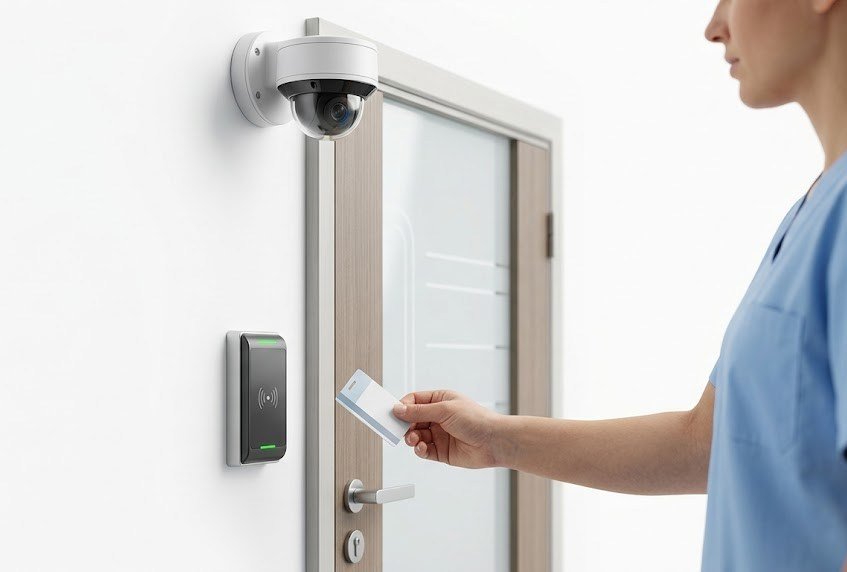
Hospitals have multiple areas where privacy is critical.
These include:
- Patient wards and ICUs
- Operating rooms
- Consultation rooms
- Medical record storage areas
- Laboratories and pharmacies
Unauthorized access to any of these areas can expose sensitive patient information or disrupt care.
Modern hospital security system solutions help control access more effectively by combining surveillance with access control systems. For example, solutions like Coram integrate with existing IP cameras and access control infrastructure, allowing hospitals to monitor entry points in real time. They provide high-definition video and intelligent alerts when unauthorized access attempts occur. This ensures that only authorized personnel can enter restricted zones, helping maintain strict privacy boundaries without requiring the replacement of existing camera setups.
This is important because access control alone is not enough. A badge or access card may open a door, but it does not confirm who actually entered or whether someone followed behind. Video-enabled verification adds an extra layer of accountability.
In practice, this means hospitals can:
- Monitor who enters and exits sensitive areas
- Detect tailgating incidents
- Identify unusual access patterns
- Maintain a clear audit trail for compliance
This reduces the risk of unauthorized exposure to patient information.
2. Preventing Unauthorized Monitoring and Surveillance Misuse
While cameras improve security, they can also pose privacy risks if not managed properly.
Hospitals must ensure that surveillance systems do not unnecessarily expose patient information.
AI-powered hospital security systems help address this by enabling smarter monitoring.
Instead of recording everything equally, modern systems can focus on specific zones and activities. This ensures that cameras are used for safety and security without intruding on patient confidentiality.
For example:
- Cameras can be positioned to monitor entrances rather than patient beds
- Alerts can be triggered only for unusual activity instead of constant monitoring
- Access to footage can be restricted to authorized personnel only
This controlled approach ensures that surveillance supports privacy rather than compromising it.
Hospitals can also define clear policies on who can access video footage and under what conditions. This reduces the risk of misuse or unauthorized viewing of sensitive information.
3. Real-Time Alerts Reduce Privacy Breaches
One of the biggest advantages of modern hospital security systems is real-time monitoring.
Traditional systems detect issues after they happen. AI-powered systems detect them instantly.
This is critical for privacy.
For example, if an unauthorized person enters a restricted ward, the system can send an immediate alert. Staff can respond quickly and prevent further exposure.
Real-time alerts can help detect:
- Unauthorized entry into patient areas
- Suspicious movement near medical records
- Unusual activity during off-hours
- Attempts to access restricted departments
This proactive approach helps hospitals stop privacy breaches before they escalate.
In high-risk environments like hospitals, quick response is essential.
4. Supporting HIPAA and Compliance Requirements
Healthcare organizations must comply with strict privacy regulations such as HIPAA.
These regulations require hospitals to protect patient information from unauthorized access and ensure that privacy is maintained at all times.
Hospital security systems play a direct role in meeting these requirements.
They help by:
- Monitoring access to sensitive areas
- Providing visual evidence for audits
- Maintaining logs of entry and exit activity
- Supporting secure handling of patient data
When integrated with access control and monitoring systems, surveillance solutions create a more comprehensive compliance framework.
For example, if an audit requires verification of who accessed a particular area, hospitals can review both access logs and video footage.
This combination provides stronger accountability and reduces compliance risks.
5. Protecting Patient Identity in High-Traffic Environments
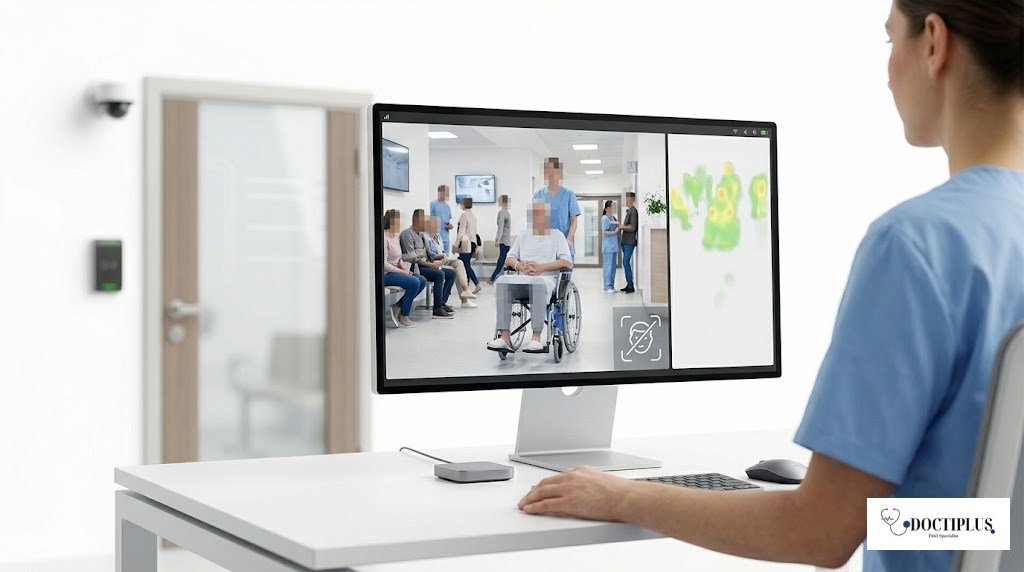
Hospitals are busy environments.
Emergency rooms, waiting areas, and outpatient departments often handle large numbers of patients simultaneously.
In such environments, protecting patient identity becomes challenging.
Modern hospital security systems help manage this by improving visibility without exposing sensitive details.
For example:
- Monitoring crowd movement without focusing on individual patient information
- Detecting unusual behavior without recording unnecessary personal details
- Ensuring that patient interactions are not publicly exposed
This balance is important.
Hospitals must maintain safety and order while respecting patient dignity and confidentiality.
AI-powered systems make this possible by focusing on patterns and activity rather than personal data.
6. Integration with Environmental and Safety Systems
Patient privacy is not only about data and access. It is also about maintaining a safe environment.
Hospitals rely on multiple systems to ensure safety, including:
- Fire detection systems
- Environmental sensors
- Equipment monitoring systems
Modern hospital security systems can integrate with these tools.
This creates a unified system where safety and privacy work together.
For example:
- Alerts from environmental sensors can trigger camera monitoring in specific areas
- Safety incidents can be verified through video without exposing unrelated patient activity
- Emergency responses can be coordinated while maintaining privacy controls
This integrated approach ensures that hospitals can respond to incidents without compromising patient confidentiality.
7. Reducing Human Error in Privacy Management
Human error is one of the biggest causes of privacy breaches.
Staff may forget to secure access points, leave sensitive areas unattended, or accidentally allow unauthorized entry.
AI-powered hospital security systems reduce this risk by automating monitoring.
They can:
- Detect doors left open
- Identify unusual access patterns
- Alert staff to potential risks
- Maintain consistent monitoring without fatigue
This reduces reliance on manual processes and improves overall security.
When systems continuously monitor activity, the chances of privacy breaches caused by human oversight are significantly lower.
8. Building Trust with Patients
Patient trust is essential in healthcare.
When patients feel that their information is secure, they are more likely to share important details, follow treatment plans, and engage with healthcare providers.
Hospital security systems contribute to this trust by ensuring that privacy is protected at every level.
When hospitals implement strong security measures:
- Patients feel safer during their visits
- Staff operate with greater confidence
- The organization builds a reputation for reliability
Privacy is not just a legal requirement. It is a key part of the patient experience.
Modern security systems help hospitals meet both expectations.
FAQs
1. How do hospital security systems protect patient privacy?
They control access to sensitive areas, monitor activity in real time, and provide alerts for unauthorized access, helping prevent privacy breaches.
2. Can surveillance cameras violate patient privacy?
If not managed properly, yes. However, modern systems are designed to focus on security while limiting unnecessary exposure of patient information.
3. What role does AI play in hospital security?
AI helps detect unusual behavior, trigger real-time alerts, and reduce reliance on manual monitoring, improving both safety and privacy.
4. Are hospital security systems compatible with existing cameras?
Yes. Many modern solutions work with existing IP cameras, allowing hospitals to upgrade without replacing their infrastructure.
5. Why is access control important for patient privacy?
It ensures that only authorized personnel can enter sensitive areas, reducing the risk of unauthorized exposure to patient information.
Conclusion
Maintaining patient privacy in hospitals is more complex than ever.
With increasing foot traffic, strict compliance requirements, and evolving security risks, healthcare facilities need more than traditional surveillance systems.
Modern hospital security system solutions provide the intelligence, visibility, and control needed to protect patient information effectively. By combining AI-powered monitoring, access control, and real-time alerts, hospitals can create safer environments that actively maintain privacy.
In today’s healthcare landscape, protecting patient privacy is not optional. It is essential for trust, compliance, and quality care.
Disclaimer
This content is for informational purposes only and does not constitute legal, medical, or professional security advice. Healthcare organizations should consult qualified IT security professionals, legal advisors, and compliance specialists before implementing or modifying hospital security systems. Regulations and requirements may vary by region, and systems should be designed to meet applicable laws and standards while addressing the specific needs of each facility.
References
- Jahanpour Alipour, Yousef Mehdipour, Afsaneh Karimi, Mohadeseh Khorashadizadeh, Maryam Akbarpour. Security, confidentiality, privacy, and patient safety in hospital information systems from the users’ perspective: A cross-sectional study. International Journal of Medical Informatics, Vol. 175, July 2023, Article 105066.
- Ramsha Qureshi, Insoo Koo. A comprehensive survey of cybersecurity threats and data privacy issues in healthcare systems. Applied Sciences, Vol. 16, Issue 3, 2026, Article 1511.
- Rohit Singh Raja. Securing healthcare data: A systematic review of compliance, privacy, and cybersecurity strategies. International Journal of Innovative Research in Computer Technology (IJIRCT), Vol. 9, Issue 6, November 2023, pp. 1–13.
- Karim Abouelmehdi, Abderrahim Beni-Hessane, Hayat Khaloufi. Big healthcare data: Preserving security and privacy. Journal of Big Data, Vol. 5, Article 1, 2018.
- Young B. Choi, Kathleen E. Capitan, Joshua S. Krause, Meredith M. Streeper. Challenges associated with privacy in healthcare: Implementation of HIPAA and security rules. Journal of Medical Systems, Vol. 30, Issue 1, February 2006, pp. 57–64.
- Wafa Bani Issa, Ibrahim Al Akour, Ahmad Ibrahim, et al. Privacy, confidentiality, security, and patient safety concerns about electronic health records. International Nursing Review, Vol. 67, Issue 2, June 2020, pp. 218–230.
- Sanjiv M. Narayan, Nitin Kohli, Megan M. Martin. Addressing contemporary threats in anonymized healthcare data using privacy engineering. npj Digital Medicine, Vol. 8, Article 145, 2025.