


Many people enjoy tetrahydrocannabinol gummies as a tasty, simple way to relax. The market now offers countless options with wildly different ingredients, and that variety can make label-reading feel overwhelming. One choice consistently stands out for health-conscious buyers.
That choice is THC gummies sweetened with organic cane sugar. This article explains why that decision matters for your body and your mind, and gives you clear reasons to pick organic cane sugar gummies over conventional alternatives. For a wider look at how the gummy format fits into broader wellness routines, our piece on the top 5 benefits of using CBD gummies daily provides useful context.
Reviewed by: Dr. Helena Mercer, MD, Board-Certified in Internal Medicine with a clinical interest in cannabinoid medicine and integrative wellness.
A Cleaner Source of Sweetness

Organic cane sugar comes from sugarcane grown without synthetic pesticides or chemical fertilizers, in line with USDA Organic standards. This means the sugar retains more natural molasses and trace nutrients than its conventional counterpart.
Regular white sugar is often processed with bone char and chemical bleaching agents to achieve its uniform white appearance. Gummies made with organic cane sugar skip those harsh industrial steps entirely. The result is a purer sweetness that does not overwhelm the cannabis flavor, and many users report a smoother taste without the chemical aftertaste that cheap sweeteners leave behind.
For those genuinely curious about ingredient transparency in the wellness products they buy, our deeper look at ingredient transparency in the social media era shows just how much label literacy matters now.
Better for Digestive Health
The body processes organic cane sugar differently from high-fructose corn syrup or many artificial sweeteners. Cheap alternatives can cause bloating, gas, and gut irritation, particularly in those with already sensitive digestion. Research published through the National Institutes of Health has linked excessive consumption of artificial sweeteners and processed sugars to negative shifts in gut microbiome composition.
Organic cane sugar contains small amounts of minerals like calcium and iron that help moderate how the body breaks down sugar. As a result, users may experience less of an aggressive blood sugar spike and the energy crash that follows. For people who take gummies regularly, this gentler digestion makes a meaningful difference. A happier gut leads to a more enjoyable overall experience, which is something we explore in detail in our article on why your gut problems need more than generic advice.
No Artificial or Hidden Ingredients
Many mass-produced THC gummies rely on corn syrup, low-grade gelatin, and synthetic dyes. These additives serve no purpose beyond cutting costs and extending shelf life. Organic cane sugar gummies typically come with shorter, more honest ingredient lists.
Manufacturers who choose organic sugar usually also avoid artificial flavors and synthetic preservatives. This transparency builds trust between buyer and brand. You can read the label and actually recognize every component, which is exactly what the FDA recommends consumers do when evaluating any edible product.
What to look for on a clean THC gummy label:
- Organic cane sugar is listed as the primary sweetener
- Natural fruit pectin instead of animal-based gelatin, where possible
- Real fruit juice or natural extracts for color rather than synthetic dyes
- A clear COA (Certificate of Analysis) verifying cannabinoid content
- No high-fructose corn syrup, artificial flavors, or undisclosed preservatives
Supports Sustainable Farming Practices
Organic cane sugar production relies on crop rotation, cover crops, and natural pest control methods. These techniques protect soil health and nearby water sources from chemical runoff. Conventional sugar farming often relies on pesticides that harm bees and other pollinators, and the Environmental Protection Agency has documented pesticide-related pollinator decline as an ongoing environmental concern.
By choosing organic cane sugar gummies, you support farms that treat the land with respect. This choice also pressures more cannabis brands to source ethical ingredients. Over time, consumer demand pushes the entire industry toward cleaner standards. A small purchasing decision contributes to a larger positive change for the planet.
Enhances the Flavor of the Cannabis Extract
THC distillate and live resin have their own earthy, floral notes that come from terpenes, the aromatic compounds the National Center for Biotechnology Information has documented as contributing meaningfully to the cannabis experience. Artificial sweeteners or refined white sugar can clash with these delicate flavors, flattening the overall profile.
Organic cane sugar carries a subtle caramel-like taste that complements cannabis profiles beautifully. It does not mask the plant’s natural character. Instead, it lifts the fruit and berry notes added to the gummy. Many experienced users say organic sugar gummies taste more authentic and less medicinal, which makes each session feel like a small treat rather than a clinical dose.
Why This Matters for Regular Users
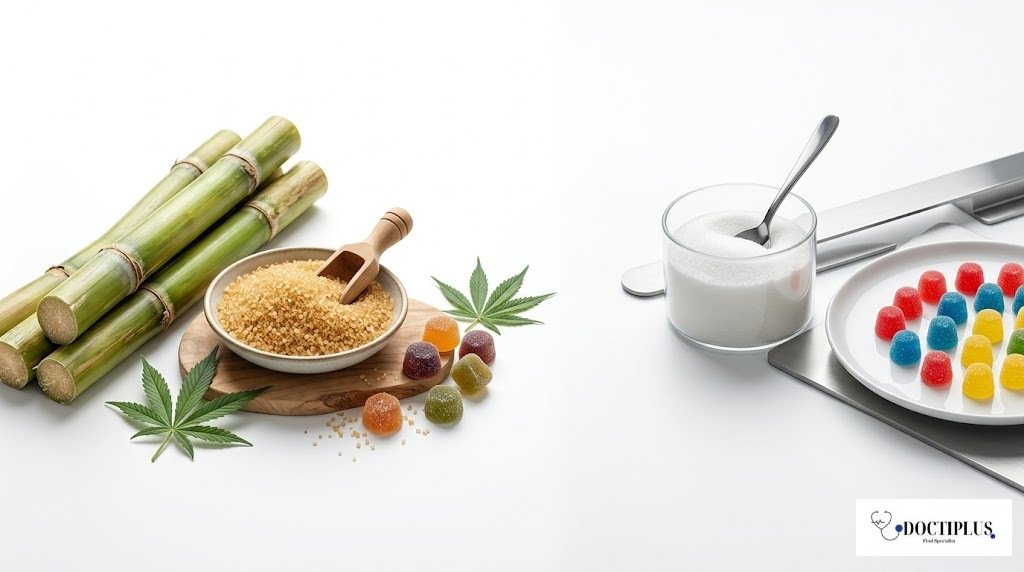
If you consume THC gummies occasionally, ingredient quality may feel like a minor consideration. But for regular users, those small differences accumulate. Cumulative exposure to artificial dyes, refined sugars, and synthetic preservatives can quietly affect digestion, energy, and overall wellness. The same logic applies to any consumable product you use frequently, which is one reason we cover similar themes in our piece on why modern lifestyles are leaving people nutrient-deficient.
For people exploring cannabis as part of a broader wellness routine, our coverage of how medical cannabis fits into a modern work-from-home lifestyle and arthritis and medical cannabis prescriptions in the UK offers additional clinical context worth reading.
Quick Comparison: Organic Cane Sugar vs. Conventional Sweeteners
| Feature | Organic Cane Sugar | Conventional White Sugar | High-Fructose Corn Syrup |
|---|---|---|---|
| Pesticide Exposure | None | Yes | Yes |
| Processing Method | Minimal | Bone char, chemical bleaching | Heavy chemical processing |
| Trace Minerals | Retained | Stripped | None |
| Glycemic Impact | Moderate | High | Very high |
| Flavor Profile | Subtle caramel | Flat | Cloying, artificial |
| Sustainability | High | Low | Low |
FAQs
Are organic cane sugar gummies more expensive?
- Slightly, in most cases. The premium reflects the cost of organic farming practices and cleaner manufacturing. For regular users, the wellness payoff usually justifies the difference.
Do organic cane sugar gummies have fewer calories?
- Calorie content is roughly the same as conventional sugar gummies. The benefit lies in cleaner processing, trace nutrients, and the absence of artificial additives, not in calorie reduction.
Can people with diabetes use them?
- Anyone managing diabetes or blood sugar conditions should consult their physician before consuming any sweetened edible product, organic or not. Cane sugar still raises blood glucose levels.
How can I verify a brand uses true organic cane sugar?
- Look for USDA Organic certification on the packaging, check for a published Certificate of Analysis, and review the full ingredient list. Reputable brands disclose sourcing openly.
Are these gummies legal everywhere?
- THC product legality varies significantly by state and country. Always verify your local laws before purchasing or consuming any THC product.
Bottom Line
Choosing THC gummies made with organic cane sugar comes down to quality and intention. These gummies provide a cleaner source of sweetness that respects your digestion, avoids artificial additives, and supports environmentally responsible farming. The flavor pairing with cannabis extracts also creates a more authentic, enjoyable edible experience.
For anyone who uses gummies regularly, the small extra cost of organic sugar pays off in long-term wellness benefits. Ultimately, the best edible is one that feels good from the first bite to the final effect.
Medical Disclaimer
This article is for informational and educational purposes only and is not intended as medical advice, diagnosis, or treatment. THC products may not be legal in your jurisdiction and may interact with medications or pre-existing conditions. Always consult your physician or a licensed healthcare provider before using any THC product, especially if you are pregnant, nursing, taking prescription medications, or managing a chronic condition such as diabetes, cardiovascular disease, or a mental health disorder. Do not operate a vehicle or heavy machinery after consuming THC. Keep all cannabis products out of reach of children and pets.
References
- United States Department of Agriculture. (2024). USDA Organic Certification Standards. Washington, DC: USDA. Available at: usda.gov
- National Institutes of Health. (2023). Sweeteners and the Gut Microbiome: Evidence Review. Bethesda, MD: NIH. Available at: ncbi.nlm.nih.gov
- U.S. Food and Drug Administration. (2024). How to Understand and Use the Nutrition Facts Label. Silver Spring, MD: FDA. Available at: fda.gov
- Environmental Protection Agency. (2024). Pollinator Protection and Pesticide Use Guidance. Washington, DC: EPA. Available at: epa.gov
- MedlinePlus. (2024). Hyperglycemia and Blood Sugar Management. Bethesda, MD: National Library of Medicine. Available at: medlineplus.gov
- National Center for Biotechnology Information. (2023). Terpenes and Cannabinoid Interaction Research. Bethesda, MD: NCBI. Available at: pubmed.ncbi.nlm.nih.gov
- World Health Organization. (2023). Guideline on Sugars Intake for Adults and Children. Geneva: WHO. Available at: who.int