

Many people come across the term “blue waffle” online and become scared that they may have a serious or disfiguring infection.
Let’s be clear from the start: “blue waffle” is not a real medical diagnosis. However, the fears it creates are real, and certain actual conditions can cause discomfort, color changes, or irritation in the vulva.
This guide explains what the myth means, what real medical issues might be mistaken for it, and how to manage symptoms safely.
What “Blue Waffle” Really Is
“Blue waffle” became popular as an internet hoax claiming that an STI could turn the vulva blue and severely damaged.
No recognized medical textbook, infectious-disease guide, or clinical guideline lists such a disease.
However, people searching for it are usually experiencing:
- New irritation
- Color changes
- Discharge
- Pain or swelling
These symptoms can occur in real and treatable conditions.
What Can Actually Cause Vulvar Color Changes
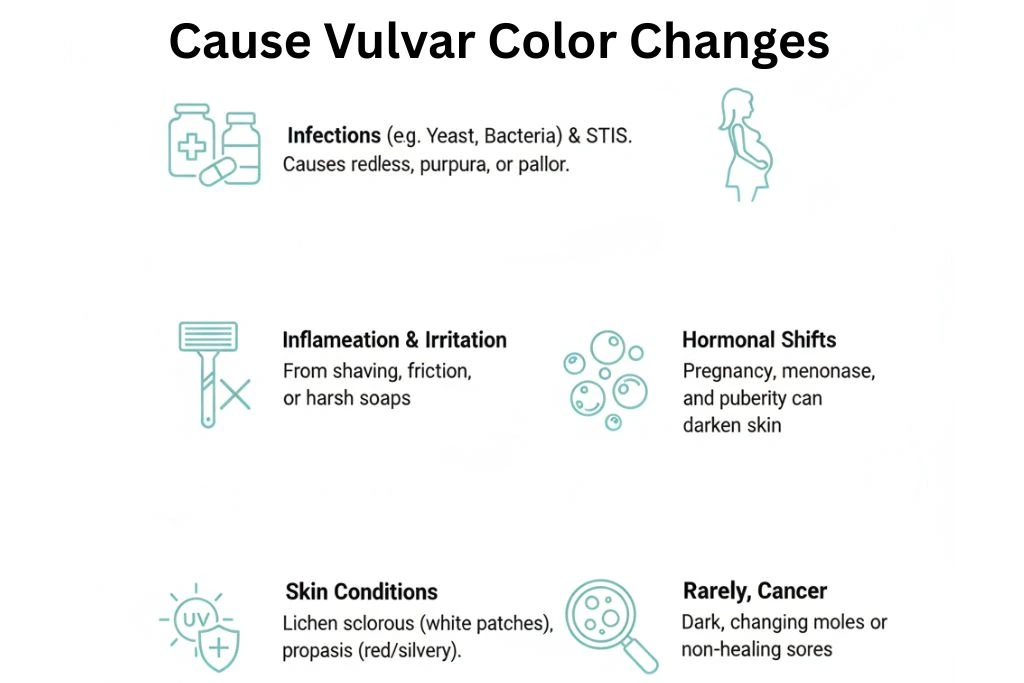
The vulva may appear darker, bluish, or purplish due to normal, temporary, or treatable causes.
A. Normal Variations
- Natural skin pigmentation
- Increased blood flow (hormones, arousal, exercise)
B. Benign Medical Causes
- Bruising (from friction or minor trauma)
- Varicose veins of the vulva
- Vascular congestion during menstruation or pregnancy
C. Conditions Worth Evaluating
- Allergic reactions
- Yeast infections
- Bacterial infections
- Sexually transmitted infections (STIs)
- Lichen planus or lichen sclerosus
- Contact dermatitis from products or shaving
Common Vaginal and Vulvar Infections
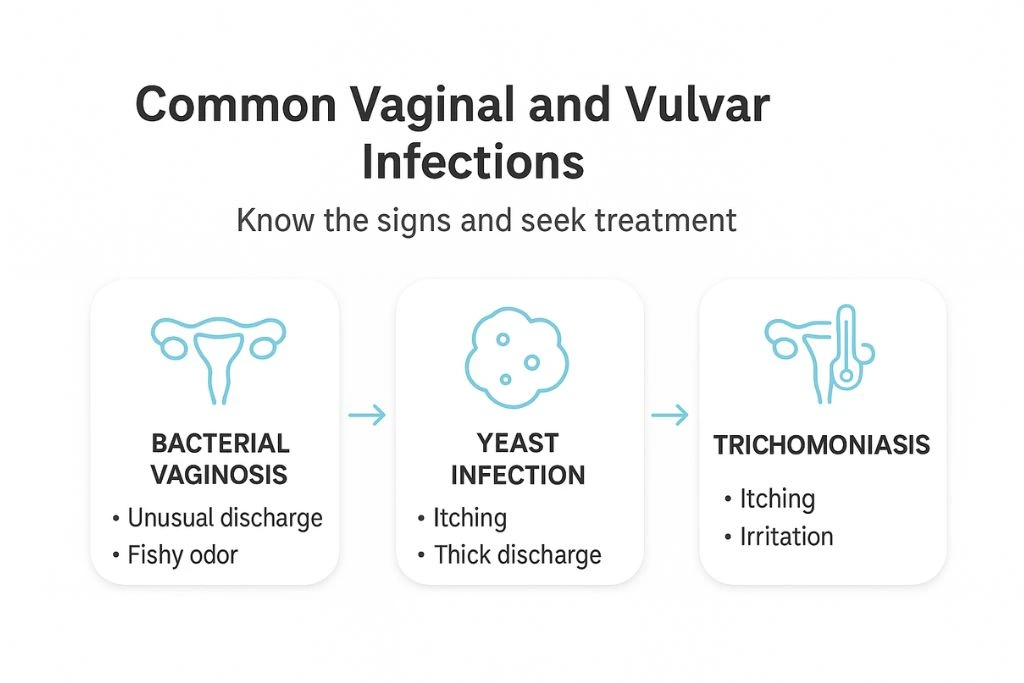
A. Yeast Infection (Candida)
Symptoms
- Itching
- Redness
- Cottage-cheese–like discharge
- Swelling
Treatment
- OTC antifungals (clotrimazole, miconazole)
- Prescription fluconazole if recurrent
B. Bacterial Vaginosis (BV)
Symptoms
- Thin gray/white discharge
- Fishy odor
- Mild irritation
Treatment
- Metronidazole or clindamycin prescribed by a clinician
C. Trichomoniasis
Symptoms
- Frothy yellow-green discharge
- Itching
- Pain with urination
Treatment
- Metronidazole (prescription only)
D. STIs That May Affect Color or Cause Swelling
- Genital herpes (painful blisters)
- Chlamydia/gonorrhea (discharge, pelvic pain)
- Syphilis (painless ulcer)
Symptoms to Watch For
Signs that require attention:
- New or unusual discharge
- Pain, burning, or itching
- Skin color changes (purple, blue, dark red)
- Open sores or ulcers
- Swelling that lasts more than 24–48 hours
- Unpleasant odor
- Pain during sex or urination
Practical At-Home Care (Doctor-Style Guidance)
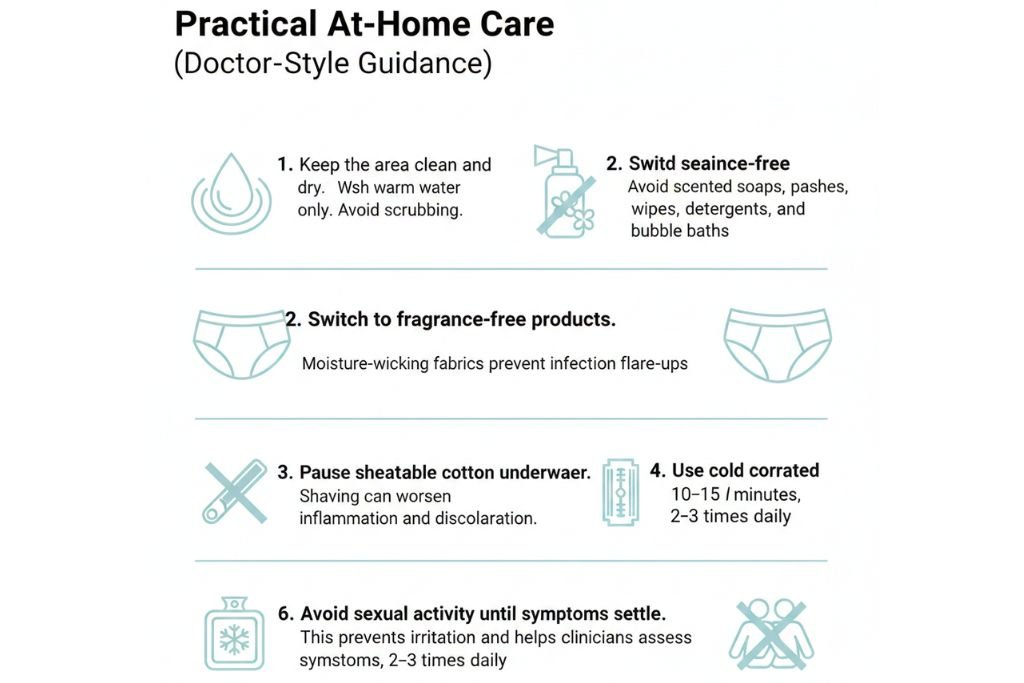
1. Keep the area clean and dry
Wash with warm water only. Avoid scrubbing.
2. Switch to fragrance-free products
Avoid scented soaps, pads, washes, wipes, detergents, and bubble baths.
3. Wear breathable cotton underwear
Moisture-wicking fabrics prevent infection flare-ups.
4. Pause shaving if irritated
Shaving can worsen inflammation and discoloration.
5. Use cold compresses for swelling
10–15 minutes, 2–3 times daily.
6. Avoid sexual activity until symptoms settle
This prevents irritation and helps clinicians assess symptoms accurately.
Food and Lifestyle Support
Foods That May Help Balance Vaginal Flora
- Plain yogurt with live cultures
- Kefir
- Fermented foods (kimchi, sauerkraut)
- Leafy greens
- High-fiber fruits
- Lean proteins
Foods to Limit During Irritation
- Sugary snacks (yeast thrives on sugar)
- Alcohol
- Very spicy foods (can worsen skin sensitivity)
Lifestyle Tips
- Change out of wet clothing quickly
- Use loose clothing during flare-ups
- Manage stress (stress can worsen infections)
- Stay hydrated
Simple Diagrams
Vulva Anatomy (Simplified)
     _________
    /         \
   |  Clitoris |
   |  ________ |
   | |  Urethra|
   | |________ |
   |  Vaginal  |
   |  Opening  |
    \_________/
Skin Irritation Pattern (Example)
Normal skin:     [====    ]
Mild irritation: [======  ]
Severe redness:  [========]
Example Symptom Patterns (Graphs)
A. Irritation Level Over 7 Days
(Example for mild contact dermatitis)
Day:     1 2 3 4 5 6 7
Pain:    |█       |
Itching: |███     |
Redness: |█████   |
Improving → → →
B. Frequency of Causes in Vulvar Discomfort
(Approximate clinic-based observations)
Cause                     Frequency
Yeast infection           ██████████  (Very common)
Bacterial vaginosis       ████████    (Common)
Contact dermatitis        ██████      (Moderate)
STIs                      ████        (Less common)
Serious disease           ██          (Uncommon)
When to See a Doctor
Seek medical attention if you experience:
- A blue, purple, or black patch that worsens
- Severe pain
- Fever with genital symptoms
- Open sores or spreading rash
- Foul-smelling discharge
- Symptoms that last longer than 3 days
- Recurrent infections (3+ per year)
- Pain during sex or bleeding after sex
Improvement Timeline
Typical recovery for common issues:
| Condition | Expected Recovery |
|---|---|
| Yeast infection | 1–3 days after treatment |
| BV | 2–5 days after antibiotics |
| Mild irritation/allergy | 2–7 days |
| Bruising/discoloration | 7–14 days |
| STIs | Varies, improves after treatment |
Final Advice
Although the term “blue waffle” can be scary, it is not a real medical disease.
If you notice color changes, irritation, or discharge, the cause is usually a common, treatable condition.
Listen to your body, use gentle care, and seek medical help if symptoms persist or worsen. You are not alone; these issues are extremely common, and doctors deal with them every day.