
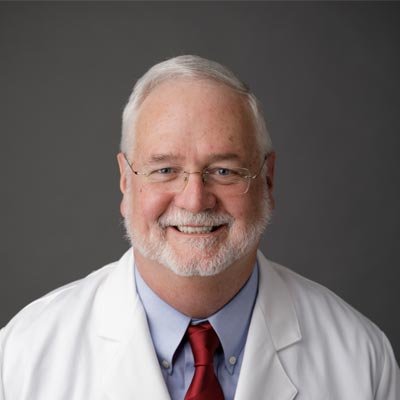
Dr. Kim Keller, MD General Surgeon and Breast Surgery Care
Dr. Kim D. Keller, MD, FACS, is a board-certified general surgeon whose clinical work includes breast surgery, laparoscopic and robotic surgery, hernia repair, gallbladder surgery, colon and rectal procedures, hemorrhoid treatment, and other abdominal surgical care. He practices with Keller Surgical Specialists, where breast disease is one of his principal areas of focus.
Dr. Keller’s background is especially relevant for patients who have been referred because imaging or another physician has identified a problem that may require surgery. A consultation with a general surgeon does not automatically mean an operation is necessary. It is an opportunity to confirm the diagnosis, determine whether surgery offers a meaningful benefit, compare available techniques, and understand what recovery is likely to involve.
Patients researching similar physicians can browse general and specialized surgeons on Doctiplus, which includes doctors working across general, minimally invasive, abdominal, breast, and other surgical areas.
About Dr. Kim Keller
Dr. Keller is professionally listed as Kim Dorian Keller, MD, FACS. Memorial Hermann currently identifies his specialty as General Surgery and lists him as accepting new patients. Keller Surgical Specialists describes his practice as combining traditional general surgery with advanced laparoscopic and robotic-assisted approaches.
His practice specifically identifies experience with:
- Breast disease and breast surgery
- Hernia surgery
- Gallbladder surgery
- Colon and rectal surgery
- Hemorrhoids
- Colonoscopy
- Abdominal surgical conditions
- Laparoscopic surgery
- Robotic-assisted surgery
- Skin and soft-tissue masses
The practice also states that Dr. Keller regularly provides surgical care for patients with colon and rectal cancers.
These areas show why general surgery remains a broad specialty. A general surgeon may treat conditions involving the breast, abdominal wall, gallbladder, gastrointestinal tract, skin, and soft tissues rather than concentrating on one organ alone.
Medical Education and Surgical Training
Dr. Keller completed medical school at the University of Arkansas for Medical Sciences in 1983. Memorial Hermann records subsequent internship and general surgery residency training through the University of Florida College of Medicine in Jacksonville, with postgraduate training listed in 1984 and residency completion in 1989.
| Training Area | Institution | Details |
|---|---|---|
| Medical education | University of Arkansas for Medical Sciences | MD, 1983 |
| Internship | University of Florida College of Medicine, Jacksonville | Surgical training |
| Residency | University of Florida College of Medicine, Jacksonville | General Surgery |
| Specialty | General Surgery | Breast, abdominal and gastrointestinal surgical care |
| Certification | American Board of Surgery | Board certified |
His own surgical practice states that his interest in surgery began during his medical-school surgical rotation and that he later completed general surgery residency training at the University of Florida in Jacksonville.
General surgery residency provides experience in evaluating patients before surgery, performing operations, managing postoperative recovery, and deciding when surgery should not be the first treatment.
Board Certification and FACS Credential
Keller Surgical Specialists identifies Dr. Keller as board certified by the American Board of Surgery. His professional biography also uses the FACS designation, meaning Fellow of the American College of Surgeons.
For patients, certification is useful background, but it should be considered alongside the surgeon’s actual experience with the condition requiring treatment.
Someone with a breast abnormality, for example, may have different questions from a patient with an inguinal hernia or recurring gallbladder attacks. The relevant issue is whether the surgeon’s current clinical work fits the patient’s specific diagnosis.
Breast Disease and Breast Surgery
Breast disease is one of the clearest areas of focus in Dr. Keller’s professional profile. Keller Surgical Specialists states that he specializes in breast disease, and the practice maintains a dedicated breast-surgery service.
Patients may reach a breast surgeon after:
- An abnormal mammogram
- An ultrasound finding
- A breast lump
- A biopsy result
- Persistent breast symptoms
- A diagnosis requiring surgical evaluation
Not every breast abnormality requires surgery.
Some findings can be followed with imaging, while others may require needle biopsy or another diagnostic approach before an operation is considered. When surgery is recommended, the procedure depends on what the testing has actually shown.
This is an important distinction because the words “breast lump” cover many different diagnoses. The surgeon needs to review imaging, pathology when available, examination findings, family history, and previous breast procedures before deciding what should happen next.
Doctiplus includes breast cancer examinations and cancer screening within its healthcare services, which can help patients understand how diagnostic care and surgical referral may connect.
High-Risk Breast Care Background
Dr. Keller’s practice biography states that he founded the High-Risk Breast Clinic at the former North Cypress Medical Center. It also describes his long-term involvement in developing surgical services for the surrounding community.
High-risk breast assessment is different from treating someone who already has a confirmed cancer diagnosis.
A patient may be considered at increased risk because of family history, previous biopsy findings, genetic factors, or another clinical reason. Depending on the situation, care can involve more frequent imaging, specialist consultation, genetic counseling, or other individualized surveillance.
Patients should confirm which high-risk breast services Dr. Keller currently provides through his practice because programs and clinical arrangements can change over time.
Breast Cancer Surgical Evaluation
Keller Surgical Specialists includes breast surgery within its main surgical services, and current provider data also associates Dr. Keller with breast cancer and breast-lump care.
When breast cancer has been diagnosed, surgery is only one part of treatment planning.
The surgical discussion may involve the location and size of the abnormality, biopsy findings, imaging, whether more than one area is involved, lymph-node evaluation, and treatment recommendations from oncology or other specialists.
Some patients may be candidates for breast-conserving surgery, while others may need a more extensive operation. The appropriate choice depends on the diagnosis and the individual treatment plan.
Patients should ask what the proposed procedure is intended to remove, whether additional treatment is expected afterward, and how pathology findings after surgery could affect the next stage of care.
Gallbladder Disease and Gallbladder Surgery
Gallbladder surgery is another major service listed by Keller Surgical Specialists. The practice identifies gallbladder disease among conditions Dr. Keller treats and lists gallbladder removal among its surgical services.
Gallstones do not always require an operation simply because they appear on imaging.
A surgeon generally needs to consider whether the stones are actually causing symptoms, whether inflammation or another complication has occurred, and whether the patient’s symptom pattern fits gallbladder disease.
When surgical removal is appropriate, the operation is commonly performed using a minimally invasive approach in suitable patients.
The important question is not only whether gallstones are present. It is whether removing the gallbladder is likely to address the patient’s actual problem.
Hernia Evaluation and Repair
Hernia repair is also specifically listed within Dr. Keller’s surgical practice.
A hernia occurs when tissue pushes through a weakened area of the abdominal wall. Common forms include inguinal, umbilical, ventral, and incisional hernias.
A surgeon may consider several factors before recommending repair, including the location and size of the hernia, discomfort, whether it is becoming larger, previous abdominal surgery, overall health, and how much the problem affects normal activity.
Some hernias can be monitored for a period of time. Others become more suitable for planned surgical repair.
Surgical techniques can vary between open, laparoscopic, and robotic-assisted approaches. The best method depends on the particular hernia rather than one technique always being preferable.
Patients should ask whether surgical mesh is expected to be used and why it is appropriate for their repair. Doctiplus has additional background on surgical mesh and complications that may require specialist review.
Laparoscopic Surgery
Keller Surgical Specialists states that Dr. Keller performs both general and advanced laparoscopic surgery.
Laparoscopic surgery uses smaller access points and specialized instruments rather than the larger incision associated with some traditional open operations.
The approach may be used for selected gallbladder, hernia, abdominal, and other procedures.
Smaller incisions can be useful in appropriate cases, but the phrase “minimally invasive” should not be interpreted as meaning the operation is insignificant. The underlying condition, anesthesia, internal surgical work, and postoperative care still matter.
The correct approach is the one that allows the required operation to be completed safely and effectively.
Robotic-Assisted Surgery
Dr. Keller’s practice also identifies robotic-assisted surgery using the da Vinci surgical system among his current surgical approaches.
Robotic surgery is still performed by the surgeon. The system translates the surgeon’s movements into precise movements of instruments positioned inside the operative area.
Whether a robotic approach offers an advantage depends on the procedure and individual anatomy.
Patients should not select a surgeon or operation solely because the word “robotic” appears in the description. More useful questions are whether it provides an advantage in their specific case, whether another approach would produce a similar result, and what the surgeon’s reason is for recommending it.
Colon and Rectal Surgery
Keller Surgical Specialists lists colon and rectal procedures among its main services and states that Dr. Keller performs surgery for patients with colon and rectal cancers.
Patients may be referred after colonoscopy, imaging, biopsy, or another examination identifies a condition that may require surgical treatment.
Not every abnormal colonoscopy result requires bowel surgery.
Polyps can often be removed during colonoscopy, while inflammatory conditions, diverticular disease, tumors, obstruction, and other gastrointestinal problems may require different treatment.
When colon surgery is being discussed, patients should understand what segment is affected, what diagnosis has been established, and whether the operation is intended to remove cancer, correct another structural problem, or prevent a complication.
Patients comparing general surgeons with breast and colon experience can also review Dr. Farnaz N. Moazzam’s general surgery profile, which discusses similar surgical areas from another physician’s training background.
Colonoscopy
Colonoscopy is also listed among the services provided by Keller Surgical Specialists.
The procedure allows direct examination of the colon and may be used for screening, evaluation of symptoms, or follow-up of earlier findings.
During colonoscopy, some polyps can be removed before they become more concerning. Other abnormalities may require biopsy or additional treatment.
Patients should confirm whether Dr. Keller personally performs their planned colonoscopy and whether it is intended as routine screening, follow-up, or evaluation of a specific symptom.
The reason for the procedure affects preparation, interpretation, and what may happen afterward.
Hemorrhoid Treatment
Hemorrhoid treatment is another area specifically listed by Dr. Keller’s practice.
Hemorrhoids are swollen vascular structures around the lower rectum or anus. They can cause discomfort, irritation, or bleeding, but similar symptoms can sometimes come from other colorectal conditions.
A surgical evaluation may therefore be useful when symptoms repeatedly return, conservative treatment has not helped, or there is uncertainty about what is causing the problem.
Not every hemorrhoid requires surgery. Treatment depends on severity, type, symptoms, and what has previously been tried.
Skin and Soft-Tissue Masses
Keller Surgical Specialists also lists treatment of skin masses and lesions within its services.
General surgeons frequently evaluate lumps involving the skin or tissue underneath it. Some can be removed because they are uncomfortable, growing, repeatedly irritated, or diagnostically uncertain.
The appearance of a lump alone is not enough to determine exactly what it is.
The surgeon may consider how long it has been present, whether it has changed, previous imaging, examination findings, and whether pathology testing after removal will be necessary.
When Surgery May Not Be the First Choice
An important part of good surgical care is recognizing when an operation is not yet necessary.
A patient may be referred because of gallstones but have symptoms that do not clearly fit gallbladder disease. Another may have a small hernia that is causing little difficulty. A breast abnormality may require imaging or biopsy before any operation is planned.
In these situations, additional diagnostic work or monitoring may be more appropriate than immediate surgery.
A consultation therefore has value even if the final decision is to wait.
Preparing for an Appointment With Dr. Keller
Patients can make a surgical consultation more useful by bringing the records connected with the problem rather than relying on memory alone.
Useful information may include current medications and doses, medication allergies, imaging reports, pathology or biopsy results, mammogram and breast ultrasound records, colonoscopy reports, CT or ultrasound findings, previous operative reports, hospital discharge records, and a short timeline explaining how symptoms have changed.
Someone seeking breast evaluation should bring prior breast imaging when available. A patient with a hernia should mention earlier abdominal operations because previous incisions may affect surgical planning.
Patients referred for gallbladder problems should describe what triggers symptoms and how long episodes usually last.
Questions Worth Asking Before Surgery
A surgical consultation becomes more useful when the patient understands why an operation is being proposed.
Important questions include what diagnosis has been confirmed, whether surgery is necessary now, what could happen with continued observation, which surgical technique is being recommended, whether laparoscopic or robotic treatment changes the expected result, and what recovery will involve.
Patients should also understand whether tissue will be sent for pathology, what activity restrictions may follow the operation, and what symptoms after discharge should prompt contact with the surgical team.
The goal is not merely to know the name of the procedure. It is to understand what problem the procedure is intended to correct.
Second Opinions for General or Breast Surgery
A second surgical opinion can be reasonable when a major elective operation has been proposed or when several treatment choices are available.
This can be particularly useful for breast surgery, complex hernia repair, colon surgery, repeated abdominal operations, or situations where both open and minimally invasive approaches are being discussed.
Another surgeon may agree completely with the first recommendation. That agreement can still be valuable because it confirms that different specialists reached a similar conclusion from the same information.
Surgical Recovery and Follow-Up
Recovery varies substantially between procedures.
A straightforward outpatient operation may involve a much shorter recovery than major colon surgery or another complex abdominal procedure. Age, overall health, previous operations, and the exact technique can also influence recovery.
Patients should understand wound care, activity limits, pain-management instructions, diet when relevant, and when follow-up is expected before leaving the surgical facility.
Doctiplus discusses how virtual follow-up may sometimes support recovery after general surgery, including operations involving hernias and the gallbladder. Whether remote follow-up is suitable depends on the procedure and whether an in-person examination is necessary.
Surgical Leadership and Professional Background
Dr. Keller’s practice biography describes substantial involvement in the development of North Cypress Medical Center. According to Keller Surgical Specialists, he was one of the physicians involved in establishing the hospital, served as Chief of Surgery, and founded its High-Risk Breast Clinic. The practice also currently states that he serves on the HCA Houston Healthcare North Cypress Board of Directors.
This administrative history provides additional context around his surgical career, although patients choosing a surgeon should still focus primarily on their diagnosis, proposed treatment, surgical alternatives, and expected recovery.
Current Practice and Appointment Information
Dr. Keller currently practices with Keller Surgical Specialists. Memorial Hermann lists offices at Huffmeister Road and Cypresswood Drive and currently provides 281-955-8884 for appointments. It also identifies Memorial Hermann Cypress Hospital as an affiliated center.
Keller Surgical Specialists currently lists surgical privileges or practice relationships with HCA Houston Healthcare North Cypress, North Cypress Surgery Center, Memorial Hermann Cypress Hospital, Houston Methodist Willowbrook Hospital, Houston Methodist Cypress Hospital, and other surgical facilities identified by the practice.
Hospital privileges, accepted insurance, surgical locations, and appointment availability can change. Patients should confirm these practical details directly with the practice before scheduling a consultation or procedure.
Understanding Dr. Keller’s Clinical Profile
The clearest verified professional picture of Dr. Kim D. Keller is that of a board-certified general surgeon with a particularly strong clinical emphasis on breast disease while continuing to provide broad general surgical care. He graduated from the University of Arkansas for Medical Sciences in 1983 and completed general surgery training through the University of Florida College of Medicine in Jacksonville.
His current practice specifically identifies breast surgery, colon and rectal surgery, gallbladder surgery, hernia repair, hemorrhoid care, colonoscopy, laparoscopic procedures, and robotic-assisted surgery among his professional work.
For patients, the important part of this background is not simply the range of operations available. Surgical care is most useful when the diagnosis is clear, the operation addresses the actual source of symptoms, and the expected benefit justifies the procedure and recovery involved.



Reviews
There are no reviews yet.