

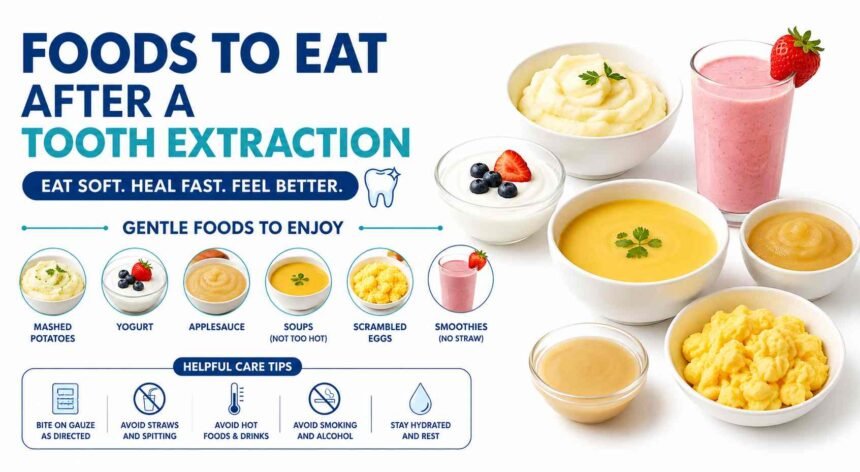
Tooth extraction recovery is not only about waiting for the pain to go away. What you eat, how you drink, and how carefully you protect the extraction site can make a big difference in healing. The first few days are especially important because your body forms a blood clot inside the empty socket. This clot protects the bone and nerves while the gum starts to heal.
If the clot is disturbed too early, healing can become painful and slower. This is why dentists often advise patients to avoid straws, smoking, hard foods, hot drinks, and forceful rinsing after extraction.
Why Food Choices Matter After Tooth Extraction
After a tooth is removed, the space in the gum becomes a healing wound. Your body responds by forming a protective blood clot. This clot is not something to ignore. It acts like a natural cover over the socket and helps protect the area while new tissue forms.
Clot stability is one of the most important parts of early healing. If the clot stays in place, recovery is usually smoother. If it comes out too soon, the bone and nerves underneath may become exposed, causing a painful condition known as dry socket.
Food choices matter because some foods are gentle, while others can harm the healing site. Soft foods reduce chewing pressure. Cool or room temperature foods help avoid extra irritation. Hard, crunchy, sticky, spicy, or hot foods may disturb the clot, scratch the gum, or leave small pieces trapped inside the socket.
How Common Is Dry Socket?
Dry socket is not common for every patient, but it is one of the most painful problems after tooth extraction. Research shows that dry socket may happen in a small number of simple extractions, often around 1 to 5 percent. The risk can be higher after difficult surgical extractions, especially impacted wisdom teeth.
The risk may also increase if a person smokes, uses a straw, rinses forcefully, has poor oral hygiene, or does not follow aftercare instructions. This is why food and drink habits during the first few days should be taken seriously.
Best Foods to Eat in the First 24 Hours
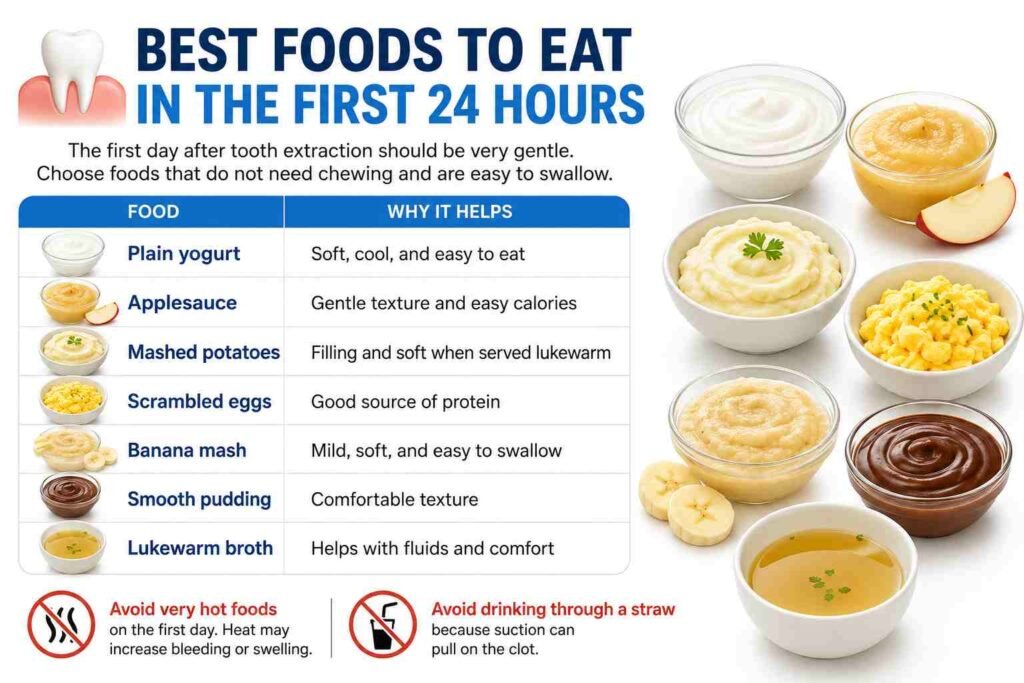
The first day after tooth extraction should be very gentle. Choose foods that do not need chewing and are easy to swallow.
| Food | Why It Helps |
|---|---|
| Plain yogurt | Soft, cool, and easy to eat |
| Applesauce | Gentle texture and easy calories |
| Mashed potatoes | Filling and soft when served lukewarm |
| Scrambled eggs | Good source of protein |
| Banana mash | Mild, soft, and easy to swallow |
| Smooth pudding | Comfortable texture |
| Lukewarm broth | Helps with fluids and comfort |
Avoid very hot foods on the first day. Heat may increase bleeding or swelling. Also, avoid drinking through a straw because suction can pull on the clot.
Foods to Eat from Day 2 to Day 3
By the second or third day, some people feel better, but the extraction site is still delicate. You can add slightly thicker soft foods, but chewing should still be limited.
| Food | Recovery Benefit |
|---|---|
| Oatmeal | Soft when cooked well |
| Soft pasta | Easy to eat if not spicy |
| Mashed sweet potato | Provides energy and nutrients |
| Cottage cheese | Soft and protein rich |
| Soft fish | Gentle protein source |
| Avocado mash | Soft and filling |
| Soft cooked carrots | Easy to mash and swallow |
Do not return to crunchy or hard foods too quickly. Pain may reduce before deeper healing is complete.
Foods to Eat After One Week
After one week, many patients can slowly return to more normal foods. However, recovery is different for everyone. A simple extraction may heal faster than a surgical extraction. Wisdom tooth removal may need more time.
You may slowly try:
| Food | Safe Eating Tip |
|---|---|
| Soft rice | Eat carefully and avoid trapping grains |
| Soft bread | Avoid hard crust |
| Tender chicken | Cut into small pieces |
| Cooked vegetables | Keep them soft |
| Pasta | Avoid spicy sauces |
| Pancakes | Soft and easy to chew |
| Soft fruits | Choose banana, ripe pear, or peeled peach |
If any food causes pain, bleeding, or pressure near the extraction site, stop eating it and return to softer foods.
Foods to Avoid After Tooth Extraction
Some foods can delay healing or increase discomfort. Avoid these during early recovery.
| Food or Drink | Why to Avoid It |
|---|---|
| Popcorn | Small pieces can get stuck |
| Nuts and seeds | Hard particles may enter the socket |
| Chips and crackers | Sharp edges can irritate the gum |
| Spicy foods | May burn or inflame the area |
| Hot tea and coffee | Heat may increase bleeding early on |
| Fizzy drinks | Bubbles may irritate the socket |
| Alcohol | May slow healing and interact with medicine |
| Sticky candy | Can pull at the healing area |
| Tough meat | Requires heavy chewing |
| Citrus juice | Acidity may sting the wound |
If you had surgical tooth removal, ask your dentist when it is safe to return to crunchy foods.
What to Drink After Tooth Extraction
Water is usually the safest drink after extraction. Take small sips and avoid swishing. Room temperature water is often more comfortable than very cold or hot drinks.
| Drink | Best Way to Use It |
|---|---|
| Water | Sip slowly throughout the day |
| Milk | Good if your stomach tolerates it |
| Smoothies | Drink from a cup, not a straw |
| Lukewarm broth | Helps with fluids and comfort |
| Oral rehydration drink | Useful if eating less than usual |
Smoothies can be helpful, but avoid using a straw. Drink carefully from a glass or use a spoon if needed.
Simple Meal Plan for the First Three Days
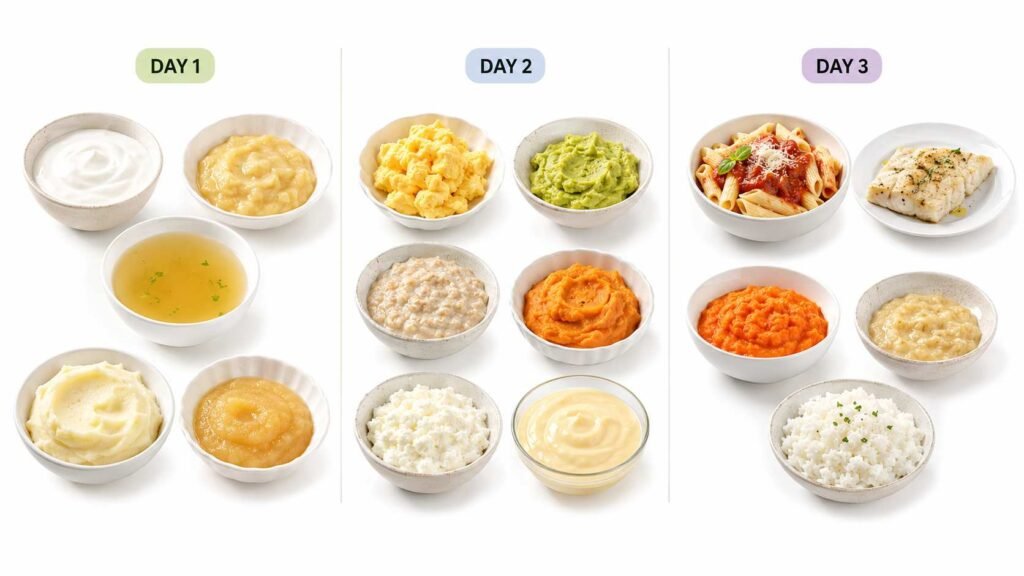
Day 1
Breakfast: Yogurt with mashed banana
Lunch: Lukewarm broth and mashed potatoes
Snack: Applesauce
Dinner: Scrambled eggs and soft avocado mash
Day 2
Breakfast: Soft oatmeal
Lunch: Mashed sweet potato and cottage cheese
Snack: Smooth pudding
Dinner: Soft pasta with a mild sauce
Day 3
Breakfast: Scrambled eggs
Lunch: Soft fish with mashed carrots
Snack: Banana mash
Dinner: Well-cooked pasta or soft rice
This type of meal plan gives your body protein, fluids, calories, and soft textures without putting pressure on the socket.
How Nutrition Helps Healing
Your body needs enough nutrients to repair gum tissue and support bone healing. Protein helps rebuild tissue. Vitamin C supports collagen formation. Calcium and vitamin D support bone health. Zinc helps with normal wound repair and immune function.
Good soft food sources include:
| Nutrient | Soft Food Sources |
|---|---|
| Protein | Eggs, yogurt, soft fish, cottage cheese |
| Vitamin C | Smooth fruit puree, mashed berries, soft cooked vegetables |
| Calcium | Milk, yogurt, fortified milk alternatives |
| Zinc | Eggs, dairy foods, soft beans |
| Healthy fats | Avocado, soft fish, smooth nut butter if safe for you |
Do not start supplements after extraction without asking your dentist or doctor, especially if you take medicine or have a health condition.
Eating Tips That Make Recovery Easier
Eat slowly and chew on the opposite side of your mouth. Keep meals small if opening your mouth feels sore. Let hot foods cool before eating. Prepare soft foods before your appointment so you do not have to search for safe meals while you are uncomfortable.
Dental teams that provide tooth removal services often explain that aftercare is part of the treatment. The extraction may be quick, but healing continues for days or weeks. Following food and drink guidance can help reduce avoidable pain and complications.
Warning Signs to Watch For
Some soreness, swelling, and light bleeding can happen after tooth extraction. However, some symptoms need dental advice.
| Warning Sign | What It May Mean |
|---|---|
| Pain that gets worse after day 2 or day 3 | Possible dry socket or infection |
| Bad smell or bad taste | Possible trapped food or infection |
| Heavy bleeding | Needs dental advice |
| Fever | Possible infection |
| Swelling that keeps increasing | Needs checking |
| Pus near the socket | Possible infection |
| Trouble swallowing or breathing | Needs urgent medical help |
Do not ignore pain that suddenly becomes stronger after initially improving. This can be a sign that the socket needs professional care.
Conclusion
Eating after tooth extraction should be simple, gentle, and planned. The best foods are soft, smooth, mild, and not too hot. Protecting the blood clot is one of the most important parts of early healing. Good nutrition, careful drinking, and avoiding suction can help make recovery smoother.
If you are unsure whether a food is safe, choose the softer option for another day. If pain, bleeding, swelling, bad taste, or fever does not improve, contact your dentist.
Medical Disclaimer
This article is for general information only. It is not a replacement for advice from a dentist, oral surgeon, doctor, or other licensed health professional. Always follow the aftercare instructions given by your dental provider.
References
- American Dental Association. Tooth Extraction and Dry Socket Information. American Dental Association, updated patient education resources.
- NHS. Dental Surgery and Recovery Aftercare Guidance. Guy’s and St Thomas’ NHS Foundation Trust, patient information resource.
- Sisk A. L, Hammer W. B, Shelton D. W, Joy E. D. Complications Following Removal of Impacted Third Molars. Journal of Oral and Maxillofacial Surgery. 1986.
- Blum I. R. Contemporary Views on Dry Socket. International Journal of Oral and Maxillofacial Surgery. 2002.
- Guo S, Dipietro L. A. Factors Affecting Wound Healing. Journal of Dental Research. 2010.