

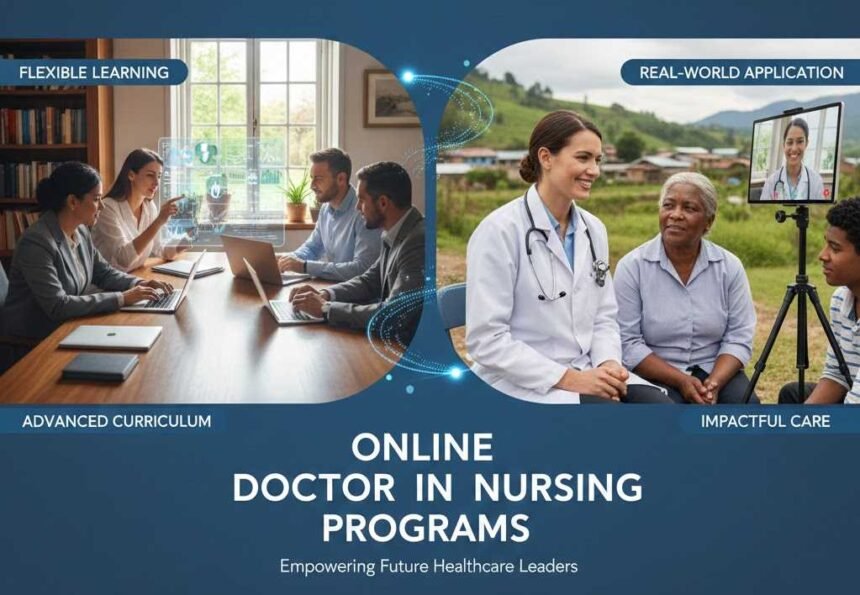
Online Doctor of Nursing Practice (DNP) programs allow registered nurses (RNs) to continue working while earning an advanced degree, making graduate education more accessible for practicing professionals. An online DNP program supports nurses in developing advanced clinical skills and leadership abilities. Here are a few details about how online Doctor in Nursing programs work:
Program Structure
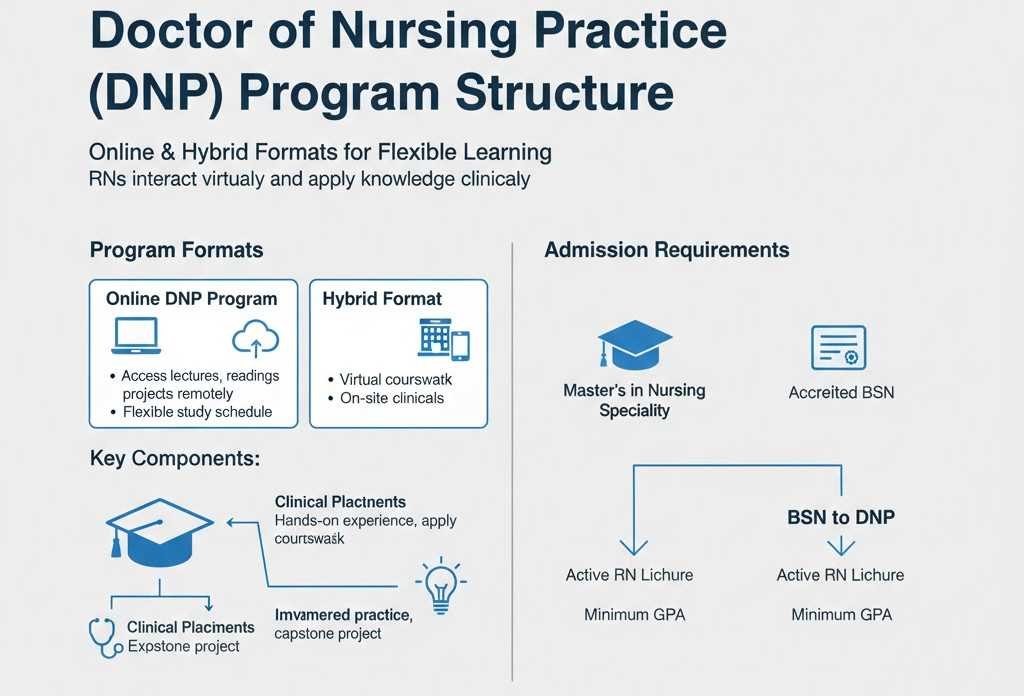
Doctor of Nursing Practice programs are offered in online or hybrid formats. RNs interact with classmates and teachers in various virtual settings. In an online DNP program, nurses access lectures, readings, and projects remotely. Online learning provides nurses with the flexibility to determine when and where they engage with course material. DNP programs also include clinical placements and an immersion experience. Clinical placements provide opportunities to learn in a healthcare setting and apply the knowledge gained in coursework.
Students entering a Post-Master’s Doctor of Nursing Practice program may need a master’s degree in a specialty area of nursing. Admission to a BSN to DNP program requires an undergraduate degree in nursing earned from an accredited college. In either a master’s or bachelor’s degree program, students are required to meet a minimum grade point average and hold an active RN licensure.
Mentorship and Clinical Integration
Nurses integrate real-world experience with education in a healthcare setting. DNP programs require that students complete a specified number of hours in the field under the direct supervision of qualified nurses or faculty members. RNs refine skills in independent practice, diagnostics, care plans, and communication with patients. Students examine what it means to provide care tailored to an individual patient’s needs. They learn to use higher-level clinical reasoning and apply knowledge from their DNP coursework to patients’ conditions. Clinical partners evaluate students’ skills as they learn.
Online learning also provides students access to structured resources and academic support, such as faculty or academic advisors and writing labs. In online classes, interactive technology enables students to communicate with their advisors, professors, and fellow students via tools such as email and video conferencing. Having access to timely information or clarification about coursework or experience requirements can help students meet course expectations.
Specialization Options
Doctor of Nursing Practice programs are offered by accredited colleges, including institutions accredited by organizations such as the Commission on Collegiate Nursing Education. These programs include specializations such as family nurse practitioner, nursing leadership, adult-gerontology care, and nurse education.
Collaborating and networking with other nurses allows students to exchange knowledge and professional experiences within these DNP specializations. Programs incorporate regular assessment to determine whether students meet the Doctor of Nursing Practice curriculum and learning objectives. Tests and projects help faculty evaluate students’ mastery of the discipline.
RNs also demonstrate cultural competence and the ability to communicate with others in their clinical settings. This includes patients, families, and interdisciplinary health care teams. Assessing these competencies is part of developing direct patient care skills and collaboration with health care teams.
Graduation and Continuing Education
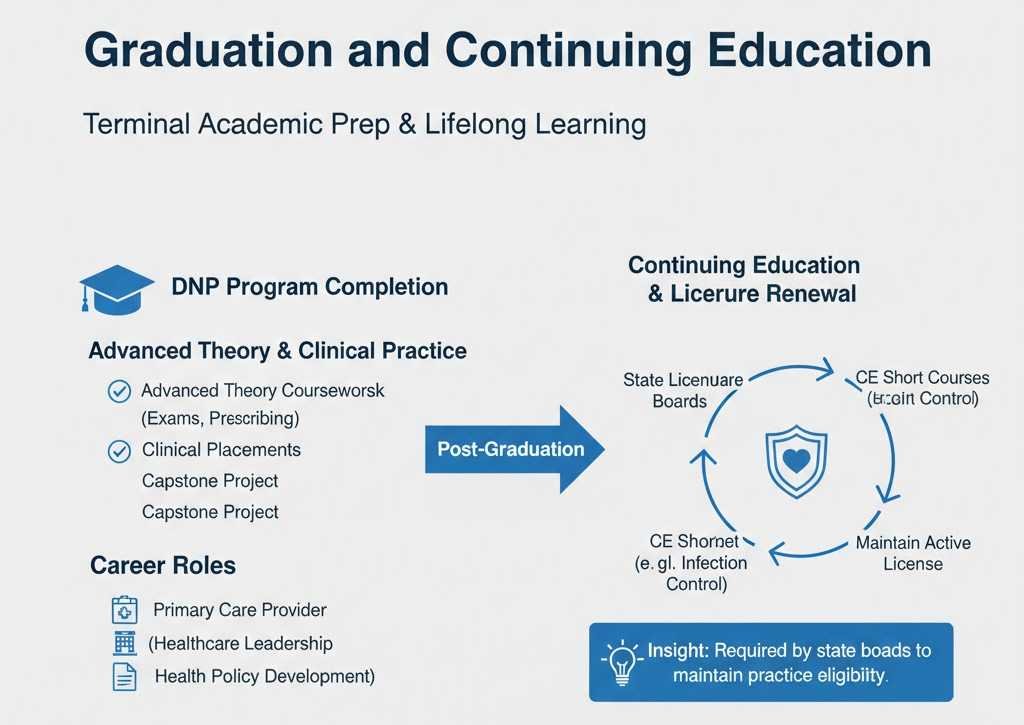
Graduation from a DNP program occurs upon completion of the required advanced theory and clinical practice components. The degree represents terminal academic preparation in nursing practice. DNP-prepared nurses may work as primary care providers where state law and scope-of-practice regulations permit. In those settings, they can perform physical exams, order diagnostic tests, prescribe medications, and provide patient education, consistent with applicable licensure rules. These professionals may also hold leadership roles within health care facilities, such as serving in administrative positions or contributing to health care policy development.
Regardless of the position a DNP-prepared nurse holds, maintaining a license through continuing education, including CE short courses, is required by state boards of nursing. Courses may cover Infection Control, Safe Prescribing (Opioids), or other regulatory topics, and online learning allows nurses to access these short courses at different points in their careers. This ongoing education supports compliance with licensure requirements while helping nurses stay current with evolving practice standards.
Enroll in an Online DNP Program
An online DNP program functions as one option for an RN who wants to pursue an advanced degree while continuing professional and personal responsibilities. Digital formats are preferred for their flexibility and accessibility, allowing you to tailor learning to a rhythm that reflects your individual needs. Final programs cultivate a diverse array of high-level competencies through extensive program requirements, mentorship networks, and practice-based training experiences. Reach out to a provider today to learn more about their programs.
Final Recommendation
Choosing the right online Doctor of Nursing Practice (DNP) program is an important career decision that should align with your professional goals, learning preferences, and licensure requirements. Prospective students are encouraged to research accredited programs carefully, review specialization options, and confirm clinical placement support. Speaking with admissions advisors, current students, or program alumni can provide helpful insight into program expectations and outcomes. By selecting a program that offers strong academic support, flexible scheduling, and meaningful clinical integration, RNs can confidently advance their education while continuing to deliver high-quality patient care.