

According to the American Academy of Pediatric Dentistry‘s 2024 guidelines, children with developmental disabilities experience tooth decay at nearly twice the rate of their neurotypical peers yet they’re also significantly more likely to have negative dental experiences that create lasting anxiety around oral care. As pediatric practices increasingly recognize the need for specialized approaches, the gap between standard preparation advice and what actually works for special needs families has become impossible to ignore.
For parents navigating this challenge, the stakes extend far beyond a single appointment. Poor early dental experiences can establish patterns of avoidance that persist into adulthood, ultimately compromising both oral health and overall medical care. The sensory overwhelm, communication barriers, and behavioral challenges that many special needs children face in dental settings require fundamentally different preparation strategies than the typical “tell them it won’t hurt” approach.
What follows isn’t generic advice adapted for special needs children it’s evidence-based guidance built specifically around the unique ways these children process sensory information, communicate their needs, and respond to unfamiliar environments.
What Makes Dental Visits Challenging for Special Needs Children
The dental office presents a perfect storm of potential triggers for children with developmental, sensory, or cognitive differences. Bright fluorescent lights, unfamiliar sounds from dental equipment, the texture of protective gear, and the close physical proximity required during examinations can overwhelm sensory processing systems that are already working overtime to navigate daily life.
Children with autism spectrum disorders often struggle with unexpected changes to routine, making the unpredictable nature of dental appointments particularly stressful. A cleaning that runs longer than expected or the introduction of an unfamiliar dental tool can trigger meltdowns that have nothing to do with pain or fear in the traditional sense. Meanwhile, children with intellectual disabilities may have difficulty understanding abstract concepts like “this will help keep your teeth healthy” or processing multi-step instructions delivered during the appointment.
Communication barriers add another layer of complexity. Many special needs children have rich inner lives and specific preferences, but they may lack the verbal skills to express when something feels uncomfortable or overwhelming. A child who can’t articulate that the dental chair’s vibration is causing distress may instead exhibit what appears to be defiant behavior, leading to frustration for everyone involved.
The traditional pediatric dentistry approach of building rapport through conversation and explanation often falls short when children process information differently or have limited attention spans. What works for neurotypical children simple explanations, gentle encouragement, and graduated exposure may need complete restructuring to be effective for special needs populations.
How to Communicate Effectively and Manage Behavior During Visits
Success in the dental chair often comes down to matching communication style and behavioral expectations to each child’s specific needs and abilities. Rather than relying on verbal explanations alone, effective preparation involves creating multiple pathways for understanding what’s about to happen.
Communication Tips for Special Needs Children
Visual supports transform abstract concepts into concrete understanding. Picture schedules showing the sequence of a dental visit walking into the office, sitting in the chair, opening the mouth, getting teeth cleaned provide predictability that reduces anxiety. For children who communicate through pictures or symbols, bringing their familiar communication system to the appointment ensures they can express needs or discomfort.
Simple, concrete language works better than euphemisms or medical terminology. Instead of saying “we’ll take pictures of your teeth,” try “the camera will click.” Rather than “this might feel a little strange,” be specific: “the brush will tickle your teeth.” Some children benefit from countdown warnings: “The water will spray in three, two, one” gives them time to mentally prepare for each new sensation.
Physical demonstration often communicates more effectively than words. Letting a child hold and explore dental tools before they’re used removes the element of surprise. Some pediatric offices keep a set of clean instruments specifically for this purpose children can touch the mirror, feel the texture of the polishing cup, or hear the sound the suction makes before experiencing it in their mouth.
Behavioral Strategies That Help Reduce Anxiety
Planned sensory breaks prevent overwhelm before it escalates into behavioral challenges. A child who needs to stim or move their body shouldn’t be expected to remain completely still for an extended period. Building in opportunities to squeeze a stress ball, take deep breaths, or even step out of the chair for a moment can make the difference between a successful appointment and a traumatic one.
- Positive reinforcement works best when it’s immediate and meaningful to the individual child.
- While stickers motivate some children, others might respond better to extra time with a preferred toy or verbal acknowledgment of their cooperation.
- The key is identifying what genuinely motivates each child rather than applying generic reward systems.
First-then statements provide clear behavioral expectations while acknowledging the child’s preferences. “First we’ll count your teeth, then you can hold your favorite toy” or “First the dentist will look in your mouth, then we’ll go see the fish tank” helps children understand the sequence while giving them something to anticipate. This approach works particularly well for children who struggle with delayed gratification or have difficulty understanding why they need to participate in uncomfortable activities.
Practical Steps Parents Should Take Before and During the Dental Visit

Effective preparation begins weeks before the actual appointment, building familiarity and positive associations gradually rather than trying to prepare everything the night before. The goal isn’t to eliminate all anxiety that’s unrealistic but to reduce unknowns and create predictable routines that help children feel more in control.
Using Storytelling and Familiarization Techniques
Social stories customized for each child’s communication level can transform the dental visit from a mysterious ordeal into a familiar sequence of events. These stories work best when they include specific details about the actual office the child will visit — the color of the dental chairs, the name of the hygienist, even the type of toothpaste used during cleanings.
Role-playing at home with stuffed animals or dolls allows children to practice the experience in a safe environment. Parents can take turns being the dentist and patient, letting the child direct the play and express any concerns that come up. Some families find success in setting up a “practice dental office” in their living room, complete with a reclining chair (or couch) and toy dental tools.
Virtual tours offered by many pediatric dental practices help bridge the gap between imagination and reality. When children can see the actual room they’ll visit, the real dental chair they’ll sit in, and the faces of the staff they’ll meet, the appointment feels less foreign. Some practices go further, offering sensory-friendly preview visits where children can explore the space without any actual dental work taking place.
Pre-Appointment Routines to Ease Stress
Sensory preparation should match the child’s specific needs and preferences. For children who are tactilely defensive, gradually introducing textures similar to what they’ll experience — soft-bristled toothbrushes, different toothpaste textures, or even the feeling of having their face gently touched — can reduce shock during the actual appointment. Children with auditory sensitivities might benefit from listening to recordings of dental equipment sounds at low volumes, gradually increasing familiarity with these noises.
The day of the appointment, maintaining familiar routines wherever possible provides stability. If a child always eats the same breakfast or wears a particular type of clothing, this isn’t the time to introduce changes. Some families find that bringing comfort items — a special blanket, favorite toy, or noise-canceling headphones — gives children a sense of security in the unfamiliar environment.
How to Foster Positive Dental Experiences for Special Needs Kids
Creating successful dental visits requires collaboration between parents and dental professionals who understand that standard pediatric approaches may not apply. The most effective pediatric dentist for special needs children recognizes that flexibility in approach often determines the outcome of treatment more than technical skill alone.
Environmental modifications can dramatically improve comfort levels. Dimming overhead lights, reducing background noise, or allowing a child to keep their feet on the ground instead of elevated in the chair acknowledges sensory needs without compromising care quality. Some practices offer weighted blankets for children who seek deep pressure input or allow favorite music during procedures.
Parental involvement varies depending on what works for each family. Some children feel more secure with a parent in their line of sight, while others focus better when parents wait outside. The key is following the child’s lead rather than making assumptions about what should provide comfort. For children who benefit from parental presence, coaching parents on how to provide calm, consistent support during procedures prevents well-meaning but counterproductive interventions.
Building trust happens gradually through small, successful interactions rather than grand gestures. A hygienist who remembers a child’s special interest and asks about their toy dinosaurs, or a dentist who acknowledges a child’s cooperation with specific praise, creates positive associations that extend beyond the immediate appointment. These relationships become particularly important for special needs children, who often struggle with transitions between different care providers.
Post-visit processing helps cement positive experiences and prepare for future appointments. Some children benefit from drawing pictures of their dental visit or talking through what happened. Others might need time to decompress quietly. Recognizing signs that a child needs additional support after a dental visit increased stimming, sleep disruption, or regression in other areas allows parents to provide appropriate follow-up care.
Why Early and Consistent Dental Care Benefits Special Needs Children
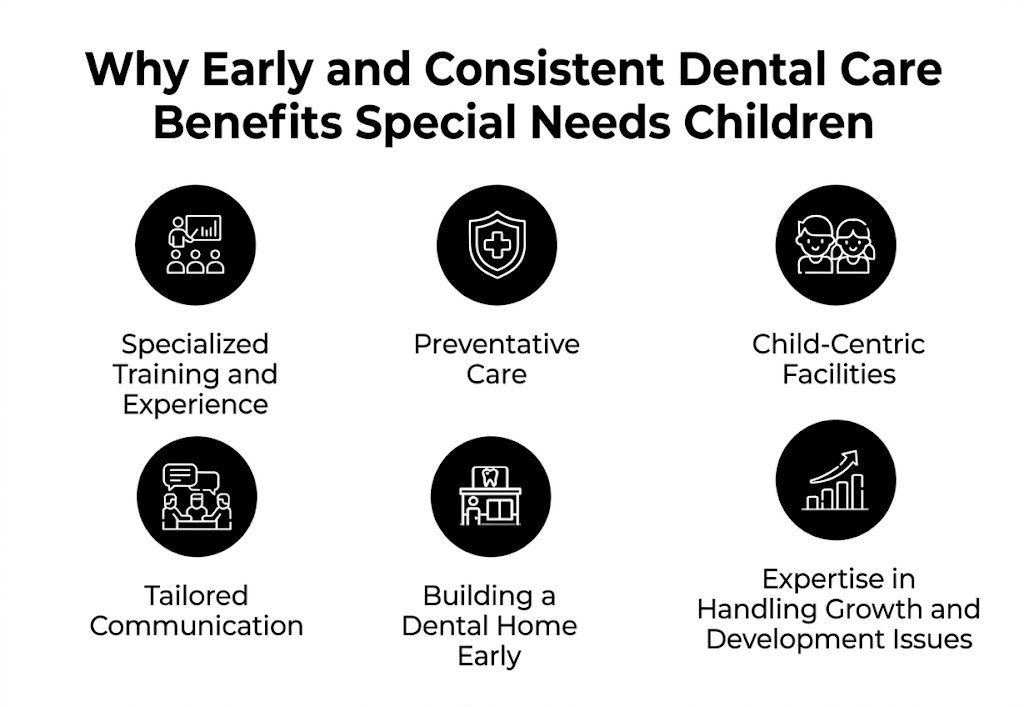
Special needs children often face additional oral health challenges that make preventive care even more critical than for their neurotypical peers. Medications can affect saliva production, certain medical conditions increase cavity risk, and motor skill differences may impact daily oral hygiene effectiveness. Establishing positive dental relationships early creates a foundation for lifelong care that can prevent minor issues from becoming major medical problems.
Consistent dental relationships reduce the stress of constantly adapting to new environments and care providers. When children develop familiarity with specific staff members and office routines, appointments become more predictable and less overwhelming over time. This consistency proves especially valuable during adolescence, when hormonal changes and increased independence can complicate both oral hygiene and medical cooperation.
Regular checkups allow dental professionals to identify potential problems before they require more invasive interventions. For children who struggle with dental procedures, catching cavities while they’re small enough for simple fillings rather than extensive treatment makes an enormous difference in both comfort and cooperation. Early intervention also provides opportunities to refine behavioral strategies and communication approaches that will serve the child well throughout their dental care journey.
The broader health benefits extend beyond oral care. Positive medical experiences in the dental office can improve cooperation with other healthcare providers, while negative experiences often create generalized medical anxiety that complicates all future care. For special needs children who may require frequent medical interventions throughout their lives, building comfort with healthcare settings becomes an essential life skill that affects overall wellbeing and independence.