


When your white blood cell count drops, even a minor infection can make you feel unusually tired or unwell. Many patients panic when they see a low WBC report, but the truth is that most people can support their immune system with steady, practical steps.
I’ve seen many patients improve their health by making small, consistent changes, nothing extreme, nothing complicated. Let me walk you through what usually helps.
Understanding Why White Blood Cells Matter
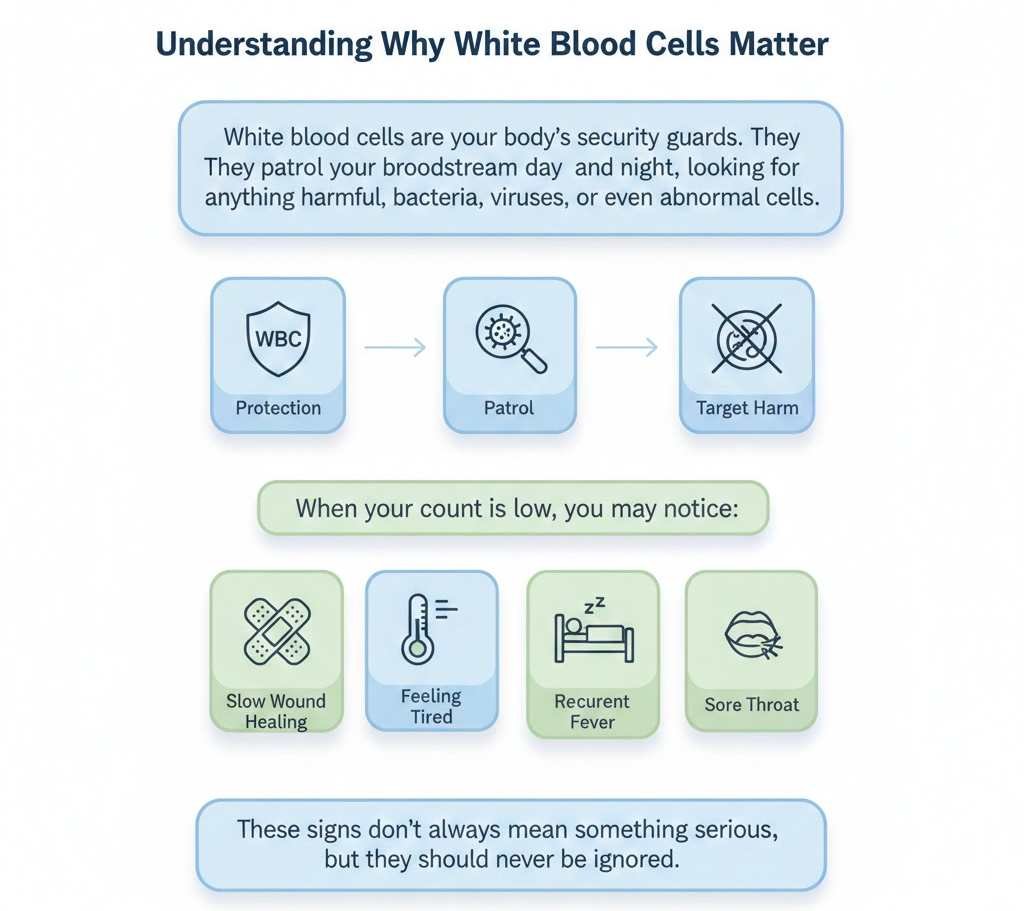
White blood cells are your body’s security guards. They patrol your bloodstream day and night, looking for anything harmful, bacteria, viruses, or even abnormal cells.
When your count is low, you may notice:
- Getting infections easily
- Slow wound healing
- Feeling tired without an apparent reason
- Recurrent fever or sore throat
These signs don’t always mean something serious, but they should never be ignored.
Common Reasons Your WBC Count Might Be Low
In my clinic, I usually see these causes:
- Viral infections
- A simple flu can temporarily lower your WBC count.
- Nutritional deficiencies
- Low folate, vitamin B12, copper, or protein intake can impact your bone marrow.
- Medications
- Antibiotics, anti-thyroid medicines, seizure medicines, and some psychiatric drugs often reduce WBCs.
- High stress or poor sleep
- Many patients ignore this, but chronic stress pushes your immune system down.
- Chronic illnesses
- Such as autoimmune disorders, serious infections, or bone marrow problems.
Knowing the cause helps choose the right solution.
How to Increase White Blood Cells: Steps That Actually Help
Below are practical, medically guided steps that I commonly advise patients.
Improve Your Diet with Immune-Supporting Foods
Your bone marrow needs fuel to produce WBCs. I usually suggest the following foods because I’ve seen consistent results with them:
Foods Rich in Vitamin C
Helps your body produce more white cells.
- Oranges
- Strawberries
- Kiwi
- Lemon water
- Guava (excellent option in South Asia)
A patient once told me her WBC improved simply by adding one guava and one glass of lemon water daily.
Foods Rich in Folate
Folate deficiency is one of the most common causes of low WBC.
- Dark green vegetables (spinach, methi, sarson)
- Beans
- Lentils
- Peanuts
- Eggs
Vitamin B12 Sources
Low B12 often shows up as fatigue with low WBC.
- Milk
- Yogurt
- Chicken
- Fish
- Fortified cereals
Vegetarians often need a supplement; your doctor can guide you.
Zinc-Rich Foods
Helps WBCs function better.
- Pumpkin seeds
- Almonds
- Cashews
- Chickpeas
- Meat
Protein
Bone marrow needs protein to build immune cells.
- Eggs
- Chicken
- Fish
- Lentils
- Milk
- Cheese
If you’re not eating enough protein daily, your WBC production may slow down.
Sleep Regularly
Most people underestimate sleep. I’ve seen young adults with low WBC counts improve after simply fixing their sleep routines.
Aim for:
- 7–8 hours each night
- Avoid screens 1 hour before bed
- Use dim lights before sleeping
Sound sleep gives your immune system space to repair and recharge.
Reduce Stress in Small, Practical Ways
When stress hormones stay high, your WBC production drops. You don’t need fancy techniques. Simple steps often work:
- 10 minutes of slow breathing
- A short walk after dinner
- Spending time with someone who calms you
- Writing down your worries for 5 minutes
One of my patients would sit quietly on her rooftop for 10 minutes every evening—her stress levels dropped, and so did her infection frequency.
Stay Hydrated
Your blood volume depends on water. When you are dehydrated, WBC circulation slows.
Aim for 6–8 glasses of water daily.
If your urine is very yellow, drink more.
Limit Smoking and Alcohol
Both weaken bone marrow. Even reducing, rather than quitting altogether, helps your WBC levels.
I once treated a man who increased his WBC count just by cutting his daily smoking in half.
Keep Your Gut Healthy
Most of your immune system sits in your gut. If your digestion is weak, your immunity suffers.
Helpful foods:
- Yogurt
- Kefir
- Bananas
- Oatmeal
- Warm soups
- Ginger tea
Try to limit spicy, oily meals.
Gentle Exercise Helps More Than Intense Workouts
Many people think that heavy workouts strengthen the immune system. They don’t. Moderate exercise works best.
Suitable activities:
- 20–30 minutes of walking
- Light cycling
- Yoga
- Stretching
Heavy gym sessions can actually lower WBC temporarily.
Keep Infections Away While Your WBC Is Low
Your immune system needs time to recover. Protect yourself during this period:
- Wash hands often
- Avoid close contact with sick people
- Don’t share utensils
- Keep your mask on in crowded areas
- Keep wounds clean
This isn’t being overcautious, it’s being sensible.
Check Your Medicines
Some medicines lower WBC. If you suspect this, don’t stop on your own. Ask your doctor to review your medicines.
I once adjusted a patient’s thyroid medication, and her WBC returned to normal within 2 months.
Consider Supplements (Only If Needed)
Common supplements that may help, only under medical supervision:
- Vitamin C
- Vitamin B12
- Folate
- Zinc
- Multivitamin
- Omega-3
Never take high doses on your own; they can cause harm.
When You Should See a Doctor
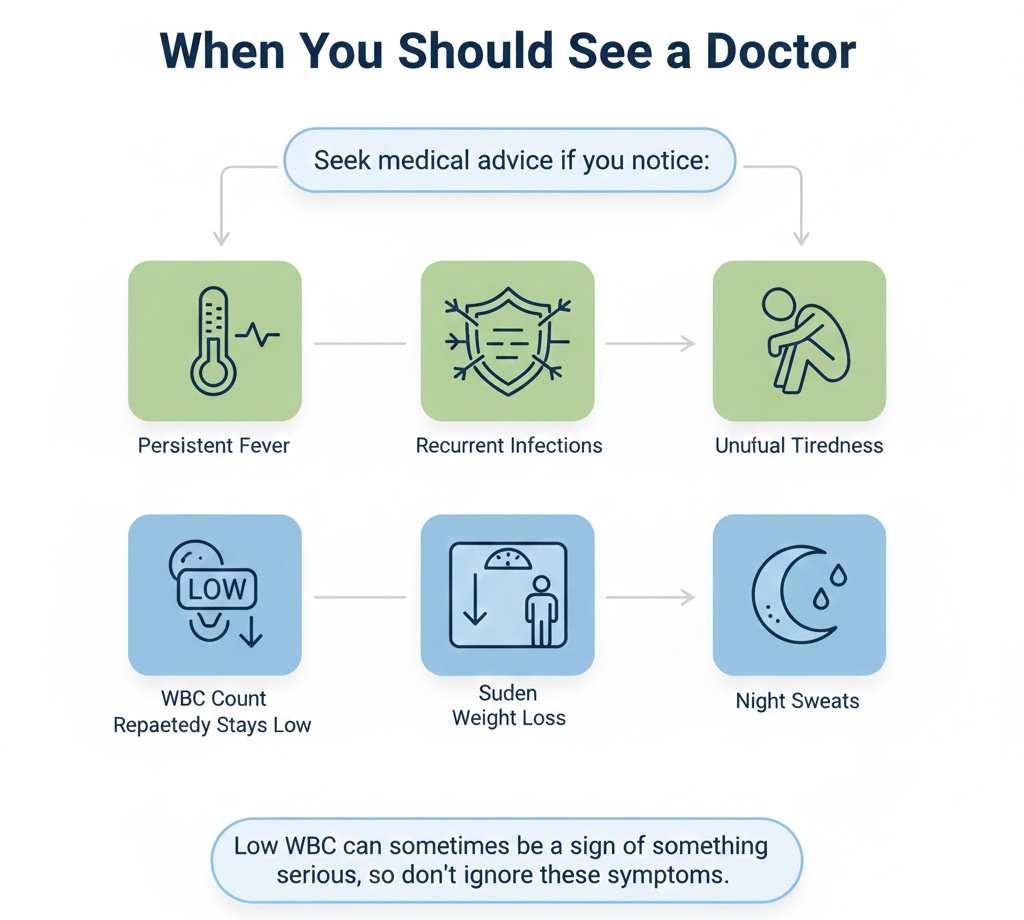
Seek medical advice if you notice:
- Persistent fever
- Recurrent infections
- Unusual tiredness
- WBC count repeatedly stays low
- Sudden weight loss
- Night sweats
Low WBC can sometimes be a sign of something serious, so don’t ignore these symptoms.
When WBC Improves
Many patients ask, “How long will it take?”
If the cause is nutritional or lifestyle-related, improvement often appears within:
- 4–8 weeks with a consistent diet
- 2–3 weeks after stopping a triggering medicine
- 3–6 months for recovery after a viral illness
Your doctor will guide you based on your exact cause and lab reports.
A Final Word from the Doctor
Increasing white blood cells isn’t about magic foods or expensive supplements. It’s about supporting your body every day with the proper habits.
If you focus on steady improvements, better sleep, balanced food, and lower stress, your immune system will respond.
Even small steps matter. And if something doesn’t feel right, get your blood tests reviewed. Early attention can prevent bigger problems later.
You’re not alone in this. With the proper guidance and patience, your white blood cell count can improve safely and naturally.