


The phone calls get shorter. Living For Mental Health Improves Senior Life The fridge holds the same three things it held last week. Your father still says he is fine, and in the narrow sense he is. Nothing is broken, nobody has fallen, the bills are paid on time. Something has gone quiet anyway, and you cannot point to the week it started.
Families usually arrive at the question of assisted living through a fall or a hospital discharge. They arrive at it much less often through the thing that was actually happening first, which is a slow erosion of mood, routine, and contact with other people. That erosion is treatable, and it responds to daily environment more than most families expect.
Why Mental Health Slips Quietly In Later Life
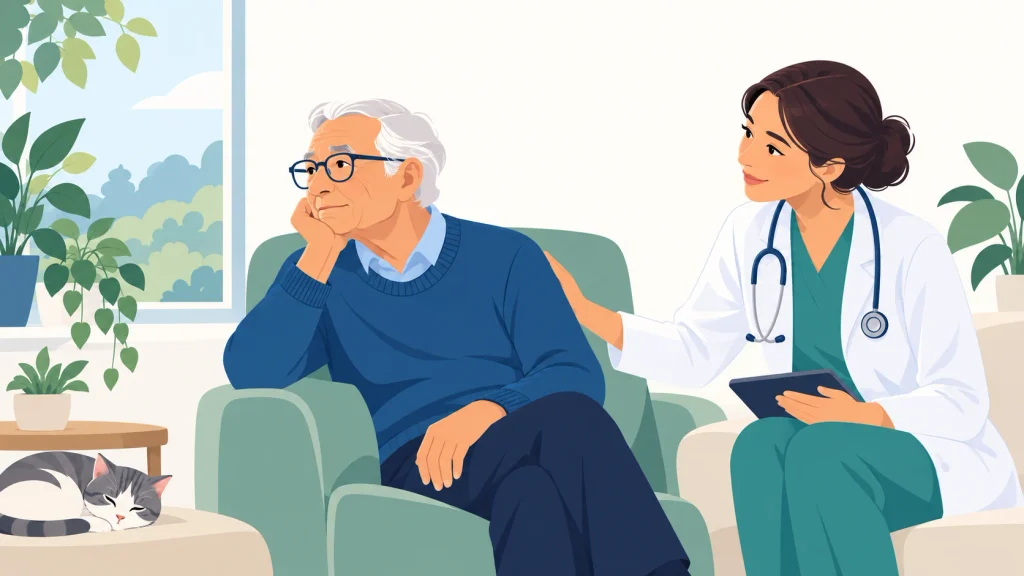
Depression in older adults often does not look like sadness. It looks like aches with no clear cause, irritability, a shorter fuse on the phone, complaints about memory, or a flat lack of interest in things that used to matter. Many older people will not use the word depressed at all, and many physicians, under time pressure, will treat the physical complaint and move on. It is worth being direct about this: depression is not a normal part of aging, and treating it as inevitable is the single most common reason it goes untreated for years.
Three things get confused with each other, and telling them apart changes what you should do next.
Grief tends to come in waves, with better hours in between, and it usually leaves a person’s sense of their own worth intact. Depression is flatter and more constant, and it often carries a sense of being a burden or of having nothing left to offer. Early cognitive decline shows up as genuine difficulty with tasks rather than a lack of interest in them. Confusingly, depression itself can produce real memory and concentration problems that improve once the depression is treated, which is why guessing from the outside is a poor idea.
Before concluding anything, it is worth ruling out the ordinary medical causes that imitate all three: thyroid problems, low B12, pain, alcohol, and medication side effects from a list that has grown one prescription at a time. Untreated hearing loss deserves special mention, because it makes group conversation exhausting and produces withdrawal that looks exactly like depression.
What Isolation Does, In Plain Numbers
The research on this stopped being soft a while ago. About 1 in 3 adults in the United States report feeling lonely, and about 1 in 4 report not having social and emotional support. Social isolation and loneliness raise the risk of heart disease and stroke, type 2 diabetes, depression and anxiety, dementia, and earlier death, according to the CDC’s review of the health effects of social isolation and loneliness. cdc
The picture is global. A 2025 report from the World Health Organization’s Commission on Social Connection found that 1 in 6 people worldwide are affected by loneliness, which it linked to more than 871,000 deaths a year. You can read the WHO’s summary of that report for the full scope. who
One distinction matters more than the statistics. Isolation is a shortage of contact. Loneliness is a shortage of meaningful contact, and a person can have plenty of the first while starving for the second. This is why the instinct to visit more often sometimes fails. Two extra visits a month from a busy adult child do not replace the accumulated small contacts a person used to have: the neighbour, the pharmacist, the friend from church, the people whose names you never learn but whose faces you expect. Research on social connection and health keeps pointing at frequency and ease rather than intensity.
What Structure Actually Changes
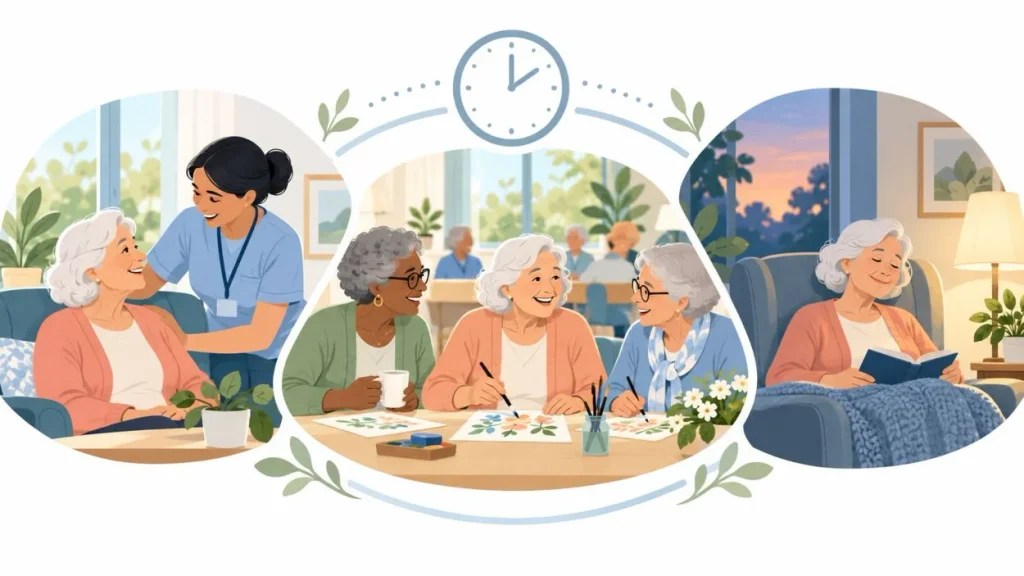
The value of a community is not the activity calendar. It is the distance between a person and other people.
If the dining room is a ninety-second walk, contact happens by default. If it requires a car, a phone call, and the energy to organise something, it happens when someone feels good, which is precisely when they need it least. Everything else follows from that one geometry. If you are trying to picture how that plays out across an ordinary day, you can learn more about Seaside Hallandale Beach’s assisted living community.
Some activities hold people and some empty the room. The ones that hold people tend to share a feature: the resident has a role. A walking partner who expects them. A card game that needs a fourth. A garden bed that will die without them. Watching from the edge of a room counts too, at least at first, and pushing someone to participate usually produces the opposite of participation.
Removing Load Without Removing Purpose
Living alone in later life carries a quiet administrative burden that nobody audits: medications to sort, a house to maintain, a car to worry about, meals to plan when cooking for one has stopped feeling worth it. Lifting that load frees up real emotional bandwidth, and it is a large part of why mood often improves within weeks of a move.
There is a limit worth respecting, though. Communities that do everything for a resident can accidentally strip out the small responsibilities that gave the day its shape. A person who wants to make their own breakfast, fold their own laundry, or water the plants on their floor should be allowed to keep doing it. Purpose is not a nice-to-have in this population; it is load-bearing.
Sleep Is The Lever Families Overlook
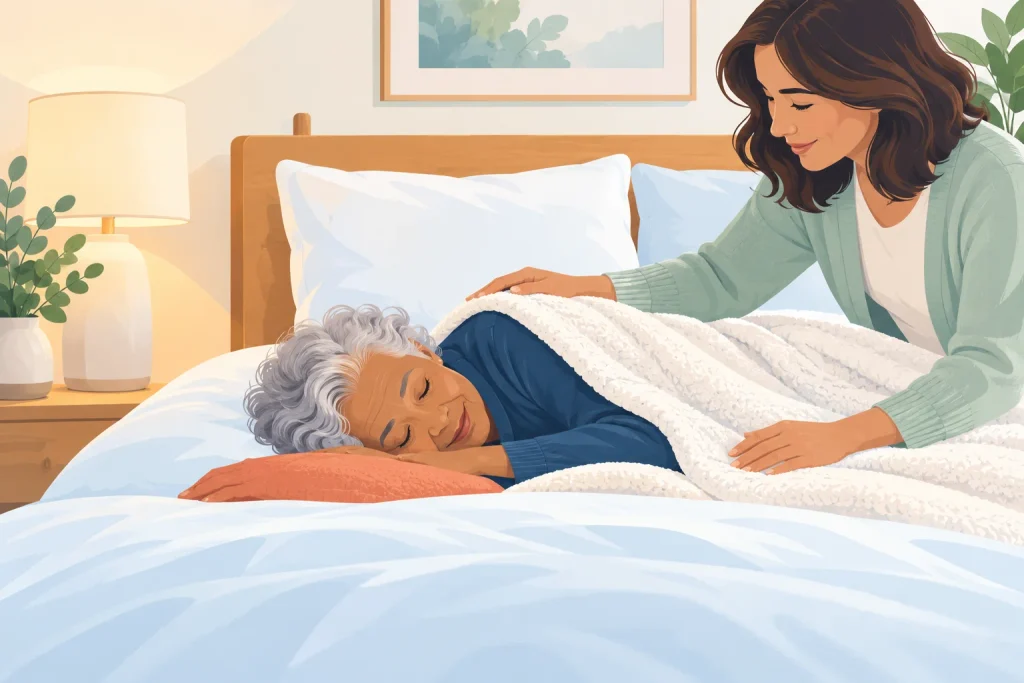
Sleep changes with age, but it is not supposed to get worse. Older adults still need roughly 7 to 9 hours, and persistent trouble getting there is a symptom rather than an inevitability. The National Institute on Aging’s guidance on sleep and older adults covers the basics well: a consistent wake time, natural light early in the day, caffeine confined to the morning, naps kept short and before mid-afternoon, and a bedroom that is cool, dark, and used for sleeping. audible
Two safety points rarely make it into articles like this one. First, chronic insomnia in older adults responds better and more durably to cognitive behavioural therapy for insomnia than to medication. Second, sedative sleep medications carry a meaningful fall risk in this age group, so any ongoing prescription deserves a conversation with the prescriber rather than a quiet renewal. Loud snoring with pauses in breathing, or an irresistible urge to move the legs at night, both point to specific treatable disorders and are worth naming to a doctor directly.
What Assisted Living Can And Cannot Do
This is where most content on the subject goes vague, and where families get hurt.
Assisted living sits between independent living and skilled nursing. Residents typically have their own apartment, shared common areas, meals, help with personal care and medications, staff on site around the clock, and a schedule of social activity. Communities range from about 25 residents to 100 or more, and most offer tiered levels of care, with residents paying more as their needs increase. Regulations, staffing rules, and terminology vary considerably by state, which is why comparing two communities in different states can be misleading. The NIA’s overview of long-term care facilities and how they differ is a sound starting point, and MedlinePlus keeps a plain-language summary of what assisted living includes. National Institute on Aging
Now the limits. Assisted living is housing with support. It is not mental health treatment. Staff are not therapists, an activities director is not a clinician, and a community cannot diagnose or treat depression, anxiety, or a psychiatric illness. A resident who needs care still needs a physician, and often a geriatric psychiatrist or therapist, whether they live alone or in a community. The environment improves the conditions for recovery. It does not substitute for the treatment itself.
Assisted living is also the wrong setting for some situations. Moderate to advanced dementia with wandering or exit-seeking usually calls for memory care. Ongoing skilled nursing needs call for a nursing home. Active substance dependence and severe, unstable psychiatric illness need specialist services that most communities are not licensed to provide. And cost is a real constraint that glossy brochures tend to soften: assisted living is largely paid privately, and Medicare does not cover room and board, though some services and some state Medicaid programmes may cover parts of the care.
One thing should never wait for a tour. If an older person talks about wanting to die, about being a burden, or about not being around much longer, that is urgent rather than philosophical. Older men in particular have high suicide rates, and warning signs in this group are frequently missed. In the United States, the 988 Suicide and Crisis Lifeline is available around the clock by call or text. The NIMH’s page on older adults and mental health sets out what treatment looks like and how to start it.
First Weeks Are Not The Verdict
Families often panic in week two. A new resident can be tearful, angry, convinced the move was a mistake, and sleeping badly. Some of this is grief for a house, a garden, and a version of their life that has ended, and it is a reasonable response rather than a sign of failure.
A workable way to hold it: expect a difficult stretch, look for a genuine upward trend by around six to eight weeks, and treat a lack of improvement as information rather than fate. If someone is still withdrawn at that point, ask for a care plan review, request a medication review, and ask whether anyone has screened their mood. Do not simply wait longer.
Questions That Actually Tell You Something On A Tour
Most tour questions produce marketing answers. These do not.
- How many residents came to yesterday’s afternoon activity, not how many are on the calendar
- Who notices if a resident stops showing up to meals, and what specifically happens next
- What do you do when someone declines invitations for two weeks straight
- What is your care staff turnover, and how long has the activities director been here
- Does anyone screen residents for depression, who does it, and how often
- May we visit unannounced on a Sunday at four in the afternoon
That last one matters most. Sunday late afternoon is the loneliest hour in most communities, and it shows you the place without a performance.
How Families Stay Part Of It
A move does not transfer responsibility. It redistributes it.
Predictable beats frequent. A call every Tuesday at the same time gives someone a thing to anticipate in a way that three spontaneous calls do not. Do something together rather than sitting opposite each other making conversation, which gets hard fast when the week has held little news. Ask staff about mood and engagement, not only about blood pressure and appetite. Bring one or two objects that carry memory rather than filling the apartment with the contents of the old house. And keep including them in the ordinary family traffic, the gossip and the complaints and the plans, because being left out of the small news is its own kind of isolation.
Signs It Is Time To Look Seriously
- Withdrawal from people or activities that used to be automatic
- Changes in appetite, weight, or sleep that persist beyond a few weeks
- Rising anxiety about ordinary tasks, or avoidance of the phone and the door
- Low mood that does not lift even after good visits
- A home that has become a place they rarely leave
Early conversations go better than crisis ones, and a tour or a short trial stay settles more fear than months of abstract discussion.
Moving Forward
Mental health in later life responds to daily architecture more than families tend to believe. Who a person sees, how far away those people are, whether the day has a shape, and whether they sleep are not soft concerns sitting alongside the medical ones. They drive the medical ones.
The most useful thing a family can do is look earlier, ask harder questions, and treat low mood as a condition to be assessed rather than a mood to be waited out. If you want to see how structure and connection work in a real setting, Seaside Hallandale Beach offers tours, and an afternoon spent watching an ordinary day tells you more than any brochure.
Medical Disclaimer
This article is for general information only and is not medical advice. It does not diagnose, treat, or replace consultation with a qualified healthcare professional. Decisions about depression, anxiety, cognitive changes, sleep disorders, medication, or long-term care should be made with a physician who knows the person’s full history. If someone is in immediate danger or talking about ending their life, contact emergency services, or in the United States, call or text 988.