

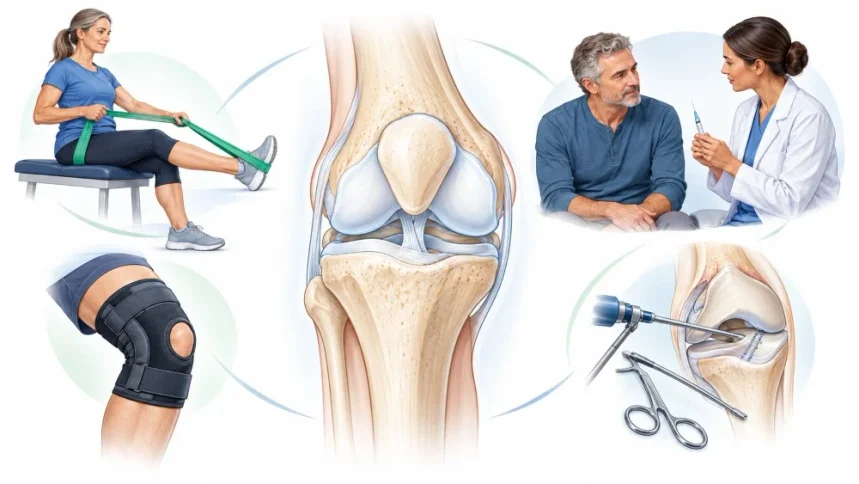
If you have been told to “see an orthopaedic specialist”, it is natural to picture an operating theatre. Plenty of people put off the appointment for that reason and live with a stiff knee or sore shoulder for months longer than they need to. Orthopaedic Treatment Options the reality is usually calmer. Many people leave an orthopaedic clinic with a plan that does not involve surgery at all, at least not straight away.
Orthopaedic conditions affect the bones, joints, muscles, ligaments and tendons that let you move, with symptoms ranging from a dull ache after exercise to pain that wakes you at night. Surgery is one path among several, and the right one depends on:
- What the condition actually is, not just where it hurts
- How severe the symptoms are, and whether they are getting worse
- How much structural damage there is
- Your age, activity level and general health
- What you want to get back to doing
An orthopaedic surgeon will assess the condition and talk you through the available options before recommending an approach. A good consultation feels like a conversation rather than a verdict, and you should leave understanding why one option is being suggested over another.
What Conditions Are Managed With Orthopaedic Treatment?
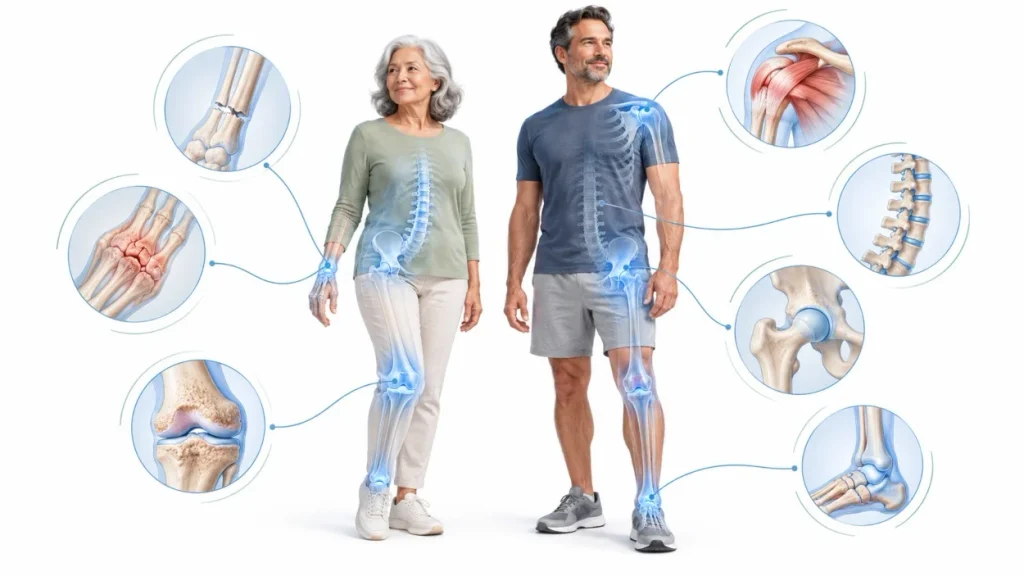
Musculoskeletal problems are far more common than most people realise. The World Health Organization estimates that around 1.71 billion people worldwide live with a musculoskeletal condition, and these conditions are the leading contributor to disability globally.
Orthopaedic care covers arthritis, sports injuries, fractures, ligament and tendon injuries, joint instability, cartilage damage, muscle injuries and spine-related problems. Here is how they tend to show up across the body:
| Body area | Problems often seen in clinic |
| Knee | Osteoarthritis, meniscus tears, ACL injuries, kneecap pain |
| Hip | Osteoarthritis, fractures after falls, tendon pain on the outer hip |
| Shoulder | Rotator cuff tears, frozen shoulder, dislocation and instability |
| Foot and ankle | Ankle sprains, Achilles tendon problems, heel pain, fractures |
| Hand and wrist | Wrist fractures, carpal tunnel syndrome, trigger finger |
| Spine | Back and neck pain, disc problems, nerve compression |
How Do Doctors Decide Which Treatment Is Suitable?
There is no single treatment that suits everyone. Two people with almost identical scans can need very different plans.
1. Diagnosis And Cause Of The Problem
Getting the cause right comes first. Knee pain from arthritis is managed very differently from knee pain after an ACL tear. A stiff shoulder from frozen shoulder often loosens gradually over one to three years with the right support, while a torn rotator cuff tendon cannot regrow by itself: same body part, same complaint, completely different paths.
2. Severity Of The Condition
Mild problems often settle with a period of relative rest, physiotherapy, and medication. More advanced problems may need a procedure to repair or replace damaged structures. One thing that surprises many patients is that how bad a joint looks on a scan and how much it hurts do not always match. Severity is judged on both.
3. Impact On Daily Activities
Your doctor will want to know how the problem affects walking, working, exercising, sleeping, and everyday tasks. Before your appointment, try keeping a short diary for a week or two: what you avoided, what woke you at night, and what made the pain better or worse. It gives your doctor far more to work with than “it hurts sometimes”.
4. Patient Goals
A 70-year-old who wants to walk to the hawker centre without stopping and a 25-year-old who wants to return to futsal may have the same injury and still need different plans. Returning to sport, walking comfortably, reducing pain, staying independent and getting back to work are all valid goals, and saying yours out loud shapes the advice you get.
Non-Surgical Orthopaedic Treatment Options

Non-surgical does not mean doing nothing. For many conditions, especially when caught early or when damage is limited, these are the main treatment options rather than a waiting room for surgery.
1. Physiotherapy And Rehabilitation
Physiotherapy is one of the most widely used orthopaedic treatments. The UK’s NICE guideline on osteoarthritis advises that everyone with osteoarthritis should be offered therapeutic exercise tailored to their needs, such as local muscle strengthening and general aerobic fitness.
A structured programme can improve strength, flexibility, balance and movement patterns, and it is used for muscle strains, joint stiffness, tendon injuries, mild ligament injuries and many arthritis symptoms.
Most of the benefit comes from the exercises you do at home between sessions. Pain can also rise a little when you first start, and NICE notes that sticking with the programme tends to reduce pain over time. Sharp pain that lingers into the next day is worth reporting to your physiotherapist.
2. Medication
Medication can ease pain, inflammation and swelling so you can move and rehabilitate more comfortably. For knee osteoarthritis, NICE recommends trying an anti-inflammatory gel before tablets, because gels tend to cause fewer side effects.
Anti-inflammatory tablets are not suitable for everyone. The NHS advises that people considering NSAIDs should check with a doctor or pharmacist first if they are over 65, have had stomach ulcers, have heart, kidney or liver problems, have asthma, or take other medicines such as blood thinners. Medication can make you more comfortable, but it will not reconnect a torn ligament or rebuild a worn joint.
3. Activity Modification
Activity modification is not complete rest, which often leaves joints stiffer and muscles weaker. It means temporarily changing how much or how hard you load the painful area, such as swapping running for cycling or swimming, adjusting how you lift at work, or cutting back on movements that flare your symptoms. A common guide is that mild discomfort during an activity is usually acceptable if it has settled by the next morning.
4. Braces And Supports
Knee braces, ankle supports and wrist splints can improve stability or reduce strain in selected situations, such as some ligament injuries, recurrent ankle giving way, or carpal tunnel symptoms at night. They work best alongside strengthening, not instead of it. For osteoarthritis, NICE advises against routine braces or supports and reserves them mainly for people with joint instability or abnormal loading whose exercise programme is not enough on its own.
5. Injections
| Injection type | What it aims to do | What the evidence suggests |
| Corticosteroid (steroid) | Reduce inflammation and pain | Often helps in the short term; long-term results vary by condition |
| Hyaluronic acid | Add lubrication to a knee joint | NICE does not recommend it for osteoarthritis |
| Platelet-rich plasma (PRP) | Use concentrated blood components to support healing | Evidence is mixed and depends heavily on the condition |
In a randomised trial of treatments for tennis elbow published in JAMA, people who received a steroid injection were less likely to have recovered at one year, and more likely to have had symptoms return, than those who received a placebo injection. A separate two-year knee study found that steroid injections every three months led to more cartilage loss without better pain relief than saline. Before any injection, ask what it should achieve, how long relief usually lasts, and how many would be too many.
6. Lifestyle And Weight Management
For weight-bearing joints, body weight matters more than most people expect. A study of older adults with knee osteoarthritis found that each pound of weight lost removed about four pounds of load from the knee with every step. NICE advises that any amount of weight loss is likely to help, and that losing 10% of body weight is likely to be better than 5%.
Regular exercise keeps the muscles around joints strong, and stopping smoking matters for anyone facing a fracture or surgery, because smoking slows bone and wound healing.
Surgical Orthopaedic Treatment Options
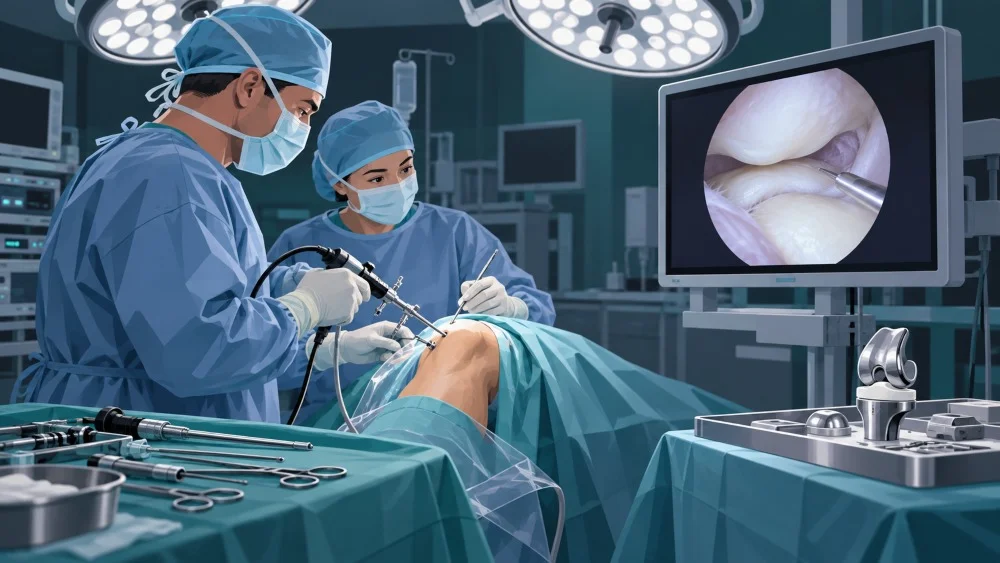
Surgery makes the most sense when there is a structural problem the body cannot fix by itself, or when a fair trial of non-surgical care has not worked.
1. Arthroscopic Surgery
Arthroscopy is keyhole surgery. A small camera and specialised instruments go into the joint through small cuts, which usually means less tissue disruption and a faster early recovery than open surgery. It is used for problems such as meniscus tears from injury, ACL reconstruction, some cartilage problems and many shoulder procedures.
It is not the right answer for every painful knee, though. An international panel published a clinical practice guideline on arthroscopy for degenerative knee disease in The BMJ, making a strong recommendation against it for nearly all people with knee arthritis or wear-related meniscal tears. A Finnish trial even found that trimming a degenerative meniscal tear worked no better than a sham operation. The key question to ask is whether your tear came from a clear injury or from gradual wear, and whether your knee genuinely locks.
2. Ligament Repair And Reconstruction
Ligaments hold joints steady, and badly damaged ones may need surgery such as ACL reconstruction, ankle ligament repair, or shoulder stabilisation after repeated dislocations. Even so, surgery is not automatic. In a randomised trial of treatment for acute ACL tears in The New England Journal of Medicine, young active adults who started with structured rehabilitation and had reconstruction later only if needed had similar two-year results to those who had early reconstruction, and many never needed the operation. Surgery becomes more likely if your knee keeps giving way, or if you play pivoting sports like football, basketball, or badminton at a high level.
3. Tendon Repair Surgery
Tendons connect muscle to bone. A complete tear may need repair, but the decision is often less clear-cut than people expect. For an Achilles tendon rupture, a Canadian trial of 144 patients found similar re-rupture rates with and without surgery when both groups followed an early, accelerated rehabilitation programme. For the rotator cuff, a sudden tear after a fall in a younger, active person often leans towards early repair, while wear-related tears in people over 55 frequently do just as well with physiotherapy, as a Finnish trial showed at one year.
4. Fracture Surgery
Many fractures heal well in a cast, sling or boot. Surgery is considered when a fracture is displaced, unstable, runs into a joint surface, or is unlikely to heal in the right position. Plates, screws, or rods restore alignment so the bone heals properly. Hip fractures in older adults are usually operated on quickly, because moving early lowers the risk of complications.
If you broke a bone from a fall at standing height or less, ask whether you should have a bone density check. A low-impact fracture can be the first sign of osteoporosis, and treating it can prevent the next one.
5. Joint Replacement Surgery
Joint replacement swaps damaged joint surfaces for artificial components, most often in the knee or hip. It is usually considered for advanced arthritis causing persistent pain and significant loss of mobility.
In a Danish trial of 100 people with moderate to severe knee osteoarthritis, those who had a knee replacement plus a structured exercise and education programme improved more at one year than those who had the programme alone. They also had more serious complications, and about a quarter of the non-surgical group chose to have the operation within that year. Recovery takes months rather than weeks, and rehabilitation is part of the treatment.
6. Corrective Surgery
Some people have alignment problems that load one part of a joint unevenly, and corrective procedures called osteotomies reshape bone to shift that load. Singapore General Hospital has reported that more than 10% of adults in Singapore have knee osteoarthritis, and that knee preservation surgeries such as high tibial osteotomy are being chosen more often by patients with arthritis on the inner side of the knee. Orthopaedic surgeons point out that younger patients may outlive a knee implant and need another one later, while an osteotomy may delay or even avoid a replacement.
How Do You Know Which Treatment Option Is Right For You?
Most people eventually wonder whether to keep going with conservative treatment or consider surgery. This table shows how the factors often lean, though your specialist will weigh them for your situation.
| Factor | Often leans towards non-surgical care first | Often leans towards surgery sooner |
| Type of damage | Wear-related changes, partial tears, sprains | Complete tears, displaced fractures, a locked joint |
| Response so far | Steady improvement with rehab | Little or no progress after a proper trial |
| Daily impact | Manageable with adjustments | Limiting sleep, work or independence |
| Goals | Comfortable everyday movement | High-demand sport or physical work |
Symptoms
How severe is the pain, is it affecting daily activities, and is it getting worse? A trend over weeks tells you more than one bad day.
Previous Treatment Response
Your doctor will want to know what you have already tried, whether it helped, and how long the improvement lasted. A “proper trial” of physiotherapy usually means several weeks of consistent work, often around six to twelve weeks depending on the condition. A few sessions without home exercises are not a fair test.
Imaging Results
X-rays, MRI and CT scans help identify structural problems, but findings are always read alongside your symptoms and examination. A systematic review of spine imaging in people without back pain found disc degeneration in 37% of pain-free 20-year-olds and 96% of pain-free 80-year-olds. In other words, a scan showing “wear and tear” does not automatically explain your pain or mean you need an operation.
Lifestyle Requirements
Treatment may differ depending on whether you want to return to competitive sport, keep up daily mobility, or continue physically demanding work such as construction or nursing.
Does Orthopaedic Treatment Always Require Surgery?
No. Mild sports injuries often recover with rehabilitation, many arthritis symptoms improve with exercise, weight management and medication, and a lot of tendon problems respond well to physiotherapy.
Waiting is not always wise, though. A displaced fracture, a knee that is locked and will not straighten, some complete tendon ruptures, and nerve compression causing weakness can all do better with earlier intervention. Surgery may give a better outcome when there is significant structural damage that cannot heal properly on its own.
What Happens During An Orthopaedic Consultation?
In Singapore, you can usually see a private orthopaedic specialist directly. In contrast, subsidised care at public hospital specialist clinics generally needs a referral from a polyclinic or a CHAS GP clinic. Either way, the consultation tends to follow a similar pattern.
Review Your Symptoms
The doctor may ask when symptoms started, about previous injuries, which activities make things worse, and what treatments you have tried. Bring any earlier scans and reports, and a list of the medicines and supplements you take.
Perform A Physical Examination
This may involve checking joint movement, strength, stability, swelling, and tenderness, and comparing the painful side with the other side. Wearing loose clothing, such as shorts for a knee problem, makes this easier.
Recommend Further Tests
Depending on the condition, tests may include X-rays, MRI scans, CT scans, ultrasound, or nerve conduction studies for suspected nerve problems. Before you leave, it helps to ask:
- What exactly is my diagnosis, and how sure are you?
- What happens if I wait or do nothing for now?
- What are the risks and the realistic recovery time for each option?
- What would make you change your recommendation?
Preparing For Orthopaedic Treatment
Whether your treatment is surgical or not, you can help your recovery by following medical advice, attending rehabilitation sessions, keeping to suitable activity levels, understanding what recovery should look like, and reporting any change in symptoms early.
If surgery is planned, preparation starts before the operation. Strengthening exercises beforehand, sometimes called prehab, can make recovery smoother, and stopping smoking, managing blood sugar and arranging help at home for the first few weeks all make a real difference.
When Symptoms Should Not Wait
Most orthopaedic problems can be sorted out through a planned appointment, but some signs need urgent care. Go to A&E, or call 995 in Singapore, if you notice:
- An injury after which you cannot bear weight, or a limb that looks clearly deformed
- A hot, red, swollen joint together with fever or feeling unwell, which can signal a joint infection
- Back pain with numbness around the groin or buttocks, new problems controlling your bladder or bowel, or weakness in both legs
- A painful, swollen calf, or sudden breathlessness, after surgery or a period in a cast
- Bone pain that is worse at night and comes with unexplained weight loss, or a history of cancer
For everything else, the choices are wider than most people fear, from physiotherapy, medication and lifestyle changes to arthroscopy, fracture fixation and joint replacement. The right option depends on your diagnosis, the severity of your symptoms and what you want your body to be able to do. Seeing an orthopaedic specialist early gives you the clearest picture while the widest range of options is still open.
Disclaimer
This article is for general information only and should not replace medical advice from a qualified healthcare professional. It does not diagnose any condition or recommend a specific treatment for any individual. If you have pain, swelling, weakness, or reduced movement, please see a doctor, and seek emergency care straight away for any of the urgent warning signs listed above.
References
- World Health Organization. Musculoskeletal health: fact sheet. https://www.who.int/news-room/fact-sheets/detail/musculoskeletal-conditions
- National Institute for Health and Care Excellence. Osteoarthritis in over 16s: diagnosis and management (NG226). 2022. https://www.nice.org.uk/guidance/ng226
- NHS. Non-steroidal anti-inflammatory drugs (NSAIDs). https://www.nhs.uk/medicines/nsaids/
- Coombes BK, Bisset L, Brooks P, Khan A, Vicenzino B. Effect of corticosteroid injection, physiotherapy, or both on clinical outcomes in patients with unilateral lateral epicondylalgia: a randomized controlled trial. JAMA. 2013;309(5):461-469. DOI: 10.1001/jama.2013.129
- McAlindon TE, LaValley MP, Harvey WF, et al. Effect of intra-articular triamcinolone vs saline on knee cartilage volume and pain in patients with knee osteoarthritis: a randomized clinical trial. JAMA. 2017;317(19):1967-1975. DOI: 10.1001/jama.2017.5283
- Messier SP, Gutekunst DJ, Davis C, DeVita P. Weight loss reduces knee-joint loads in overweight and obese older adults with knee osteoarthritis. Arthritis & Rheumatism. 2005;52(7):2026-2032. DOI: 10.1002/art.21139
- Siemieniuk RAC, Harris IA, Agoritsas T, et al. Arthroscopic surgery for degenerative knee arthritis and meniscal tears: a clinical practice guideline. BMJ. 2017;357:j1982. DOI: 10.1136/bmj.j1982
- Sihvonen R, Paavola M, Malmivaara A, et al. Arthroscopic partial meniscectomy versus sham surgery for a degenerative meniscal tear. New England Journal of Medicine. 2013;369(26):2515-2524. DOI: 10.1056/NEJMoa1305189
- Frobell RB, Roos EM, Roos HP, Ranstam J, Lohmander LS. A randomized trial of treatment for acute anterior cruciate ligament tears. New England Journal of Medicine. 2010;363(4):331-342. DOI: 10.1056/NEJMoa0907797
- Willits K, Amendola A, Bryant D, et al. Operative versus nonoperative treatment of acute Achilles tendon ruptures: a multicenter randomized trial using accelerated functional rehabilitation. Journal of Bone and Joint Surgery (American). 2010;92(17):2767-2775. DOI: 10.2106/JBJS.I.01401
- Kukkonen J, Joukainen A, Lehtinen J, et al. Treatment of non-traumatic rotator cuff tears: a randomised controlled trial with one-year clinical results. Bone & Joint Journal. 2014;96-B(1):75-81. DOI: 10.1302/0301-620X.96B1.32168
- Skou ST, Roos EM, Laursen MB, et al. A randomized, controlled trial of total knee replacement. New England Journal of Medicine. 2015;373(17):1597-1606. DOI: 10.1056/NEJMoa1505467
- Singapore General Hospital. Knee preservation surgeries at SGH doubles despite pandemic. Media release, 8 April 2022. https://www.sgh.com.sg/news/patient-care/knee-preservation-surgeries-at-sgh-doubles-despite-pandemic
- Brinjikji W, Luetmer PH, Comstock B, et al. Systematic literature review of imaging features of spinal degeneration in asymptomatic populations. American Journal of Neuroradiology. 2015;36(4):811-816. DOI: 10.3174/ajnr.A4173