

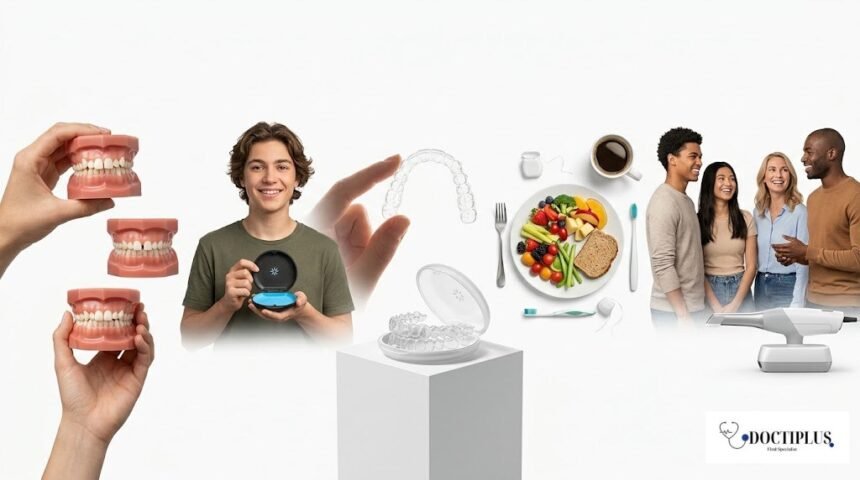
Over 4 million Americans currently wear braces, and nearly a quarter of them are adults seeking discreet treatment. Clear aligner systems like Invisalign have reshaped orthodontics, but choosing between aligners and traditional braces involves more than appearance. Treatment effectiveness, daily lifestyle demands, and long-term value all factor into the decision.
Understanding when Invisalign delivers results comparable to braces, and when it does not, has real financial and health implications. The answer depends on your specific dental conditions, personal discipline, and priorities that most patients never think to ask about during a first consultation.
How Invisalign Works Compared to Traditional Braces
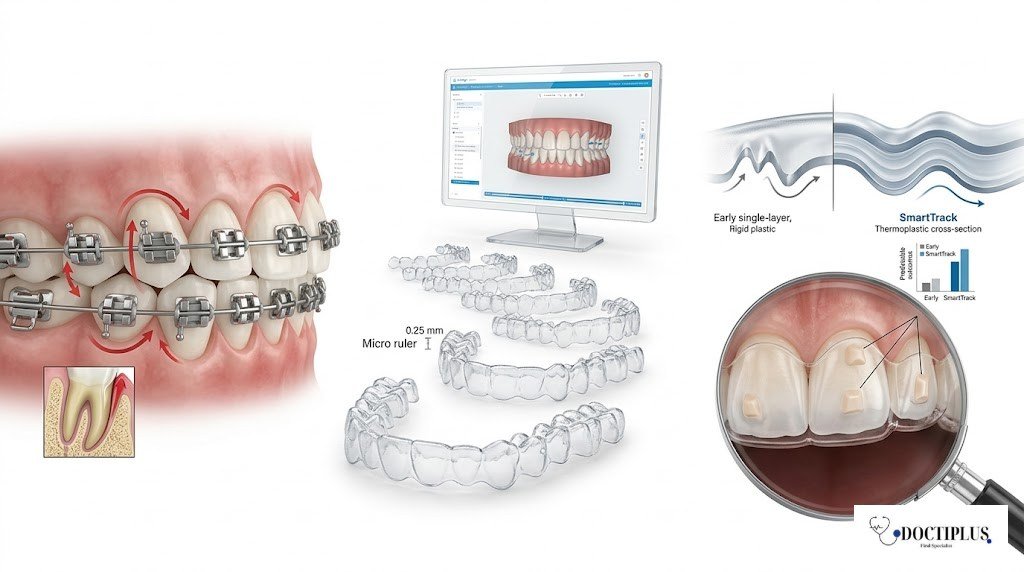
Traditional braces use metal brackets bonded to teeth, connected by archwires that an orthodontist tightens every 4 to 6 weeks. This system applies continuous, targeted force capable of complex rotations, vertical movements, and precise root repositioning.
Invisalign takes a fundamentally different approach. A series of custom-moulded thermoplastic aligners, each worn for 1 to 2 weeks, shifts teeth approximately 0.25 millimetres per stage. The full treatment sequence is mapped digitally using 3D treatment planning software before the first aligner is manufactured.
The Role of SmartTrack Material
Early Invisalign aligners used rigid single-layer plastic that delivered inconsistent force. Today’s aligners are made from SmartTrack material, a proprietary multi-layer thermoplastic developed by Align Technology. SmartTrack applies gentler, more constant force throughout the wear cycle, improving both comfort and the predictability of tooth movement. Combined with SmartForce attachments, small tooth-coloured bumps bonded to specific teeth, the material enables movements that earlier aligner generations could not achieve.
According to research published in the Angle Orthodontist journal, SmartTrack has improved aligner fit and reduced the gap between predicted and actual tooth positions, which is one of the main reasons Invisalign outcomes have become more reliable over the past decade.
Who Is the Best Candidate for Invisalign?
Clinical research shows that Invisalign achieves results comparable to traditional braces in roughly 74% of cases. That statistic, however, varies sharply depending on case complexity and patient compliance.
| Strong Invisalign Candidates | Better Suited for Traditional Braces |
| Mild to moderate gaps between teeth | Severe crowding needing extractions |
| Minor crowding or overlapping | Significant overbites, underbites, or crossbites |
| Relapsed cases (post-braces shifting) | Teeth requiring major vertical or rotational movement |
| Adults with strong compliance habits | Teens who may struggle with 22-hour daily wear |
| Minor bite refinements | Class II or Class III jaw relationship corrections |
Age plays a role, too. The American Association of Orthodontists notes that adult patients typically demonstrate stronger adherence to wearing schedules, making them ideal candidates when their orthodontic needs fall within aligner capabilities. Teen compliance rates vary significantly, which is why many orthodontists still recommend fixed braces for adolescent patients with moderate or complex needs.
Benefits of Invisalign Over Braces
The benefits of Invisalign over braces go well beyond appearance. Here are the advantages that matter most in daily life:
- Near-invisible look: Clear aligners are virtually undetectable, making them ideal for professionals who present to clients, attend meetings, or speak publicly.
- No dietary restrictions: Aligners are removed for every meal, so patients can eat anything without worrying about bracket damage or food getting trapped in wires.
- Better oral hygiene: Brushing and flossing happen normally. Studies from the American Dental Association show that patients in fixed braces face higher rates of white spot lesions and gum inflammation compared to aligner users.
- Less soft tissue irritation: No metal brackets or wire ends to cut the inside of cheeks, lips, or gums.
- Fewer emergency visits: There are no broken brackets or poking wires to deal with, reducing unplanned trips to the orthodontist.
- Predictable timeline: 3D modelling maps the full treatment before it begins, so patients see the projected result and schedule upfront.
Disadvantages and Realistic Expectations
No treatment is perfect. These are the trade-offs patients should prepare for:
- Strict compliance demand: Aligners must be worn 20 to 22 hours daily. Every hour below that threshold risks delaying the treatment timeline.
- Constant removal routine: Every meal, snack, coffee, or drink other than water requires removing, storing, cleaning, and reinserting the aligners.
- Not suited for all cases: Severe rotations, large vertical movements, and significant jaw corrections often exceed aligner capabilities and need fixed braces.
- Pressure discomfort with each tray: New aligners every 1 to 2 weeks cause consistent low-level soreness, which some patients find harder to manage than the occasional wire adjustment.
- Risk of losing trays: Removable aligners can be misplaced at restaurants, during travel, or at school, requiring costly replacements and potential treatment delays.
How Much Does Invisalign Cost?
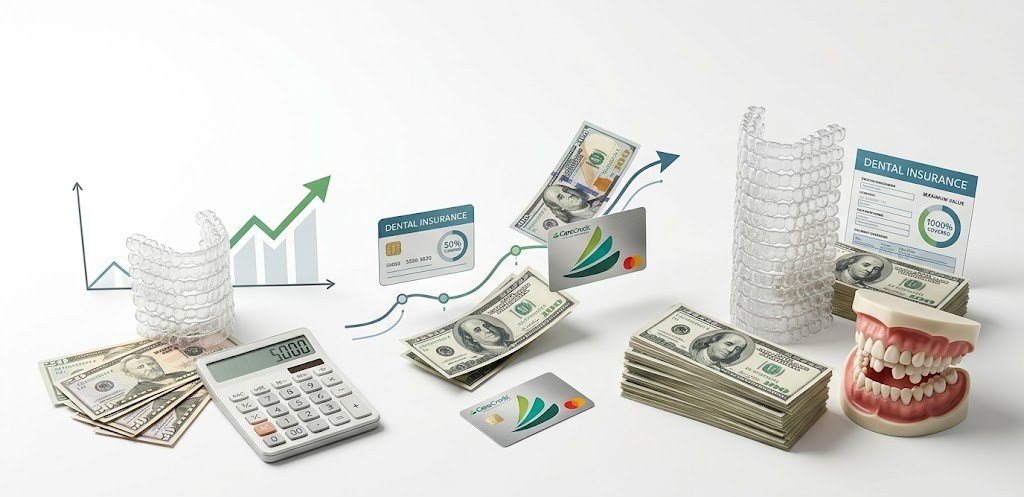
Treatment typically ranges from $3,000 to $8,000, with most cases falling between $4,000 and $6,000, depending on complexity and location. According to the American Dental Association, most dental plans that include orthodontic benefits now cover Invisalign at the same rate as traditional braces, typically 50% up to a lifetime maximum of $1,500 to $2,500.
| Factor | Simple Cases | Complex Cases |
| Number of aligners | 12 to 15 trays | 40+ trays |
| Treatment duration | 6 to 8 months | 18 to 24 months |
| Estimated cost | $3,000 to $4,000 | $6,000 to $8,000 |
| Typical insurance coverage | 50% up to $1,500 | 50% up to $2,500 |
Many practices offer interest-free payment plans, and third-party financing through providers like CareCredit can spread costs over several years. Some offices also discount full upfront payment.
Invisalign vs. Other Clear Aligner Brands
Several competitors have entered the clear aligner market. Here is how the main options compare:
| Supervision | In-office orthodontist | In-office orthodontist | Remote monitoring only |
| Case complexity | Mild to moderate | Mild to moderate | Very minor corrections only |
| Typical cost | $4,000 to $6,000 | $3,000 to $5,000 | $1,900 to $2,500 |
| Aligner material | SmartTrack (proprietary) | Standard thermoplastic | Standard thermoplastic |
| Attachments | Yes (SmartForce) | Yes | No |
Direct-to-consumer brands lower costs by removing in-person supervision, but this increases the risk of complications. The Journal of Clinical Orthodontics has highlighted that unsupervised aligner treatment carries higher rates of poor outcomes, especially when cases turn out to be more complex than initially assessed through at-home impressions.
Conclusion
Invisalign is an excellent orthodontic option when the case matches its strengths: mild to moderate spacing, minor crowding, and a patient who can commit to disciplined daily wear. For complex bite corrections, significant rotations, or patients who may struggle with compliance, traditional braces often deliver better clinical outcomes.
The best way to determine whether Invisalign is right for you is through an in-person evaluation with an experienced orthodontic provider who can assess your teeth, bite, and lifestyle honestly. Do not rely on marketing materials or at-home impression kits for a decision that affects your oral health for decades. If you have not had a professional consultation yet, booking one is the most valuable first step you can take.
References
- American Association of Orthodontists. (2024). Adults in Orthodontics: Patient Demographics and Treatment Trends.
- Align Technology. (2024). Invisalign SmartTrack Material: Clinical Performance Overview.
- American Dental Association. (2024). Dental Insurance Coverage for Orthodontic Treatment.
- Journal of Clinical Orthodontics. (2023). Comparative Effectiveness of Clear Aligners and Fixed Appliances.
- The Angle Orthodontist. (2023). Accuracy of Tooth Movement Prediction With Invisalign SmartTrack Aligners.
- Centers for Disease Control and Prevention. (2023). Oral and Dental Health: Fast Facts.
Disclaimer
This article is for informational and educational purposes only and does not constitute professional dental, orthodontic, or medical advice. It is not a substitute for a clinical evaluation, diagnosis, or treatment plan from a qualified healthcare provider. Treatment outcomes, costs, insurance coverage, and candidacy vary by individual. Always consult a licensed orthodontist or dentist for personalised guidance. Brand names, statistics, and treatment details referenced are based on publicly available information from recognised dental health organisations and manufacturers, and may be updated over time. Invisalign, SmartTrack, and SmartForce are registered trademarks of Align Technology, Inc.