

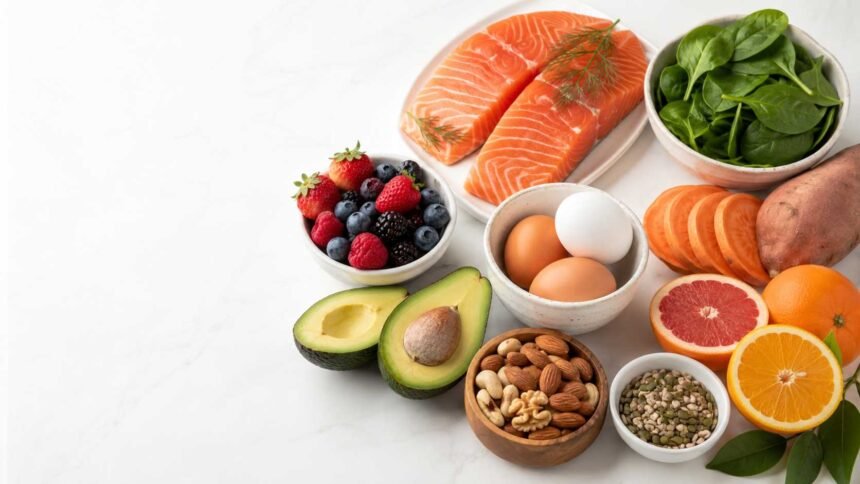
Hair health starts from the inside. What you eat determines what your follicles get, and most people are unknowingly under-feeding the systems that drive hair growth. Here are eight foods that deliver the vitamins and nutrients your hair and body actually need.
| Food | Key Nutrients | What It Supports |
| Eggs | Biotin, protein | Hair structure and follicle strength |
| Fatty fish | Omega-3s, vitamin D | Scalp health and follicle function |
| Spinach | Iron, folate, vitamins A and C | Hair growth and circulation |
| Sweet potatoes | Beta-carotene, vitamin A | Scalp health and sebum production |
| Nuts and seeds | Vitamin E, zinc, selenium | Follicle protection and growth |
| Berries | Vitamin C, antioxidants | Collagen production and follicle protection |
| Legumes | Protein, iron, zinc, biotin | Hair strength and growth support |
| Liver and organ meats | Iron, B vitamins, vitamin A, copper | Overall hair and cellular health |
Why Food Is the Foundation of Hair Health
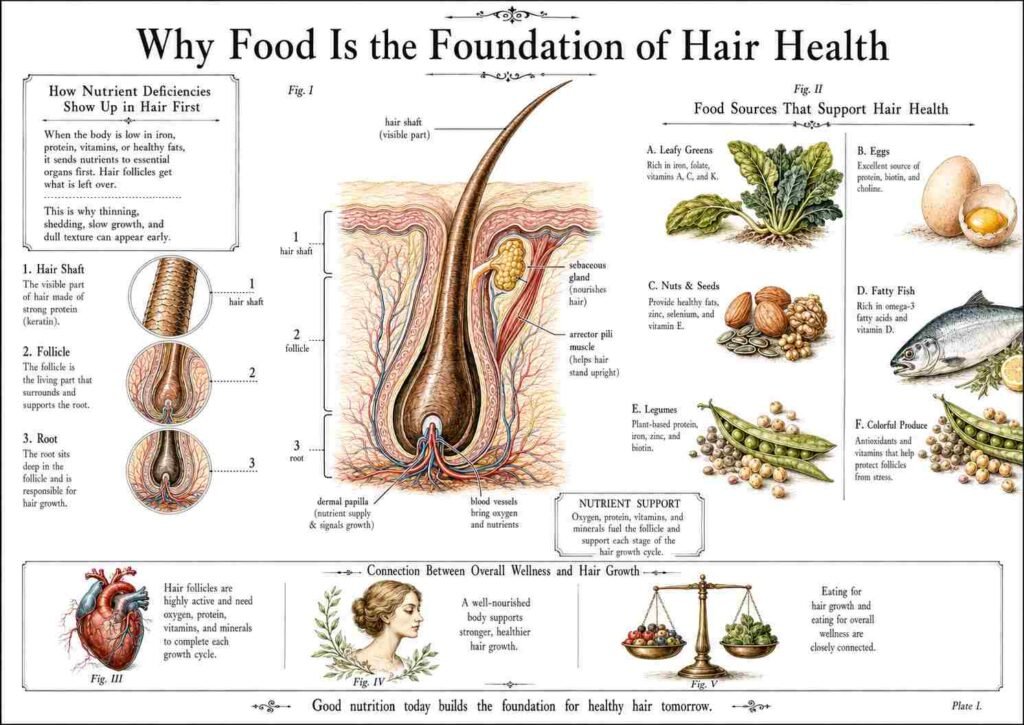
How Nutrient Deficiencies Show Up in Hair First
Hair is not essential to survival. When the body is under-resourced, short on iron, protein, vitamins, or healthy fats, it redirects nutrients to the organs and systems it can’t function without. Hair follicles get what’s left over.
That’s why hair is often the first place nutritional gaps show up. Thinning, shedding, slow growth, and dull texture are frequently not a hair problem; they’re a nutrition problem that happens to express itself through hair.
Connection Between Overall Wellness and Hair Growth
Hair follicles are among the most metabolically active structures in the body. They require a consistent supply of oxygen, protein, vitamins, and minerals to complete each growth cycle.
A well-nourished body grows hair more effectively, while one that isn’t will prioritize everything else first.
Eating for hair growth and eating for overall wellness are effectively the same thing. The Body Bio’s supplements for immune function help protect your immune system and support follicle health, as well as support energy, immunity, hormonal balance, and cellular function. This list covers both.
Eggs
1. Biotin and Protein: The Two Things Hair Is Built From
Hair is made almost entirely of keratin, a protein. Without adequate dietary protein, the body doesn’t have the raw materials to build it.
Eggs deliver a complete amino acid profile, meaning they provide all the essential amino acids the body needs to produce keratin efficiently.
Eggs are also one of the richest dietary sources of biotin, a B vitamin directly involved in keratin synthesis. Biotin deficiency is one of the better-documented causes of hair thinning, and eggs are among the most practical ways to maintain adequate levels through diet.
2. Why Eggs Are One of the Most Complete Hair Health Foods Available
Beyond protein and biotin, eggs provide zinc, selenium, and vitamin D, all of which play supporting roles in follicle health and hair growth cycles.
The yolk in particular is nutrient-dense in ways the white alone is not, making whole eggs significantly more valuable than egg whites for hair and overall nutrition.
Two to three whole eggs per day is a straightforward, cost-effective way to cover several of the nutritional bases hair growth depends on.
Fatty Fish
1. Omega-3s and Their Role in Scalp Health and Follicle Function
The scalp is skin, and like all skin, it depends on healthy fats to maintain its barrier function, reduce inflammation, and support the follicles embedded within it. Omega-3 fatty acids, specifically EPA and DHA, are the most important dietary fats for this purpose.
An inflamed, dry, or poorly nourished scalp creates an unfavorable environment for hair growth. Omega-3s address the inflammatory and structural conditions at the root level, literally making them one of the most direct nutritional inputs for follicle health.
2. Best Fish to Eat and How Often
The highest omega-3 sources are:
- Salmon: one of the richest sources of EPA and DHA, and also high in vitamin D and protein.
- Sardines: small, affordable, and nutrient-dense with omega-3s, calcium, and B12.
- Mackerel: high in omega-3s and one of the better sources of CoQ10.
- Anchovies: easy to add to meals and concentrated in omega-3s relative to their size.
Two to three servings of oily fish per week provide a meaningful, consistent intake of omega-3 fatty acids for scalp and follicle health.
Spinach
1. Iron, Folate, and Vitamins A and C for Hair Growth
Spinach delivers four nutrients that directly support hair growth in a single food. Without iron, red blood cells carry oxygen to the scalp and follicles; without it, follicles become starved of the oxygen they need to complete the growth cycle.
Folate supports the rapid cell division required for hair growth. Vitamin A supports sebum production, which keeps the scalp conditioned. Vitamin C supports collagen synthesis and enhances iron absorption from plant sources.
2. Why Iron Deficiency Is One of the Most Common Causes of Hair Thinning
Iron deficiency is one of the most prevalent nutritional deficiencies globally, and hair thinning is often among its earliest visible symptoms. Women of reproductive age are particularly vulnerable.
When iron stores drop, the body reduces supply to non-essential tissues, including hair follicles, and the growth cycle shortens.
Adding spinach and other iron-rich plant foods to the diet consistently, alongside vitamin C sources to improve absorption, addresses one of the most common and correctable nutritional drivers of hair loss.
Sweet Potatoes
1. Beta-Carotene and Vitamin A for Scalp and Follicle Health
Sweet potatoes are one of the richest dietary sources of beta-carotene, the precursor that the body converts to vitamin A.
A medium sweet potato can provide several times the daily recommended intake of vitamin A through beta-carotene alone.
2. How Vitamin A Regulates Sebum Production and Keeps Follicles Healthy
Vitamin A plays a specific and important role in the scalp: it stimulates the production of sebum, the natural oil that keeps the scalp moisturized and follicles functioning properly. A scalp that’s too dry lacks the moisture and pH balance follicles need to produce healthy hair.
For those looking to maximize results, incorporating high-quality hair-growth vitamins into a daily routine can ensure these micronutrients are consistently available, providing the structural support follicles need even when the diet varies.
The body converts only as much as it needs, making it a safer source than preformed vitamin A from supplements, which can cause problems at high doses. Sweet potatoes, carrots, and other orange and yellow vegetables deliver the benefit without the risk.
Nuts and Seeds
1. Vitamin E, Zinc, Selenium, and Omega-3s in One Food Group
Nuts and seeds cover a broad spectrum of the micronutrients hair follicles depend on. A handful of mixed nuts and seeds throughout the day can meaningfully contribute to:
- Vitamin E: from almonds and sunflower seeds, an antioxidant that protects follicle cell membranes from oxidative damage.
- Zinc: from pumpkin seeds and cashews, it’s essential for hair tissue growth and repair and for keeping the oil glands around follicles working properly.
- Selenium: from Brazil nuts, one of the most concentrated dietary sources available, supporting antioxidant enzyme activity that protects follicles.
- Omega-3s: from walnuts and flaxseeds, plant-based sources that contribute to the anti-inflammatory environment follicles need.
2. How These Nutrients Protect Follicles From Oxidative Stress
Oxidative stress, the imbalance between free radical production and the body’s ability to neutralize it, directly damages follicle cells and is linked to premature hair aging and loss. The combination of vitamin E, selenium, and zinc found in nuts and seeds provides layered antioxidant protection at the follicle level.
For those whose diets don’t consistently provide these micronutrients, targeted nutritional support can fill the gaps.
Berries
1. Vitamin C and Antioxidants for Collagen Production and Follicle Protection
Berries, including blueberries, strawberries, blackberries, and raspberries, are among the most antioxidant-rich foods available. Vitamin C is the standout nutrient for hair health.
It’s essential for collagen synthesis, and collagen is a structural protein that supports the hair shaft and the connective tissue surrounding each follicle.
2. How Collagen Supports Hair Structure and Strength
Collagen provides the scaffolding that holds follicles in place and maintains the structural integrity of the hair shaft. As collagen production naturally declines with age, hair can become thinner, more brittle, and more prone to breakage.
Vitamin C from berries directly supports the body’s ability to produce and maintain collagen, making it one of the more practical dietary tools for maintaining hair strength over time.
Berries also deliver anthocyanins, plant compounds that improve circulation, including to the scalp, and a range of polyphenols that reduce the oxidative stress that accelerates follicle aging.
Legumes
1. Protein, Iron, Zinc, and Biotin From Plant Sources
Legumes, including lentils, chickpeas, black beans, and kidney beans, are one of the most nutritionally complete plant foods for hair health.
They provide plant-based protein for keratin production, iron for follicle oxygenation, zinc for tissue repair and sebum regulation, and biotin for keratin synthesis.
2. Why Legumes Are an Underrated Hair Health Food for Plant-Based Diets
For those eating plant-based or reducing animal product intake, legumes are one of the most practical ways to maintain the nutritional inputs hair growth depends on without relying on meat and eggs as primary sources.
A cup of cooked lentils, for example, delivers meaningful amounts of all four nutrients in a single serving, making legumes one of the more efficient sources of hair health, regardless of dietary preference.
Pair them with a vitamin C source at the same meal to maximize iron absorption from the plant source.
Liver and Organ Meats
1. Most Nutrient-Dense Hair Health Food Available
Liver, particularly beef liver, is nutritionally exceptional. It delivers iron, zinc, copper, vitamin A, and the full spectrum of B vitamins, including B12 and folate, in concentrations that are difficult to match through any other single food.
For hair health specifically, the combination of nutrients in the liver addresses multiple growth factors simultaneously: iron for follicle oxygenation, B vitamins for energy production within follicle cells, zinc for tissue repair, and copper for melanin production, the pigment that gives hair its color.
2. Iron, B Vitamins, Vitamin A, and Copper All in One Source
The challenge with liver is that it’s fallen out of favor in modern diets despite being one of the most complete nutritional sources available.
For those who do include it, even one to two servings per week provides a significant nutritional contribution to hair and overall health.
For those who don’t eat organ meats or who want to ensure consistent coverage of these nutrients despite weekly dietary variation, BodyBio UK provides targeted nutritional support built around the specific compounds that hair follicles and overall cellular health depend on, making it a practical complement to a food-first approach.
How to Build These Foods Into Your Diet Consistently
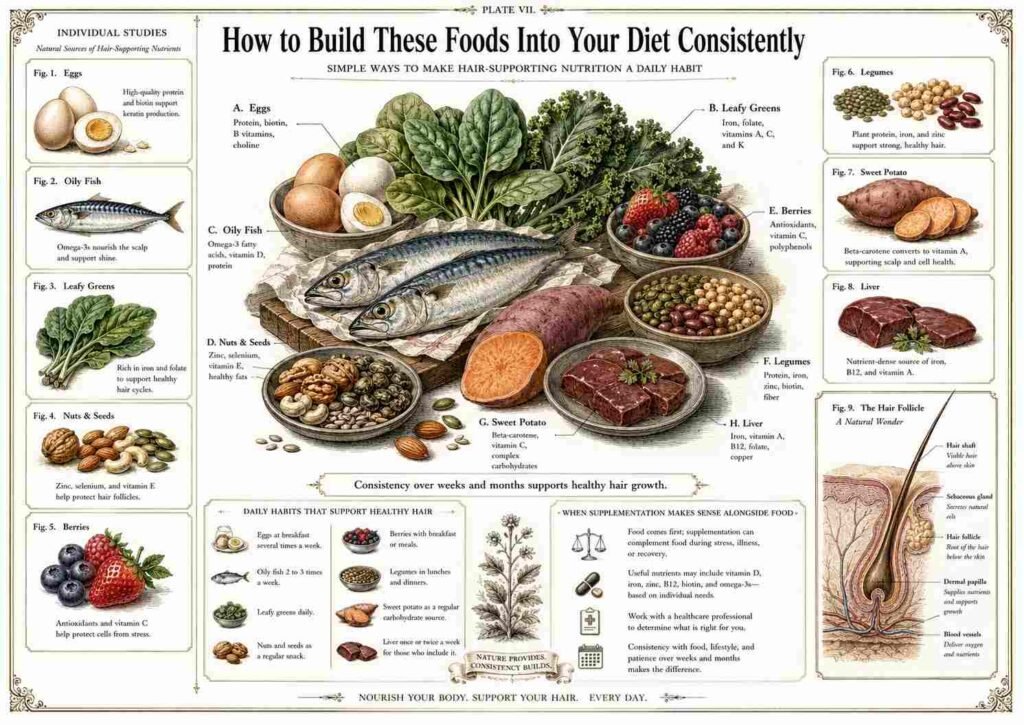
1. Simple Ways to Make Hair-Supporting Nutrition a Daily Habit
The nutritional strategy for hair growth doesn’t require a complete dietary overhaul. It requires consistency across a relatively small number of high-impact foods. Practically, that looks like:
- Eggs at breakfast several times a week.
- Oily fish, two to three times a week, canned sardines, and mackerel make this straightforward.
- Spinach or other dark leafy greens should be included in at least one meal daily.
- A small handful of mixed nuts and seeds as a regular snack.
- Berries can be added to breakfast or eaten alongside other meals.
- Legumes are a regular feature of lunches and dinners.
- Sweet potato as a regular carbohydrate source in place of more processed options.
- Liver once or twice a week for those who include it.
None of these are dramatic change. Consistently applied over weeks and months, they create a nutritional environment that supports hair growth as a natural outcome of overall good health.
2. When Supplementation Makes Sense Alongside Food
Food should come first. But the honest reality is that dietary consistency is difficult to maintain, and even a well-structured diet can leave gaps in the specific micronutrients follicles depend on.
Targeted supplementation makes sense as a complement to food, not a replacement for it, particularly during periods of high stress, illness, or recovery where nutritional demands increase.
Feed the Body Well, and the Hair Will Follow
Hair growth reflects internal health. Follicles get what the rest of the body leaves over, which means the most reliable path to better hair is to build a nutritional foundation that consistently leaves plenty over.
Start with the foods you consistently miss most. Add them in gradually. Stay consistent. The results won’t be overnight.
Hair growth cycles take time, but the nutritional foundation you build now is what your hair will reflect three to six months from today.
Frequently Asked Questions
1. Which vitamin deficiency is most commonly linked to hair loss?
- Iron deficiency is one of the most common and well-documented nutritional causes of hair thinning, particularly in women. Biotin deficiency is also frequently linked to hair loss, as is vitamin D deficiency.
2. How long does it take to see results from eating for hair growth?
- Hair grows approximately one to two centimeters per month, and growth cycles mean that nutritional changes take time to show up visibly. Most people notice meaningful changes in hair texture, strength, and shedding within three to six months of consistent dietary improvement.
3. Can you get enough hair growth nutrients from food alone?
- For most people, regularly eating a varied whole-food diet that includes the foods on this list can cover most of the nutritional needs for hair health. Gaps tend to appear during high-stress periods, restrictive diets, or when dietary variety is low.
Final Conclusion
Hair growth is closely connected to overall nutrition, so the best approach is to support the body first rather than looking for quick fixes. Foods such as eggs, fatty fish, spinach, sweet potatoes, nuts, seeds, berries, legumes, and organ meats can provide important nutrients like protein, iron, zinc, biotin, vitamin D, vitamin C, vitamin A, omega-3 fatty acids, and antioxidants. These nutrients help support the scalp, follicles, collagen production, oxygen delivery, and normal hair growth cycles.
However, better hair health usually takes time. Hair does not respond overnight because growth cycles often take several months to show visible change. A food-first routine, supported by medical guidance when hair loss is sudden, severe, or ongoing, is the safest and most realistic path. Supplements may help when a true deficiency exists, but they should not replace a balanced diet or professional advice. In the end, healthy hair is often a reflection of a healthier body, and consistent nutrition is one of the strongest foundations for both.
Disclaimer
This article is for general informational and educational purposes only. It is not medical advice and should not be used to diagnose, treat, cure, or prevent hair loss or any health condition. Many factors, including genetics, hormonal changes, stress, illness, medications, thyroid problems, autoimmune conditions, low iron, vitamin D deficiency, or other nutritional gaps, can cause hair thinning, shedding, or slow growth. Always speak with a qualified healthcare professional, dermatologist, or registered dietitian before starting supplements, changing your diet for medical reasons, or treating ongoing hair loss.
References
- Guo, E. L., & Katta, R. (2017). Diet and hair loss: Effects of nutrient deficiency and supplement use. Dermatology Practical & Conceptual, 7(1), 1–10. DOI: 10.5826/dpc. 0701a01. This review explains how nutritional deficiencies may contribute to hair loss and notes that supplementation is most useful when a real deficiency is present.
- Almohanna, H. M., Ahmed, A. A., Tsatalis, J. P., & Tosti, A. (2019). The role of vitamins and minerals in hair loss: A review. Dermatology and Therapy, 9(1), 51–70. DOI: 10.1007/s13555-018-0278-6. PMID: 30547302. PMCID: PMC6380979. This review covers vitamin A, B vitamins, vitamin C, vitamin D, vitamin E, iron, selenium, and zinc in relation to non-scarring hair loss.
- Asghar, F., Shamim, N., Farooque, U., Sheikh, H., & Aqeel, R. (2020). Telogen effluvium: A review of the literature. Cureus, 12(5), e8320. DOI: 10.7759/cureus.8320. PMID: 32607303. PMCID: PMC7320655. This paper discusses telogen effluvium, a common form of diffuse shedding that may be triggered by stress, illness, weight change, or other body stressors.
- Patel, D. P., Swink, S. M., & Castelo-Soccio, L. (2017). A review of the use of biotin for hair loss. Skin Appendage Disorders, 3(3), 166–169. DOI: 10.1159/000462981. PMID: 28879195. PMCID: PMC5582478. This review notes that biotin is widely marketed for hair, but evidence is limited for people who do not have a true biotin deficiency.
- Le Floc’h, C., Cheniti, A., Connétable, S., Piccardi, N., Vincenzi, C., & Tosti, A. (2015). Effect of a nutritional supplement on hair loss in women. Journal of Cosmetic Dermatology, 14(1), 76–82. DOI: 10.1111/jocd. 12127. PMID: 25573272. This randomized comparative study examined omega-3, omega-6, and antioxidant supplementation in women with hair loss.
- Goluch-Koniuszy, Z. S. (2016). Nutrition of women with hair loss problems during the period of menopause. Przegląd Menopauzalny / Menopause Review, 15(1), 56–61. DOI: 10.5114/pm.2016.58776. PMID: 27095961. PMCID: PMC4828511. This article discusses the role of diet and nutrients in women experiencing hair loss during menopause.
- Rebora, A. (2019). Telogen effluvium: A comprehensive review. Clinical, Cosmetic and Investigational Dermatology, 12, 583–590. DOI: 10.2147/CCID.S200471. This review is useful for understanding excessive hair shedding and the importance of identifying underlying triggers such as stress, illness, or nutritional imbalance.