


You scroll through climate news at breakfast and feel a knot tighten in your chest. You want to compost, eat better, drive less, and recycle properly, but the energy to do any of it never quite shows up. The harder you try to hold both your mental health and your environmental values together, the heavier each one starts to feel.
You are not broken, and you are not alone in this. The state of the planet and the state of our minds are tangled in ways most wellness advice ignores. Roughly 15% of working adults globally face mental health disorders at any given moment, and the same generation watching ecosystems strain is the one carrying record rates of anxiety and depression.
These are not two unrelated stories that happen to share a timeline. They feed into each other. The way you feel shapes the choices you make about energy, food, and waste. The way the environment behaves shapes your mood, your sleep, and your sense of control. Pretending they are separate problems is part of why both keep getting harder to manage.
Building a Holistic Sustainable Lifestyle for Optimal Mental Health
A sustainable lifestyle is not about doing everything right. It is about integration. When your environmental values match the way you actually live, both your mind and the planet benefit from less internal conflict and a stronger sense of purpose. The small daily choices that often feel insignificant turn out to be where the real shift happens.
Mindfulness Practices Rooted in Environmental Awareness
Some regions have become hubs for wellness approaches that respect both individual and planetary well-being. Their healthcare communities are starting to recognize that mental health treatment cannot stay locked inside an office. Nature-based interventions are increasingly woven into evidence-based care because the data keep showing that healing accelerates when people reconnect with the natural world.
Within this kind of integrated care landscape, the Arlington, VA Outpatient Mental Health Center is a useful example of how contemporary treatment can blend medication, therapy, and lifestyle support while acknowledging that environmental connection plays a real role in lasting recovery. This kind of approach reflects the broader shift captured in the evolving conversation around holistic recovery, where treatment increasingly looks at the whole person rather than the symptom in isolation.
Circular Relationship Between Sustainability and Mental Healing
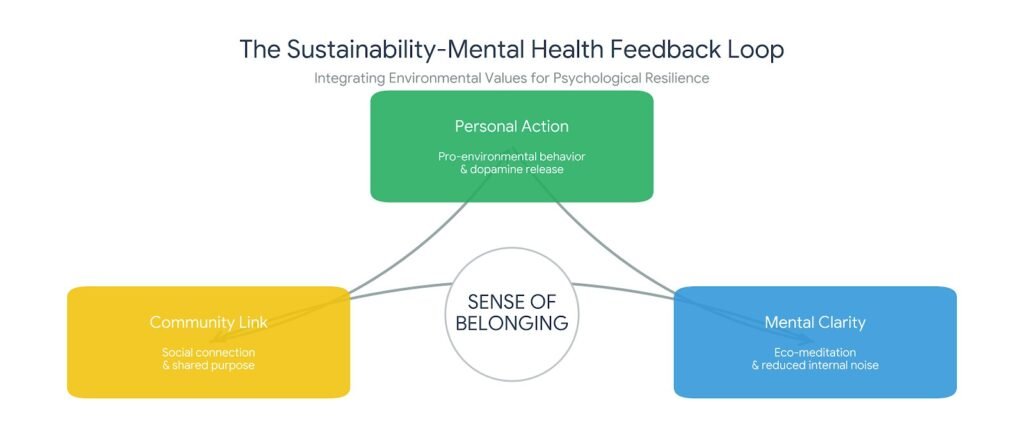
Taking environmental action does more than ease guilt. Studies show that pro-environmental behavior triggers dopamine release similar to other altruistic acts, which means you are quietly rewiring your brain’s reward system while doing something useful for the planet.
Community involvement multiplies the effect. Joining a local cleanup or a neighborhood advocacy group offers social connection, the kind of in-person belonging that digital interactions never quite replace. The combination of meaningful purpose and real human contact builds genuine protection against depression and isolation.
Eco-meditation blends traditional mindfulness with environmental awareness. Instead of just watching your breath, you might pause on the simple fact that the oxygen filling your lungs came from trees in a forest you may never visit. That small shift deepens both your meditation practice and your felt sense of belonging to the natural world. Many people who explore the psychology of slow travel describe a similar effect, where slowing down in any form quietly reorganizes the inner noise.
Understanding the Deep Connection Between Mental Well-being and Sustainability
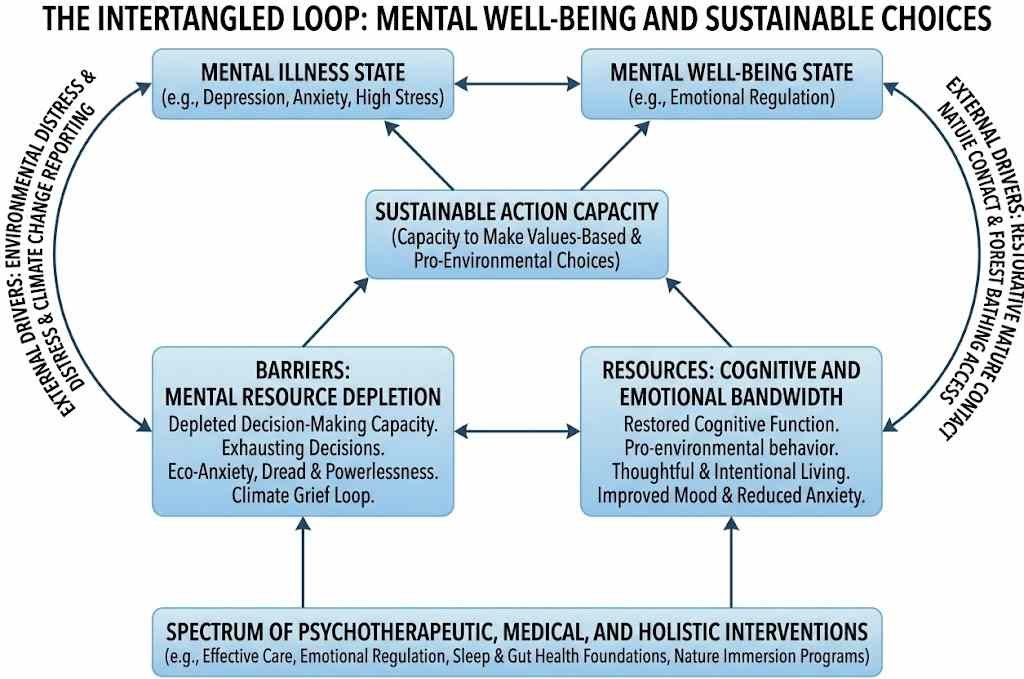
Your mental state and your environmental choices are more entangled than most people assume. When you are struggling emotionally, even small decisions feel exhausting. Sustainable choices, which usually require extra thought and effort, can become almost impossible.
Psychology Behind Eco-Anxiety and Climate Grief
Eco-anxiety has become a familiar term for a real phenomenon. It is not a formal diagnosis. It is a persistent dread about environmental collapse that can drift into serious psychological territory. According to the American Psychological Association, younger generations report intense feelings of helplessness as they watch climate change, with symptoms that genuinely disrupt sleep, focus, and motivation.
Here is where it becomes a loop. Worrying about the environment triggers stress. That stress drains your ability to take meaningful action. The powerlessness deepens. Breaking the cycle starts with realizing that mental well-being and sustainability are not competing demands on your limited energy. They actually feed each other when you treat them as connected.
How Mental Health Influences Sustainable Behavior Choices
Depression and anxiety affect more than mood. They eat into your decision-making capacity. When getting out of bed feels heroic, hunting for eco-friendly products or planning a zero-waste shopping trip is unrealistic. Cognitive bandwidth theory explains why. Mental illness consumes the limited mental resources you have, leaving little room for intentional, values-based choices.
The encouraging part is what happens with treatment. Research consistently shows that effective mental health care increases pro-environmental behavior afterward. Better cognitive function and emotional regulation restore the mental space you need for thoughtful living. Some people also find that addressing physical foundations like sleep, nutrient intake, and gut health eases the load enough to make values-based choices feel less like a daily fight.
Nature’s Therapeutic Role in Mental Health Recovery
Green and blue spaces deliver measurable mental health benefits across every age group. This is not just correlation. Neuroscience research confirms that natural environments lower cortisol, reduce blood pressure, and quiet the amygdala’s stress signal.
Forest bathing, known in Japan as shinrin-yoku, has earned scientific credibility. Research published by the National Library of Medicine confirms that even short stretches of time outdoors meaningfully lift mood and reduce anxiety markers. If you live in a city without forest access, local parks help. Even a window view of trees has shown benefits, and structured nature immersion through a wellness retreat that resets the nervous system can amplify those gains for people coming out of long stretches of stress.
Evidence-Based Mental Health Self-Care Practices With Sustainability Benefits
Theory turns into practice when you look at specific research-supported approaches that benefit both your well-being and the planet at the same time.
Movement-Based Practices That Reduce Carbon Emissions
Active transportation is one of the cleanest examples of dual benefit. Walking or biking instead of driving cuts emissions while delivering cardiovascular exercise and mood stabilization. Harvard Health Publishing notes that regular exercise changes brain structure in ways that support memory, focus, and mood regulation, and people who walk or cycle to work consistently report lower stress levels than those who drive.
Outdoor exercise also outperforms gym sessions on multiple fronts. You skip the energy footprint of climate-controlled facilities and gain the psychological lift that nature exposure provides. A morning jog through a park gives you fresh air, natural light, and a varied environment that no treadmill can match. The connection between movement and mental well-being runs deeper than calories burned, which is why active commuting often feels different from a workout despite the similar physical demand.
Nutrition Strategies Supporting Mental Health and Planet Health
A sustainable approach to food can lift psychological well-being in ways most diet trends miss. Plant-forward eating, in particular, shows promise for reducing carbon footprints and supporting mood. Brain-essential omega-3 fatty acids can come from sustainably caught fish or algae-derived supplements with a much smaller environmental impact than conventional fish oil supply chains.
The gut-brain-environment axis points to fascinating links. Fermented foods like kimchi, sauerkraut, and yogurt support mental health through better gut flora and align with traditional zero-waste preservation methods. Local, seasonal eating reduces transportation emissions while delivering fresher, nutrient-dense food that better supports brain function. Even simple habits like buying loose produce instead of packaged versions add up over a year.
Innovative Eco-Friendly Lifestyle Approaches to Mental Wellness
Beyond daily routines, newer therapeutic methods are reshaping mental health care through intentionally sustainable approaches. These practices combine older wisdom with current science.
Green Therapy Modalities Gaining Scientific Recognition
Horticultural therapy programs show strong results for depression and anxiety. Caring for plants gives both purpose and visible outcomes, and watching something grow under your care pushes back against feelings of powerlessness. Many programs use rescued or native plants, which adds an environmental benefit on top of the therapeutic one.
Animal-assisted therapy increasingly partners with rescue organizations. Participants get therapeutic value while supporting animal welfare and responsible pet care. Adventure therapy takes groups into wilderness settings, combining physical challenge, environmental education, and peer support in ways that traditional clinical environments cannot offer.
Zero-Waste Practices as Mindfulness Training
Zero-waste living is, in practice, a form of mindfulness. Before any purchase, you pause and ask whether you really need it, where it will go when you no longer want it, and whether you could borrow, repair, or buy used instead. That kind of deliberate decision-making strengthens the same cognitive skills that support better mental health.
Minimalism reduces both environmental impact and the mental clutter that fuels anxiety. Owning less means less time spent organizing, cleaning, and worrying about possessions. The growing repair culture also offers cognitive engagement through problem-solving while keeping items out of landfills. Pairing this with healthier digital lifestyle habits reduces the constant pull on attention that makes intentional living so hard in the first place.
Integrating Professional Mental Health Support With Sustainable Values
Recognizing the link between an eco-friendly lifestyle and mental health does not mean dismissing professional care. Severe depression, anxiety disorders, and other mental health conditions deserve qualified treatment. Sustainable practices can support recovery, but they should not replace necessary medical intervention.
Finding the Balance Between Clinical Care and Lifestyle Practice
The strongest outcomes often come from clinical expertise and sustainable practices working together. Medication may stabilize mood enough that nature-based activities become accessible. Therapy can help you build the cognitive flexibility to make sustainable choices without slipping into perfectionism or guilt.
Forward-thinking providers now build nature exposure into treatment plans as therapeutic homework. Outdoor group therapy combines peer support with environmental connection. Family therapy can explore shared environmental values, creating alignment that strengthens both relationships and long-term sustainable living. The result is treatment that fits a person’s whole life rather than a single 50-minute window.
Measuring Your Progress Without Losing Your Mind
Personal Wellbeing and Environmental Impact Tracking
Several apps now allow you to track mental health symptoms and environmental behaviors side by side. You may start to notice patterns. Mood might improve during weeks with more outdoor time. Anxiety may drop when you take concrete climate action. These insights help you build a personal approach instead of following generic advice that may not fit your life.
The trick is to avoid comparison traps. Your journey will not look like anyone else’s, and that is exactly how it should be. Celebrate small wins in both areas. Maybe you biked to work twice this week. Maybe you went a full day without intrusive anxious thoughts. Both count, and both deserve to be noticed.
Overcoming the Perfectionism Trap
Managing Perfectionism and Eco-Guilt
The trickiest barrier often comes from inside. Feeling permanently inadequate at both mental health and environmental effort is a common pattern, and it blocks progress. When every choice carries moral weight, decision fatigue follows fast, and paralysis is close behind.
Cognitive reframing helps. Replace the thought “I should recycle everything” with “I am doing my best with what I have right now.” Self-compassion is not self-indulgence. It is essential for sustaining long-term behavior change. Professional support for eco-anxiety provides tools for managing overwhelm without abandoning your values.
It also helps to remember the difference between systemic and individual responsibility. Personal choices matter, but corporations and governments hold the largest share of responsibility for environmental destruction. You can make sustainable choices and advocate for systemic change without carrying guilt for problems you did not create.
FAQs
Can sustainable living practices alone treat clinical depression or anxiety?
- No. Sustainability practices support mental health, but they cannot replace professional treatment for clinical conditions. Severe depression or anxiety disorders require qualified medical intervention. Think of sustainable living as complementary to, not a replacement for, clinical care when symptoms significantly affect daily life.
What is the difference between eco-anxiety and regular climate awareness?
- Climate awareness is an intellectual understanding of environmental challenges. Eco-anxiety happens when that awareness creates chronic stress, intrusive thoughts, or symptoms that interfere with daily life. It is the difference between caring about climate change and experiencing persistent panic about environmental collapse. Professional support helps when eco-anxiety becomes disruptive rather than motivating.
How do I balance mental health needs that may not feel eco-friendly?
- Be practical, not perfect. If psychiatric medication helps you function, take it—your well-being matters. If driving to therapy is necessary right now, that is fine. As your mental health stabilizes, you will have more capacity for sustainable choices. Self-compassion during treatment is not an environmental failure.
Closing Thoughts
The link between personal wellness and planetary health is not abstract. It shows up in your morning, your meals, your commute, and your conversations. Choosing to walk instead of driving lifts your mood and lowers emissions in the same step. Growing herbs on a windowsill feeds both body and attention while cutting food miles.
These are not separate acts of self-care and environmentalism. They are integrated practices that honor your interconnection with everything around you. Start small. Track what works. Let go of what does not. Lasting change happens gradually, in the boring middle weeks where nothing dramatic seems to be happening.
Your mental health journey and your environmental commitment can support each other instead of competing for energy. The planet needs people who are well enough to act, and your healing benefits from a real connection to the natural world that holds you. The two are not in tension. They were always meant to grow together.
References
- Sarrimanolis, N. (2024). Top 6 Most Common Health Issues in Adults. Dr. Nick Sarrimanolis. Retrieved from https://www.drnicksarrimanolis.com/top-6-most-common-health-issues-in-adults/
- United Nations Environment Program. (2024). Sustainable Lifestyles and Skills. UNEP. Retrieved from https://www.unep.org/topics/finance-and-economic-transformations/scp-and-circularity/sustainable-lifestyles-and-skills
- American Psychological Association. (2020). The majority of US adults believe climate change is the most important issue today. APA. Retrieved from https://www.apa.org/news/press/releases/2020/02/climate-change
- Hansen, M. M., Jones, R., & Tocchini, K. (2017). Shinrin-Yoku (Forest Bathing) and Nature Therapy: A State-of-the-Art Review. International Journal of Environmental Research and Public Health, 14(8), 851. Retrieved from https://www.ncbi.nlm.nih.gov/pmc/articles/PMC4917590/
- Harvard Health Publishing. (2024). Regular exercise changes the brain to improve memory and thinking skills. Harvard Medical School. Retrieved from https://www.health.harvard.edu/mind-and-mood/regular-exercise-changes-brain-improve-memory-thinking-skills
- World Health Organization. (2024). Mental health in the workplace. WHO. Retrieved from https://www.who.int/teams/mental-health-and-substance-use/promotion-prevention/mental-health-in-the-workplace
Medical Disclaimer
The information provided in this article is for general educational and informational purposes only. It is not intended as a substitute for professional medical advice, diagnosis, or treatment. Always seek the guidance of a qualified healthcare provider with any questions you may have regarding a medical or mental health condition, or before starting any new wellness, dietary, or lifestyle practice.
Never disregard professional medical advice or delay in seeking it because of something you have read on this site. The strategies, practices, and resources discussed reflect general wellness perspectives and are not personalized clinical recommendations. Individual results vary, and what supports one person may not be appropriate for another. If you are experiencing a mental health crisis, contact a qualified professional or local emergency services immediately.