

Switching from glasses to contact lenses is one of the most rewarding upgrades you can make to your daily vision routine. Yet for many newcomers, the experience begins with confusion, mild discomfort, and a long list of questions nobody warned them about. With dozens of lens brands, materials, replacement schedules, and care products on the market, picking the right contact lenses as a beginner can feel overwhelming.
This complete beginner’s guide breaks down everything you need to know before, during, and after your first contact lens fitting. You will learn how to choose lenses that match your eye health and lifestyle, what realistic comfort and adaptation look like, how to care for your lenses safely, and how to avoid the most common mistakes that lead new wearers to give up too early.
Why Choosing the Right Contact Lenses Matters for First-Time Wearers
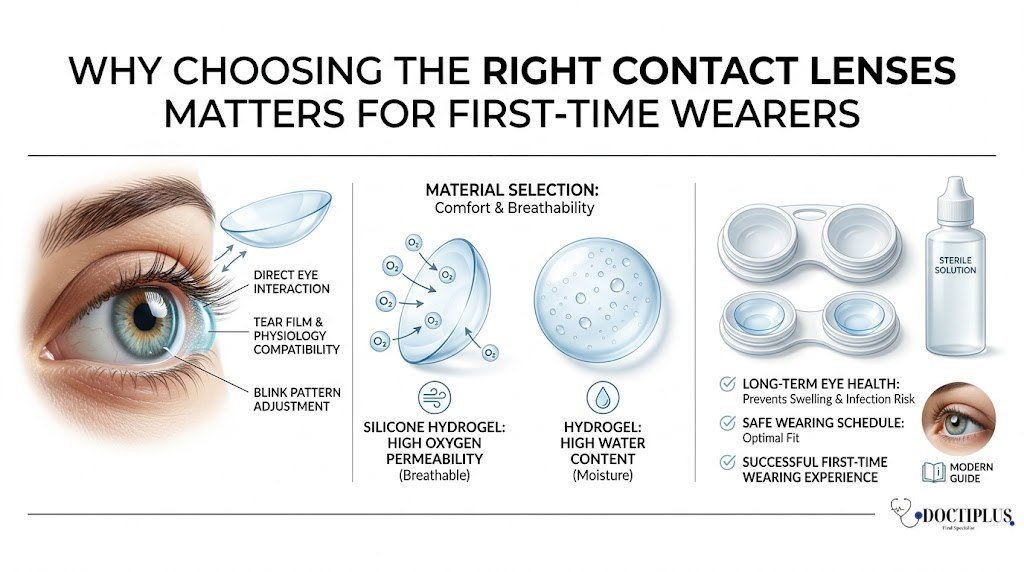
The difference between a successful first experience and an early goodbye to contacts often comes down to one decision: choosing the right pair from the start. Industry research suggests that a significant share of first-time contact lens wearers abandon them within the first year, usually because of dryness, discomfort, or unrealistic expectations rather than vision problems. The good news is that almost all of these issues are preventable with proper preparation and the right lens match.
Unlike eyeglasses that sit in front of your eyes, contact lenses interact directly with your tear film, cornea, and blinking pattern. Even small mismatches between your eye physiology and your lens material can lead to redness, itchiness, and afternoon fatigue. That is why choosing the right lens is not just about clear vision. It is about long-term comfort and eye health.
How Lens Material Affects Comfort
Modern contact lenses are made from materials that vary in oxygen permeability, water content, and surface chemistry. Silicone hydrogel lenses allow more oxygen to reach the cornea and are ideal for longer wearing hours. Traditional hydrogel lenses feel softer on insertion but offer less breathability. New wearers who start with the wrong material may form negative associations that linger even after switching to a better fit.
Long-Term Eye Health Considerations
Poorly fitted lenses or extended wear beyond recommended schedules can cause corneal swelling, protein deposit buildup, or higher infection risk. Many beginners blame themselves when discomfort strikes, when the actual cause is a lens parameter mismatch. Working with a licensed optometrist ensures both your prescription and lens fit support healthy, long-term wear.
Key Factors to Consider Before Choosing Your First Contact Lenses
Before placing an order or attending your first fitting, take stock of your eye health, daily routine, and visual needs. The factors below will guide you and your optometrist toward the lens type that fits your real life.
Eye Health and Tear Film Quality
Your tear film is what keeps your contact lenses moist throughout the day. Some people produce thicker, oilier tears that lubricate lenses well, while others have watery tears that evaporate quickly. A simple tear film test at your eye care clinic can reveal whether you need a moisture-retaining lens or a standard hydrogel option.
Lifestyle and Daily Activities
Frequent travelers often prefer daily disposable lenses because they remove the need to carry cleaning solutions or storage cases. Athletes benefit from lenses with higher oxygen permeability that support increased metabolic demand during exercise. People working in dusty, dry, or chemical-heavy environments may need shorter replacement schedules to prevent deposit buildup.
Screen Time and Digital Eye Strain
Modern lifestyles involve hours of screen time, which reduces natural blinking and increases dryness. If you spend more than six hours daily on a computer or phone, look for lenses with surface treatments that retain moisture longer. Some lenses are specifically designed for digital lifestyles and reduce end-of-day fatigue.
Prescription Type and Complexity
Mild myopia or hyperopia is easy to correct with most lens designs. However, astigmatism requires toric lenses that maintain a stable orientation, while presbyopia is best managed with multifocal lenses or a monovision setup. Beginners with complex prescriptions usually need a longer adaptation period and may benefit from working with practitioners who specialize in comfortable contact lenses for tougher cases.
Allergies and Eye Sensitivities
If you have seasonal allergies or sensitive eyes, daily disposable lenses are usually the safer choice during high pollen periods. Lower water content lenses also resist protein deposits better and are less likely to trigger irritation.
Types of Contact Lenses Available for Beginners
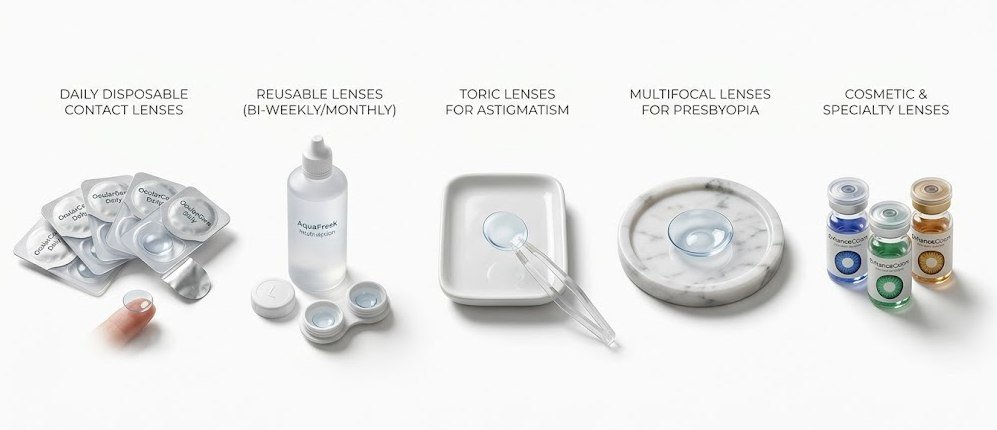
Understanding the main lens categories helps you have a more productive conversation with your eye care provider. Each lens type has its own strengths, replacement schedule, and ideal user profile.
Daily Disposable Contact Lenses
Worn once and discarded at the end of the day, daily disposables are the most beginner-friendly option. They eliminate cleaning, reduce infection risk, and are excellent for occasional wear, travel, or sensitive eyes. The trade-off is that they cost more per year than reusable lenses.
Bi-Weekly and Monthly Reusable Lenses
These lenses are cleaned, disinfected, and reused for up to two or four weeks before being replaced. They are more affordable for full-time wearers but require disciplined daily care. Monthly silicone hydrogel lenses are the most popular choice for committed contact lens users.
Toric Lenses for Astigmatism
Toric lenses are weighted to maintain a stable orientation on the eye, correcting the irregular cornea curvature found in astigmatism. They take longer to fit and adapt to, but provide sharp, stable vision when matched correctly.
Multifocal Lenses for Presbyopia
Multifocal lenses contain multiple prescription zones that allow you to see clearly at near, intermediate, and far distances. They are ideal for adults over 40 who want to read menus, view computer screens, and drive without switching glasses.
Specialty and Cosmetic Lenses
Colored contacts, scleral lenses for keratoconus, and orthokeratology lenses for nighttime corneal reshaping serve specific needs. These should always be prescribed and fitted by a qualified eye care professional, even if they are sold for cosmetic use.
What to Expect When Wearing Contact Lenses for the First Time
Knowing what is normal during your first days of wear helps you separate routine adaptation from genuine warning signs. The first two weeks are a learning curve for your eyes, your hands, and your daily habits.
Initial Insertion and Sensation
Most beginners feel awareness of the lens for the first few hours, similar to becoming aware of your tongue inside your mouth. This sensation is not pain. It is your brain noticing something new, and it usually fades within a day or two as your eyes settle into the rhythm of lens wear.
Vision Clarity and Visual Adjustment
Vision through contacts often feels surprisingly open compared with glasses because no frames are blocking peripheral view, and no fogging on cold days. Some new wearers notice slight fluctuations in sharpness during the first week as the tear film stabilizes around the lens. This is normal and usually clears up on its own.
Learning Insertion and Removal Techniques
Putting the lens in is usually easier than taking it out because gravity helps. Removal requires confidence, clean, dry fingers, and the right pinch technique. Most clinics offer hands-on training before you leave with your first pair, and you should not feel rushed during this practice.
Building Up Wear Time Gradually
Start with about six hours on day one, then add one or two hours per day until you reach your desired wearing time. This gradual schedule allows your eyes to adapt their oxygen metabolism and tear chemistry, which reduces the risk of end-of-day dryness or redness.
Common First Week Challenges
Occasional lens displacement, brief fogginess, and minor irritation from trapped debris are normal during the first week. These small problems feel dramatic to beginners but are easy to manage with rinsing solution and patience. If discomfort lasts more than a few minutes after blinking and rinsing, remove the lens and inspect it before reinserting.
Best Practices for Caring for Your Contact Lenses
Good lens care habits formed in your first month will protect your eyes for years. Skipping steps may seem harmless at first, but the eye has limited natural defenses against bacteria once a lens is on the cornea.
Hand Washing and Hygiene
Wash your hands with fragrance-free soap and dry them with a lint-free towel before touching your lenses. Even traces of lotion, makeup residue, or kitchen oils can transfer to the lens and cause irritation.
Cleaning and Storage for Reusable Lenses
Use a fresh multipurpose solution every time you store your lenses. Even with no rub formulas, gently rubbing the lens between your fingers for ten seconds removes deposits that simple soaking cannot. Never top up the old solution. Always discard it and refill the case completely.
Storage Case Maintenance
Replace your lens case every three months. After each use, rinse it with fresh solution, never tap water, and let it air dry upside down. Bacteria form biofilms inside cases that resist disinfection, which makes regular replacement essential.
Avoiding Water Exposure
Remove your lenses before swimming, showering, or using a hot tub. Tap water and pool water can carry microorganisms such as Acanthamoeba that stick to lens surfaces and cause severe corneal infections. Keep a backup pair of glasses available for situations where lens removal is necessary.
Following Replacement Schedules
Set phone reminders for monthly or bi-weekly replacements. Lenses degrade gradually, and the slow decline in comfort makes it easy to overwear them. Fresh lenses always feel and perform better than ones nearing the end of their cycle.
Common Mistakes First-Time Contact Lens Wearers Make
Bad eyes do not cause most early lens problems. Predictable beginner mistakes cause them. Knowing what to avoid is half the battle.
Pushing Through Discomfort
Mild awareness during the first few days is normal, but burning, sharp pain, or excessive watering is not. Wearing a painful lens can damage the cornea and create lasting negative associations with contact lens use. When in doubt, take them out.
Skipping the Gradual Wear Schedule
Jumping straight to twelve-hour wear because the lenses feel fine in the morning is a classic beginner trap. Eyes need time to develop the metabolic and tear chemistry adaptations that support all-day wear. Patience early on prevents long-term comfort problems.
Cutting Corners on Lens Care
Using tap water, stretching solution between changes, or skipping the rub step are the leading causes of contact lens-related infections. These shortcuts may save a few seconds but can cost weeks of recovery and even permanent vision damage in severe cases.
Using Incompatible Eye Drops
Not all eye drops are safe with contacts. Many over-the-counter drops contain preservatives that bind to lens materials and worsen irritation. Use only drops labeled as compatible with contact lenses, and discuss frequent dryness with your optometrist.
Lacking Backup Glasses or Lens Cases
Always keep a current pair of backup glasses and a spare lens case with solution. Sleeping in lenses that are not approved for overnight wear, even during a quick nap, can cause corneal swelling. Backup options prevent forced choices between comfort and eye safety.
Self-Diagnosing Persistent Problems
Switching brands or buying random care products without professional guidance often makes things worse. What feels like lens intolerance may actually be dry eye disease, allergies, or a prescription change. A proper exam can identify the real cause quickly and save months of frustration.
When to Consult an Eye Care Professional
Some situations require more than home troubleshooting. Schedule a visit with your optometrist if you experience persistent redness, sharp pain, blurred vision that does not clear after blinking, light sensitivity, or any sign of discharge. These symptoms can indicate corneal abrasions, infections, or allergic reactions that need prompt treatment. Annual eye exams are also essential for contact lens wearers, even when everything feels fine, because subtle changes in prescription, fit, or eye health can develop without obvious symptoms.
Conclusion
Choosing your first contact lenses is more than a vision decision. It is a commitment to a daily routine that affects your comfort, your eye health, and your confidence. The best results come from understanding your eye characteristics, matching lens material and replacement schedule to your real lifestyle, building good handling and hygiene habits early, and staying patient through the natural adaptation period.
With the right preparation, modern contact lenses can offer a level of visual freedom that glasses cannot match. Take the time to consult a qualified eye care professional, ask plenty of questions during your fitting, and commit to safe wear practices. Your future self will thank you for the care you put into these first decisions.
Disclaimer
This article is for general informational and educational purposes only. It is not a substitute for professional medical advice, diagnosis, or treatment. Always consult a licensed eye care professional, optometrist, or ophthalmologist before starting contact lens wear, changing your lens type, or treating any eye condition. The author and publisher are not liable for any outcomes that may result from acting on the information presented in this guide.