

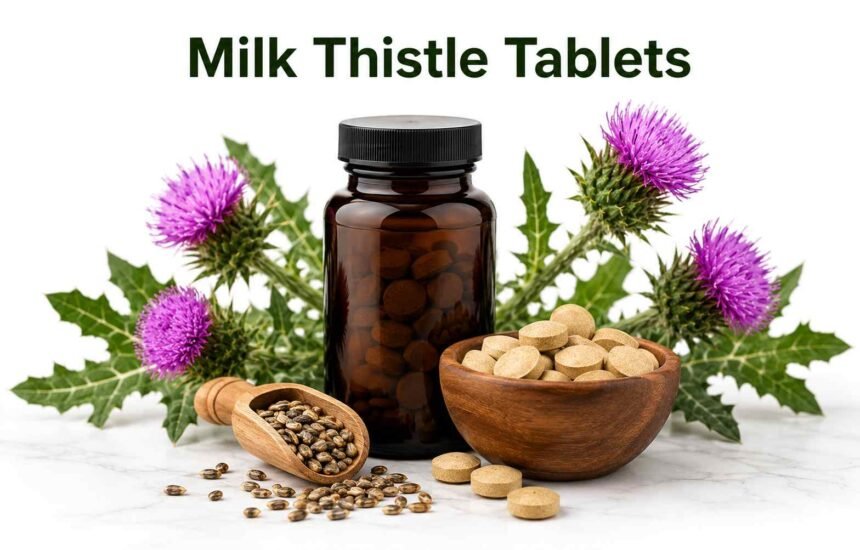
There is a certain point, usually somewhere between late nights, rushed meals, and that extra cup of chai, when you start thinking a bit more seriously about your health, not in a dramatic, overhaul-your-life way, but in small, manageable steps. That is often where supplements come in, and if you have been browsing around, chances are you have seen milk thistle tablets pop up more than once. There is a good reason for that.
Milk thistle (Silybum marianum) has been used in traditional European and Mediterranean medicine for more than 2,000 years, primarily as a liver tonic. Today, it is one of the most extensively studied botanicals in the world, with hundreds of published clinical studies evaluating its therapeutic potential. The active compound, silymarin, is a group of flavonolignans concentrated in the seeds of the plant.
Below are ten evidence-informed reasons why adding milk thistle to your daily routine is worth serious consideration.
1. It Gives Your Liver Meaningful Ongoing Support

Your liver performs over 500 distinct functions: processing nutrients from food, filtering environmental toxins, metabolizing medications, regulating blood sugar, and producing bile for digestion. It works around the clock without rest.
The silymarin in milk thistle tablets has been shown in clinical research to support liver cell regeneration, reduce liver inflammation, and provide hepatoprotective effects, as confirmed by a comprehensive review in the American Journal of Gastroenterology covering multiple study populations. Your liver is already doing the hard work; this helps lighten the load.
2. It Fights Oxidative Stress at the Cellular Level
Stress, air pollution, processed food, blue light exposure, and even vigorous exercise all contribute to oxidative stress, a state in which free radicals outpace the body’s antioxidant defenses. Over time, this imbalance accelerates aging and increases disease risk.
Silymarin is classified as a potent antioxidant by researchers at the National Institutes of Health. It works by scavenging free radicals, upregulating glutathione (one of the body’s most critical internal antioxidants), and reducing lipid peroxidation in cell membranes. The cumulative benefit over weeks and months is measurable, even if it does not produce an immediate sensation.
3. Your Digestion May Noticeably Improve
The liver produces bile, stored in the gallbladder and released into the small intestine to emulsify dietary fats. When liver function is suboptimal, bile flow can become sluggish, leading to bloating, heaviness after meals, and poor absorption of fat-soluble vitamins A, D, E, and K.
By supporting healthy liver and gallbladder function, milk thistle tablets can contribute to steadier, more comfortable digestion. Patients with non-alcoholic fatty liver disease, in particular, frequently report digestive improvements alongside improvements in liver markers, as documented in trials reviewed by WebMD’s clinical overview.
4. It Supports Blood Sugar Regulation
This is one of the more surprising and well-documented benefits of silymarin, rarely mentioned in mainstream supplement discussions.
A 2006 study published in Phytotherapy Research found significant reductions in fasting blood glucose and HbA1c in patients with type 2 diabetes who supplemented with silymarin alongside standard treatment. The proposed mechanism involves silymarin’s ability to reduce insulin resistance and protect the pancreatic beta cells that produce insulin.
5. It Has Meaningful Anti-Inflammatory Properties
Chronic low-grade inflammation underlies conditions ranging from cardiovascular disease to metabolic disorders, depression, and accelerated cognitive decline. Unlike acute inflammation, which is healthy and necessary, chronic systemic inflammation operates quietly for years.
Silymarin inhibits NF-kB, one of the most central regulators of inflammatory gene expression in the body. Healthline’s evidence review highlights this as one of the most clinically relevant properties of silymarin, making milk thistle valuable not just for liver conditions, but for anyone dealing with generalized inflammation or joint discomfort.
6. It Supports Cholesterol and Cardiovascular Health
The liver plays a central role in cholesterol synthesis and regulation. When liver function is impaired or burdened, the lipid profile often reflects it, with elevations in LDL cholesterol and triglycerides.
A randomized controlled trial cited in the Mayo Clinic’s milk thistle overview found that silymarin supplementation was associated with meaningful reductions in total cholesterol, LDL, and triglycerides in patients with liver disease. The mechanism via improved liver function is biologically coherent and increasingly supported by emerging data.
7. It May Help Protect Brain Health Over Time
Neuroinflammation and oxidative damage are central to the progression of neurodegenerative conditions, including Alzheimer’s and Parkinson’s disease. Silymarin’s combined antioxidant and anti-inflammatory properties have attracted growing interest from researchers studying brain aging.
Animal studies reviewed by the Memorial Sloan Kettering integrative medicine team show that silymarin can cross the blood-brain barrier and reduce amyloid plaque accumulation. Human trials are still limited, but the mechanistic rationale is sound, and the safety profile of milk thistle makes it a low-risk addition while more research matures.
8. It Supports Skin Health from the Inside Out
The connection between liver health and skin condition is well established in integrative medicine. The liver processes hormones, histamines, and endotoxins that, when not properly cleared, often manifest in the skin as acne, rosacea, eczema flares, or general dullness.
Research compiled by Examine.com’s milk thistle analysis includes several studies on topical and oral silymarin for conditions like acne and psoriasis with promising results. Oral supplementation supports the liver’s systemic clearing function, which can reflect over time in improved skin clarity and reduced inflammatory flares.
9. It Is Consistent with Long-Term, Sustainable Health Habits
One of the most common questions readers ask is: How long should I take milk thistle to see liver health improvements? The honest answer: it depends. Some people notice subtle shifts in digestion or energy within two to four weeks. For others, meaningful change in liver enzyme levels takes two to three months of consistent use.
Natural supplements do not rush the process, and that is part of their appeal. According to Miduty, the habits that make the biggest long-term difference are the ones that do not feel like a burden, and milk thistle tablets fit that description well.
10. It Integrates Easily into Any Daily Routine
Not everyone has the time or patience for complicated wellness protocols. The appeal of milk thistle tablets is their simplicity: take them once or twice daily with water, and get on with your day: no special preparation, no complex stacking requirements.
This frictionless quality is clinically relevant. Supplement adherence is one of the most significant variables in supplement research. A supplement that is easy to take consistently outperforms a complex regimen that gets abandoned after two weeks.
How to Choose and Use Milk Thistle Tablets: A Practical Guide
What to Look for on the Label
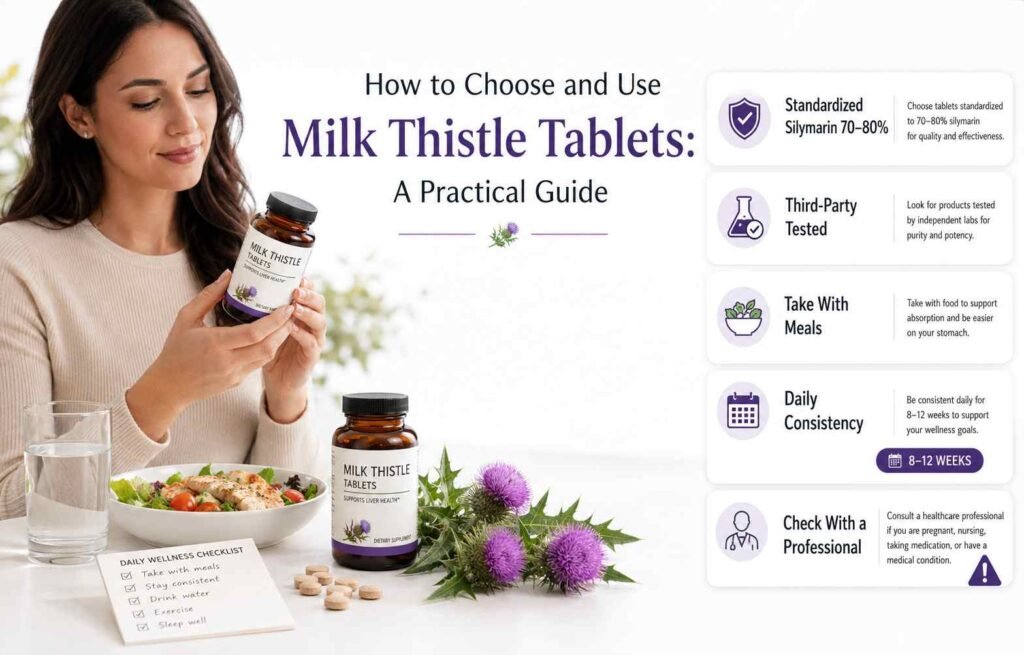
- Standardized silymarin content: Look for products standardized to at least 70-80% silymarin by weight, as recommended by NCCIH guidelines.
- Bioavailability: Phytosome forms bound to phosphatidylcholine offer improved absorption over standard silymarin.
- Dosage range: Clinical trials typically use 200-400mg of standardized silymarin extract per day, often divided into two doses.
- Third-party testing: Choose brands that test for heavy metals, pesticides, and contaminant levels.
- Clean formulation: Avoid products with unnecessary fillers or proprietary blends that obscure actual silymarin content.
Timing and Usage
- Most practitioners recommend taking milk thistle tablets with meals to support digestion and reduce any stomach discomfort.
- Consistency matters more than timing. A dose taken reliably every day outperforms inconsistent higher doses.
- For specific liver concerns, a minimum trial of 8-12 weeks at a consistent dose is recommended before evaluating results.
Who Should Check with a Professional First
- Pregnant or breastfeeding individuals (insufficient safety data in this population).
- Anyone on medications metabolized by the liver’s CYP450 enzyme pathways, as explained in the WebMD drug interaction overview.
- People with hormone-sensitive conditions (silymarin has mild estrogenic activity in some studies).
- Those with allergies to plants in the Asteraceae family: ragweed, chrysanthemums, marigolds, or daisies.
A Few Things Worth Keeping in Mind
- Milk thistle supports the liver; it does not replace a liver-healthy diet. Reducing alcohol, processed foods, and excess sugar remains essential.
- Stick to a consistent daily routine rather than taking it sporadically.
- Choose a quality product from a transparent, trusted source like Miduty, which details formulation standards clearly.
- If you have existing liver conditions or are on prescription medications, confirm with your healthcare provider before starting.
- Track how you feel over 4-12 weeks. Subtle improvements in energy, digestion, and skin are the most common early signals.
Final Thoughts
If you are expecting something dramatic to happen overnight, milk thistle probably will not impress you. But if you are looking for steady, evidence-informed, low-key support for one of your body’s most important organs, it earns its place in a serious wellness routine.
The supplements worth trusting are rarely the loudest ones. They are the ones who quietly do their job, meeting the body where it is and supporting it over time. Milk thistle tablets from Miduty sit firmly in that category.
Disclaimer
This article is for general informational and educational purposes only. It does not constitute medical advice, diagnosis, or treatment. The statements in this article have not been evaluated by the Food and Drug Administration (FDA) or any equivalent regulatory authority. Milk thistle supplements are not intended to diagnose, treat, cure, or prevent any disease. Individual results vary. Always consult a qualified healthcare professional before starting any new supplement, especially if you are pregnant, breastfeeding, taking prescription medications, or managing an existing health condition. Do not discontinue prescribed treatment in favor of supplements without medical guidance.
References
- Gillessen, A., & Schmidt, H. H.-J. (2020). Silymarin as supportive treatment in liver diseases: A narrative review. Advances in Therapy, 37(4), 1279–1301. DOI: 10.1007/s12325-020-01251-y.
- Flora, K., Hahn, M., Rosen, H., & Benner, K. (1998). Milk thistle (Silybum marianum) for the therapy of liver disease. The American Journal of Gastroenterology, 93(2), 139–143. DOI: 10.1111/j.1572-0241.1998.00139.x.
- Jacobs, B. P., Dennehy, C., Ramirez, G., Sapp, J., & Lawrence, V. A. (2002). Milk thistle for the treatment of liver disease: A systematic review and meta-analysis. The American Journal of Medicine, 113(6), 506–515. DOI: 10.1016/S0002-9343(02)01244-5.
- Surai, P. F. (2015). Silymarin as a natural antioxidant: An overview of the current evidence and perspectives. Antioxidants, 4(1), 204–247. DOI: 10.3390/antiox4010204.
- Huseini, H. F., Larijani, B., Heshmat, R., Fakhrzadeh, H., Radjabipour, B., Toliat, T., & Raza, M. (2006). The efficacy of Silybum marianum (L.) Gaertn. (silymarin) in the treatment of type II diabetes: A randomized, double-blind, placebo-controlled clinical trial. Phytotherapy Research, 20(12), 1036–1039. DOI: 10.1002/ptr.1988.
- Voroneanu, L., Nistor, I., Dumea, R., Apetrii, M., & Covic, A. (2016). Silymarin in type 2 diabetes mellitus: A systematic review and meta-analysis of randomized controlled trials. Journal of Diabetes Research, 2016, Article ID 5147468. DOI: 10.1155/2016/5147468.
- Hadi, A., Pourmasoumi, M., Mohammadi, H., Symonds, M. E., & Miraghajani, M. (2018). The effects of silymarin supplementation on metabolic status and oxidative stress in patients with type 2 diabetes mellitus: A systematic review and meta-analysis of clinical trials. Complementary Therapies in Medicine, 41, 311–319. DOI: 10.1016/j.ctim.2018.08.010.
- Ebrahimpour-Koujan, S., Gargari, B. P., Mobasseri, M., Valizadeh, H., & Asghari-Jafarabadi, M. (2015). Effects of Silybum marianum (L.) Gaertn. (silymarin) extract supplementation on antioxidant status and hs-CRP in patients with type 2 diabetes mellitus: A randomized, triple-blind, placebo-controlled clinical trial. Phytomedicine, 22(2), 290–296. DOI: 10.1016/j.phymed.2014.12.010.
- Mohammadi, H., Hadi, A., Arab, A., Moradi, S., & Rouhani, M. H. (2019). Effects of silymarin supplementation on blood lipids: A systematic review and meta-analysis of clinical trials. Phytotherapy Research, 33(4), 871–880. DOI: 10.1002/ptr.6287.
- Fried, M. W., Navarro, V. J., Afdhal, N., Belle, S. H., Wahed, A. S., Hawke, R. L., Doo, E., Meyers, C. M., Reddy, K. R., & SyNCH Study Group. (2012). Effect of silymarin (milk thistle) on liver disease in patients with chronic hepatitis C unsuccessfully treated with interferon therapy: A randomized controlled trial. JAMA, 308(3), 274–282. DOI: 10.1001/jama.2012.8265.
- Surai, P. F., Surai, A., & Earle-Payne, K. (2024). Silymarin and inflammation: Food for thoughts. Antioxidants, 13(1), Article 98. DOI: 10.3390/antiox13010098.
- Zhao, Y., Zhou, Y., Gong, T., Liu, Z., Yang, W., Xiong, Y., Xiao, D., Cifuentes, A., Ibáñez, E., & Lu, W. (2024). The clinical anti-inflammatory effects and underlying mechanisms of silymarin. iScience, 27(11), Article 111109. DOI: 10.1016/j.isci.2024.111109.