

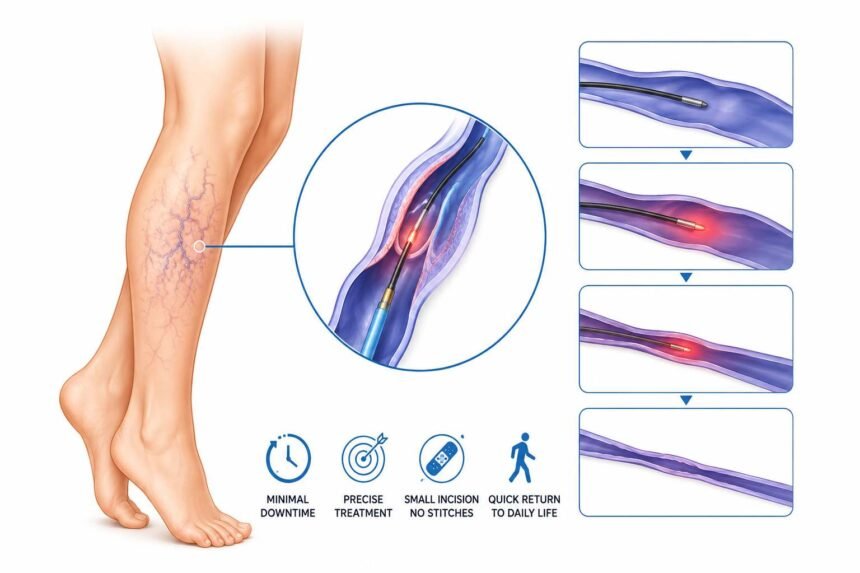
Leg vein problems tend to sneak up on people. It starts with heaviness at the end of a shift, maybe some aching after a long flight, then one day you notice a vein that wasn’t there last year. Aging, pregnancy, standing jobs, and hours of travel all push in the same direction over time. A lot of people live with it, mostly because they’re picturing an old-school surgery with weeks of recovery. That picture is out of date. Modern treatment for varicose veins, spider veins, and chronic venous insufficiency looks nothing like that anymore, and the shift toward minimally invasive care is less about a trend and more about people finally getting a realistic option that fits an actual schedule.
Why “Quick” Actually Matters Here
Most people don’t ignore vein symptoms because they think it’s fine. They ignore it because dealing with it sounds like a hassle, and by the time aching legs start interfering with sleep or work, the problem has usually been building for a while. That gap between symptoms starting and someone actually getting evaluated is a real issue, one that Metro Vein Centers in Peoria is built around closing. Having a location that offers evaluation and treatment close to home changes the math for someone managing chronic venous insufficiency who has been putting off care because it felt like too much to coordinate.
Short Appointments Change Whether People Actually Show Up
Time is the real gatekeeper for a lot of medical care, not cost or fear. If a treatment can be done in under half an hour, based on the Peoria clinic’s published treatment information, that changes who’s willing to book the appointment in the first place. A working parent squeezing this in between drop-off and a shift doesn’t need a whole day off. A retired patient managing a few other appointments doesn’t need to plan around it for a week. Shorter visits lower the mental barrier just as much as the physical one.
Recovery Time Is the Number That Decides Everything
Ask anyone who’s put off a medical procedure why, and recovery time is usually near the top of the list. Minimally invasive vein treatments are built around minimal downtime, which means most people are back to normal walking and daily routines fast. That matters more than it sounds like it should, especially for anyone whose symptoms already get worse from sitting or standing too long in the first place. There’s also a quieter benefit: treatments with short recovery windows are easier to actually follow through on, compared to procedures that demand a week of rest that most people’s lives don’t have room for.
Not Every Vein Problem Gets the Same Fix
One thing that separates modern vein care from older approaches is that it stopped pretending one method works for everyone. The treatment menu at the Peoria location includes radiofrequency ablation, sclerotherapy, microphlebectomy, adhesive-based closure, and foam treatment, and each one is suited to a different kind of vein problem. This lines up with how the Society for Vascular Surgery’s clinical practice guidelines approach treatment: thermal ablation for larger refluxing veins, sclerotherapy or phlebectomy for tributaries, each matched to vein size and what the ultrasound actually shows rather than a one-size-fits-all protocol.
Life Doesn’t Pause for Vein Treatment, So Treatment Had to Adapt
Convenience isn’t a marketing angle here; it’s a response to when this condition actually shows up. Pregnancy, aging veins, desk jobs, retail and hospitality shifts, frequent travel- these are the years when people are busiest and least able to disappear for a long recovery. A treatment path with short visits and limited disruption fits that reality instead of fighting it, and that fit is often what finally gets someone in the door instead of waiting another two years.
What’s Actually Going On Under the Skin
Visible veins are the part people notice, but they’re often just the surface story. Underneath, damaged valves let blood pool instead of flowing back up toward the heart, and that pooling is what drives the heaviness, throbbing, and swelling that shows up before anyone sees a bulging vein. According to MedlinePlus, chronic venous insufficiency tends to get worse over time if it isn’t addressed, though it can usually be managed well when caught early. That’s the real argument for proper evaluation rather than just cosmetic treatment: a duplex ultrasound can tell a clinician whether they’re looking at a straightforward cosmetic issue or a circulation problem that needs a different plan. Johns Hopkins Medicine notes that while chronic venous insufficiency isn’t usually dangerous, it can become genuinely painful and disabling if it’s left alone, which is exactly why ruling things in or out with imaging matters more than eyeballing a leg.
Insurance Coverage Changes Who Actually Gets Treated
Cost is the quiet reason a lot of people never get past “I should look into that.” Published information from the Peoria clinic states that more than 91 percent of treatments are covered by insurance, with the practice accepting over 200 plans. That detail matters as much as any clinical outcome, because access is what turns “I should get this checked” into an actual appointment on the calendar. When a minimally invasive option is also the financially reachable one, a lot of the usual excuses stop holding up.
Track Record Behind the Confidence
Trust doesn’t come from a brochure; it comes from other patients’ actual outcomes. Metro Vein Centers reports experience across more than 100,000 patients, with 98 percent patient satisfaction and over 16,000 five-star reviews across its network. Numbers like that don’t replace an individual medical evaluation, and they shouldn’t be treated as a substitute for one, but they do tell you something about consistency. For someone comparing options and feeling uncertain, that kind of track record decides to get evaluated finally feel a lot less like a gamble.
Waiting Rarely Makes This Easier
Vein disease is one of those conditions that quietly worsens the longer it’s ignored. Aching, swelling, visible varicose veins, and skin irritation can all progress, and according to research summarized in Circulation, chronic venous disease affects more than 25 million adults in the United States, with over 6 million living with more advanced disease. Minimally invasive treatment removes a lot of the usual reasons people give themselves to wait. Faster visits, targeted methods, and lighter recovery expectations make it easier to act while symptoms are still manageable instead of after they’ve become a daily problem.
Where This Leaves Things
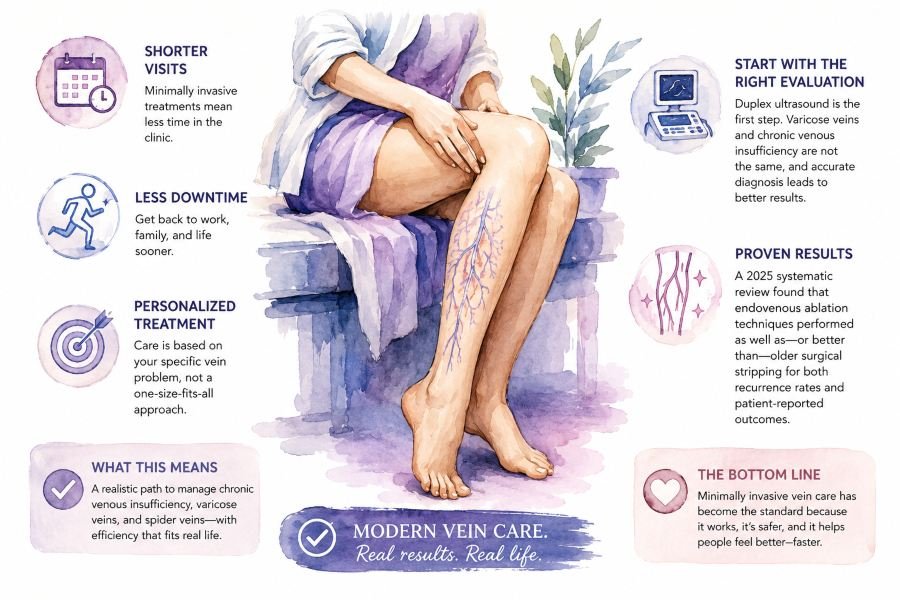
Minimally invasive vein treatment has become the default choice because it actually matches how people live now, not because it’s the newest option on a menu. Shorter visits, less downtime, a treatment plan built around the specific vein problem rather than a single fallback method- all of that adds up to a realistic path for managing chronic venous insufficiency, varicose veins, and spider veins. For anyone juggling work, family, and a body that’s been quietly asking for attention, that combination of efficiency and actual effectiveness is what makes modern vein care something people finish instead of something they keep meaning to get around to.
A proper evaluation with duplex ultrasound is still the right first step before choosing a treatment path, since the Cleveland Clinic notes that varicose veins and chronic venous insufficiency aren’t automatically the same diagnosis, and matching the right procedure to the right stage is what makes outcomes reliable. A 2025 systematic review comparing endovenous ablation techniques to older surgical stripping found the minimally invasive methods held up well on both recurrence rates and patient-reported outcomes, which is a big part of why they’ve become the standard rather than the alternative.
Disclaimer: This article is for general informational purposes only and is not a substitute for professional medical advice, diagnosis, or treatment. Leg vein symptoms can have multiple underlying causes, and any treatment decision should be made after a proper evaluation by a qualified vascular specialist.