

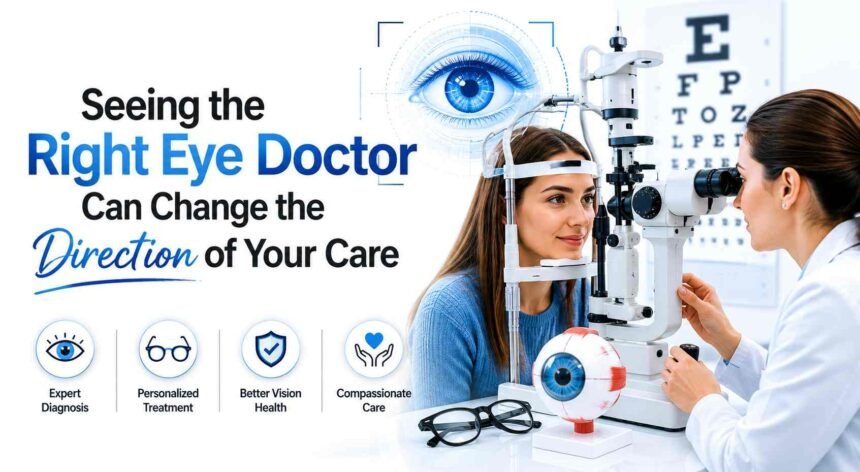
Eye care can feel confusing when symptoms move beyond a simple glasses update. A patient may start with blurry vision, eye pressure concerns, cataract symptoms, distorted vision, or worsening night driving, and wonder whether a routine appointment is enough. In many cases, routine eye exams are the right first step. In other cases, the problem may require an eye surgeon who can evaluate whether a procedure, laser treatment, or advanced surgical plan may be needed.
Mueller Vision experts know that patients searching for an ophthalmologist often want a clear answer about when to see a general eye doctor and when to seek surgical-level care. An ophthalmologist is a medical doctor trained to diagnose and treat eye disease, prescribe medication, and perform eye surgery.
That does not mean every ophthalmology visit leads to surgery. It means the doctor has the training to decide whether monitoring, medication, laser treatment, surgery, or referral is appropriate.
The right eye doctor can change the direction of care because the right diagnosis often changes the next step.
Why Routine Eye Exams and Surgical Evaluations Work Together
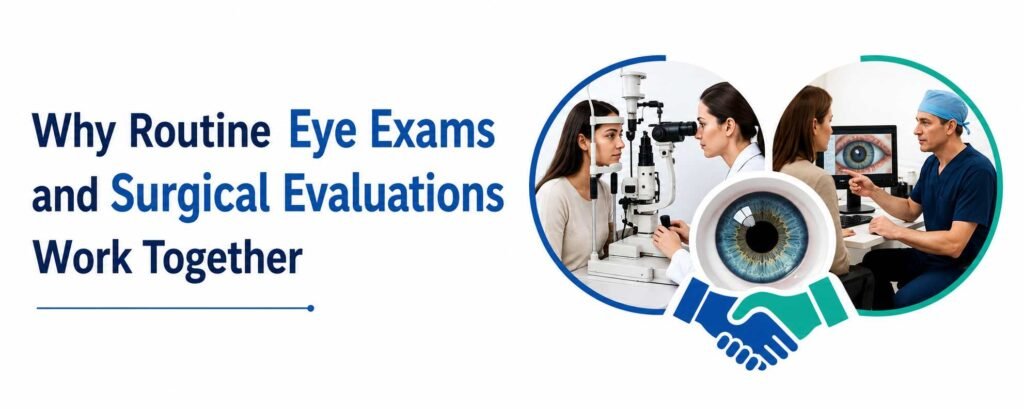
Routine eye exams and surgical evaluations work together because most surgical decisions begin with careful diagnosis. A routine exam can detect cataracts, glaucoma risk, dry eye, corneal problems, retinal disease, diabetic eye changes, and prescription shifts. A surgical evaluation becomes important when the condition may need a procedure or when the patient needs a deeper discussion about treatment timing.
Routine exams may include visual acuity testing, refraction, eye pressure measurement, slit-lamp examination, retinal evaluation, optic nerve assessment, and dilation. The National Eye Institute states that a dilated eye exam is the only way to check for eye diseases early, before they cause vision loss, and when they may be easier to treat.
Dr. Brett H. Mueller, DO, PhD, says, “At Mueller Vision, routine eye exams help patients understand their eye health clearly, identify changes early, and choose the right level of care when surgery or advanced treatment becomes part of the discussion.”
Routine eye care helps find the problem, while surgical care helps decide whether intervention belongs in the plan.
What Symptoms Suggest You Need More Than a Prescription Update
Some symptoms suggest that a patient may need more than a prescription update. Blurry vision that improves with new glasses is often different from sudden blur, distorted vision, one-eye vision loss, flashes, floaters, shadows, severe glare, or pain.
Sudden new floaters, flashes of light, and a curtain-like shadow can be signs of retinal detachment.
Retinal detachment is considered a medical emergency, and early treatment can help prevent permanent vision loss.
Eye pain with redness, nausea, halos, and sudden blurry vision can suggest acute angle-closure glaucoma, which requires urgent medical attention.
A prescription change should improve vision, but warning symptoms need an explanation.
Patients should seek prompt evaluation when vision changes suddenly, worsens quickly, affects one eye, or interferes with safety. The goal is not to assume surgery is needed. The goal is to avoid treating a medical warning sign like an ordinary inconvenience.
How Cataract Surgery Becomes an Option When Vision Limits Life
Cataract surgery becomes an option when cloudy vision starts limiting daily life. A cataract is a cloudy area in the natural lens of the eye. Cataract symptoms can include blurry vision, faded colors, trouble seeing at night, sensitivity to light, halos, and double vision.
Early cataracts may be managed with updated glasses, better lighting, or observation. Over time, patients may find that these adjustments no longer help enough. They may stop driving at night, struggle with glare, avoid reading, or feel less confident performing familiar tasks.
Cataract surgery removes the cloudy lens and replaces it with an artificial lens. The decision involves more than whether a cataract is present. It involves how much the cataract affects daily life, whether other eye diseases are present, what lens options are appropriate, what recovery may involve, and what outcome is realistic.
Cataract surgery becomes part of the conversation when cloudy vision starts taking choices away.
Patients should ask about timing, lens options, astigmatism correction, cost, recovery, and how cataract surgery may interact with glaucoma, dry eye, retinal disease, or previous vision correction surgery.
Why Glaucoma and Retina Conditions Need Specialized Monitoring
Glaucoma and retina conditions need specialized monitoring because they can threaten vision even when symptoms are subtle. Glaucoma damages the optic nerve and can cause vision loss or blindness. Early glaucoma may have no symptoms, which makes testing and follow-up especially important. Glaucoma care may include medication, laser treatment, or surgery, depending on the patient’s eye pressure, optic nerve health, visual field testing, and disease progression. Laser treatment can help fluid drain from the eye and lower pressure. Surgery may be recommended when medicines and laser treatment are not enough. Retina conditions can also require urgent or specialist-level care. Retinal tears may sometimes be treated with laser surgery or freezing treatment to help prevent retinal detachment. If the retina detaches, surgical repair may be needed. Glaucoma threatens the nerve, and retinal disease threatens the seeing tissue, and both deserve careful monitoring.
Patients with diabetes, high myopia, family history of glaucoma, previous eye surgery, or sudden flashes and floaters may need more targeted care than a routine vision check alone can provide.
What Questions Help Patients Feel More Confident About Surgery
Patients feel more confident about surgery when they understand the reason, timing, alternatives, risks, recovery, cost, and expected outcome. A surgical recommendation should not feel like a mystery.
Patients should ask what diagnosis is causing the symptoms, what happens if they wait, what happens if they proceed, whether there are non-surgical alternatives, what the recovery timeline looks like, and what risks apply to their specific eyes.
Cost belongs in this conversation as well. Some surgeries may be medically necessary and billed through medical insurance. Other options, such as premium lens upgrades or elective vision correction, may include out-of-pocket costs. Patients should ask what is covered, what is optional, what financing exists, and what follow-up care is included.
Confident surgical decisions come from understanding both the medical need and the practical tradeoffs.
Patients also have different risk tolerance. Some prefer monitoring until surgery is clearly necessary. Others want earlier intervention when vision limits independence or safety. Good surgical counseling should respect those differences while keeping medical safety at the center.
How Modern Diagnostics Guide Safer Eye Care Decisions
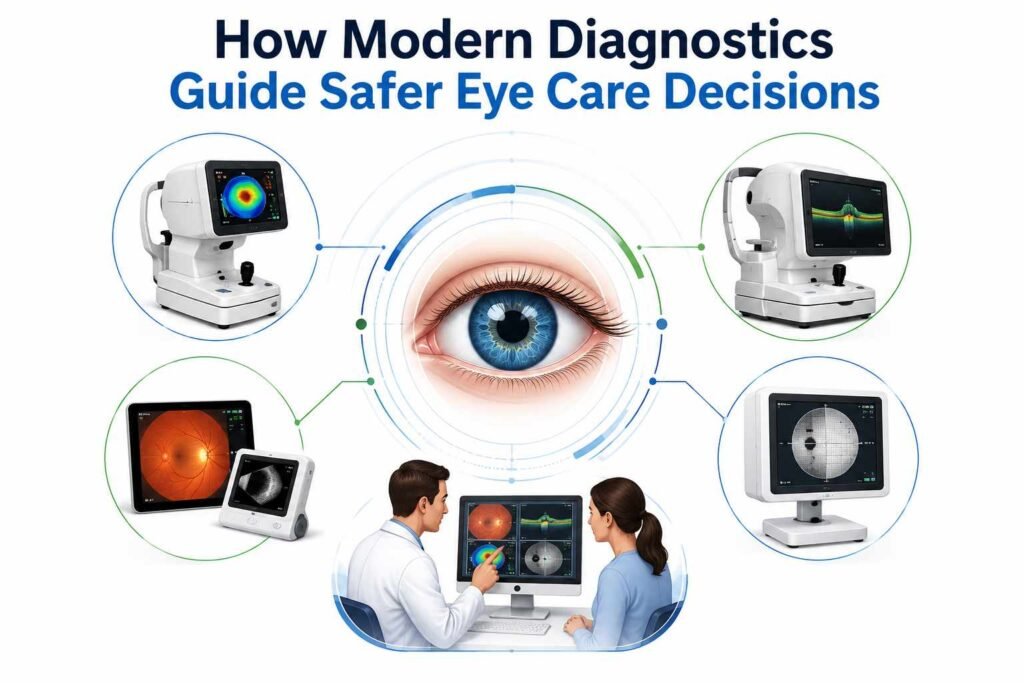
Modern diagnostics guide safer eye care decisions by showing what is happening inside the eye. Testing can help determine whether a patient needs monitoring, medication, laser treatment, surgery, or referral to a subspecialist.
For cataracts, measurements help evaluate lens clouding, corneal shape, astigmatism, and lens implant options. For glaucoma, testing may include eye pressure measurement, optic nerve imaging, corneal thickness, and visual field testing. For retina concerns, testing may include dilation, retinal photography, optical coherence tomography, or ultrasound when the view is limited.
Technology helps surgeons choose the right level of care. It can reveal whether a cataract is the main reason for blur, whether glaucoma is progressing, whether retinal fluid is present, or whether corneal disease is affecting clarity.
Modern diagnostics help doctors match the treatment to the true source of the vision problem.
Technology does not replace judgment. It supports judgment. The safest decision still depends on eye anatomy, disease severity, patient goals, recovery expectations, cost, and long-term vision health.
Why Timing Can Matter as Much as Treatment
Timing can matter as much as treatment because some eye conditions progress slowly while others need urgent action. Cataracts may often be monitored until they interfere with daily life. Glaucoma may need long-term pressure control before vision loss becomes obvious. Retinal detachment symptoms require immediate attention because early treatment can help prevent permanent vision loss.
A patient who waits too long for cataract surgery may experience unnecessary difficulty with driving, reading, or daily independence. A patient who delays glaucoma care may lose side vision that cannot be restored. A patient who ignores retinal detachment symptoms may risk permanent damage.
The right treatment at the wrong time may not protect vision as well as the right treatment at the right time.
Timing decisions should consider symptoms, testing, disease progression, lifestyle, safety, recovery, and patient readiness. Surgery should not be rushed without reason, but it should not be delayed when delay increases risk.
Stronger Vision Protection Starts With the Right Referral
Stronger vision protection starts with the right referral because different eye problems need different levels of care. Routine eye exams help detect and monitor many conditions. Surgical evaluations help when a procedure may protect or improve vision.
Patients should start with routine care for general monitoring, prescription changes, dry eye, stable cataracts, and preventive exams. Patients should seek surgical-level evaluation when cataracts limit daily life, glaucoma progresses despite treatment, corneal disease worsens, retinal warning signs appear, or advanced vision correction options need discussion.
Patients should seek urgent care for sudden vision loss, many new floaters, flashes, curtain-like shadows, severe eye pain, trauma, or sudden one-eye symptoms.
Seeing the right eye doctor at the right time can turn uncertainty into a clear plan.
Routine care and surgical care are strongest when they work together. The first helps patients notice and monitor change. The second helps patients understand whether intervention is needed. Knowing when to move from one to the other can help protect vision and support more confident decisions.
References
- [1] “What Is an Ophthalmologist?” by American Academy of Ophthalmology, updated January 22, 2026.
- [2] “Get a Dilated Eye Exam,” by National Eye Institute, updated November 26, 2025.
- [3] “Retinal Detachment,” by National Eye Institute, updated November 5, 2025.
- [4] “Types and Causes of Retinal Detachment,” by National Eye Institute, updated December 6, 2024.
- [5] “Glaucoma,” by National Eye Institute, updated November 26, 2025.
- [6] “Cataracts,” by National Eye Institute, updated November 26, 2025.
- [7] “Cataract Surgery,” by National Eye Institute, updated December 5, 2024.
- [8] “Laser Treatment for Glaucoma,” by National Eye Institute, updated August 6, 2025.
- [9] “Glaucoma Surgery,” by National Eye Institute, updated December 5, 2024.
- [10] “Laser Surgery and Freeze Treatment for Retinal Tears,” by National Eye Institute, updated December 6, 2024.
- [11] “Surgery for Retinal Detachment,” by National Eye Institute, updated December 6, 2024.